Custom Apparel Packaging for a Premium Fashion Collection
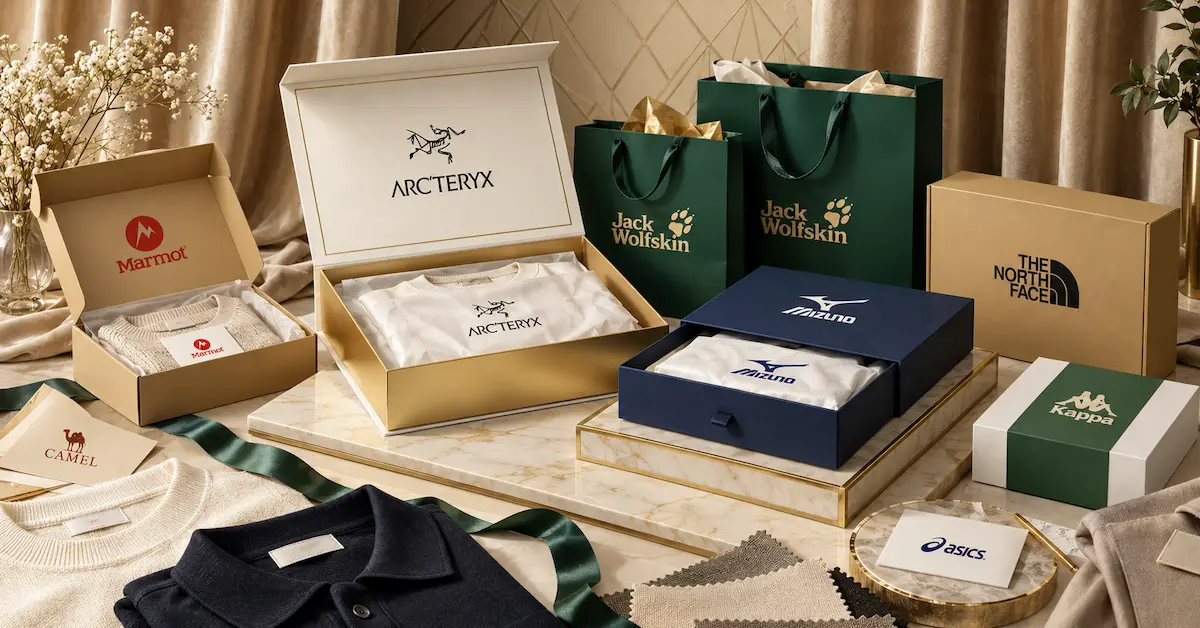
Premium fashion packaging does more than hold a garment. It influences how clothing is presented, handled, protected and delivered to the customer. From a branded paper bag in a boutique to a carefully fitted apparel box, every packaging component contributes to the overall brand experience.
For fashion brands developing a new clothing collection, custom apparel packaging requires careful coordination between visual design and practical production requirements. Materials, dimensions, printing finishes, protective packaging and assembly methods must work together.
A beautiful box may be unsuitable if it cannot accommodate the folded garment. A premium paper bag may lose its intended appearance if the handles, material or printing finish are poorly matched. Likewise, multiple packaging components can look inconsistent when their artwork and color references are developed independently.
This premium apparel packaging case study brief explores how clothing brands can plan a coordinated packaging system through material selection, structural design, branding consistency, physical sampling and quality control.
The objective is to develop packaging that supports the collection's identity while meeting its handling, presentation and distribution requirements.
Project status: This article presents a representative premium fashion packaging development brief. Actual QTTAG customer requirements, approved samples, production photographs and project outcomes must be verified before this content is published as a completed customer case study.
Project Overview: A Coordinated Packaging System for Fashion Apparel
A premium fashion collection may include shirts, knitwear, jackets, dresses and accessories. These products can differ considerably in size, weight, folding requirements and distribution methods.
The challenge is to create an apparel brand packaging system that feels consistent without requiring every product to use identical packaging dimensions or materials.
For this project scenario, the proposed development brief covers custom apparel boxes, branded paper bags and protective inner packaging.
| Project Element | Development Requirement |
|---|---|
| Product | Custom apparel packaging |
| Application | Premium fashion collection |
| Branding objective | Consistent visual presentation across packaging components |
| Packaging options | Paper bags, boxes and garment inner packaging |
| Material considerations | Paperboard, paper stocks and suitable protective materials |
| Design requirements | Logo, colors, typography and finishes |
| Structural requirements | Product fit, closures, handles and handling |
| Protection | Appropriate protection for garments during storage and delivery |
| Sampling | Physical packaging prototypes and garment fit checks |
| Quality control | Dimensions, print quality, construction and assembly |
| Production objective | Repeatable packaging across product variations |
A coordinated system does not necessarily mean ordering all packaging products from the same material or using one structure for every garment.
The goal is to establish shared design references while allowing each packaging component to perform its intended function.
The Packaging Challenge: Balancing Appearance and Function
Premium clothing packaging must satisfy two important requirements.
It should communicate the brand's intended visual identity, and it should work reliably with the actual garments.
These objectives need to be considered together.
Maintaining a Consistent Brand Identity
A clothing brand may use several packaging formats throughout the customer journey.
Retail paper bags, garment boxes and protective packaging can all feature related logo treatments and colors.
However, paper, laminated surfaces and flexible materials may reproduce colors differently.
Physical samples are useful when coordinating the final appearance.
Protecting the Finished Garment
Packaging should be selected according to the garment's characteristics.
A lightweight T-shirt and a structured jacket may have different folding and protection requirements.
The packaging must also accommodate any additional inserts or accessories.
Controlling Packaging Dimensions
Oversized packaging can use unnecessary material and complicate handling.
Packaging that is too small may compress the garment or create an unacceptable presentation.
Product measurements and representative folded samples should guide the design.
Supporting Different Sales Channels
Retail packaging and e-commerce shipping packaging serve different purposes.
A shopping bag may prioritize customer carrying and store presentation, while a shipping package requires additional consideration of transportation and handling.
Brands should define the intended use before choosing the packaging structure.
Building an Apparel Brand Packaging System
An effective packaging system begins with a clear inventory of the products and customer touchpoints involved.
The design should reflect where the packaging is used, how it will be handled and which brand elements need to remain consistent.
Primary Packaging
Primary packaging may include a garment bag, internal paper wrap or other material placed directly around the clothing.
Its role may involve protecting the product surface, keeping components together or providing a controlled presentation.
Retail Packaging
Branded paper bags and selected gift boxes can support in-store presentation.
Their design should consider the garment's dimensions, weight and handling requirements.
E-Commerce Packaging
Shipping mailers and suitable boxes may protect clothing during distribution.
The correct structure depends on the product and the expected handling conditions.
Presentation Accessories
Tissue paper, inserts, cards, stickers and other accessories can be included where they serve a clear purpose.
These elements should not be added automatically.
Every additional component affects purchasing cost, packing time and the overall material requirements.
| Packaging Component | Main Purpose | Key Design Consideration |
|---|---|---|
| Paper shopping bags | Retail carrying and presentation | Handle construction and dimensions |
| Apparel packaging boxes | Presentation and containment | Garment fit and structural strength |
| Protective garment bags | Garment protection and identification | Material, closure and dimensions |
| Tissue paper | Wrapping and presentation | Material suitability and print appearance |
| Packaging inserts | Positioning or information | Fit and readability |
| Branded cards | Product or brand information | Artwork and consistency |
The brand should determine which components are necessary before developing the complete packaging specification.
Choosing Custom Luxury Clothing Packaging Materials
Material selection influences appearance, durability, production feasibility and cost.
Different packaging materials may suit different parts of the clothing collection.
The final choice should follow the product's intended use rather than general claims about premium appearance.
Premium Paper Stocks
Paper stocks may be selected for shopping bags, wrapping materials and certain packaging structures.
Important considerations include:
-
Surface texture
-
Material weight and thickness
-
Stiffness
-
Print compatibility
-
Folding performance
-
Color consistency
-
Suitability for the intended finish
A paper sample can feel substantial when handled separately but behave differently after folding or conversion into a bag.
Paperboard
Paperboard is commonly considered for folding packaging and selected box constructions.
The appropriate grade depends on the structural requirements.
Stiffness and folding behavior should be evaluated through physical prototypes.
Rigid Box Materials
Rigid packaging constructions may be appropriate for selected gift or premium presentation applications.
Their suitability depends on the product's dimensions, weight and desired opening experience.
The manufacturing method, covering material and any insert design should be considered together.
Protective Packaging Materials
Some clothing products may require protective inner bags or wraps.
Material selection should account for storage, handling, closure and any relevant destination-market requirements.
Claims about recyclability, compostability or other environmental attributes require material-specific evidence and should not be assumed from appearance.
Material Selection Overview
| Material or Construction | Potential Application | Main Evaluation |
|---|---|---|
| Premium paper stock | Shopping bags and wrapping | Surface, printing and handling |
| Paperboard | Folding apparel boxes | Stiffness and folding |
| Rigid box construction | Premium clothing presentation | Structure, fit and finishing |
| Flexible protective packaging | Garment storage and protection | Closure and garment compatibility |
| Tissue paper | Internal presentation | Surface and print suitability |
For custom luxury clothing packaging, buyers should compare materials using complete physical samples rather than isolated material swatches alone.
Designing Premium Fashion Packaging Boxes and Bags
Premium fashion packaging boxes and bags should share a recognizable design language while meeting different practical requirements.
This often means maintaining the same master logo and color references but adjusting layout, material and construction.
Logo Placement
The logo should remain legible and balanced on each packaging format.
A position that works on a large paper bag may not be suitable for a small box lid.
Typography
Use consistent typography references for brand names and other identity elements.
Product-specific information may require a different layout from the primary logo.
Packaging Colors
A coordinated color system can connect the retail bag, apparel box and internal packaging.
Because materials have different surfaces and printing characteristics, visual matching should be approved using physical references.
Dimensions and Proportions
The dimensions of each product should be based on its contents.
Avoid choosing packaging sizes entirely from a visual mockup.
Printing and Finishing
Printing, foil stamping, embossing, debossing and selected laminations may be considered when compatible with the packaging materials.
The final selection should support the brand identity and the product's intended handling.
Selecting the Right Apparel Packaging Box Construction
Boxes for clothing vary by structure, opening method and intended presentation.
The appropriate design should follow the garment and distribution requirements.
Folding Carton Boxes
Folding cartons may be considered for packaging that needs a suitable balance between presentation and efficient storage.
Their dimensions, paperboard construction and folding methods must be evaluated.
Rigid Gift Boxes
Rigid boxes can provide a structured presentation for selected premium garments or gift sets.
However, they may introduce different storage, shipping and assembly requirements from folding cartons.
Magnetic Closure Boxes
Magnetic closures may be considered for suitable premium box structures.
The opening mechanism, material construction and any applicable product requirements need to be reviewed.
Mailer Boxes
Mailer-style boxes may be useful for clothing distributed through e-commerce channels.
A visually refined mailer should still be tested for relevant transportation and handling conditions.
| Box Type | Potential Application | Main Consideration |
|---|---|---|
| Folding carton | Retail or selected garment packaging | Folding and structural suitability |
| Rigid box | Premium presentation or gift sets | Storage, strength and product fit |
| Magnetic closure box | Selected presentation packaging | Closure construction and function |
| Mailer box | E-commerce clothing orders | Transport handling and protection |
A box should be approved using an actual folded garment or representative product contents.
Custom Paper Bags for Premium Fashion Retail
Branded paper shopping bags are an important part of many boutique and retail packaging systems.
A well-designed paper bag should look appropriate for the collection while supporting the expected contents.
Paper Selection
The chosen paper influences the bag's stiffness, texture and overall appearance.
Handle Construction
Different handles may include paper, cotton cord, ribbon or other suitable constructions.
Buyers should evaluate handle attachment and intended carrying requirements.
Bag Dimensions
A bag should accommodate the intended garment or apparel box without creating unnecessary space.
Branding
Printing and finishing should coordinate with the other packaging components.
Carrying and Handling Evaluation
Physical samples should be evaluated with representative contents.
A visually attractive bag should not be approved based only on an empty sample.
The supplier and buyer should agree on any relevant load or handling tests before production.
Coordinating Packaging With Clothing Labels and Hang Tags
Packaging becomes more effective when it reflects the wider apparel branding system.
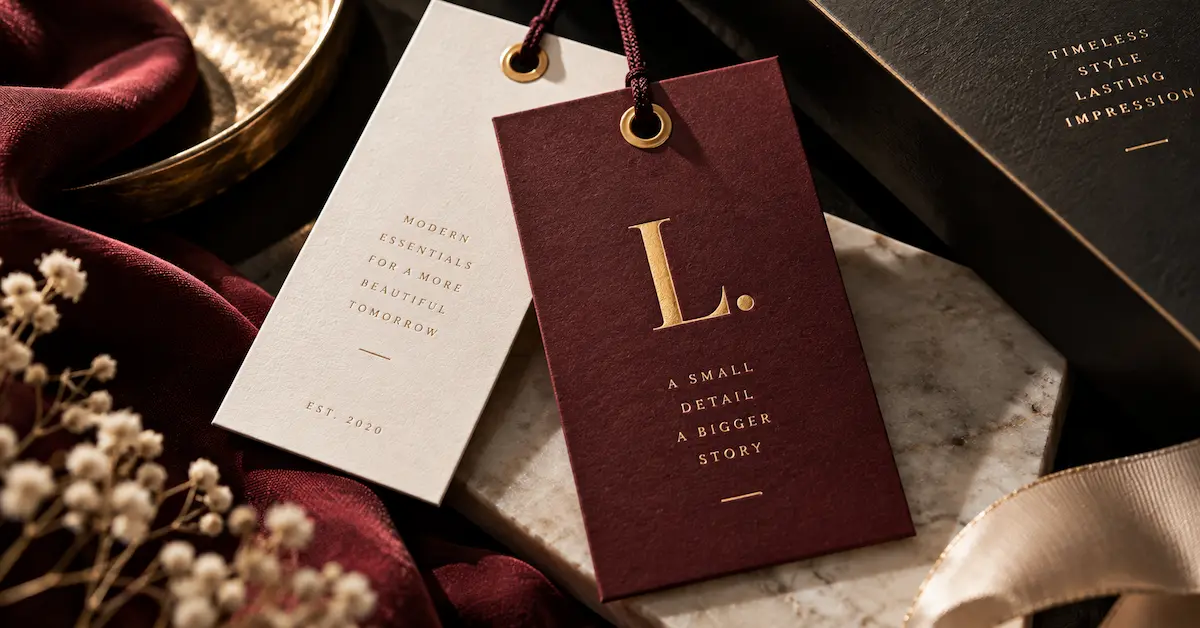
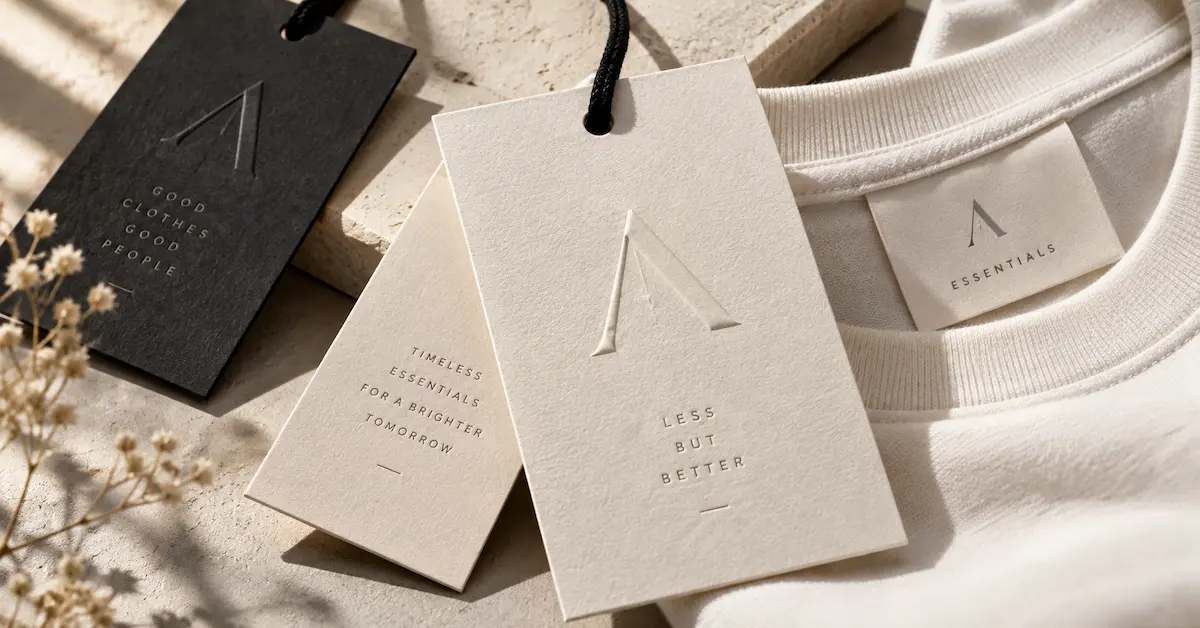
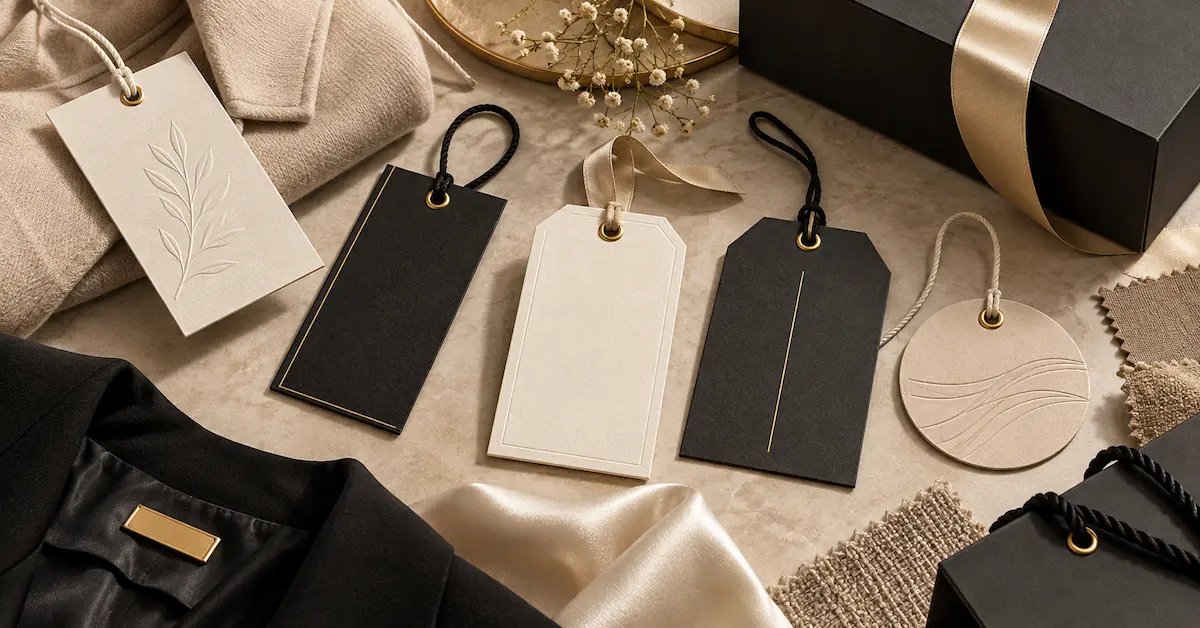
A premium collection may already use woven labels, care labels and custom hang tags.
These elements create useful references for packaging development.
Woven Labels
The woven label establishes an identity on the garment itself.
The packaging can use the same master brand artwork, adapted appropriately for printing or finishing.
Custom Hang Tags
Hang tags connect garment identification with retail presentation.
Packaging can coordinate the logo, colors and overall visual direction.
Paper Bags and Boxes
Bags and boxes may use related printing treatments.
Exact material matching is not always realistic, but the design should remain recognizable.
Consistency Without Identical Materials
Different products use different manufacturing processes.
A logo woven into a textile and the same logo printed on paper will not necessarily produce the same surface appearance.
The goal is controlled visual consistency rather than forcing every component to use an identical material.
Developing a Consistent Packaging Artwork System
A coordinated packaging project can involve several production files.
Without clear artwork management, different suppliers or teams may use inconsistent versions.
Maintain a Master Logo
Use a single approved source for the main brand artwork.
Define Color References
Record the intended colors and establish physical references where appropriate.
Control Packaging Layouts
Each packaging format should have a separate approved layout showing dimensions, artwork positions and required finishing.
Identify Product Variations
Different packaging sizes, garment styles or seasonal colorways may need different artwork versions.
Document Finishing Requirements
Any foil stamping, embossing, lamination or other special treatment should be clearly identified.
Avoid Unapproved Changes
Changes made for production feasibility should be reviewed with the buyer before sampling or manufacturing.
An organized artwork system helps maintain consistency when packaging is reordered or expanded.
How to Balance Packaging Presentation and Garment Protection
Premium packaging should not compromise the quality of the garment inside.
The required protection depends on the garment, storage conditions and distribution method.
Avoid Unnecessary Compression
The packaging should accommodate the folded garment appropriately.
Excessive compression may affect presentation or create undesirable creasing for certain products.
Consider Surface Protection
Packaging materials should not introduce unacceptable marks, residue or other unwanted effects during normal handling.
Control Product Movement
Some boxes may benefit from suitable internal arrangements or inserts to reduce unwanted movement.
Consider Moisture and Storage Conditions
The packaging should be reviewed against realistic storage and distribution requirements.
No packaging construction should be described as waterproof or protective under all conditions without relevant supporting tests.
Evaluate the Complete Package
A box or bag may look acceptable when empty but perform differently when filled.
Use representative garments and accessories during sample approval.
Physical Sampling: From Design to Finished Packaging
This premium apparel packaging case study brief places particular emphasis on physical sampling because complete packaging performance cannot be evaluated from digital artwork alone.
A coordinated set may contain several materials and manufacturing methods.
Each component should be approved individually and as part of the complete presentation.
Step 1: Confirm the Product Requirements
Prepare the garment types, approximate folded dimensions, intended packaging components and distribution requirements.
Step 2: Review Material Options
Compare relevant paper, board and protective materials.
Step 3: Confirm Structural Designs
Check box structures, paper bag dimensions, closures and any necessary inserts.
Step 4: Approve Artwork Layouts
Review logo placement, colors, typography and printing details.
Step 5: Produce Physical Samples
Develop samples representing the intended construction as closely as the sampling arrangement allows.
Step 6: Test Garment Fit
Place the actual or representative garments inside the sample packaging.
Check handling, fit and presentation.
Step 7: Evaluate the Complete Branding Set
Arrange the garment, labels, hang tags, box and paper bag together.
Review whether the intended brand identity remains consistent.
Step 8: Record the Approved Specifications
Retain the final artwork versions, material references, dimensions and approved samples.
These records form the basis for production quality checks.
Clothing Packaging Sample Approval: What Should Buyers Check?
Clothing packaging sample approval should assess visual appearance, construction and practical handling.
Approving only a digital rendering may overlook important production details.
| Approval Item | Main Check | Reference |
|---|---|---|
| Material | Texture, color and construction | Approved material sample |
| Dimensions | Finished packaging size | Approved drawing |
| Printing | Logo clarity and positioning | Approved artwork |
| Color consistency | Appearance across components | Physical color references |
| Box construction | Folding, closure and assembly | Approved structural sample |
| Paper bag handles | Attachment and handling | Agreed evaluation method |
| Garment fit | Product dimensions and presentation | Representative garment |
| Protective packaging | Closure and suitability | Approved packaging specification |
| Finishing quality | Foil, embossing or lamination | Approved physical sample |
| Complete packaging set | Coordination and appearance | Finished presentation reference |
Evaluate Real Garments
Representative garments provide more useful information than empty packaging.
Inspect Material and Finishing Consistency
Changes in paper, coatings or printing can affect the overall visual presentation.
Check Packaging Assembly
A design should be practical for the intended production and packing process.
Agree on Acceptance Criteria
Before bulk production, document what constitutes an acceptable finished packaging component.
Production Quality Control for Coordinated Apparel Packaging
A multi-component packaging project requires control across several manufacturing stages.
Some processes may differ between paper bags, boxes and garment inner packaging.
Quality checks should be specific to each product.
Incoming Material Checks
Inspect materials against the approved references where appropriate.
Printing Inspection
Check artwork accuracy, print positioning and visible quality.
Cutting and Folding
Confirm dimensions, edge quality and correct construction.
Finishing Inspection
Evaluate any foil stamping, embossing, coatings or laminations against approved samples.
Assembly Checks
Inspect handles, closures, inserts and related components.
Packing and Sorting
Ensure the correct packaging variations are matched with the appropriate garment styles or SKUs.
| Stage | Potential Issue | Recommended Control |
|---|---|---|
| Material preparation | Inconsistent stock | Approved material reference |
| Printing | Incorrect artwork or registration | Artwork verification |
| Cutting | Dimensional variation | Finished size inspection |
| Finishing | Uneven decorative effect | Physical sample comparison |
| Assembly | Incorrect handles or closures | Assembly inspection |
| Packing | Mixed packaging versions | SKU and packing verification |
Batch inspection criteria should be established with the supplier based on the actual products and project requirements.
Common Problems in Premium Apparel Packaging Projects
Several problems can appear when multiple packaging components are developed together.
Inconsistent Brand Colors
Different paper and protective materials may reproduce colors differently.
Use coordinated physical references and define acceptable variation.
Poor Garment Fit
Packaging dimensions may be unsuitable for the folded garment.
Check fit using representative products before approval.
Weak or Inappropriate Handles
A paper bag handle may not suit the intended contents or carrying conditions.
Evaluate the assembled bag with appropriate loads.
Packaging Damage During Handling
Insufficient structural suitability may create damage during distribution.
Test relevant handling conditions rather than assuming appearance proves performance.
Incorrect Product Variations
Multiple garment sizes or packaging versions may create sorting errors.
Use clear SKU and artwork identification.
Excessive Packaging Complexity
Too many components can increase packing time and coordination requirements.
Include only the elements that serve an intended presentation, protection or information purpose.
What Determines the Cost of Custom Apparel Packaging?
The total cost of a packaging system depends on the complete specification.
Important cost factors may include:
-
Packaging material and grade
-
Paperboard thickness and construction
-
Bag or box dimensions
-
Printing colors and coverage
-
Specialty finishes
-
Custom die-cutting or tooling
-
Handles, ribbons and closures
-
Internal inserts or protective packaging
-
Quantity
-
Number of sizes and artwork versions
-
Sampling and development requirements
-
Assembly and packing
-
Delivery requirements
Material and Construction
A rigid box and a paper bag have different manufacturing requirements.
They should be quoted separately before evaluating the cost of the coordinated set.
Order Quantity
The order volume and number of packaging variations affect production planning.
Suppliers may have different minimum quantities for each packaging product.
Finishing Complexity
Additional printing or decorative processes can change the manufacturing requirements.
Complete Packaging Cost
Compare the cost of all required components rather than only the main box or bag.
A useful quotation should clarify which services and materials are included.
Preparing an RFQ for a Complete Apparel Packaging Project
A clear RFQ allows the supplier to evaluate the proposed packaging system.
| Required Information | What to Provide |
|---|---|
| Brand artwork | Approved logo and graphics |
| Garment types | Product categories and representative items |
| Folded dimensions | Actual garment measurements |
| Packaging products | Boxes, bags, protective materials and accessories |
| Material preferences | Paper, board and relevant surface references |
| Finished dimensions | Size requirements for each component |
| Printing | Colors, layout and artwork versions |
| Finishing | Foil, embossing, coatings or other treatments |
| Quantity | Estimated volume by packaging type |
| Variations | Different garment styles, sizes or collections |
| Protection | Storage and transport considerations |
| Sampling | Physical sample approval requirements |
| Delivery | Destination and required schedule |
When several packaging components are involved, provide a separate specification for each product while maintaining one coordinated brand reference.
Frequently Asked Questions About Premium Apparel Packaging
What is included in a custom apparel packaging system?
A custom apparel packaging system may include paper shopping bags, garment boxes, protective inner packaging, tissue paper and selected accessories. The components depend on the garments and distribution requirements.
What packaging is suitable for premium fashion clothing?
The appropriate packaging depends on garment size, structure, presentation requirements and distribution method. Physical samples should be evaluated with representative garments.
Can clothing packaging boxes and paper bags share the same branding?
Yes. They can use coordinated logos, typography and color references, although the different materials may require separate printing and finishing specifications.
Are rigid boxes always better for luxury clothing?
Not necessarily. Rigid boxes may suit selected presentation requirements, but folding cartons, paper bags or other packaging can be more appropriate depending on product fit, storage, handling and cost.
How should apparel packaging samples be approved?
Review the actual materials, dimensions, printing, structure, finishing and garment fit. Approve the completed packaging components against agreed specifications.
Can sustainable materials be used for premium apparel packaging?
Materials with documented environmental attributes may be considered where appropriate. Claims such as recycled content or recyclability must be supported by relevant product-specific evidence and market requirements.
What is the minimum order quantity for custom apparel packaging?
Minimum quantities vary by packaging type, material, finishing and supplier. Request a quotation for each component using the intended dimensions and quantities.
How can brands maintain packaging consistency across multiple collections?
Maintain approved artwork files, material references, packaging dimensions and physical samples. Recheck specifications whenever materials, suppliers or product requirements change.
Develop Coordinated Apparel Packaging With QTTAG
Premium fashion packaging should support both brand presentation and practical garment handling.
Custom boxes, paper bags and protective packaging perform different functions, but they can follow one coordinated design system.
The development approach outlined in this premium apparel packaging case study brief helps clothing brands prepare clearer specifications, compare materials, evaluate samples and plan consistent production.
QTTAG supports custom apparel branding and packaging projects, including paper bags, poly bags, packaging boxes and coordinated garment branding products.
When discussing a new packaging project, share your brand artwork, garment dimensions, packaging requirements, preferred materials, expected order quantities and intended distribution method.
These details provide a starting point for evaluating suitable packaging structures and sample options.
Ready to Create Custom Packaging for Your Premium Fashion Collection?
Share your logo artwork, garment specifications, preferred packaging materials, box and bag dimensions, finishing requirements and estimated order quantity with QTTAG.
Our team can discuss suitable apparel packaging customization and sampling options for your clothing collection.
Request a Quote
Author
Founder at QTTAG
Jason Qiao is the founder of QTTAG, focusing on garment branding and packaging solutions. With years of experience in the apparel industry, he shares practical insights on custom labels, hang tags and sustainable packaging to help global brands grow.
Written By
Jason Qiao