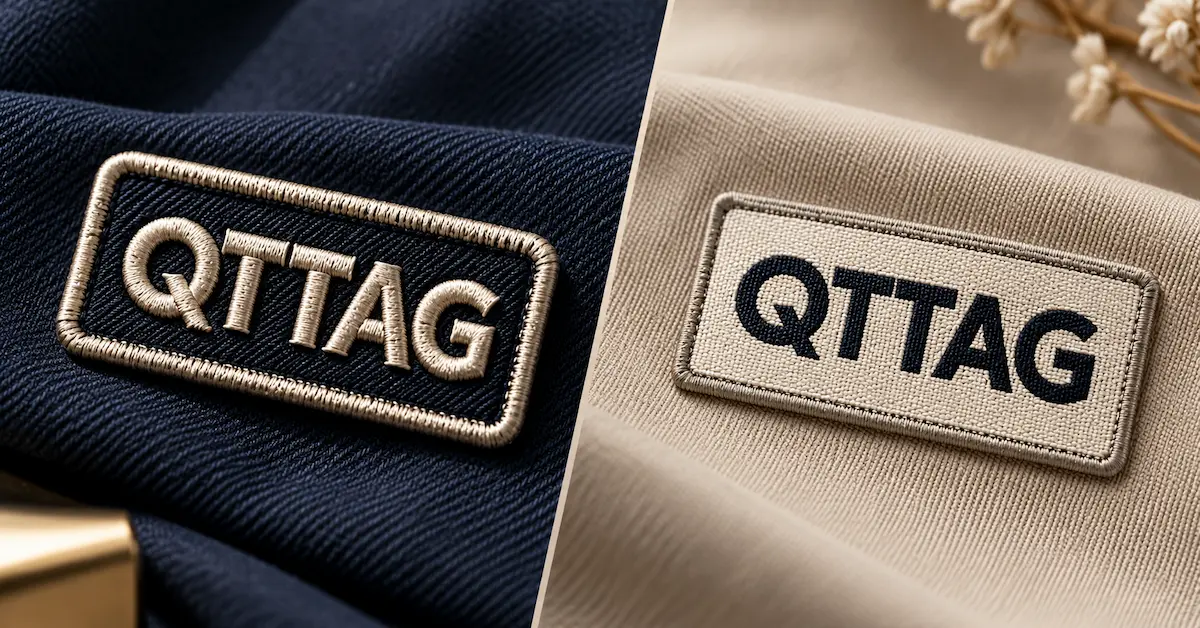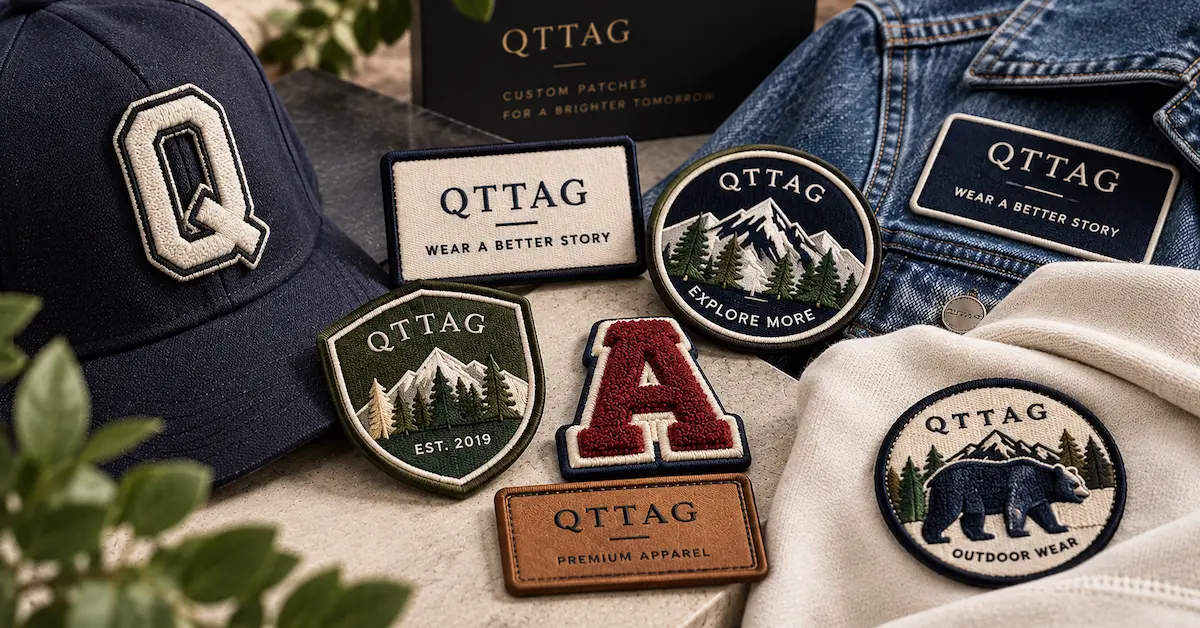
Custom Patches Cost Guide: What Changes Price, MOQ and Lead Time
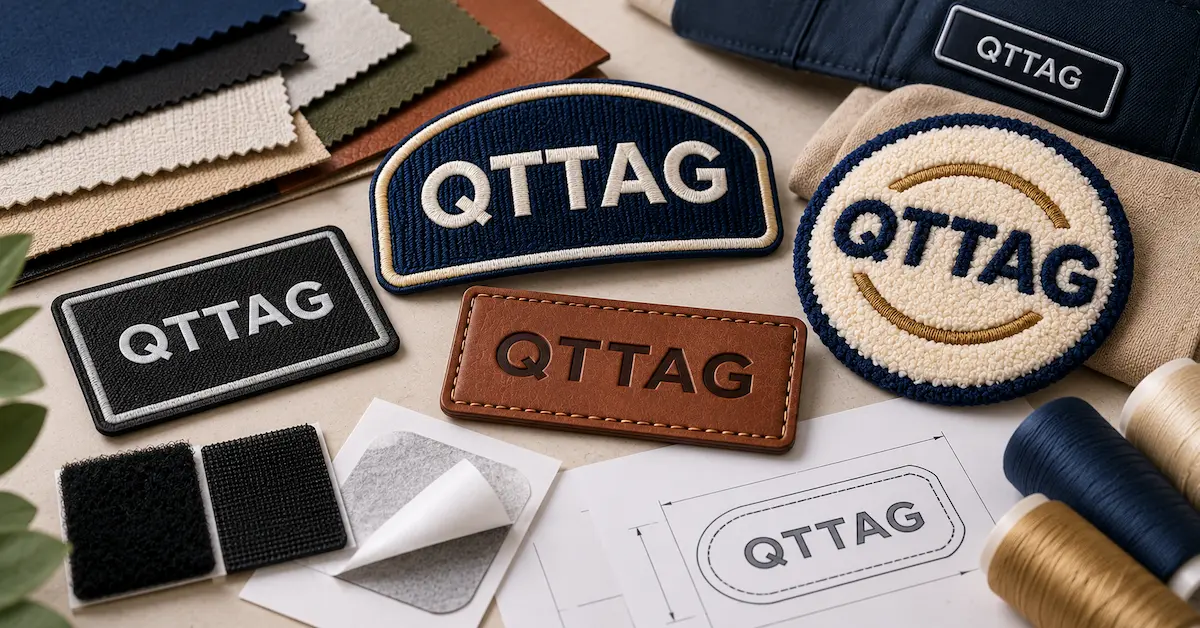
A clothing brand needs 500 logo patches for a jacket collection. It sends the same artwork to three suppliers and receives three different quotations.
One supplier recommends embroidery. Another suggests a woven patch because the logo contains small lettering. The third offers embroidered patches with an iron-on backing, but application work is not included.
All three offers may be reasonable. They are simply not pricing the same finished product.
Custom patches cost depends on the patch material, size, artwork detail, production method, border, backing, order quantity and finishing requirements. MOQ and lead time also depend on the number of designs, sample approval and the manufacturer's production arrangements.
The useful question isn't just how much one patch costs. It's what the buyer will receive, what still needs to be done before the patch can be attached to the garment, and when the completed order can arrive.
How Much Do Custom Patches Cost?
There isn't a single price that applies to every custom patch.
An embroidered logo on twill, a fine-detail woven patch and a large chenille letter use different materials and production processes.
Even within embroidery, the amount of stitching can change the manufacturing work.
For example, two patches can have identical dimensions but very different embroidery coverage. One might leave much of the base fabric visible, while the other covers nearly the entire surface with thread.
Their production requirements won't necessarily be the same.
A quotation should therefore identify the construction, not just the size.
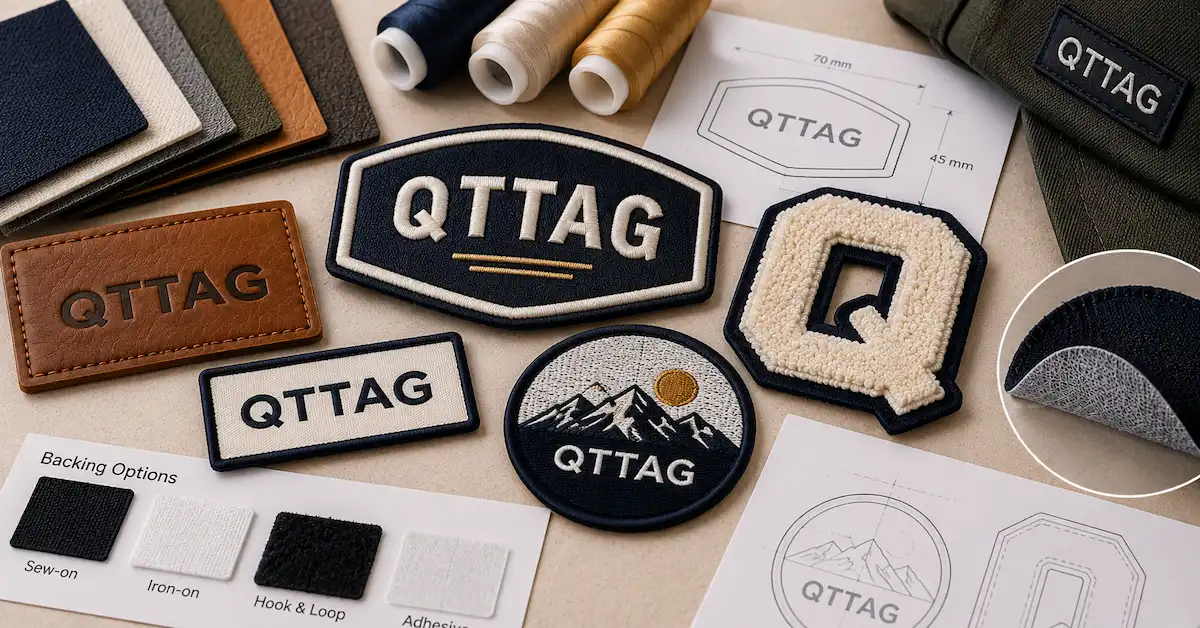
| Patch Type | Main Cost Considerations | What Buyers Should Check |
|---|---|---|
| Embroidered patches | Stitch count, coverage, colors, size and border | Digitizing and finished stitch detail |
| Woven patches | Yarn, weave structure, dimensions and finishing | Fine text and logo clarity |
| Chenille patches | Yarn construction, size, shapes and base material | Raised texture and thickness |
| Leather patches | Material type, thickness, cutting and marking | Genuine or synthetic material specification |
| Molded PVC patches | Mold preparation, shape, colors and construction | Tooling charges and dimensional details |
These products should be quoted from their actual specifications.
A lower unit price doesn't automatically indicate that a manufacturer is offering a lower-quality patch. It may indicate a simpler construction or a different set of included services.
Why Can Embroidered Patch Prices Vary So Much?
Embroidery pricing can be difficult to judge from artwork alone.
A logo with large filled areas may require substantially more stitching than an outline design of similar dimensions.
The design also needs to be converted into machine-readable embroidery instructions, commonly called digitizing.
That preparation establishes stitch paths, colors and other production details.
Stitch Coverage and Design Complexity
A patch featuring a simple wordmark may have different embroidery requirements from one containing a fully stitched background, lettering and several decorative elements.
The amount of thread and machine work matters.
However, stitch count isn't the only pricing factor. The supplier's equipment, production method and quotation policy also play a role.
For example, Numo Manufacturing publicly lists a digitizing setup fee per design and an additional charge when a specified stitch allowance is exceeded.
That is Numo's commercial arrangement—not a universal pricing formula.
Other manufacturers may include digitizing in the unit price.
What Buyers Should Ask
If you're comparing embroidered patch quotations, find out whether the price includes artwork digitizing and whether the quoted embroidery coverage is equivalent.
Also confirm how revisions are handled.
A design that needs substantial changes after the first physical sample may require additional preparation.
This is why sending a clear, approved logo before requesting a final price can be useful.
Are Woven Patches Cheaper Than Embroidered Patches?
Not necessarily.
Woven patches form their designs through interlaced yarns, while conventional embroidered patches use stitching on a base fabric.
The manufacturing processes differ, and so do their commercial cost structures.
A woven construction can be a useful option for relatively fine lettering or small graphic elements.
Embroidery may be preferred when the brand wants visible raised stitching.
Consider a jacket logo with a narrow border and small text underneath.
If embroidery cannot reproduce the small lettering at the intended size, enlarging the patch or simplifying the artwork may be necessary.
A woven sample could provide another solution.
The important point is that selecting woven construction may affect both the design and the quotation.
It isn't simply a cheaper replacement for embroidery.
What About Chenille and Leather Patches?
Chenille patches have a distinctive raised yarn texture, often used for bold lettering and varsity-style designs.
They can work well for large graphic elements, but they may not be appropriate for very fine text.
Leather patches offer another appearance. Their pricing depends partly on the selected material and the method used to mark or decorate it.
A genuine leather patch and a synthetic leather-like patch should not be treated as identical specifications.
For both constructions, examine a physical sample before committing to bulk production.
Size Matters, but So Does the Shape
A larger patch generally requires more material, although the relationship between size and price depends on construction.
A simple rectangular patch may involve different cutting and finishing from an irregular outline.
Border selection matters too.
Embroidered patches may use overlocked or merrowed-style borders, suitable stitched edges or precision-cut finishes, depending on the design.
A patch with many sharp corners may require a different finishing approach from a simple circle.
The supplier should review the actual outline before confirming the process.
Don't Forget the Finished Dimensions
When a buyer specifies a 60 mm patch, the manufacturer needs to understand what that measurement represents.
Is it the total finished width, including the border?
Or is it the area occupied by the logo?
The difference can affect both appearance and placement.
A patch that looks balanced in a digital preview may be too large for the intended jacket sleeve or cap.
Ask for a drawing showing the overall dimensions, edge construction and artwork position.
Then review the size on a representative garment.
Does Patch Backing Affect the Cost?
Yes, backing can change the material, manufacturing and garment application requirements.
But the best backing isn't automatically the most expensive one.
A sew-on patch may be suitable when the garment construction allows stitching.
An iron-on backing uses a compatible heat-activated adhesive system. Its suitability depends on the patch, garment fabric and application procedure.
Hook-and-loop systems may be considered when the patch needs to be removable.
| Backing Type | Common Application | Additional Consideration |
|---|---|---|
| Sew-on | Permanent stitching attachment | Sewing work and placement |
| Iron-on / heat-seal | Compatible heat-applied attachment | Fabric compatibility and pressing conditions |
| Hook-and-loop | Removable or interchangeable patches | Two-part fastening system |
| Specialty adhesive | Selected temporary or product-specific uses | Bonding and use requirements |
Not every backing is available or appropriate for every patch.
A thick chenille patch, a woven patch and a leather patch can have very different attachment requirements.
Application Cost Is a Separate Question
A buyer might receive a quotation for patches with iron-on backing but still need the garment factory to apply them.
That requires equipment, labor and inspection.
Likewise, sew-on patches need stitching work.
If one supplier quotes finished patches only while another includes attachment to garments, the offers aren't directly comparable.
The buyer should clarify whether the order covers patch production, backing application, garment attachment or a combination of these services.
How Does MOQ Work for Custom Patches?
MOQ stands for Minimum Order Quantity.
For custom patches, it may apply per artwork, size, material, colorway or production arrangement.
The definition differs by supplier.
For example, Numo Manufacturing publishes a 25-piece minimum for its custom embroidered patch program.
Owl Badges publishes a 10-piece minimum for its own embroidered patches and states that digitizing is included.
Both are examples of individual supplier policies. Neither represents a universal industry minimum or QTTAG's ordering terms.
One Logo, Several Versions
Suppose an apparel brand is preparing three jacket styles.
Each uses the same logo, but the patch colors differ.
| Patch Version | Required Quantity | Difference |
|---|---|---|
| Navy and cream | 200 | Yarn colors |
| Black and gold | 150 | Yarn colors |
| Cream and navy | 150 | Yarn colors |
| Total | 500 | Three versions |
A buyer may want to order 500 units together.
But does the supplier calculate MOQ based on the total, or does each colorway need to meet a separate minimum?
That question should be answered before pricing is finalized.
The same issue applies if the collection includes different patch dimensions or materials.
Is a Low MOQ Always Better?
A lower MOQ can make sense for a startup or limited collection.
It reduces the number of units the brand must purchase before testing demand.
But a smaller order may have a higher unit price because development and production preparation are spread across fewer patches.
Ordering a larger quantity solely to obtain a lower unit price can also create unused inventory.
If the logo or product specification changes, those extra patches may no longer be suitable.
Compare the quantity you'll actually use with the supplier's price tiers.
What About Sampling and Setup Fees?
A digital proof is usually helpful for reviewing artwork, dimensions, colors and the intended outline.
It cannot fully demonstrate the finished texture, thickness or appearance of a patch.
For a new construction, physical sampling provides a better basis for approval.
This is especially relevant when the design contains fine details or an unfamiliar material.
What Should Be Checked on the Sample?
Inspect the logo at its actual size.
Look at the border, colors, surface and backing.
Then place the patch on the intended garment.
Does it sit correctly? Is the thickness suitable? Does the shape complement the garment?
For heat-applied backing, the attachment method and fabric compatibility may need testing.
For sew-on patches, confirm how the edge and stitching will work with the garment construction.
Are Setup Fees Always Charged?
No.
Some suppliers charge separately for embroidery digitizing, mold creation, tooling or other preparation.
Others include certain setup services in their unit prices.
Before ordering, confirm whether the quoted amount includes artwork preparation, digital proofs, physical samples and revisions.
Also ask whether the original setup can be reused for a repeat order with identical specifications.
That information can matter when a clothing brand plans several future collections.
How Long Does Custom Patch Production Take?
A supplier's production lead time needs a clearly defined starting point.
Does it begin after receiving the artwork, after the digital proof is approved or after the physical sample has been accepted?
These are different milestones.
For example, Owl Badges publicly describes a production period of three to four weeks after proof approval for its embroidered patch program.
That illustrates how some suppliers define their schedule. It does not establish a standard lead time for all patch manufacturers.
What Can Extend the Schedule?
A new patch design may involve artwork review, digitizing or construction planning.
If the sample doesn't reproduce the small lettering accurately, the artwork or production method may need revision.
Special materials, backing requirements and edge finishing can introduce additional preparation or production steps.
The order may then need inspection, packing and shipment.
| Stage | What the Buyer Should Confirm |
|---|---|
| Artwork review | Design and final dimensions |
| Production preparation | Digitizing, tooling or material selection |
| Proof approval | Which version is authorized |
| Physical sampling | Whether a sample is needed |
| Sample revision | How changes affect scheduling |
| Bulk production | Manufacturing completion estimate |
| Finishing | Border and backing requirements |
| Quality inspection | Approved appearance and construction |
| Shipping | Dispatch and expected delivery |
A repeat order may involve fewer development steps if the specification remains unchanged.
Still, material availability and production scheduling should be reconfirmed.
Lead Time Isn't the Same as Arrival Date
If the garment factory needs patches before final sewing, the important date is when the patches arrive and are ready to use.
International shipping, packing arrangements and applicable import procedures may add time.
Ask the supplier to distinguish manufacturing completion from dispatch and expected delivery.
How to Compare the Total Cost of Custom Patches
A useful quotation should describe the complete finished patch.
For budgeting, the total can be considered as:
Total patch purchasing cost = patch production + applicable setup and sampling + backing and finishing + packing and freight.
Garment attachment costs should be included separately when evaluating the finished clothing product.
For example, an embroidered patch with sew-on backing may have a different attachment cost from a compatible heat-applied patch.
The total cost is not simply the supplier's patch price multiplied by quantity.
Questions to Ask Before Choosing a Supplier
Does the quotation include digitizing or tooling?
Is the border included?
Which backing is supplied?
Is the quoted price based on one artwork or several versions?
Are shipping and packing included?
What happens if the physical sample needs revision?
The answers can explain a large difference between quotations that initially appear similar.
For repeat orders, keep the approved artwork and physical sample reference.
That helps prevent unnecessary redevelopment when the garment design hasn't changed.
What Should You Include in a Custom Patch RFQ?
A clear purchasing brief makes quotations easier to compare.
| RFQ Item | Information to Provide |
|---|---|
| Logo artwork | Approved design file |
| Garment | Jacket, cap, sweatshirt, uniform or other |
| Patch construction | Woven, embroidered, chenille, leather or proposed option |
| Finished dimensions | Width and height, including border |
| Colors | Approved physical or artwork references |
| Design coverage | Relevant embroidery or artwork requirements |
| Border | Required finish and shape |
| Backing | Sew-on, iron-on, hook-and-loop or other |
| Quantity | Total and amount per design version |
| Sampling | Digital proof and physical sample requirements |
| Performance | Relevant attachment, handling or care conditions |
| Packing | Separate versions or special packaging |
| Delivery | Destination and required date |
If the buyer hasn't chosen the patch material, provide the logo and garment information first.
A manufacturer can then discuss feasible constructions and sample requirements.
That usually produces a more useful quotation than requesting the cheapest possible patch without defining the finished product.
Frequently Asked Questions About Custom Patches Cost
How much do custom patches cost?
Custom patches pricing depends on material, construction, dimensions, artwork, backing, finishing and order quantity. A complete specification is needed for an accurate quotation.
Are woven patches cheaper than embroidered patches?
Not necessarily. Their manufacturing processes differ, and pricing varies by design, size, quantity and supplier. Compare physical samples and equivalent finished specifications.
What affects embroidered patch pricing most?
Size, stitch coverage, design complexity, colors, backing and finishing can influence the quotation. Supplier setup and digitizing policies also matter.
What is the MOQ for custom patches?
MOQ varies by supplier and product. Some businesses offer small-batch orders, while others use different minimums for particular materials or designs.
Can several patch colors share one MOQ?
Possibly, depending on the manufacturer. Ask whether each colorway or artwork version is counted separately.
Does iron-on backing cost more than sew-on?
That depends on the supplier and chosen construction. Some include a particular backing as standard, while others charge separately.
How long does custom patch production take?
Timing depends on artwork approval, production preparation, sampling, manufacturing, finishing, inspection and shipping. Confirm when the supplier's quoted lead time begins.
Are chenille patches suitable for detailed logos?
Chenille is often suited to bold shapes and raised lettering. Fine graphic detail may require another construction or an approved design adjustment.
How can I reduce custom patch costs?
Review the material and construction, avoid unnecessary artwork variations, confirm backing requirements and order realistic quantities. Compare total costs rather than unit prices alone.
Request a Custom Patch Quote From QTTAG
When planning custom patches for a clothing collection, begin with the approved logo and intended garment application.
QTTAG supports custom apparel branding inquiries, including labels and related branding accessories. Availability of woven, embroidered, chenille, leather or specialty patch constructions should be confirmed for the specific project.
Ready to Plan Custom Patches for Your Clothing Brand?
Share your logo artwork, garment specifications, preferred patch materials, dimensions, backing requirements, estimated order quantity and delivery needs with QTTAG.
Our team can review your requirements and discuss available customization, sampling and quotation options.
Request a Quote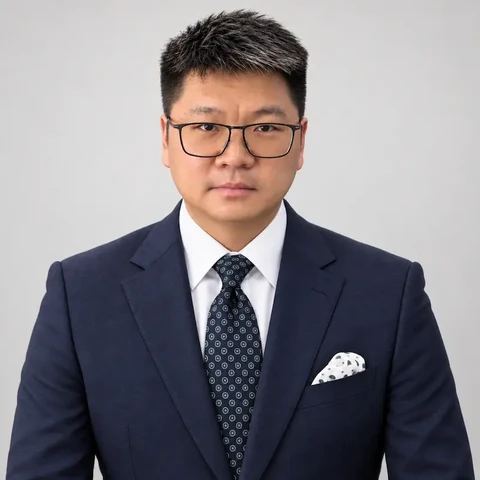
Author
Founder at QTTAG
Jason Qiao is the founder of QTTAG, focusing on garment branding and packaging solutions. With years of experience in the apparel industry, he shares practical insights on custom labels, hang tags and sustainable packaging to help global brands grow.
Written By
Jason Qiao