Custom Patches vs Woven Patches: Key Differences for Apparel Brands
A fashion brand wants a small logo patch for its new jacket collection. The artwork contains a thin border, a few letters and a detailed symbol.
One supplier suggests an embroidered patch. Another recommends woven construction. Both can make the logo, but the finished patches won't necessarily look the same.
This is where the terminology sometimes causes confusion.
Custom patches are patches manufactured to a buyer's requirements. Woven patches are one type of custom patch, made by interlacing yarns rather than stitching a design onto a separate base fabric.
So the real comparison isn't custom versus woven. It's woven construction versus the other materials and methods available for customized patches.
For apparel brands, that decision affects logo clarity, surface texture, thickness, attachment and cost.
Custom Patches and Woven Patches Aren't Opposites
The word custom describes how a product is ordered. The word woven describes how it is made.
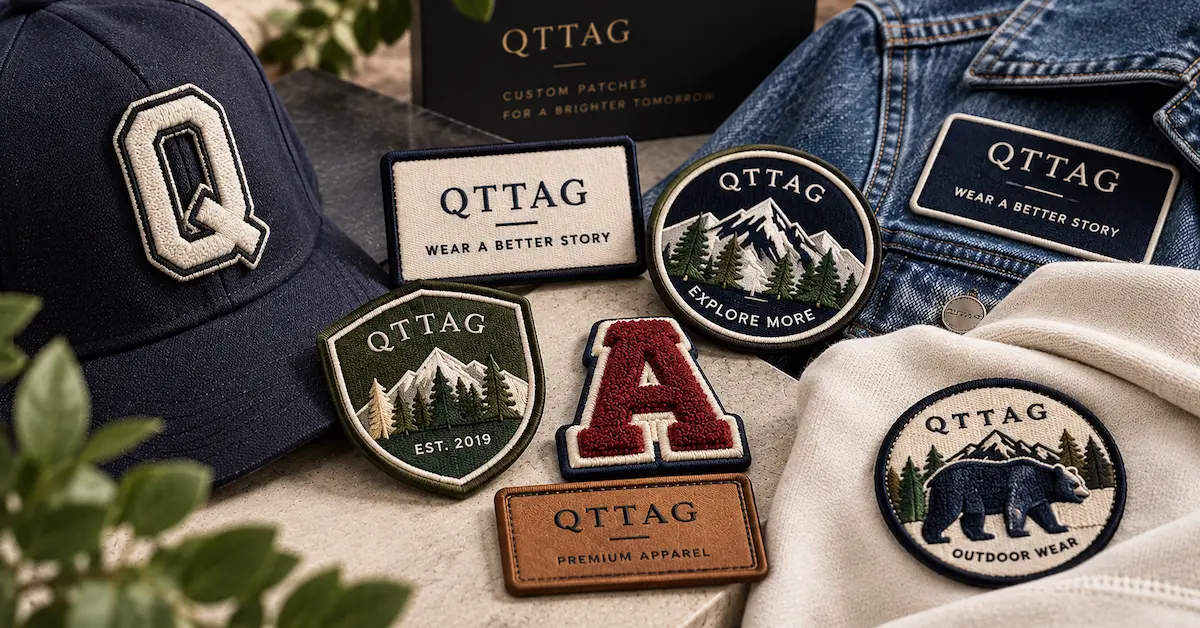
A custom patch might be woven, embroidered, made with chenille yarn or produced from leather or another suitable material. The buyer supplies the artwork and agrees on the required construction.
Woven patches belong to this broader category.
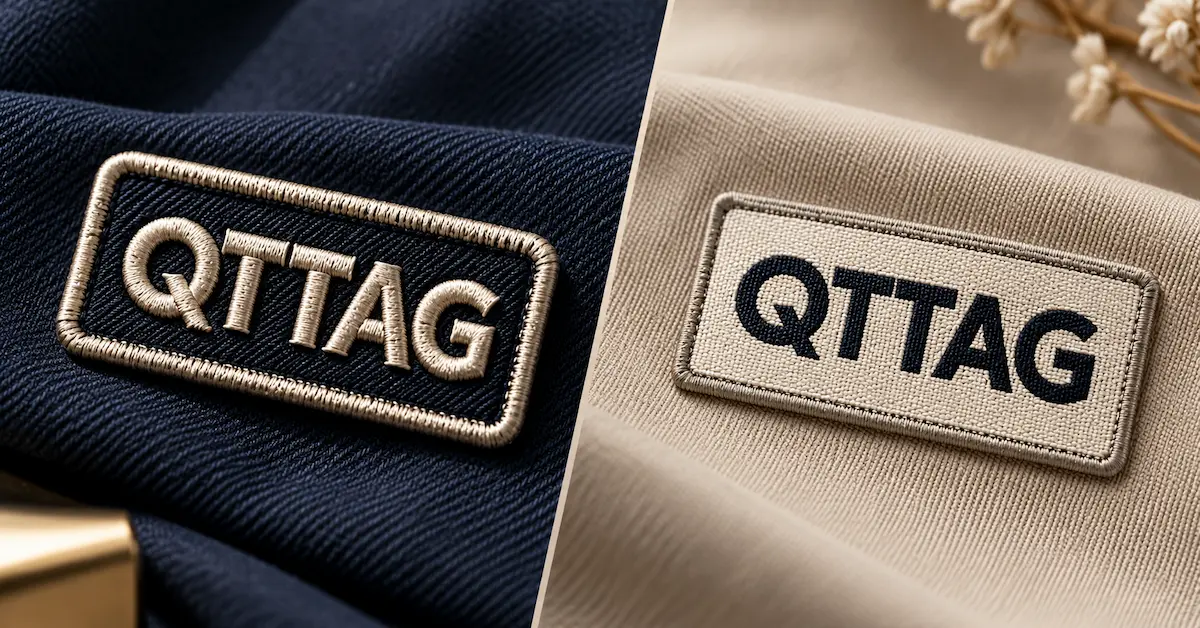
Their design is formed directly through interlaced yarns. This typically produces a flatter surface than conventional embroidery, where the design is stitched onto a base fabric.
That difference is useful when a logo contains small lettering or relatively fine lines.
Embroidery has its own strengths. The visible stitching creates texture that some brands deliberately want.
Neither method is universally better.
A flat woven patch can look understated on one garment, while a textured embroidered emblem may complement another collection.
The right choice depends on what the brand wants customers to see and feel.
How Do Different Patch Materials Compare?
When a buyer asks about custom patches, the supplier should clarify which material and construction are being considered.
A single artwork file can produce quite different results.
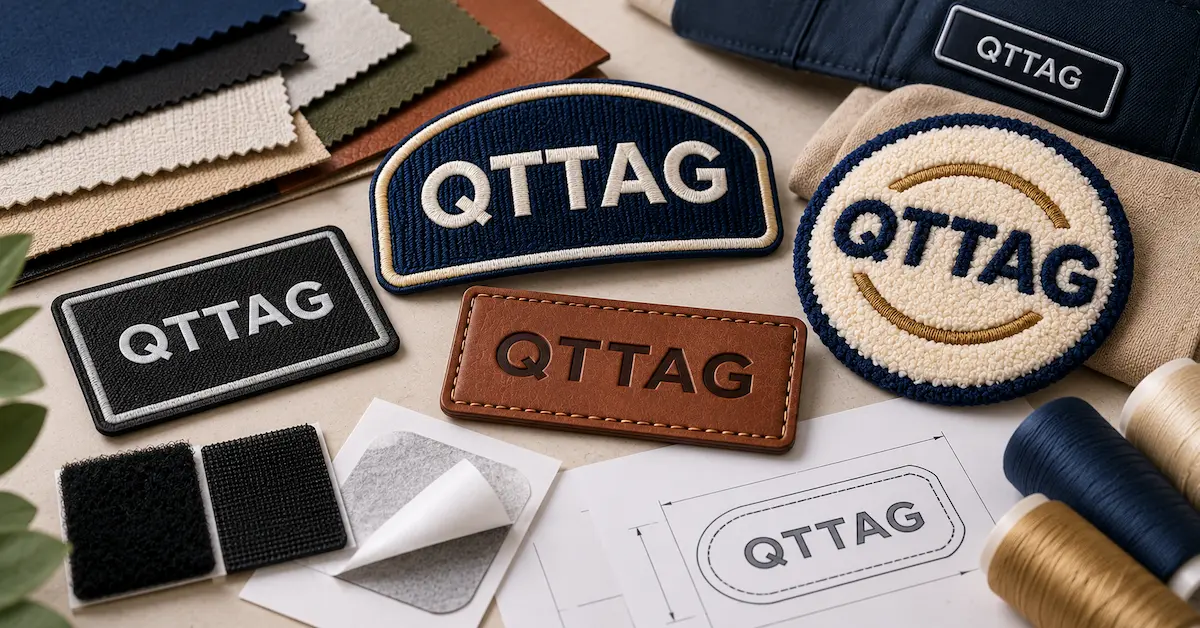
| Patch Type | Finished Appearance | Design Consideration | Potential Apparel Use |
|---|---|---|---|
| Woven | Relatively flat woven texture | Fine lettering and graphic detail | Jackets, uniforms, caps |
| Embroidered | Visible raised stitching | Bold logos and textured artwork | Workwear, outerwear, casualwear |
| Chenille | Soft, raised yarn texture | Large lettering and simple shapes | Varsity jackets, sweatshirts |
| Leather | Distinct leather or leather-like surface | Material, marking and flexibility | Denim, hats, accessories |
| PVC or molded patches | Molded surface and dimensional effects | Shape, thickness and flexibility | Selected outdoor and casual products |
These are general material characteristics. The actual finish and available options depend on the supplier's production methods.
Woven Patches for Detailed Logos
Imagine a brand logo with small text beneath a symbol.
A woven construction may reproduce the design more clearly than a conventional embroidered patch of the same size.
That doesn't mean every woven patch can handle unlimited detail. Yarn selection, weave density, spacing and the finished dimensions still matter.
The useful test is a physical sample made from the actual artwork.
Embroidered Patches for Texture
An embroidered patch uses stitching to form the visible design.
This creates a surface that looks and feels different from woven yarn construction.
For a workwear emblem or a bold logo on a jacket, that texture may be desirable.
If the artwork contains very small text, ask the supplier whether embroidery can reproduce it cleanly at the required size.
Chenille and Leather Patches
Chenille patches create a soft, raised appearance often associated with varsity-style designs.
They generally suit bold lettering and shapes better than fine graphic details.
Leather patches offer another visual direction, particularly for selected denim, outerwear and accessories.
The material may be genuine leather or a synthetic alternative. Buyers should ask for the actual composition rather than relying on a generic material description.
When Is a Woven Patch the Better Choice?
The first thing to examine is the logo.
Not the supplier catalog. Not the price list.
Look at the smallest details that must remain recognizable.
A woven patch may be worth considering when the design includes fine typography, compact symbols or closely arranged graphic elements.
For example, a minimalist clothing brand may want a small patch on a jacket sleeve. The artwork contains a wordmark and a fine outline.
Increasing the patch size might help embroidery reproduce the design. But the larger result may not suit the garment.
A woven sample could offer another option without changing the overall design direction.
There are limits, though.
Woven construction doesn't reproduce digital artwork exactly like a high-resolution printer. The design still has to be interpreted through yarns.
Before approval, examine the finished patch at its actual size. Small lettering that looks clear in an enlarged image may be less readable on the physical product.
Also check the outer edge and intended sewing position.
A patch that reproduces the logo beautifully but doesn't fit the garment's intended placement isn't ready for production.
What About Thickness, Edges and Garment Comfort?
Patch thickness is easy to overlook when comparing two samples lying on a table.
Once the patch is attached to clothing, it becomes more important.
A raised embroidered or chenille design may be part of the intended visual effect. On a lightweight fabric, however, a bulky construction can alter the garment's appearance or movement.
Woven patches are often relatively flat, but their finished thickness still depends on the construction, backing and edge treatment.
Edge Finishing
The edge determines how the finished patch looks and how it can be attached.
Depending on the material and manufacturing method, options may include a cut edge or a suitable stitched border.
The supplier should confirm which finishes are practical for the proposed shape.
Complex outlines deserve particular attention.
A patch shaped around a detailed logo may need a different finishing approach from a simple rectangular emblem.
Garment Placement
The same patch may behave differently on a flat jacket panel, a curved cap or a stretch garment.
Before choosing a construction, decide where it will be attached.
A representative garment sample is more useful than a loose patch when evaluating thickness, appearance and attachment.
Sew-On or Iron-On: Which Backing Should You Choose?
Backing is one of the most important details in a custom patch order.
A patch can have excellent artwork and still be unsuitable if the attachment method doesn't match the garment.
Sew-on patches are attached with stitching. They may be appropriate when the garment construction allows a mechanical attachment.
Iron-on patches use a suitable heat-activated bonding system. Their performance depends on the backing, fabric and application conditions.
Some applications may use hook-and-loop systems when patches need to be removable or interchangeable.
| Backing | Application | What Needs Approval |
|---|---|---|
| Sew-on | Stitching to compatible fabric | Stitch location, edge and garment construction |
| Iron-on | Heat and pressure | Adhesive, fabric compatibility and application |
| Hook-and-loop | Removable fastening | Attachment system and intended use |
A buyer should not assume that iron-on backing is available or appropriate for every patch material.
The same caution applies to durability.
A patch that remains attached during initial handling may behave differently after washing or repeated garment movement.
Ask what tests are appropriate for the finished product, and confirm the application process before bulk production.
Why Do Patch Quotations Differ So Much?
Suppose two manufacturers receive the same logo and quote different prices.
The difference may have little to do with one supplier offering better quality.
They may be pricing different products.
One quotation could describe a woven patch with a straight cut edge and no backing. Another may include embroidery, a stitched border and an adhesive backing.
The material, dimensions, artwork preparation, finishing and order quantity all affect production requirements.
Special constructions may also involve additional development or tooling.
When comparing quotations, use an agreed specification.
Ask each supplier to confirm the finished dimensions, material, colors, backing, edge finish and quantity.
Also check the sample requirements.
A digital proof helps review the intended design, but it won't demonstrate every material characteristic.
The price of a patch isn't the whole cost either. If the garment manufacturer must sew or heat-apply it, that work belongs in the purchasing calculation.
Minimum order quantities should be confirmed for the actual construction. An MOQ quoted for embroidered patches may not apply to leather or molded products.
What Should Buyers Check Before Bulk Production?
It helps to approve the patch in two stages.
First, review the loose patch.
Check its dimensions, artwork clarity, colors, material, edges and backing.
Then evaluate it on the garment.
Does the patch sit where it should? Does it affect the fabric's appearance? Is the proposed attachment suitable?
If the garment will be washed or stretched during use, agree on relevant performance checks.
A sample that looks good on a desk doesn't answer every question about its finished application.
A Practical Patch RFQ
| Requirement | Information to Provide |
|---|---|
| Artwork | Approved logo or graphic |
| Garment | Jacket, sweatshirt, cap, uniform or other |
| Fabric | Material and relevant finish |
| Patch type | Woven, embroidered or preferred construction |
| Size | Finished width and height |
| Colors | Approved artwork references |
| Edge | Required shape and finish |
| Backing | Sew-on, iron-on or another suitable option |
| Quantity | Estimated order volume |
| Testing | Relevant attachment and care requirements |
| Delivery | Destination and requested schedule |
When the preferred construction is uncertain, send the artwork and garment details before selecting the material.
The manufacturer can then discuss feasible options.
For a collection with several designs, keep a clear reference for each approved patch version.
Frequently Asked Questions
Are custom patches and woven patches the same?
Custom patches are a broad category of patches made to a buyer's specifications. Woven patches are one type, manufactured using interlaced yarns.
Are woven patches better than embroidered patches?
Neither is universally better. Woven patches may suit fine details and relatively flat designs, while embroidered patches provide a more pronounced stitched texture.
Can woven patches reproduce small lettering?
They can reproduce certain fine details, but the result depends on yarn, weave construction, artwork and dimensions. Check a physical sample.
Are woven patches suitable for clothing brands?
Yes. They may be considered for jackets, uniforms, caps and other apparel products when their construction and attachment suit the garment.
Can custom woven patches have iron-on backing?
Some constructions support compatible heat-activated backing. Availability and application performance should be confirmed with the supplier.
Which patch type is suitable for premium fashion?
The decision depends on the intended visual identity. Woven, embroidered, chenille and leather patches create different appearances and should be evaluated against the actual garment.
What is the MOQ for custom patches?
MOQ varies with the supplier, material, construction and artwork. Request a quotation based on the finished specification.
What files should I send when ordering custom patches?
Provide the approved logo, required dimensions, garment type, intended placement, preferred materials, backing and estimated quantity.
Discuss Custom Patch Options With QTTAG
For a new apparel collection, begin with the logo and the garment.
A patch sample should demonstrate the intended design, but the finished application matters just as much.
QTTAG supports custom apparel branding inquiries, including garment labels and related branding accessories. The availability of particular woven, embroidered, chenille, leather or specialty patch constructions should be confirmed for each project.
Ready to Create Custom Patches for Your Clothing Brand?
Share your logo artwork, garment specifications, preferred patch materials, dimensions, backing requirements and estimated order quantity with QTTAG.
Our team can discuss available customization and sampling options for your apparel collection.
Request a Quote
Author
Founder at QTTAG
Jason Qiao is the founder of QTTAG, focusing on garment branding and packaging solutions. With years of experience in the apparel industry, he shares practical insights on custom labels, hang tags and sustainable packaging to help global brands grow.
Written By
Jason Qiao