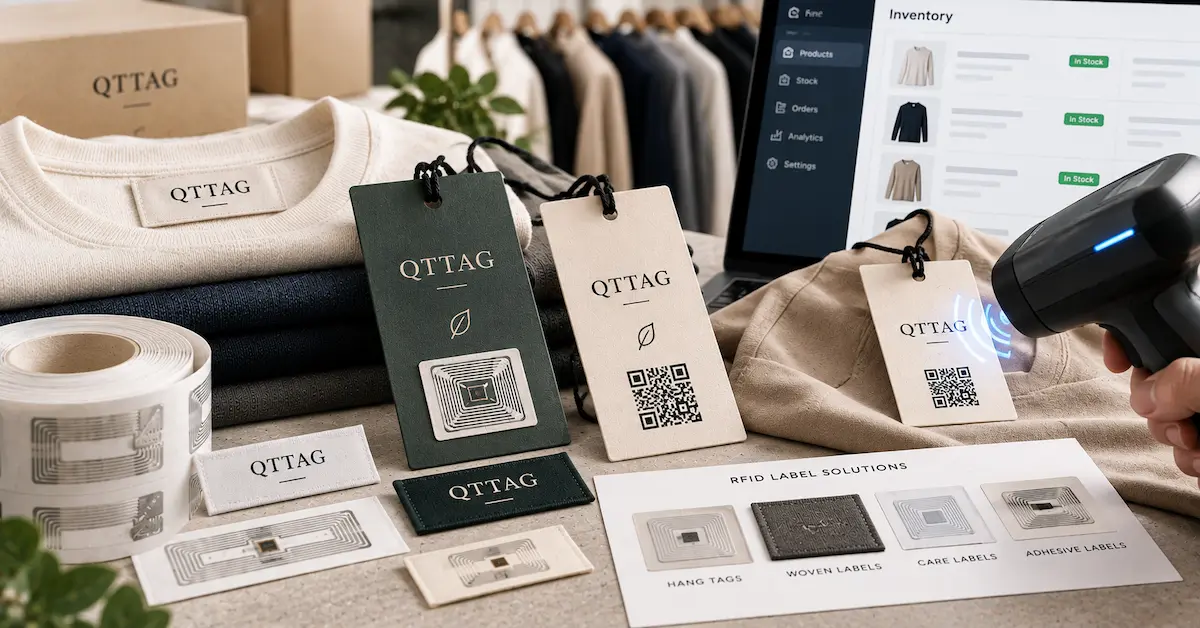
Digital Product Passports: What Apparel Brands Need to Know
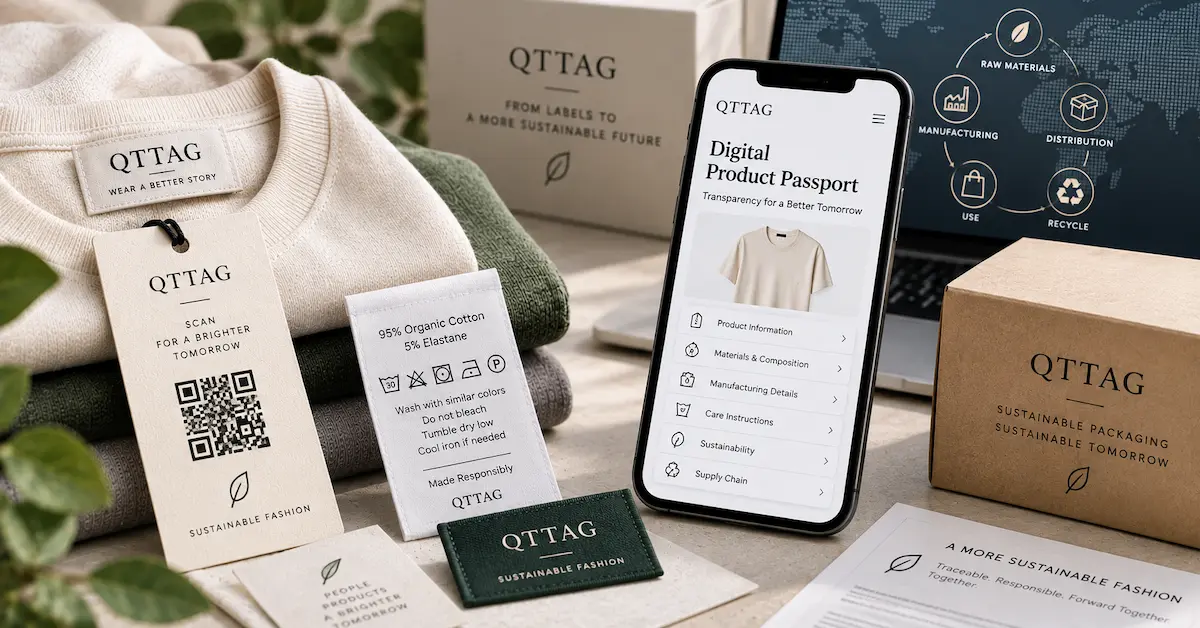
Digital Product Passports are becoming an important topic for fashion brands, clothing manufacturers and businesses selling products in the European Union. As the industry prepares for new product-information requirements, companies are examining how garment materials, manufacturing records, product identifiers and digital labels can work together.
However, a Digital Product Passport is not simply a QR code printed on a clothing label. It is a structured system for making defined product information accessible to relevant parties under the applicable legal framework.
Digital Product Passports (DPPs) are digital records associated with products that can make specified information about their identity, materials, sustainability characteristics and other regulated attributes available through an appropriate data-access system.
For apparel brands, preparation involves organizing reliable product data, understanding EU regulatory developments, choosing suitable identification methods and coordinating information between suppliers.
The EU's Ecodesign for Sustainable Products Regulation establishes the framework for introducing Digital Product Passports across applicable product groups. Textile-specific requirements are being developed, and businesses should not assume that all clothing products already have the same mandatory passport obligations.
This guide explains how DPPs work, what apparel brands should prepare, how QR codes and RFID relate to digital product identification, and which questions buyers should ask before investing in new labeling systems.
What Are Digital Product Passports?
Digital Product Passports are digital product-information systems introduced through applicable regulatory frameworks.
Under the EU Ecodesign for Sustainable Products Regulation (ESPR), product passports are intended to improve access to relevant information about products and support greater transparency across value chains.
Instead of relying entirely on printed product information, a DPP framework can allow specified information to be connected to an identified product.
Depending on the applicable product-specific requirements, that information may concern:
-
Product identification
-
Manufacturer or economic operator information
-
Material characteristics
-
Specified environmental information
-
Relevant product documentation
-
Traceability information
-
Repair or other circularity-related information
-
Product-specific compliance information
The final required data depends on the legislation applicable to the relevant product group.
A Digital Passport Is More Than a Webpage
A brand can create a webpage containing garment information and print a QR code linking to it.
That may provide a useful customer-information service.
However, a webpage or QR code does not automatically satisfy the regulatory requirements for a formal Digital Product Passport.
A regulated DPP may involve prescribed identifiers, registration, technical standards, access rights, data responsibilities and product-specific mandatory information.
These requirements should not be assumed before the relevant rules have been finalized.
Why Are Digital Product Passports Relevant to Fashion Brands?
Apparel production often involves multiple organizations.
Fibers may be sourced from one supplier, yarns processed elsewhere, fabrics manufactured by another company and finished garments assembled in a separate location.
A clothing brand then needs to organize information about the completed product.
Digital Product Passports may encourage businesses to establish clearer connections between product identity, sourcing documentation and applicable sustainability information.
Better Product Data Organization
A consistent product identifier can help connect a garment to its approved technical information.
Greater Supply-Chain Transparency
Where reliable records exist, brands may be able to associate information with relevant suppliers or production stages.
Improved Access to Information
Digital access can make specified product information available without requiring every detail to be printed on a small garment label.
Preparation for Regulatory Change
Organizing product information before new rules take effect may reduce future implementation difficulties.
Supporting Circularity-Related Information
Depending on applicable requirements, future systems may make relevant information more accessible to parties involved in product use, maintenance or end-of-life handling.
These are potential benefits of the framework, not guaranteed outcomes from attaching a QR code.
What Is the EU Regulatory Framework for Digital Product Passports?
The EU adopted Regulation (EU) 2024/1781, commonly known as the Ecodesign for Sustainable Products Regulation.
The ESPR establishes a framework for setting ecodesign requirements for covered products.
Digital Product Passports form part of that framework.
However, the regulation does not impose one identical DPP requirement on every product immediately.
Product-specific requirements are introduced through relevant delegated acts or other applicable legislation.
What the ESPR Establishes
The framework addresses matters such as:
-
Digital product information
-
Product identification
-
Data accessibility
-
Relevant technical requirements
-
Information responsibilities
-
Registration and associated systems
-
Product-specific implementation rules
Why Product-Specific Rules Matter
The information required for a garment may differ from the information required for a battery or an industrial material.
Brands should therefore avoid copying DPP specifications from unrelated industries.
When Will Apparel DPP Requirements Apply?
The European Commission's indicative planning points toward textile-specific regulatory measures in 2027.
This is not the same as declaring that every garment must carry a passport from a fixed date in 2027.
The final legal obligations and compliance timeline depend on the adopted measures and applicable transition provisions.
Apparel brands should follow official EU publications rather than rely on promotional claims that all clothing products are already required to have DPPs.
What Information Could an Apparel Digital Product Passport Contain?
A clothing Digital Product Passport may involve different types of information, depending on the final requirements.
For sourcing and systems planning, it is useful to organize candidate data into defined categories.
| Information Category | Example Data | Verification Responsibility |
|---|---|---|
| Product identity | Product ID, model and variant | Brand or relevant operator |
| Product description | Garment type and style | Brand |
| Material information | Verified fiber composition | Brand and material suppliers |
| Manufacturing information | Relevant production records | Responsible supply-chain parties |
| Environmental information | Supported product-specific attributes | Relevant data owners |
| Care information | Approved garment care guidance | Brand or technical team |
| Regulatory information | Required declarations or documents | Responsible economic operator |
| Traceability | Relevant documented supply-chain links | Authorized participating organizations |
This table is a preparation checklist, not a list of finalized mandatory apparel DPP fields.
Material Information
Fiber composition and material references should come from reliable product specifications.
Product Identity
A unique or otherwise suitable identifier can connect information to the relevant garment, model or product variation.
Manufacturing Information
Brands may need to coordinate records from different production partners.
The exact information that must be disclosed will depend on applicable rules.
Environmental Claims
Recycled content, material origin or other environmental attributes should not be added without appropriate evidence.
Product Data Accuracy
A digital record can contain incorrect information just as easily as a printed label.
Digital access does not replace the need for verification.
How Do Digital Product Passports Work?
The operating model generally involves connecting an identified product with a structured information record.
Under the EU framework, the precise technical implementation depends on relevant standards and legal requirements.
A simplified preparation model includes five stages.
Step 1: Establish Product Identity
Identify the garment or product unit at the level required by the intended system.
A fashion collection may contain multiple styles, sizes and colors.
The identity model must distinguish the relevant variations.
Step 2: Gather Product Data
Collect approved product information from the responsible sources.
This may include material specifications, product details and relevant supporting documents.
Step 3: Validate the Data
Check that information is accurate, current and associated with the correct product.
Step 4: Make Data Accessible
Use the appropriate digital infrastructure and, where required, a compliant data carrier or other specified access method.
Step 5: Maintain the Information
Establish responsibilities for necessary updates, corrections and data availability.
An operational DPP is therefore a combination of product records, identifiers, digital infrastructure and governance—not merely a label design.
QR Code Clothing Labels and Digital Product Passports
QR codes are widely used to connect physical products with digital information.
For apparel brands, a QR code may provide a convenient way to open a product webpage, care guide or other approved resource.
How QR Code Labels Work
A printed code can direct a compatible device to a digital destination.
That destination may contain relevant information about the garment.
Potential Apparel Applications
QR code clothing labels may be considered for:
-
Product information pages
-
Digital garment care guidance
-
Brand authenticity services
-
Product registration
-
Relevant sourcing information
-
Other approved customer resources
These are possible commercial applications, not automatically mandated DPP functions.
Printing Quality
QR codes should be produced at a size and contrast that supports reliable scanning.
The suitable dimensions depend on the code, printing method and intended use.
Label Durability
A printed code may become difficult to read if the label fades, wrinkles or deteriorates.
Physical testing should reflect the intended garment application.
Important Regulatory Distinction
A QR code is a possible data-access technology.
It does not, by itself, prove that a product complies with an EU Digital Product Passport requirement.
The legally acceptable carrier and its technical conditions will depend on the applicable product-specific measures.
RFID Labels vs. QR Code Labels for Apparel
RFID and QR codes can both support product identification, but they operate differently.
A QR code is an optically readable symbol.
RFID uses radio-frequency communication through compatible tags and readers.
| Feature | QR Code Labels | RFID Labels |
|---|---|---|
| Reading method | Optical scanning | Radio-frequency reading |
| Typical equipment | Camera or scanner | Compatible RFID reader |
| Line of sight | Generally required | Not necessarily required |
| Technology | Printed symbol | Electronic tag construction |
| Main infrastructure | Digital destination and scanning | Tags, readers and data system |
| Common application | Information access | Identification and inventory workflows |
| Garment considerations | Print readability and durability | Tag construction and read performance |
| DPP suitability | Subject to applicable requirements | Subject to applicable requirements |
When QR Codes May Be Useful
QR codes may suit applications focused on customer access to online product information.
When RFID May Be Useful
RFID labels may suit businesses requiring compatible electronic identification across inventory and operational systems.
Can Both Be Used?
A garment could potentially use both technologies for different business purposes.
Whether this is useful depends on the application and integration requirements.
Is RFID Mandatory for Apparel DPPs?
Do not assume so.
The final data-carrier requirements for relevant apparel products must be established from the applicable legislation and technical specifications.
What Types of Labels Could Support Digital Product Identification?
Apparel brands may need to consider different physical locations for product identifiers.
The correct construction depends on scanning requirements, product handling and applicable rules.
Printed Care Labels
A printed care label may carry text or suitable machine-readable information where technically appropriate.
The finished layout must preserve the readability of other required information.
Woven Brand Labels
Woven labels can provide brand identification and may be coordinated with other digital-access components.
However, a conventional woven logo should not be confused with an electronic identifier.
Heat Transfer Labels
Selected heat transfer constructions may reproduce compatible graphic information.
Fabric compatibility and print durability require validation.
Hang Tags
Hang tags can provide additional space for printed product identifiers.
However, they are typically removable and may be unsuitable when a permanent or otherwise specified data carrier is required.
Packaging Labels
Packaging can also carry product information or identifiers in appropriate applications.
The acceptability of packaging-based data carriers depends on the relevant rules.
RFID-Enabled Components
Electronic identification requires a suitable tag, antenna or chip construction and compatible systems.
Its availability and performance must be confirmed for the intended garment.
Why Product Identifiers Matter
A Digital Product Passport system needs a reliable way to associate the correct information with the correct product.
A garment may differ from another garment in size, color, style or production version.
Without consistent identification, product records can become mixed.
Product Models
A model identifier can distinguish different garment designs.
Variants
Size and color variants may need separate identification depending on the system.
Production Batches
Batch information may support certain traceability or quality-management workflows.
Unique Product Identification
Some applications may require identification at a more granular level.
The appropriate level depends on the business requirements and applicable legal rules.
Data Governance
An identifier is only useful when the associated information is accurate.
Brands should establish who creates, validates and updates product records.
How Can Apparel Brands Prepare Their Product Data?
Good data preparation can begin before final sector-specific DPP requirements are established.
A practical approach is to organize existing information without assuming that every possible field will become mandatory.
Create a Product Master Record
Maintain a structured record for each relevant product or style.
Verify Material Specifications
Confirm actual fiber composition using appropriate supplier information.
Link Documents to the Correct Product
Relevant testing, material or technical records should be associated with the correct product.
Manage Versions
Changes in fabric, design or manufacturing should be documented when they affect the product record.
Assign Data Responsibilities
Identify which team or supplier is responsible for each information category.
Review Data Quality
Missing or inconsistent fields should be identified before expanding the system.
Avoid Unsupported Claims
A digital platform should not be used to publish unverified sustainability or origin statements.
What Should Clothing Brands Ask Their Suppliers?
Suppliers may hold important product or material information needed by the brand.
A clear request can help determine what is available and what still requires development.
| Supplier Question | Purpose |
|---|---|
| What material specifications can you provide? | Establish source information |
| How is the product or material identified? | Link records correctly |
| Are relevant supporting documents available? | Check claims |
| Can product versions be distinguished? | Manage changes |
| How are records maintained? | Evaluate traceability |
| Which data formats are available? | Support integration |
| Can information be updated when specifications change? | Maintain accuracy |
| Who approves final product claims? | Clarify responsibility |
| Are QR or RFID applications supported? | Assess physical identification |
| What tests apply to the label? | Verify garment compatibility |
The supplier's role should be clearly defined.
A label manufacturer may reproduce approved identifiers without being responsible for validating the entire supply-chain history.
How to Design QR Code Labels for Clothing
A useful QR label design needs both readable product information and reliable scanning.
Establish the Intended Destination
Confirm where the code will lead.
Use an appropriate, maintained digital resource.
Choose the Physical Location
Consider whether the code belongs on a care label, hang tag or another suitable component.
Preserve Readability
The code should remain optically readable after printing and relevant handling.
Avoid Excessively Small Artwork
The correct minimum size depends on code complexity and printing characteristics.
Sample testing is necessary.
Check Background Contrast
Low contrast may reduce scanning reliability.
Evaluate Garment Conditions
Fabric texture, folding and label movement can affect scanning.
Test Finished Samples
Use representative devices and intended conditions to check the result.
These checks support QR-code functionality but do not independently establish DPP compliance.
How to Evaluate RFID Labels for Fashion Brands
RFID systems require more than a printed symbol.
A complete application involves the physical tag, suitable readers and the related data infrastructure.
Tag Construction
The electronic component should be appropriate for its intended application.
Placement
Garment construction and nearby materials can influence practical use.
Read Performance
Testing should reflect the actual reader environment and application.
Data Association
The electronic identifier must correspond to the correct product.
Durability
Where the tag remains attached during garment use, relevant care and handling performance must be considered.
Privacy and Security
RFID applications may involve privacy, security and access-control considerations.
These should be addressed according to the use case and applicable requirements.
Cost and Integration
Tags, readers, software and implementation work may all contribute to total project cost.
The most appropriate identification technology depends on the complete business requirement.
How Do DPPs Relate to Sustainable Fashion?
The Digital Product Passport framework is connected to efforts to improve access to relevant product information.
However, a digital record does not automatically make a garment environmentally sustainable.
Traceable Material Information
Where reliable evidence exists, a product record can refer to relevant material attributes.
More Consistent Claims
Structured data can help organizations manage approved statements across systems.
Repair and Product Use Information
Where relevant, digital resources may provide useful maintenance or product-related information.
Circularity-Related Data
Applicable future requirements may specify information relevant to product circularity.
Limits of Digitalization
A digital product passport is an information mechanism.
Environmental performance depends on the actual product and processes, not the presence of a code.
A garment with a QR code should not be marketed as sustainable solely because it has digital information attached.
Digital Product Passports and Existing Care Label Requirements
Apparel brands must distinguish DPP preparation from current textile labeling obligations.
Conventional garment labeling rules may require information such as:
-
Fiber composition
-
Country of origin
-
Care instructions
-
Responsible business information
-
Applicable language or placement requirements
These obligations differ by jurisdiction.
A future digital information system does not automatically replace existing physical labeling requirements.
Keep Required Information Available
Brands should continue following applicable current rules.
Align Physical and Digital Records
Where the same information appears in multiple places, it should remain consistent.
Manage Artwork Versions
A label associated with the wrong product record can create problems.
Verify New Requirements Separately
Any future changes permitting or requiring different information methods must be evaluated under the relevant legal provisions.
Digital product information and conventional labels should be designed as coordinated systems.
How Could DPPs Affect Private Label Clothing Manufacturers?
Private-label businesses often work with multiple brands, suppliers and garment variations.
This can make product data coordination challenging.
Buyer-Provided Requirements
The private-label customer may define which product data and documentation are needed.
Material Supplier Information
The garment manufacturer may rely on information received from fabric or component suppliers.
Artwork Control
Brand labels, care labels and digital identifiers should use approved data.
Product Variation Management
Different sizes, colors and material compositions may require distinct records.
Responsibility Agreements
The contract should clarify which organization validates information and which one manufactures or applies physical identifiers.
Future-Proofing
Maintaining structured product information can be useful even before a specific DPP obligation takes effect.
Common Mistakes When Preparing for Digital Product Passports
Assuming Every Clothing Product Already Needs a DPP
The EU framework is being implemented progressively.
Product-specific obligations must be verified.
Treating a QR Code as Full Compliance
A printed code alone is not a complete regulated passport.
Copying Requirements From Other Industries
Different product groups may have different technical and legal requirements.
Publishing Unverified Material Claims
Digital access does not make inaccurate information acceptable.
Ignoring Product Variations
A single generic record may not accurately describe every garment variant.
Forgetting Label Durability
The physical identifier must remain appropriate for its intended use and applicable requirements.
Neglecting Data Maintenance
Information may need to be updated or corrected.
Buying Technology Before Defining Requirements
An expensive software or RFID system may not solve the actual business problem.
Start with product data, the intended use case and the applicable regulatory framework.
A Practical DPP Preparation Checklist for Apparel Brands
The following steps can help fashion businesses prepare without assuming that all future textile-specific requirements are already final.
| Preparation Area | Recommended Action |
|---|---|
| Product portfolio | Identify relevant clothing categories and markets |
| Regulatory review | Follow current EU delegated-act developments |
| Product identification | Review existing SKU and variant systems |
| Material data | Organize verified composition records |
| Supplier records | Identify available sourcing documentation |
| Data ownership | Assign approval responsibility |
| Digital infrastructure | Review system capabilities and gaps |
| Label design | Evaluate possible identifier locations |
| QR/RFID testing | Test only relevant proposed use cases |
| Claims | Require supporting evidence |
| Version control | Maintain changes and approvals |
| Implementation | Update specifications when rules are finalized |
The goal is to build reliable foundations, not to claim compliance with requirements that have not yet been adopted.
What Should Buyers Include in a Digital Label RFQ?
A brand planning digital identification can prepare a clear request before contacting suppliers.
| RFQ Item | Information to Provide |
|---|---|
| Garment type | T-shirt, jacket, knitwear or other product |
| Target market | Intended sales countries |
| Label type | Printed, woven, heat transfer or other |
| Identifier | QR code or relevant electronic option |
| Artwork | Approved design and content |
| Dimensions | Intended label size |
| Material | Garment and label specifications |
| Placement | Planned garment or packaging position |
| Information destination | Approved digital resource, if applicable |
| Durability | Expected use and care conditions |
| Quantity | Estimated order volume |
| Variations | SKU or product identifier structure |
| Testing | Scan or read-performance requirements |
| Delivery | Destination and schedule |
A manufacturer should confirm which requested constructions it can actually supply.
For regulated DPP applications, the buyer must separately determine the applicable legal and technical requirements.
Frequently Asked Questions About Digital Product Passports
What are Digital Product Passports?
Digital Product Passports are product-associated digital information systems introduced through applicable legal frameworks. They can make specified product information accessible through appropriate identifiers and technical systems.
Are Digital Product Passports mandatory for clothing in the EU?
Not as a universal requirement for all clothing products under finalized textile-specific ESPR rules as of October 2026. The EU is developing relevant requirements, and businesses should follow official updates.
When will apparel Digital Product Passports become mandatory?
The European Commission's indicative timeline points toward textile-specific delegated measures in 2027. The final compliance date depends on adopted rules and applicable transition periods.
Can a QR code be used for a clothing Digital Product Passport?
QR codes are one possible data-carrier technology, but whether they satisfy a particular regulated DPP requirement depends on the applicable technical and product-specific rules.
Are RFID labels required for Digital Product Passports?
There is no general rule requiring every apparel DPP to use RFID. The acceptable technology must be determined from the applicable requirements.
What information should apparel brands prepare?
Useful starting points include product identification, verified material specifications, supplier documentation, product variations and approved technical information. Mandatory data fields must be confirmed from the final applicable rules.
Can a Digital Product Passport replace a care label?
Not automatically. Existing physical garment labeling obligations continue to apply unless and until applicable legal requirements provide otherwise.
Does a Digital Product Passport prove a product is sustainable?
No. A digital product record may communicate supported information, but the garment's environmental characteristics require their own evidence.
Can private label manufacturers prepare for DPPs?
Yes. They can organize product specifications, supplier records, artwork versions and identification systems while monitoring the applicable regulatory developments.
Can QTTAG provide QR Code or RFID labels?
Specific materials, printing technologies, electronic components and integration services must be confirmed directly with QTTAG for the intended project. The availability of a compliant DPP solution should not be assumed.
Prepare Apparel Labeling for Digital Product Information With QTTAG
Digital Product Passports introduce new considerations for how apparel brands organize product identity, documentation and access to information.
Preparing for these systems begins with accurate product records and a clear understanding of the applicable requirements.
QR codes, printed care labels, woven labels and RFID technologies have different functions. The correct solution depends on the garment, business use case and final regulatory specifications.
QTTAG supports custom apparel branding projects, including garment labels, hang tags and related packaging.
For brands exploring digital product identification, a useful starting point is to prepare the product artwork, intended information, garment specification and identification requirements.
Any QR, RFID or other specialized label capability should be confirmed for the individual project.
Ready to Explore Custom Labels for Your Apparel Brand?
Share your garment specifications, approved artwork, proposed product identifiers, label dimensions, target market and estimated order quantity with QTTAG.
Our team can discuss available label customization and sampling options for your clothing collection.
Request a Quote
Author
Founder at QTTAG
Jason Qiao is the founder of QTTAG, focusing on garment branding and packaging solutions. With years of experience in the apparel industry, he shares practical insights on custom labels, hang tags and sustainable packaging to help global brands grow.
Written By
Jason Qiao