Embroidered Patches for Apparel: Materials, Backings and Design Options
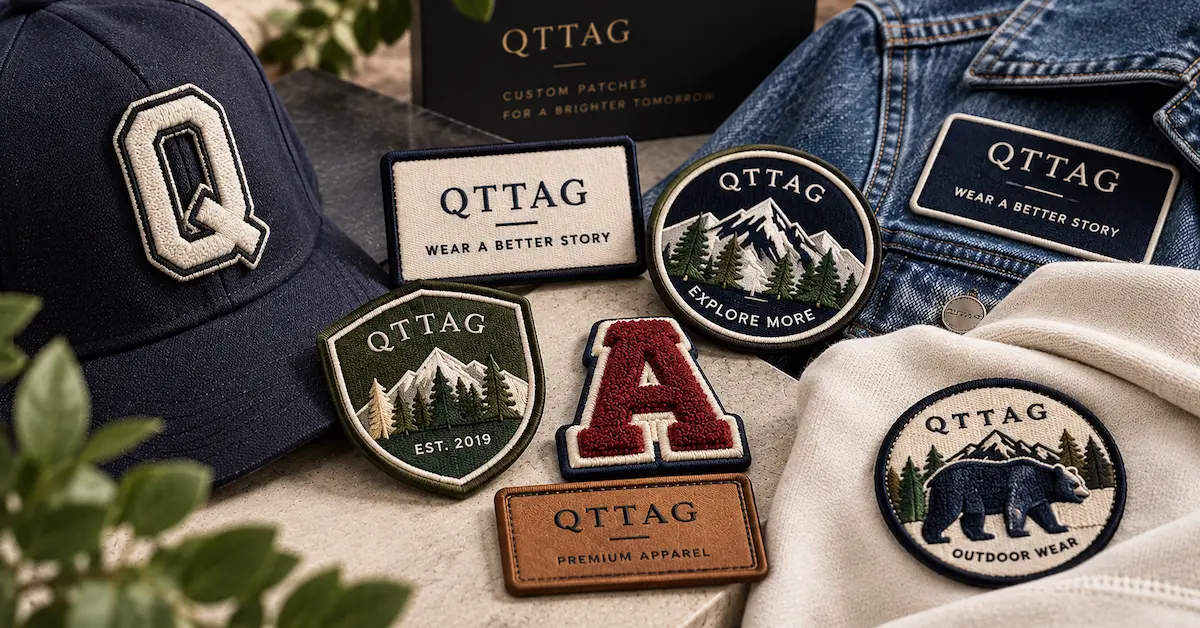
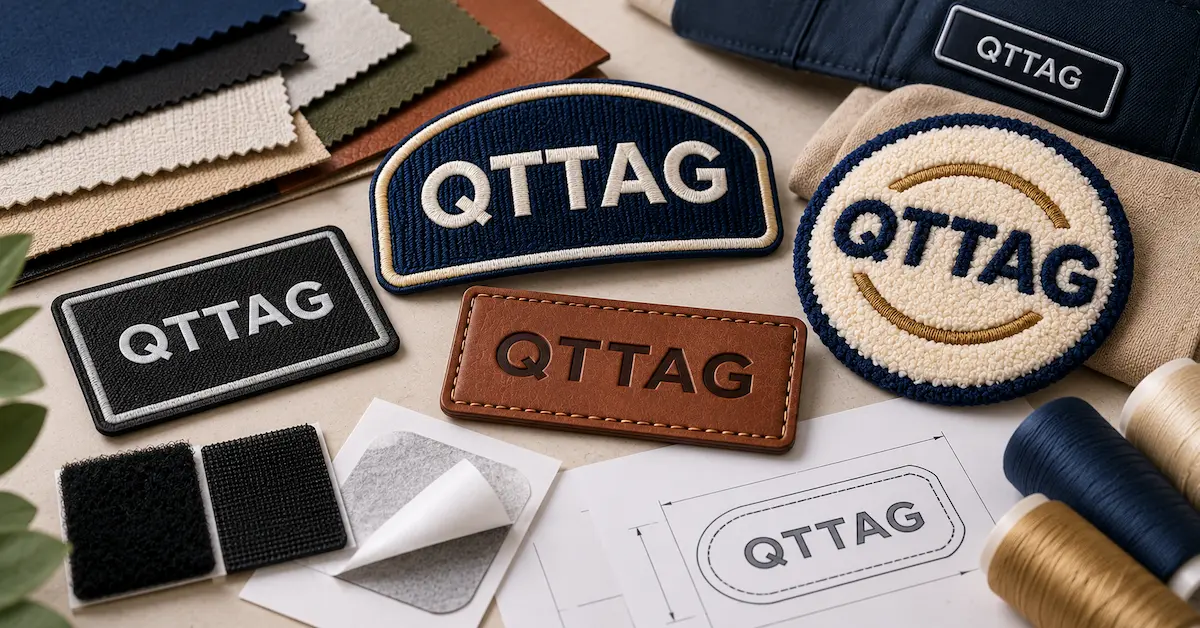
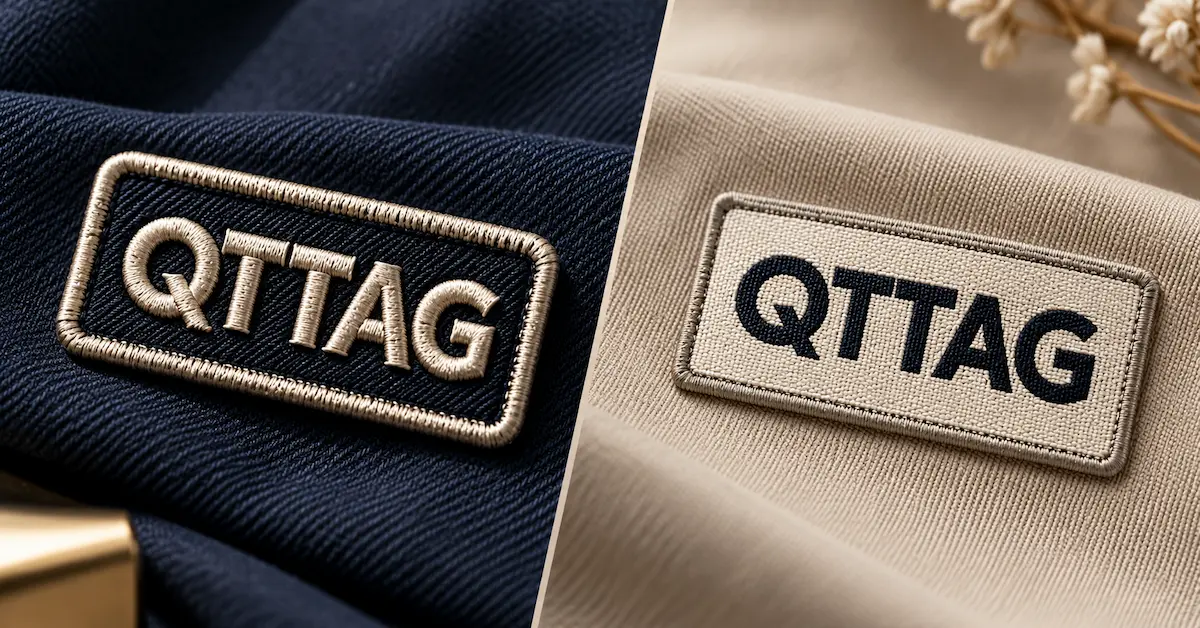
Embroidered patches give clothing brands a distinctive way to display logos, lettering and decorative artwork through visible stitching and textile texture. They are commonly considered for jackets, uniforms, sweatshirts, caps, denim garments and fashion accessories.
Unlike printed graphics or woven patches, embroidered patches are generally created by stitching a design onto a suitable base material. The thread coverage, stitch direction, backing construction and finished edge all influence how the completed patch looks and feels.
The best embroidered patches for apparel combine clearly reproduced artwork, suitable thread and base materials, consistent stitching, and an attachment method compatible with the intended garment.
For apparel buyers, the main challenge is selecting a construction that delivers the required visual appearance while remaining practical for application, washing and production.
This guide explains embroidered patch materials, stitching techniques, backing options, edge finishing, garment applications, sample approval and the factors that influence manufacturing cost.
What Are Embroidered Patches?
Embroidered patches are separately manufactured textile emblems in which a design is formed using embroidery stitches on a base fabric or other compatible substrate.
They can reproduce brand logos, company names, team emblems, numbers, letters and decorative graphics.
Unlike embroidery applied directly to a completed garment, a separately manufactured patch is produced first and then attached using a suitable method.
Common uses include:
-
Fashion jackets and denim clothing
-
Sweatshirts and hoodies
-
Workwear and uniforms
-
Sports team apparel
-
Caps and hats
-
Outdoor clothing
-
Bags and textile accessories
-
Private-label fashion collections
Embroidered patches can provide a textured branding element that stands apart from flat printing.
However, the finished result depends on the embroidery design, thread, base fabric, backing, edge finishing and attachment process.
Why Do Clothing Brands Choose Embroidered Patches?
Clothing brands may choose embroidered constructions when visible thread texture is part of the intended design.
A patch can create a recognizable visual element across garments that use different materials and colors.
It may also be suitable when the brand wants to manufacture the emblem separately before garment assembly.
The patch still needs to be tested with the intended clothing fabric and application method.
Embroidered Patches vs. Woven Patches
Embroidered and woven patches serve related purposes, but they are produced differently.
Embroidered patches use stitching to form artwork on a base material, while woven patches create artwork through interlaced yarns.
This distinction affects the surface texture, fine details and production considerations.
| Feature | Embroidered Patches | Woven Patches |
|---|---|---|
| Manufacturing method | Embroidery stitches on a base | Interlaced yarn construction |
| Surface appearance | Visible stitched texture | Generally flatter woven texture |
| Fine detail | Depends on stitch type and dimensions | Can suit selected fine graphic details |
| Dimensional appearance | May have pronounced stitch coverage | Usually comparatively low profile |
| Base material | Commonly uses a separate substrate | Design formed in woven structure |
| Edge construction | Stitched, cut or other suitable edge | Cut or suitable border finish |
| Attachment | Sew-on or compatible backing | Sew-on or compatible backing |
| Main design consideration | Stitch clarity and texture | Weave resolution and artwork detail |
When Embroidery Is Appropriate
Embroidered patches may be a suitable choice when the design calls for:
-
Textured brand emblems
-
Bold lettering
-
Decorative outlines
-
Visible stitching
-
Traditional uniform or team-style graphics
-
Selected dimensional effects
When Woven Construction May Be Preferable
Woven patches may be better suited to certain small logos, tightly spaced lettering or relatively flat branding applications.
Neither manufacturing method is universally superior.
Buyers should compare physical samples produced from the actual artwork.
What Materials Are Used in Embroidered Patches?
An embroidered patch typically combines embroidery thread with a compatible base material.
Additional components may include stabilizers, backing materials and edge-finishing threads.
The exact construction varies by manufacturer and intended use.
Polyester Embroidery Thread
Polyester thread is used in many embroidery applications.
Available threads differ in sheen, thickness, color and other characteristics.
The actual thread specification should be confirmed with the supplier.
Rayon Embroidery Thread
Rayon thread may be considered for particular decorative appearances.
Its suitability depends on the intended finish, garment and laundering conditions.
Buyers should evaluate product-specific performance rather than assume that all thread types behave identically.
Base Fabric
A suitable base material supports the embroidery during manufacturing.
Different base fabrics can influence patch thickness, flexibility and appearance.
Possible constructions may use twill or other compatible textile materials, depending on the product.
Stabilizers
Stabilizing materials may help maintain the fabric's shape during embroidery.
The appropriate stabilizer depends on the base fabric, stitch coverage and production method.
Material Comparison
| Component | Function | Buyer Evaluation |
|---|---|---|
| Embroidery thread | Forms the logo and graphics | Color, texture and appearance |
| Base fabric | Supports the embroidered design | Material, thickness and flexibility |
| Stabilizer | Supports construction during embroidery | Dimensional consistency |
| Edge thread | Finishes selected patch borders | Color and stitching quality |
| Backing | Supports the intended attachment | Garment compatibility |
A material specification should identify the actual components rather than use only the general term "embroidered patch."
How Stitch Density and Coverage Affect Patch Appearance
Embroidery is not simply a matter of selecting thread colors.
The arrangement, direction and coverage of stitches influence the finished artwork.
Stitch Density
Stitch density affects how thread covers the base material.
Insufficient coverage may expose unintended portions of the background.
Excessive coverage can introduce stiffness, distortion or unnecessary thickness.
The appropriate density depends on the design, thread, base and manufacturing equipment.
Stitch Direction
The direction of stitches can influence the visual texture.
Different stitching directions may reflect light differently, creating variation across a logo.
Satin Stitches
Satin stitching is commonly used for suitable lettering, borders and selected shapes.
Fine details and narrow elements require careful technical evaluation.
Fill Stitches
Fill stitching can cover larger graphic areas.
The stitch pattern and density should be selected according to the intended appearance.
Outline Stitches
Outline stitching may help define letters and symbols.
However, extremely narrow outlines may not reproduce clearly at small dimensions.
Why Physical Sampling Matters
A digital embroidery preview cannot fully show the texture, thread coverage and thickness of the finished result.
Before bulk production, inspect an actual embroidered sample at its intended size.
Designing Custom Embroidered Patches for Clothing
Custom embroidered patches for clothing should be designed around the limits and opportunities of embroidery.
An artwork file that looks perfect on a monitor may require modification before it can be stitched reliably.
Start With Approved Artwork
Provide a clean logo or graphic file.
Vector artwork is often useful for identifying shapes and proportions, although the embroidery process may require a separate production file.
Review Fine Lettering
Very small text can be difficult to reproduce with embroidery.
Minimum readable dimensions depend on thread, stitch design and equipment.
The supplier should evaluate the artwork rather than apply a universal minimum size to every project.
Simplify Unnecessary Detail
Complicated gradients, extremely thin lines or closely spaced elements may not translate well into stitches.
Simplification may improve clarity without changing the recognizable identity.
Any changes should be approved by the brand.
Define the Color System
Specify the intended thread colors using suitable references.
The finished thread appearance may differ from a digital color value.
Confirm the Patch Dimensions
The chosen size should allow the logo to remain recognizable.
A larger patch may support more detail, but it must still fit the garment.
Evaluate the Finished Texture
A heavily embroidered design may feel different from a patch with lower thread coverage.
Consider the intended garment and wearing conditions.
Choosing Patch Shapes and Edge Finishes
Edge finishing affects the appearance, handling and attachment of embroidered patches.
Not every edge method is appropriate for every shape.
Merrowed or Overlocked Borders
A merrowed-style border uses stitching around the perimeter of a suitable patch.
It can create a traditional finished appearance.
This method is often associated with simple patch shapes, although actual feasibility depends on production equipment and construction.
Heat-Cut Edges
Selected compatible synthetic materials may be cut using suitable heat-based processes.
The result depends on the material and manufacturing method.
Laser-Cut Edges
Laser cutting may be used for certain compatible constructions.
Cutting quality and material behavior require validation.
Custom-Shaped Borders
Custom outlines can follow a brand symbol or decorative design.
Complex shapes may introduce additional manufacturing or edge-finishing requirements.
| Edge Finish | Potential Application | Main Inspection |
|---|---|---|
| Merrowed border | Selected regular shapes | Border consistency |
| Heat-cut edge | Compatible materials | Edge condition |
| Laser-cut edge | Suitable custom outlines | Shape accuracy |
| Custom stitched finish | Selected decorative designs | Stitch position and coverage |
The patch should be approved with its final edge construction, not only with the central embroidery completed.
What Backing Options Are Available for Embroidered Patches?
The backing determines how the patch will be attached or prepared for attachment.
Common embroidered patch backing options include sew-on, compatible heat-activated adhesive and hook-and-loop systems.
Sew-On Backing
Sew-on embroidered patches are attached to garments through stitching.
This may be suitable when the garment can accommodate sewing and a mechanical attachment is desired.
The patch edge and stitch path should be considered together.
Iron-On Backing
Iron-on embroidered patches use a compatible heat-activated bonding layer.
The backing must be suitable for the garment fabric and intended application conditions.
Do not assume that every embroidered patch can receive the same iron-on adhesive or use the same pressing settings.
Hook-and-Loop Backing
Hook-and-loop constructions allow suitable patches to be attached and removed from compatible surfaces.
They may be used when the design requires interchangeable identification.
Pressure-Sensitive Adhesive
Some adhesive systems are intended for temporary or specialized uses.
Their presence does not automatically make a patch suitable for repeated garment washing.
Backing Comparison
| Backing | Attachment Method | Main Consideration |
|---|---|---|
| Sew-on | Stitching | Garment and border compatibility |
| Iron-on | Heat-activated adhesive | Fabric and application validation |
| Hook-and-loop | Compatible fastening surfaces | Attachment and removal |
| Pressure-sensitive adhesive | Adhesive contact | Intended duration and conditions |
The backing should be specified before the patch enters production.
Iron-On vs. Sew-On Embroidered Patches
The decision between iron-on and sew-on attachment depends on the garment, application process and required performance.
When Sew-On Patches May Be Suitable
Sew-on embroidered patches can be considered when:
-
The garment can be stitched appropriately.
-
A mechanical attachment is desired.
-
The selected fabric is sensitive to heat.
-
Stitching is part of the intended design.
-
The manufacturer has a suitable sewing process.
When Iron-On Patches May Be Suitable
Iron-on embroidered patches may be considered when:
-
The selected fabric tolerates the validated application conditions.
-
The backing is designed for the intended garment.
-
The production team has suitable pressing equipment.
-
Physical testing confirms acceptable adhesion.
-
The garment can be handled without unacceptable heat-related damage.
Which Method Is More Durable?
There is no universal answer.
A correctly selected sewn attachment and a properly validated heat-bonded construction can each be appropriate for different applications.
Durability depends on the actual patch, garment, application and laundering conditions.
Where necessary, buyers can request comparative finished-garment samples.
Which Garments Are Suitable for Embroidered Patches?
Embroidered patches are used across many clothing categories, but material compatibility and design proportions matter.
Jackets and Outerwear
Jackets may provide suitable locations for embroidered logos and decorative emblems.
The patch dimensions and attachment method should match the outer fabric.
Denim Clothing
Denim garments can accommodate selected patch constructions.
Placement should be checked for sewing access, garment movement and appearance.
Sweatshirts and Hoodies
Embroidered emblems may be considered for chest, sleeve or other positions.
Patch stiffness and garment flexibility should be evaluated.
Workwear and Uniforms
Uniform projects may require consistent logo identification across multiple products and repeat orders.
Clear artwork, dimensions and attachment specifications are particularly important.
Caps and Hats
Curved surfaces may create attachment challenges.
Patch shape and sewing method should be evaluated on the intended cap.
T-Shirts
Lightweight garments can be affected by bulky or stiff patches.
A smaller embroidered construction may be considered where appropriate, but physical garment evaluation is necessary.
Bags and Accessories
Textile bags and suitable accessories may provide additional applications.
Each substrate should be checked separately.
How to Choose Patch Size and Placement
A patch should be sized and positioned according to the garment's construction and the intended branding effect.
| Placement | Typical Design Consideration |
|---|---|
| Left chest | Compact branding and positioning |
| Sleeve | Curved surface and fabric movement |
| Jacket back | Larger decorative area |
| Pocket area | Avoiding interference with pocket function |
| Cap front | Curvature and attachment |
| Bag panel | Surface stability and handling |
Artwork Readability
Small lettering and complex graphics may require sufficient patch dimensions.
Fabric Movement
A large or stiff patch can affect how a garment moves.
Seam Position
Avoid placing a patch where seams or garment construction prevent proper attachment.
Visual Proportion
The patch should complement the garment rather than appear disproportionately large or small.
Production Consistency
Use an approved placement reference when the same patch will be applied across multiple garment sizes.
How Do Embroidered Patches Perform After Washing?
The durability of embroidered patches depends on the thread, base fabric, backing, border and attachment method.
A patch may look acceptable immediately after application but behave differently during repeated laundering.
Thread Appearance
Evaluate whether the embroidered design maintains an acceptable appearance.
Color Changes
Color performance depends on the selected threads and relevant laundering conditions.
Avoid unsupported colorfastness claims.
Border Condition
Inspect the patch perimeter for loose threads, separation or other unacceptable changes.
Sewn Attachment
Check whether the patch remains securely stitched to the garment.
Adhesive Attachment
For iron-on constructions, evaluate adhesion after the defined washing process.
Garment Condition
The garment itself should remain acceptable, without unnecessary distortion or other damage associated with the patch.
Tests should reflect the actual intended use and garment care requirements.
Common Embroidered Patch Problems
Several defects may occur when artwork, materials or manufacturing conditions are unsuitable.
| Problem | Possible Cause | Recommended Check |
|---|---|---|
| Small text is unclear | Inadequate stitch resolution | Review artwork size |
| Base fabric shows through | Unsuitable coverage | Evaluate stitch construction |
| Patch becomes stiff | Excessive stitch density or backing | Review material and design |
| Edge threads become loose | Unsuitable border finishing | Inspect completed edge |
| Patch lifts from garment | Incompatible backing or application | Validate attachment |
| Fabric puckering | Stitching or material incompatibility | Test completed garment |
| Logo colors differ | Thread reference variation | Approve physical colors |
| Patch dimensions vary | Manufacturing or finishing inconsistency | Check tolerances |
These are potential technical issues, not verified defects in QTTAG products.
A useful investigation should compare the affected item with the approved reference and available production information.
How to Approve Embroidered Patch Samples
Physical sampling is an important stage in selecting embroidered patches for clothing.
Step 1: Confirm the Artwork
Provide the approved logo, colors, intended dimensions and garment application.
Step 2: Select Materials
Review suitable thread, base fabric and construction options.
Step 3: Prepare the Embroidery Design
The supplier evaluates the artwork and develops the appropriate production specifications.
Step 4: Select Edge and Backing
Confirm the finished border and attachment method.
Step 5: Produce a Sample
Develop a representative embroidered patch.
Step 6: Inspect the Embroidery
Check lettering, stitches, thread colors, dimensions and edge finishing.
Step 7: Apply It to a Garment
Use a representative fabric and the intended attachment method.
Step 8: Evaluate Performance
Perform relevant handling, washing or wear evaluation where required.
Step 9: Approve the Reference
Retain the physical sample and corresponding artwork and production specification.
Quality Control for Bulk Embroidered Patch Production
A successful initial sample establishes a reference, but bulk production still requires inspection.
| Quality Item | What to Inspect |
|---|---|
| Thread | Approved colors and appearance |
| Base material | Suitable construction and condition |
| Embroidery | Complete logo and stitch quality |
| Dimensions | Finished width and height |
| Edge finishing | Border consistency |
| Backing | Correct attachment construction |
| Shape | Alignment and cutting |
| Garment application | Placement and attachment |
| Packing | Correct design versions and quantities |
Incoming Material Checks
Confirm that the materials correspond to the approved specification.
In-Process Embroidery Checks
Review visible defects and artwork reproduction during manufacturing.
Edge and Backing Inspection
Inspect the completed patch, not only the embroidered design.
Order Sorting
Different colors, sizes or logo versions should have clear identification.
Repeat Production
Retain approved samples and manufacturing references for future orders.
Material substitutions or significant changes should be reviewed.
How Much Do Custom Embroidered Patches Cost?
The cost of embroidered patches depends on several factors.
These may include:
-
Finished patch dimensions
-
Stitch count and artwork complexity
-
Thread colors
-
Base fabric
-
Stitch density and coverage
-
Edge construction
-
Backing type
-
Order quantity
-
Different logo versions
-
Sampling and development requirements
-
Packing and delivery
Stitch Count
Embroidery stitch count can influence production requirements.
However, stitch count alone does not establish the total price.
Patch Size
Larger dimensions may involve more material and embroidery work.
Artwork Complexity
Detailed designs can require additional preparation and technical adjustments.
Backing and Edges
Specialized attachment or finishing may affect the manufacturing process.
Order Quantity
Minimum order quantities vary by supplier, construction and artwork requirements.
Total Applied Cost
Buyers should consider both patch manufacturing and garment attachment.
Compare quotations based on the same completed specification.
What Should Buyers Include in an Embroidered Patch RFQ?
A detailed request for quotation helps suppliers recommend suitable materials and processes.
| RFQ Item | What to Provide |
|---|---|
| Logo artwork | Approved vector artwork |
| Garment type | Jacket, hoodie, cap, uniform or other |
| Fabric | Actual garment material |
| Patch dimensions | Finished width and height |
| Patch shape | Standard or custom outline |
| Thread colors | Approved references |
| Embroidery requirements | Desired texture and detail |
| Edge finish | Preferred border or cutting |
| Backing | Sew-on, iron-on or hook-and-loop |
| Placement | Intended garment position |
| Quantity | Estimated order volume |
| Variations | Different sizes or artwork versions |
| Performance | Expected washing and wearing conditions |
| Sampling | Physical sample approval requirements |
| Delivery | Destination and schedule |
Where the buyer is uncertain about stitch coverage or backing, provide the garment fabric and desired appearance for discussion before sampling.
Frequently Asked Questions About Embroidered Patches
What are embroidered patches made of?
Embroidered patches generally use embroidery threads stitched onto a compatible base material. Edge finishes, stabilizers and backings vary according to the construction.
What is the difference between embroidered and woven patches?
Embroidered patches use stitching to form artwork on a base, creating visible thread texture. Woven patches use interlaced yarns and may suit certain finer details or flatter designs.
Can embroidered patches use iron-on backing?
Some embroidered patch constructions support compatible heat-activated backing. The actual fabric, adhesive and application conditions must be validated.
Are sew-on embroidered patches suitable for jackets?
They can be suitable when the patch and stitching method are compatible with the jacket material and construction.
Can embroidered patches reproduce small lettering?
Small text may be possible within the limits of the selected thread, stitch design and dimensions. Physical samples should be checked for legibility.
Are embroidered patches suitable for caps and hats?
They may be used on suitable caps and hats. Curvature and attachment requirements should be evaluated on the actual product.
How durable are embroidered patches after washing?
Durability depends on thread, base material, edge finish, attachment and laundering conditions. Product-specific testing is needed to establish performance.
What is the minimum order quantity for embroidered patches?
Minimum quantities vary by supplier, design, materials and backing requirements. Request a quotation using the actual specification.
Develop Custom Embroidered Patches With QTTAG
Embroidered patches can provide distinctive textile branding for apparel collections, uniforms and accessories.
The right result depends on clear artwork, suitable threads, stitch construction, edge finishing and garment-compatible attachment.
When planning a new project, the most useful starting points are the approved logo, garment fabric, patch dimensions, intended placement, backing preference and estimated quantity.
QTTAG focuses on custom apparel branding. The availability of specific embroidered patch constructions and backing systems should be confirmed with the team before ordering.
Ready to Create Custom Embroidered Patches for Your Clothing Brand?
Share your logo artwork, garment type, preferred embroidered patch dimensions, thread colors, edge finishing, backing requirements and estimated order quantity with QTTAG.
Our team can discuss available customization and sampling options for your apparel collection.
Request a Quote
Author
Founder at QTTAG
Jason Qiao is the founder of QTTAG, focusing on garment branding and packaging solutions. With years of experience in the apparel industry, he shares practical insights on custom labels, hang tags and sustainable packaging to help global brands grow.
Written By
Jason Qiao