Custom Woven Labels for a Premium Fashion Collection
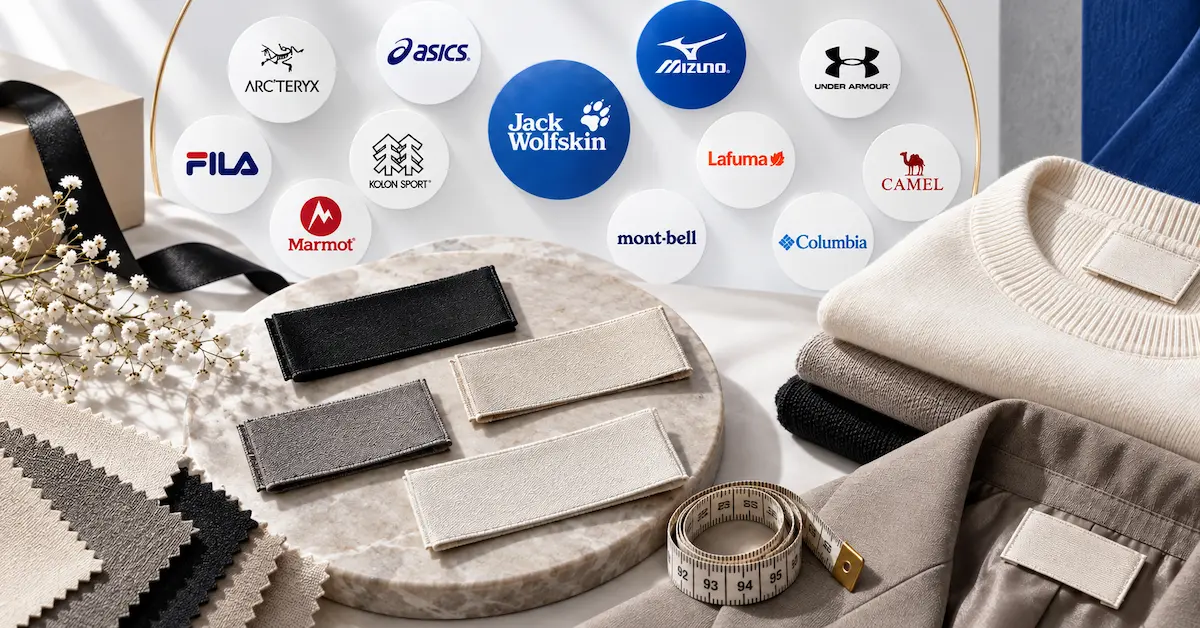
A premium fashion collection needs more than an attractive logo. Every visible and tactile detail should support the brand's identity, including the woven labels sewn into its garments.
Custom woven labels communicate brand identity through yarn colors, woven textures, typography and carefully finished edges. Unlike printed graphics, woven labels reproduce artwork through interlaced yarns, making the choice of construction, label size and finishing method particularly important.
This premium woven label case study brief examines how fashion brands can develop refined woven labels through artwork evaluation, yarn selection, physical sampling and production quality control.
The goal is to create labels that reproduce the intended brand identity while remaining suitable for the garment's construction and expected use.
Project status: This is a technical project brief based on a representative premium fashion labeling scenario. Specific customer requirements, production records, finished samples and project outcomes must be verified before publication as a completed customer case study.
Project Overview: Premium Woven Labels for Fashion Apparel
A premium woven label can be a small component of a garment, but its construction can influence the overall brand presentation.
For fashion brands, the challenge is to convert a visual identity into a consistent textile component that works across different garment styles.
The proposed project brief focuses on developing custom woven labels for a coordinated fashion collection.
| Project Element | Design Requirement |
|---|---|
| Product | Custom woven clothing labels |
| Target application | Premium fashion apparel |
| Branding objective | Refined, recognizable brand identification |
| Core materials | Suitable woven yarns |
| Design priorities | Logo clarity, proportion and color |
| Construction options | Appropriate weave and fold types |
| Quality requirements | Consistent artwork and finishing |
| Approval process | Physical sampling and specification review |
| Production goal | Repeatable labeling across garment styles |
The label must satisfy both the brand's visual expectations and the garment manufacturer's practical requirements.
For example, a label intended for a jacket neckline may need different dimensions or attachment details from a label used on lightweight knitwear.
An effective specification considers these differences before production begins.
The Design Challenge: Turning a Brand Logo Into a Woven Label
One of the main challenges in premium garment branding is maintaining logo clarity when artwork is converted into woven fabric.
Digital artwork is created from lines, shapes and colors. Woven labels reproduce those elements through yarns and weave structures.
This difference affects the final result.
Fine Typography and Logo Details
Fashion brands often use delicate typography, narrow lettering and small graphic symbols.
These elements may become difficult to reproduce when the finished label is too small or when the weaving construction cannot accommodate the required detail.
Before manufacturing, the supplier should review:
-
Minimum lettering size
-
Spacing between characters
-
Line thickness
-
Logo proportions
-
Artwork orientation
-
Finished label dimensions
When adjustments are necessary, the buyer should approve them before sampling.
Brand Color Reproduction
Color consistency matters when woven labels must coordinate with hang tags, packaging and other branding materials.
However, a digital color reference does not necessarily produce an identical appearance in yarn.
The chosen yarn, weave pattern and lighting conditions influence the finished label.
Physical samples provide a more reliable basis for visual approval than digital mockups alone.
Design Proportions
The size and shape of the woven label should suit its intended garment.
A wide brand label may work on outerwear, while a smaller construction may be more appropriate for lightweight clothing.
The goal is to maintain a recognizable identity without compromising the garment's appearance or attachment method.
Choosing the Right Woven Label Construction
The woven construction influences texture, visual detail, thickness and finishing options.
Buyers should compare actual material samples rather than assume that one construction is always superior.
Damask Woven Labels
Damask constructions are commonly considered for detailed garment branding.
Depending on the manufacturing specification, they may support relatively refined lettering and graphic elements.
For a damask label branding project, the main evaluation points include logo resolution, yarn selection, woven texture and the final appearance of the artwork.
Fine details should be checked using physical samples at the intended production size.
Satin-Style Woven Labels
Satin-style constructions may provide a different surface appearance and tactile effect.
The appropriate choice depends on the intended finish and garment application.
Brands should examine the sample's surface, flexibility and visual consistency.
Other Woven Label Options
Other woven constructions may be appropriate when the design prioritizes different textures, production requirements or cost considerations.
The supplier should explain the practical differences using the actual proposed specifications.
| Selection Factor | Main Consideration | Approval Method |
|---|---|---|
| Logo detail | Clarity of lettering and symbols | Physical woven sample |
| Yarn color | Brand color reproduction | Approved material reference |
| Weave construction | Texture and visual resolution | Construction comparison |
| Label thickness | Suitability for garment application | Finished garment sample |
| Fold type | Attachment and appearance | Folded prototype |
| Edge quality | Clean finishing and handling | Visual and physical inspection |
| Cost | Design and production complexity | Specification-based quotation |
The best construction is the one that meets the agreed design and application requirements.
How to Design Woven Labels for Premium Fashion Collections
Successful custom woven labels for luxury clothing require more than applying a logo to a rectangular layout.
The artwork must be developed around the actual label dimensions, weaving process and garment placement.
Establish an Approved Brand Artwork
Use a consistent, approved version of the brand logo.
Suitable vector files can help preserve design proportions and provide clear artwork references.
Before sampling, confirm the final dimensions, orientation, colors and typography.
Define the Finished Label Size
The finished size should account for any folding or sewing allowance.
The visible artwork area may be smaller than the total woven label dimensions.
This difference matters when a label includes end folds or is inserted into a seam.
Consider the Garment Placement
Labels may be applied to necklines, side seams or other garment locations.
Each placement has different requirements.
A neckline label may prioritize comfort and compact dimensions, while an exterior woven label may place greater emphasis on visual presentation.
Coordinate the Collection
Premium clothing collections often contain multiple garment styles.
The same brand identity may need to appear across shirts, knitwear, jackets and other products.
Establish common artwork and color references, while allowing necessary adjustments to label dimensions or attachment methods.
Comparing Woven Label Fold Types
Fold construction affects both the appearance of the label and how it is attached to the garment.
Several options may be considered.
End Fold Woven Labels
End fold labels have folded ends that create a finished appearance and provide areas suitable for certain stitching methods.
They may work well for labels positioned across a garment surface.
The folded size and sewing allowance must be confirmed.
Center Fold Woven Labels
Center fold labels are folded through the middle.
They are commonly considered for insertion into garment seams.
Artwork placement should account for the fold line and the information visible on each side.
Straight Cut Woven Labels
Straight cut labels use a simpler construction without folded ends.
The buyer should evaluate edge finishing, attachment and the garment's intended use.
Mitre Fold Woven Labels
Mitre fold labels use angled folds to create a distinctive shape.
Their suitability depends on the label's design and the intended attachment method.
| Fold Type | Main Feature | Common Consideration |
|---|---|---|
| End Fold | Folded ends | Stitching position and finished dimensions |
| Center Fold | Central fold | Seam insertion and two-sided artwork |
| Straight Cut | Unfolded construction | Edge finish and attachment |
| Mitre Fold | Angled folded ends | Fold symmetry and presentation |
The preferred fold should be selected through physical evaluation rather than appearance alone.
From Digital Artwork to Physical Sampling
Digital previews help communicate branding intentions, but they cannot fully demonstrate the actual woven texture, color or finished construction.
Physical sampling is therefore an important part of high-end garment label sampling.
Step 1: Review the Artwork
Confirm the brand logo, color references, label dimensions and selected weave construction.
Identify any elements that may need adjustment before production.
Step 2: Develop the Initial Sample
Produce a representative woven sample using the proposed specification.
The sample should demonstrate the design's actual appearance at its intended size.
Step 3: Inspect the Woven Details
Review:
-
Logo definition
-
Typography
-
Yarn color appearance
-
Weave consistency
-
Label dimensions
-
Edge finishing
-
Fold accuracy
-
Overall visual balance
Step 4: Test the Label on a Garment
A woven label should be evaluated in its intended application.
A sample may look attractive when placed flat on a table but appear different after being folded or sewn into clothing.
The buyer should assess whether the label sits correctly and complements the finished garment.
Step 5: Record the Approved Specification
Once the sample is accepted, retain the approved artwork, material references, dimensions and finishing instructions.
These records can support production inspection and future orders.
Quality Control: What Should Be Checked?
This premium woven label case study brief places particular emphasis on physical sample approval because even small inconsistencies may affect the appearance of a refined brand design.
Quality control should reflect the actual specifications agreed between the brand and supplier.
| Inspection Item | What to Check | Reference |
|---|---|---|
| Logo reproduction | Shape, clarity and complete details | Approved artwork |
| Yarn color | Visual consistency | Approved sample |
| Label dimensions | Finished width and height | Product specification |
| Weaving | Visible defects or irregular details | Approved construction |
| Cutting | Edge condition | Finishing reference |
| Folding | Position and symmetry | Approved folded sample |
| Garment attachment | Placement and finished appearance | Sewn garment sample |
| Production consistency | Variation between inspected labels | Agreed acceptance criteria |
Logo Accuracy
A premium design may depend on consistent lettering and spacing.
Compare physical samples against the approved artwork and woven reference.
Color Consistency
Inspect labels under suitable lighting conditions.
Color differences should be evaluated using an agreed comparison method rather than subjective descriptions alone.
Edge and Fold Quality
Inconsistent cutting or folding can affect the finished appearance.
These details are particularly important when the label is visible on the garment.
Garment Compatibility
Review how the label behaves after attachment.
Depending on the application, buyers may need to assess fabric distortion, seam behavior, wearer comfort and durability.
Batch Inspection
A successful initial sample does not guarantee that every item in a production batch will be identical.
The supplier and buyer should agree on inspection methods, sampling plans and acceptance criteria.
How to Maintain Consistency Across Different Garment Styles
Fashion collections often include multiple products that share one brand identity.
Maintaining consistency requires clear control over artwork, colors and production specifications.
One Approved Logo System
Use a consistent artwork source for all versions of the brand label.
If the collection includes multiple label dimensions, document each approved variation.
Coordinated Yarn Colors
Establish suitable yarn color references for the brand.
Recheck colors when materials or manufacturing specifications change.
Garment-Specific Label Construction
Different garments may need different fold types, placements or label dimensions.
Consistency does not necessarily mean using an identical physical label on every product.
The objective is a recognizable brand presentation across the entire collection.
Clear Product Identification
When ordering labels for multiple sizes or garment styles, establish clear references for each design.
This helps prevent sorting and packing mistakes.
Repeat Order Control
Maintain the approved artwork and sample reference.
If the supplier, yarn, dimensions or weaving construction changes, determine whether additional sampling is required.
Coordinating Woven Labels With Hang Tags and Packaging
Woven labels are one part of a complete apparel branding system.
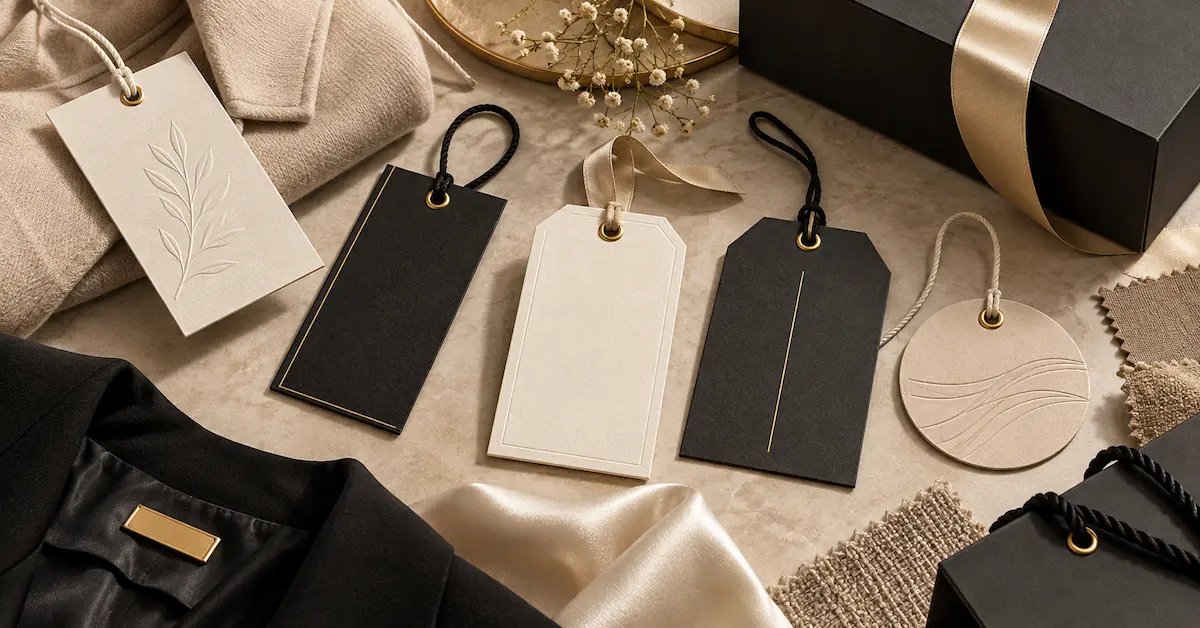
A premium clothing collection may also include custom hang tags, care labels, attachment strings and branded packaging.
These components should communicate a consistent identity.
Woven Labels and Care Labels
The woven label can focus on the brand identity.
Care labels can carry composition and washing information when a separate information label is appropriate.
Label content and durability must satisfy applicable destination-market requirements.
Woven Labels and Hang Tags
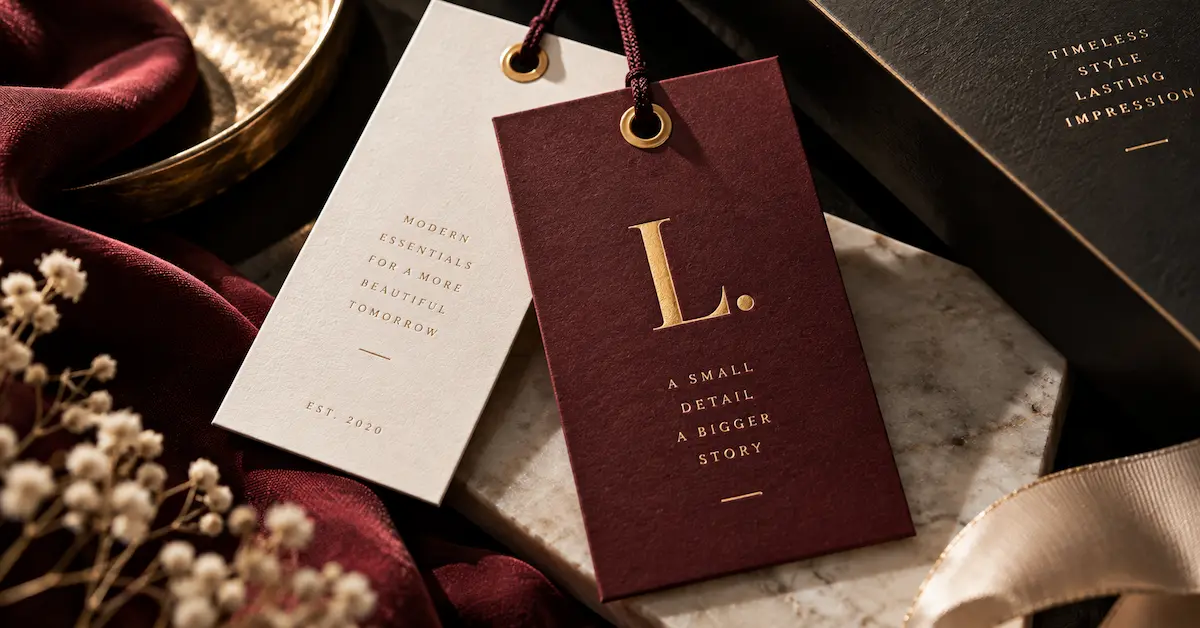
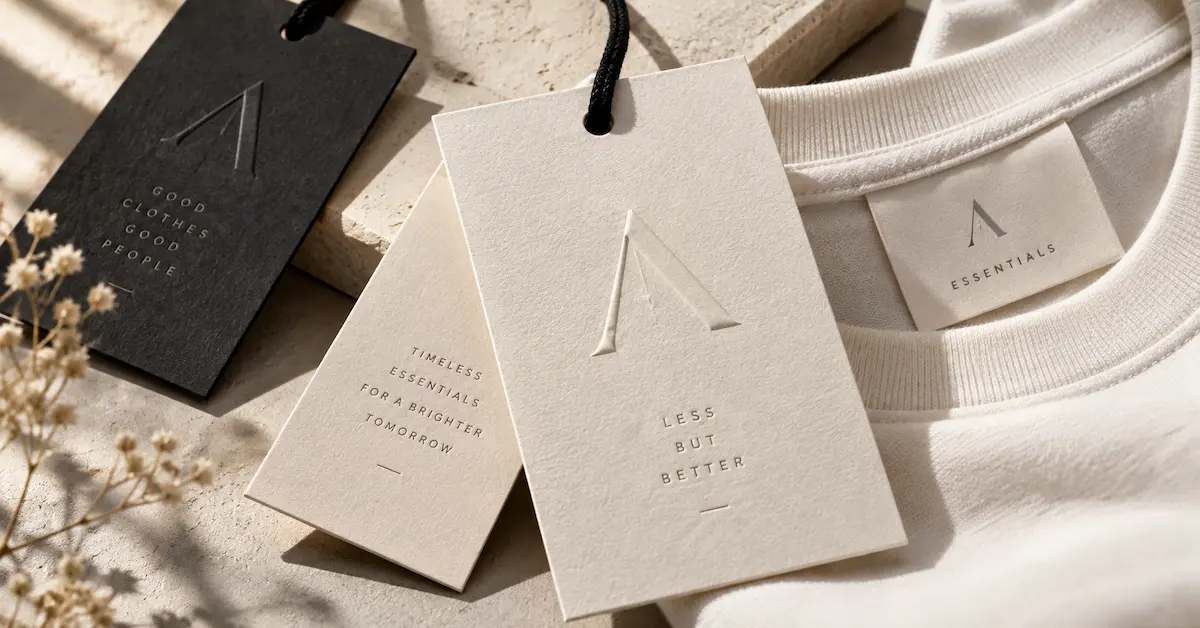
Hang tags may use paper, printing and finishing methods that differ from woven textile manufacturing.
However, typography, logo proportions and color direction can remain coordinated.
For example, a woven logo and printed hang tag can share the same approved brand artwork even when the final materials produce different surface effects.
Woven Labels and Apparel Packaging
Packaging boxes, paper bags and protective packaging can reinforce the collection's visual language.
A coordinated presentation does not require every material to look identical.
Instead, brands should establish consistent design priorities across the different products.
Why Coordination Matters
When several suppliers or production teams handle different components, design interpretation can vary.
A shared artwork package and approved material references help align the finished products.
For brands developing woven labels for premium fashion, this coordination is particularly useful when launching new collections or expanding product ranges.
Production Planning and Cost Considerations
The cost of custom woven labels depends on the final specification.
There is no universal price that applies to every design.
Important variables may include:
-
Label dimensions
-
Weave construction
-
Artwork complexity
-
Yarn colors
-
Fold type
-
Cutting and finishing
-
Order quantity
-
Number of design versions
-
Sampling requirements
-
Packaging and delivery needs
Artwork Complexity
Detailed logos may require more careful manufacturing evaluation.
Some designs may need adjustments before they can be reproduced effectively.
Construction and Finishing
Different weave structures and fold types can affect production requirements.
Buyers should compare quotations using equivalent specifications.
Quantity and Design Variations
An order with one approved design differs from a collection that needs multiple label sizes, colors or versions.
Provide the complete quantity breakdown when requesting a quotation.
Sampling and Revision
Sample development and potential revisions should be discussed before confirming the production order.
The buyer should establish whether artwork adjustments, samples or other development services are included in the quotation.
What Should Buyers Send When Requesting Custom Woven Labels?
A detailed RFQ helps suppliers evaluate the design and recommend appropriate materials and finishing methods.
| Information | Recommended Details |
|---|---|
| Brand artwork | Approved vector logo |
| Product application | Intended garment styles |
| Finished dimensions | Required width and height |
| Weave construction | Preferred option, if known |
| Colors | Yarn or brand color references |
| Fold type | End fold, center fold or another option |
| Quantity | Estimated order volume |
| Variations | Sizes, colors and artwork versions |
| Sampling | Prototype and approval requirements |
| Quality | Required inspection criteria |
| Delivery | Destination and target schedule |
If the buyer has not selected a construction, sharing the artwork and garment application is a suitable starting point.
The supplier can then discuss potential material and finishing options.
Common Mistakes to Avoid in Premium Woven Label Projects
Several avoidable mistakes can complicate label development.
Approving Only a Digital Mockup
A digital image cannot demonstrate all aspects of yarn texture, woven detail and garment attachment.
Approve a physical sample when the design and application require it.
Using Artwork That Is Too Detailed
Small lettering and complex symbols may not reproduce as intended.
Review the design at the finished label size.
Ignoring Fold Allowances
A correctly woven graphic may appear poorly positioned if the folding requirements were not considered.
Confirm the visible artwork area and total dimensions.
Comparing Different Supplier Specifications
Quotations may appear similar while using different constructions or finishing methods.
Compare equivalent requirements before choosing a supplier.
Failing to Document the Approved Sample
Without a clear reference, future orders may be more difficult to reproduce consistently.
Retain the approved version and relevant technical specifications.
Frequently Asked Questions About Premium Woven Labels
What is the best woven label material for luxury clothing?
The choice depends on the required texture, logo detail, garment application and budget. Different woven constructions and yarns should be evaluated using physical samples.
Are damask woven labels suitable for detailed logos?
Damask constructions may reproduce relatively detailed artwork, depending on the weave specification and dimensions. Fine typography and small symbols should be checked through sampling.
Which woven label fold is most suitable for fashion garments?
End folds, center folds and other constructions serve different attachment methods. The correct choice depends on garment design, placement and sewing requirements.
Can woven labels match brand colors exactly?
Yarn selection and weave construction influence color appearance. Digital references can guide development, but final approval should be based on representative physical samples.
How should a premium woven label sample be approved?
Check logo reproduction, color, dimensions, woven texture, edge quality and fold accuracy. Where possible, evaluate the label after attachment to the intended garment.
Can one woven label design work across an entire fashion collection?
A consistent brand design can be maintained across multiple garments, but individual label dimensions, folds and placements may need adjustment.
What is the minimum order quantity for custom woven labels?
Minimum order quantities depend on the supplier and product specification. Request a quotation using the final artwork, construction, dimensions and estimated quantity.
Custom Woven Label Development With QTTAG
A well-developed woven label connects the brand's visual identity with the practical requirements of garment manufacturing.
The choice of yarn, weave construction, dimensions and finishing should be evaluated together.
QTTAG supports custom garment branding projects, including woven label solutions for fashion collections.
The considerations in this premium woven label case study brief can help buyers prepare a clearer specification, evaluate physical samples and establish suitable production requirements.
For brands developing a new collection, the next step is to prepare the artwork, intended garment information, label dimensions, preferred colors and estimated order quantity.
These details provide a starting point for discussing customization and sampling.
Ready to Develop Custom Woven Labels for Your Fashion Collection?
Share your logo artwork, label specifications, garment application and estimated order quantity with QTTAG.
Our team can discuss suitable woven label customization and sampling options for your collection.
Request a Quote
Author
Founder at QTTAG
Jason Qiao is the founder of QTTAG, focusing on garment branding and packaging solutions. With years of experience in the apparel industry, he shares practical insights on custom labels, hang tags and sustainable packaging to help global brands grow.
Written By
Jason Qiao