
A clearer route from creative direction to production.
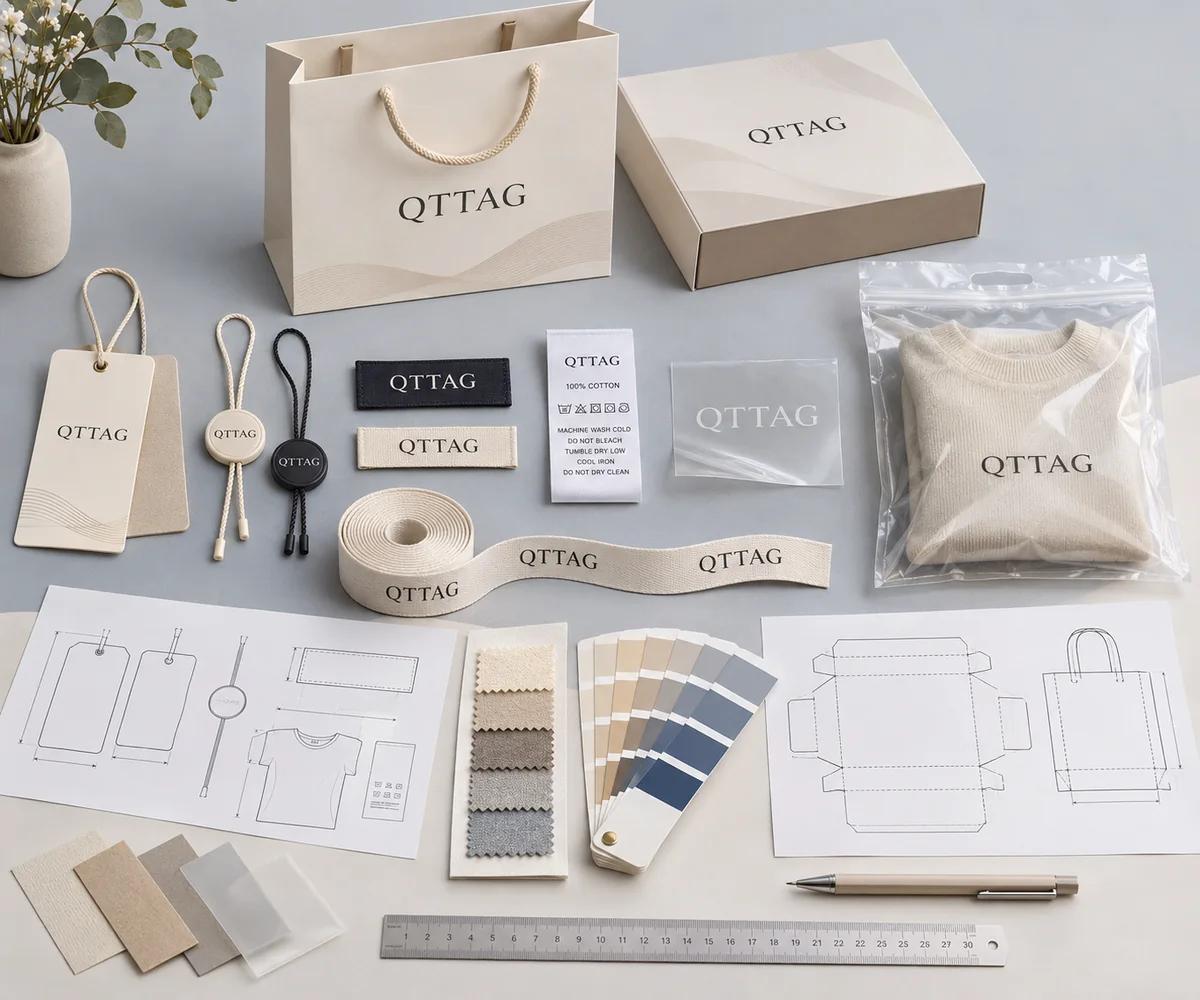
Material, finish, fold and artwork decisions shape how a brand detail performs. QTTAG helps you make those choices visible, testable and ready for repeat production.

Materials
Choose the material around the use case.
Start with where the detail will live, how it will be handled and what it needs to communicate. That brief guides the substrate, yarn, paper or board selection.
- Woven and printed fabric options
- Paper, board and packaging substrates
- Attachment, finish and handling requirements

Printing & Finishes
Make the surface carry the right signal.
Printing and finishing should support the artwork, the material and the moment of use. We help compare the practical route before a sample is approved.
- Printing, foil, embossing and UV options
- Colour, contrast and legibility checks
- Surface feel matched to the garment or package

Label Fold Types
Fold and attachment choices shape the fit.
A label can be folded, cut, stitched or applied in different ways. The right construction keeps information visible and the finished detail comfortable in use.
- Straight cut, centre, end and loop fold options
- Cut edge, woven edge and shaped formats
- Attachment planning for the garment construction

Sampling & Custom Process
Approve the detail before the run.
A clear sample cycle gives the team a shared reference for material, colour, size, finish and assembly before production starts.
- Brief and specification review
- Representative sample preparation
- Feedback, revision and approval
- Production handoff with the approved reference

Artwork Requirements
Start with production-ready artwork.
Share the artwork, dimensions, colours, copy and intended application. We can then identify the details that need clarification before sampling.
- Vector artwork or high-resolution source files
- Confirmed dimensions, copy and colour references
- Fold, hole, trim and attachment notes
- One approved artwork version for production
Customization FAQs
Answers to common questions about materials, finishes, label construction, artwork and sampling.
Have more questions? Visit all FAQsWhat should I prepare before customizing labels and packaging?
Start with the product type, intended use, finished dimensions, estimated quantity and available artwork. If labels, hang tags and packaging are being developed together, identify which colors, logos and product details need to remain consistent.
How do I choose materials for clothing labels, hang tags and packaging?
Consider how the product will be used, its required durability, texture and construction. Woven and printed fabric labels, paper hang tags and packaging materials have different requirements. Compare suitable material samples before confirming your choice.
What printing and finishing options can I choose?
Options may include printing, foil stamping, embossing, debossing and spot UV, depending on the material and product structure. Review color references, text readability and finish placement before approving the production specification.
How do I choose the right label fold or cutting format?
Choose the format based on garment placement, sewing method, finished dimensions and the information that needs to remain visible. Center fold, end fold and straight cut labels serve different applications. Roll form is a supply format rather than a fold type.
What artwork files should I provide for customization?
Editable vector files such as AI, EPS or vector PDF are preferred when available. Include approved wording, color references, finished dimensions and relevant fold lines or packaging dielines. Identify the latest artwork version before submitting files for review.
How are samples reviewed before bulk production?
Samples are reviewed against the agreed artwork and product specifications. Buyers should check material, size, color, construction, wording and finishing details where applicable. Confirm any revisions and approve the final reference before production proceeds.
Ready to specify the next detail?
Bring the artwork, reference or first idea.
We will help map the materials, finishes and sampling steps around the way the product needs to work.