Rigid Gift Boxes for a Luxury Apparel Collection
Rigid Gift Boxes for a Luxury Apparel Collection
A luxury garment deserves packaging that reflects the care invested in its design. Whether presenting a cashmere sweater, a premium shirt or a limited-edition clothing set, the packaging influences how the product is handled, protected and experienced.
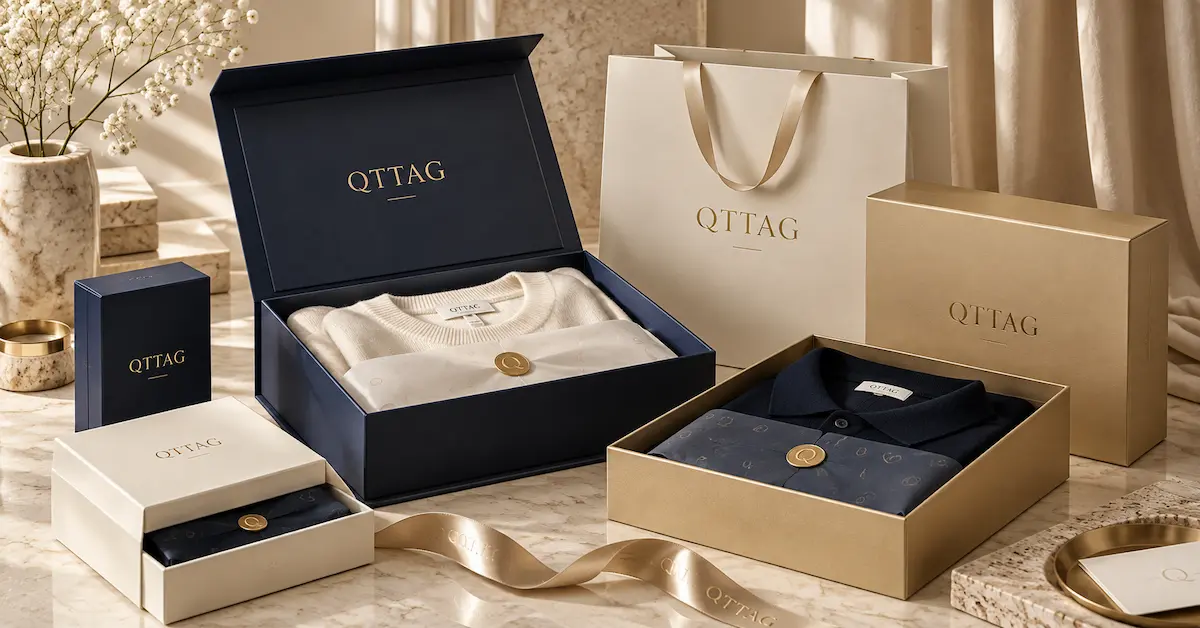
Rigid gift boxes are often considered when fashion brands want a more structured presentation than a conventional folding carton. Their construction can support decorative paper coverings, specialty finishes and custom interior arrangements.
Yet the appearance of a rigid box is only one part of the purchasing decision. Box dimensions, garment folding, insert materials, structural construction and production consistency all affect whether the packaging is suitable.
This luxury apparel gift box case study brief explores how fashion brands can develop custom rigid packaging through structural design, material selection, protective inserts, premium finishing and physical sample approval.
The objective is to establish a coordinated gift packaging specification that balances visual presentation, garment protection and practical manufacturing requirements.
Project status: This article presents a representative luxury apparel packaging development brief. Customer-specific orders, finished QTTAG samples, production records and actual project outcomes must be verified before the content is presented as a completed customer case study.
1. Project Overview: Custom Rigid Gift Boxes for Luxury Clothing
Premium fashion brands may require gift packaging for selected garments, seasonal collections, VIP presentations or product launches.
The packaging should support the identity of the collection while accommodating the actual garment.
Unlike a decorative box used only for display, an apparel gift box must be designed around the clothing and its intended handling requirements.
For this project scenario, the development objective is to establish an appropriate rigid gift box construction for a luxury clothing collection.
| Project Element | Development Requirement |
|---|---|
| Product | Custom rigid apparel gift boxes |
| Application | Luxury fashion garments and gift sets |
| Branding objective | Refined, coordinated garment presentation |
| Structure | Suitable rigid box construction and opening method |
| Core materials | Paperboard, covering paper and optional interior materials |
| Interior | Garment-fitting insert or wrapping arrangement |
| Design | Logo, typography, colors and specialty finishes |
| Performance | Product fit, handling and structural suitability |
| Sampling | Complete physical box and garment fit approval |
| Quality control | Dimensions, covering, printing, assembly and finishing |
| Production objective | Consistent packaging across approved variations |
The main challenge is not simply creating a rigid box that looks luxurious.
It is designing a complete packaging system that accommodates the garment, communicates the brand and remains suitable for repeat production.
2. The Packaging Challenge: Luxury Presentation Meets Garment Protection
Fashion gift packaging must balance appearance with function.
A large box may appear impressive in photographs but be unsuitable for storing or transporting garments. A tightly fitted box may hold the product securely but introduce unwanted creasing.
These issues should be considered during development.
Preserving the Garment Presentation
The garment should fit inside the box according to its intended folding arrangement.
A structured jacket, knitwear set and lightweight shirt may require different interior dimensions.
Before choosing a box size, prepare a representative garment in the intended folded configuration.
Creating a Refined Opening Experience
The box's opening direction, lid fit and interior layout influence how the garment is revealed.
The design may use a removable lid, hinged opening or another suitable structure.
The opening mechanism should be evaluated physically rather than approved solely from a rendering.
Maintaining a Consistent Brand Identity
The outside and inside of the box should follow a coordinated visual direction.
Paper coverings, logos, ribbons and inserts can be selected to support the collection's identity.
However, adding more decorative features does not automatically create a better luxury presentation.
Supporting Handling and Distribution
A gift box may be displayed in a boutique, delivered as part of an online order or used for a promotional presentation.
These situations introduce different requirements.
The packaging should be evaluated for its actual intended use rather than assumed to provide shipping protection under all conditions.
3. What Are Rigid Gift Boxes?
Rigid gift boxes are packaging structures made with relatively stiff board components, commonly covered with decorative or printed materials.
Unlike many conventional folding cartons, rigid boxes are typically assembled into their finished three-dimensional form.
Their construction can provide a substantial appearance and a defined presentation space for the packaged product.
Typical Components
A rigid apparel box may include:
-
Structural paperboard
-
Decorative covering paper
-
A lid and base or another opening structure
-
Printed or foil-stamped branding
-
Optional inserts or dividers
-
Tissue paper or wrapping materials
-
Ribbons, pull tabs or other accessories
The exact construction depends on the intended packaging design.
Rigid Boxes vs. Folding Cartons
Both types can be suitable for clothing packaging, but they have different construction and handling characteristics.
| Comparison | Rigid Gift Boxes | Folding Cartons |
|---|---|---|
| Structure | Stiff assembled construction | Folded paperboard structure |
| Presentation | Often used for structured gift packaging | Suitable for a range of retail formats |
| Storage | May occupy more space when assembled | Often supplied in a flat format |
| Covering | May use separately applied decorative paper | Often printed or finished on carton stock |
| Interior | Can incorporate selected custom inserts | Can incorporate compatible inserts |
| Manufacturing | Multiple construction and assembly stages | Cutting, creasing and folding |
| Main selection factor | Finished presentation and intended handling | Construction, storage and product fit |
Neither construction is universally superior.
The choice should depend on the garment, presentation requirements, storage and purchasing budget.
4. Selecting the Right Rigid Box Structure
Different opening structures create different handling and presentation experiences.
The selected design should be appropriate for the garment's size and the brand's intended use.
Lift-Off Lid Boxes
A lift-off lid box has a separate lid that can be removed from the base.
This construction may be considered for apparel gift sets and premium clothing presentation.
The lid fit, removal experience and finished appearance should be evaluated during sampling.
Hinged Lid Boxes
A hinged construction keeps the lid connected to the box body.
It may be considered when the opening presentation is an important design feature.
The hinge area and covering material require careful construction.
Magnetic Closure Boxes
Some rigid box designs incorporate magnetic closures.
These can be considered when a particular opening and closing experience is desired.
Their feasibility depends on construction, material selection and applicable requirements.
Drawer-Style Boxes
Drawer-style packaging uses a sliding inner component.
It can create a different opening experience but requires suitable internal dimensions and controlled movement.
Comparing Structures
| Box Structure | Potential Application | Main Approval Check |
|---|---|---|
| Lift-off lid | Apparel gift sets | Lid fit and opening |
| Hinged lid | Premium presentation | Hinge construction |
| Magnetic closure | Selected luxury gift packaging | Closure function |
| Drawer style | Curated fashion sets | Sliding movement and fit |
The final choice should follow the intended customer experience and garment requirements.
5. Choosing Materials for Custom Rigid Gift Boxes for Clothing
Custom rigid gift boxes for clothing depend on several materials working together.
A rigid box may have a structural board core, exterior covering and optional interior components.
The finished appearance and performance depend on their combined construction.
Structural Paperboard
The core board contributes to the box's stiffness and shape.
The selected board should be appropriate for the dimensions, intended contents and handling requirements.
Higher board thickness does not automatically guarantee better performance.
The complete construction must be evaluated.
Decorative Covering Paper
Covering paper determines much of the visible surface appearance.
Potential options include smooth, textured, colored and selected specialty papers.
Buyers should review material shade, surface texture and print compatibility.
Interior Lining
The inside of the box may be covered with a complementary paper or another suitable material.
The lining should be visually coordinated with the exterior and appropriate for the garment.
Wrapping and Protective Materials
Tissue paper or other protective components can help organize the garment presentation.
Their materials and dimensions should be considered as part of the complete package.
Material Comparison
| Material Component | Function | Main Evaluation |
|---|---|---|
| Structural board | Box shape and stiffness | Dimensions and construction |
| Covering paper | Exterior presentation | Texture, color and finish |
| Interior lining | Inside appearance | Compatibility and adhesion |
| Tissue paper | Wrapping and presentation | Garment compatibility |
| Insert material | Positioning and support | Shape, fit and surface |
| Ribbon or pull tab | Opening and decoration | Attachment and handling |
Material selection should be based on representative physical samples and the intended packaging structure.
6. Designing Luxury Apparel Box Inserts
Luxury apparel box inserts help organize the inside of a gift box and may support the intended garment presentation.
Not every box requires a custom insert.
The correct design depends on what the box contains and how the customer is expected to remove the product.
Paperboard Inserts
Paperboard inserts may be considered for compartmentalizing clothing accessories or supporting selected products.
They can be manufactured with suitable folds or structural features.
Tissue Paper Arrangements
Tissue paper can provide a soft presentation layer around garments.
It may be useful for a folded shirt or knitwear set where a rigid internal holder is unnecessary.
Fabric-Covered Inserts
Selected projects may use fabric-covered components for visual presentation.
The construction must be evaluated for surface compatibility, cleanliness and handling.
Accessory Compartments
When the gift set contains a belt, scarf, garment accessory or presentation card, separate compartments may be useful.
The interior design should reflect the actual contents.
Avoiding Unnecessary Compression
An insert should not place excessive pressure on the garment or distort its intended fold.
The fit should be evaluated using the actual product.
| Interior Requirement | Potential Solution | Main Check |
|---|---|---|
| Folded knitwear | Wrapping or supportive arrangement | Garment fit |
| Shirt presentation | Appropriate base or insert | Folding and creasing |
| Multiple garments | Sections or dividers | Arrangement and removal |
| Accessories | Separate compartments | Product positioning |
| Gift presentation | Decorative liner or tissue | Visual coordination |
The best insert is not necessarily the most elaborate one.
It should serve a practical function while supporting the brand's desired presentation.
7. How to Determine the Correct Gift Box Dimensions
A common packaging development mistake is choosing the box size before evaluating the folded garment.
Garment dimensions should guide the packaging structure.
Measure the Folded Product
Prepare the clothing in its intended final folding configuration.
Measure the approximate width, length and height of the folded garment.
Account for Additional Components
The package may also include tissue paper, labels, product cards or accessories.
These elements affect internal capacity.
Determine Suitable Clearance
The garment should fit inside the box without unacceptable compression.
However, excessive clearance may allow the contents to shift unnecessarily.
The appropriate fit depends on the material and presentation requirements.
Consider the Lid and Base Construction
External and internal box dimensions are not identical.
Board thickness and covering construction affect the usable interior space.
Review Multiple Garment Sizes
A brand may want one box size for several garment sizes.
This should be confirmed using representative product samples.
If one format is unsuitable, different approved box sizes may be necessary.
8. Creating Premium Garment Gift Packaging Through Finishing
Premium garment gift packaging can use printing and decorative finishing to create a consistent brand presentation.
The selected effects should complement the material and overall design.
Foil Stamping
Foil stamping can create metallic or specialty finishes on compatible covering materials.
Gold, silver and other available foil options may be considered.
The result should be evaluated on the actual paper.
Embossing
Embossing produces a raised impression.
It may be considered for logos or decorative elements where dimensional detail is important.
Debossing
Debossing produces a recessed impression.
Its suitability depends on the chosen substrate and production method.
Printing
Conventional printing can reproduce logos, typography, patterns and product information.
Print colors should be approved against the intended material.
Lamination
Selected laminations may change the surface appearance or handling characteristics.
Compatibility with folding, covering and other finishing processes should be checked.
Specialty Textures
Textured covering papers may create a distinctive tactile presentation without requiring extensive additional decoration.
| Finish | Potential Design Effect | Quality Consideration |
|---|---|---|
| Foil stamping | Metallic highlights | Coverage and alignment |
| Embossing | Raised details | Definition and consistency |
| Debossing | Recessed details | Impression quality |
| Printed graphics | Brand color and imagery | Registration and clarity |
| Lamination | Selected surface effect | Material compatibility |
| Textured paper | Tactile appearance | Surface consistency |
Combining several finishes may increase production complexity.
A restrained design using suitable materials can be just as effective as a highly decorated box.
9. Coordinating Apparel Gift Boxes With the Brand Identity
A luxury gift box should not look disconnected from the clothing collection.
The packaging may need to coordinate with woven labels, hang tags, shopping bags and other brand materials.
Shared Logo Artwork
The same master brand logo should guide the design of each component.
Adjustments for different manufacturing processes may be necessary, but the brand identity should remain recognizable.
Coordinated Colors
Textile labels and printed packaging materials may reproduce colors differently.
Physical material references can help establish acceptable visual coordination.
Consistent Typography
Using approved typography improves consistency across packaging and product information.
Matching Gift Bags
A paper shopping bag may be used to carry the gift box.
The bag should accommodate the box dimensions and expected weight.
Coordinating Interior Details
Tissue paper, inserts and presentation cards can follow the same design direction as the exterior.
However, each additional component should serve a clear purpose.
10. Creating a Refined Unboxing Experience
The opening experience is an important part of gift packaging.
For luxury fashion collections, the sequence in which the customer sees the box, opens the lid and reveals the garment can influence the presentation.
Exterior Presentation
The outer surface introduces the brand.
Logo placement, colors and material texture should follow the approved design.
Opening Movement
The lid or closure should work as intended.
An excessively tight lid, loose fit or awkward drawer movement may affect the handling experience.
Interior Reveal
The garment should be positioned so that it can be viewed and removed appropriately.
The interior arrangement should avoid unnecessary obstruction.
Garment Removal
The customer should be able to remove the clothing without damaging the packaging or garment.
Any pull tabs, inserts or wrapping should support this process.
Reusability Considerations
Some brands may want a gift box that customers can retain.
If reuse is part of the design brief, construction and handling expectations should be assessed accordingly.
The package should not be described as reusable for specific purposes without considering its actual materials and intended use.
11. Rigid Apparel Box Sampling: From Artwork to Prototype
Rigid apparel box sampling should validate the completed box structure, garment fit, printing, finishing and interior arrangement before bulk production.
Digital renderings can illustrate the intended appearance but cannot fully demonstrate the construction or handling performance.
Step 1: Prepare the Project Brief
Confirm the garment types, folded dimensions, box quantity, desired structure and visual references.
Step 2: Review Structural Options
Compare suitable rigid box constructions.
Identify opening mechanisms and internal arrangements.
Step 3: Select Materials
Confirm the proposed structural board, covering paper and interior components.
Step 4: Prepare Production Artwork
Review logo placement, colors, finishing areas and box dimensions.
Step 5: Produce a Structural Prototype
Create a physical prototype to evaluate the proposed dimensions and opening method.
Step 6: Evaluate Garment Fit
Place representative garments inside.
Check whether the intended folding and presentation work correctly.
Step 7: Produce a Finished Sample
Develop a sample representing the intended materials, artwork and finishing.
Step 8: Approve the Complete Packaging
Inspect the finished box with the garment and any intended inserts.
Step 9: Record the Approved Specification
Retain the approved sample, structural drawing and material references for production.
This process helps identify issues before a larger order is manufactured.
12. Quality Control for Luxury Rigid Gift Boxes
This luxury apparel gift box case study brief emphasizes physical inspection because a rigid box may contain several components manufactured through different processes.
Quality control should cover both the appearance and practical assembly of the finished box.
| Inspection Item | What to Check | Approval Reference |
|---|---|---|
| Structural board | Construction and visible condition | Approved material specification |
| Dimensions | External and usable internal size | Approved drawing |
| Covering paper | Shade, texture and finish | Approved material sample |
| Logo printing | Clarity and positioning | Approved artwork |
| Specialty finishing | Foil, embossing or other details | Finished sample |
| Lid or closure | Fit and operation | Approved structural prototype |
| Corners and edges | Alignment and finishing | Physical reference |
| Interior lining | Placement and surface condition | Approved sample |
| Inserts | Dimensions and garment fit | Approved interior arrangement |
| Overall presentation | Complete packaging consistency | Finished reference box |
Structural Consistency
The box should maintain the agreed shape and dimensions.
Covering Quality
Inspect for visible wrinkles, poor alignment or other unacceptable surface issues.
Printing and Finishing
Compare logo appearance and specialty details with the approved sample.
Closure Function
Evaluate the actual opening and closing operation.
Garment Fit
Check the complete packaging with representative contents.
Batch Inspection
Inspect production samples using agreed criteria rather than relying only on the initial approved prototype.
13. Common Problems in Luxury Apparel Gift Box Production
Several issues may arise when producing complex rigid packaging.
Incorrect Interior Dimensions
The box may not accommodate the folded garment as intended.
This can result from incomplete product measurements or structural assumptions.
Measure the actual contents and evaluate physical prototypes.
Loose or Excessively Tight Lids
A lid that does not fit appropriately can affect the presentation and handling.
Review structural dimensions and assembly consistency.
Wrinkled Covering Paper
Covering quality depends on material selection and the manufacturing process.
The supplier should evaluate the actual paper and construction.
Misaligned Logos
Printed or foil-stamped artwork can appear inconsistent when the covering or finishing position varies.
Use approved layout references and production inspection.
Poorly Fitted Inserts
An insert may not support the contents correctly or may interfere with garment removal.
Evaluate the full interior arrangement with representative products.
Surface Damage During Assembly
The box can develop visible marks or other imperfections during handling and construction.
Define acceptable appearance requirements before production.
Inconsistent Packaging Across Batches
Changes in materials or manufacturing methods may alter the finished result.
Retain approved references and review significant changes.
14. Packaging Protection and Shipping Considerations
Rigid gift boxes can create a structured presentation, but they should not automatically be treated as complete shipping protection.
The requirements depend on how the packaged garments are distributed.
Retail Presentation
A gift box used primarily in a boutique may prioritize visual appearance and convenient handling.
Direct-to-Consumer Delivery
An apparel gift box shipped to a customer may require additional protective outer packaging.
Transport Handling
The complete shipping configuration should be evaluated against the intended distribution conditions.
Moisture and Surface Protection
Covering paper and other components may be affected by unsuitable storage or handling environments.
Pack-Out Requirements
The buyer should clarify whether rigid boxes will be supplied assembled, filled with garments or packed separately for later use.
These choices affect storage, freight and handling requirements.
15. What Determines the Cost of Custom Rigid Gift Boxes?
Rigid packaging costs depend on the complete design rather than the box dimensions alone.
Important factors may include:
-
Structural board and covering materials
-
Box dimensions
-
Opening and closure construction
-
Printing and decorative finishing
-
Custom inserts and interior linings
-
Artwork complexity
-
Custom tooling where applicable
-
Quantity and design variations
-
Assembly requirements
-
Sampling and revisions
-
Packing and transportation
-
Delivery destination
Material Selection
Specialty covering papers and different structural materials can have different purchasing and production requirements.
Box Construction
A lift-off lid, hinged construction or drawer-style box may involve different assembly operations.
Inserts and Accessories
Custom inserts, ribbons and other components add to the finished packaging specification.
Order Quantity
Production quantities affect manufacturing planning, but minimum order requirements vary by supplier and construction.
Shipping and Storage
Assembled rigid boxes may occupy significant storage and transportation space.
This should be considered when comparing total purchasing costs.
Evaluate the Complete Finished Price
A quotation should clarify whether interior components, finishing, assembly and packing are included.
Buyers should compare equivalent approved specifications.
16. What Should Buyers Include in a Rigid Gift Box RFQ?
A complete purchasing brief helps the supplier assess structural feasibility and prepare an accurate quotation.
| RFQ Information | Recommended Details |
|---|---|
| Brand artwork | Approved logo and graphics |
| Garment type | Knitwear, shirts, jackets or gift sets |
| Folded dimensions | Actual product size |
| Box construction | Preferred opening structure |
| Box size | Intended external and internal dimensions |
| Materials | Board and covering preferences |
| Interior | Inserts, wrapping or compartments |
| Printing | Colors, artwork and placement |
| Finishing | Foil, embossing or other effects |
| Closure | Lid, magnet, drawer or other suitable mechanism |
| Quantity | Estimated order volume |
| Variations | Different products or box sizes |
| Distribution | Retail, gifting or e-commerce |
| Sampling | Physical prototype and approval requirements |
| Delivery | Destination and required schedule |
If the buyer does not yet know the correct box dimensions, providing a representative folded garment and the intended presentation is a useful starting point.
17. Frequently Asked Questions About Rigid Apparel Gift Boxes
What are rigid gift boxes used for in luxury clothing?
Rigid gift boxes are considered for selected premium garments, gift sets and presentation packaging. Their suitability depends on the product, desired appearance, handling and distribution requirements.
Are rigid gift boxes better than folding cartons?
Neither is universally better. Rigid boxes can provide a structured presentation, while folding cartons may offer different storage and handling advantages. The correct choice depends on the actual project.
What materials are used to make rigid apparel boxes?
Rigid boxes commonly use stiff board components with decorative covering materials. Interior linings, inserts and finishing options vary according to the design.
Can custom rigid gift boxes include garment inserts?
Yes. Suitable insert constructions may be considered to organize garments and accessories. The design should be tested using the actual products.
How should a luxury apparel gift box sample be approved?
Review structural dimensions, materials, printing, finishing, opening operation, garment fit and interior arrangement. Retain an approved physical reference.
Can rigid gift boxes be used for e-commerce shipping?
They may form part of an e-commerce packaging system, but additional outer protection can be necessary. The complete shipping configuration should be evaluated against the intended handling conditions.
What determines the minimum order quantity for rigid gift boxes?
Minimum quantities depend on the supplier, materials, box construction, finishing and production requirements. Request a quotation based on the actual specification.
How can different apparel products share a consistent gift packaging design?
Brands can maintain a common logo, typography, colors and material direction while adjusting box dimensions and interior structures for different garments.
18. Develop Custom Rigid Gift Boxes With QTTAG
A well-designed apparel gift box connects physical structure with a coordinated brand experience.
The board construction, covering material, printing, inserts and garment fit should be planned together.
The development approach outlined in this luxury apparel gift box case study brief can help fashion brands compare construction options, prepare clearer specifications, evaluate physical samples and establish suitable production requirements.
QTTAG supports custom apparel branding and packaging projects, including packaging boxes, paper bags and related garment presentation products.
When preparing a project, share the intended clothing products, folded dimensions, desired box structure, artwork, interior requirements and estimated quantity.
These details provide a starting point for discussing suitable customization and sampling options.
Ready to Create Custom Rigid Gift Boxes for Your Luxury Apparel Collection?
Share your logo artwork, garment dimensions, preferred box construction, packaging materials, finishing requirements, insert designs and estimated order quantity with QTTAG.
Our team can discuss suitable rigid gift box customization, structural design and physical sampling options for your clothing collection.
Request a Quote
Author
Founder at QTTAG
Jason Qiao is the founder of QTTAG, focusing on garment branding and packaging solutions. With years of experience in the apparel industry, he shares practical insights on custom labels, hang tags and sustainable packaging to help global brands grow.
Written By
Jason Qiao