How to Choose Brand Labels for Modern Apparel Brands
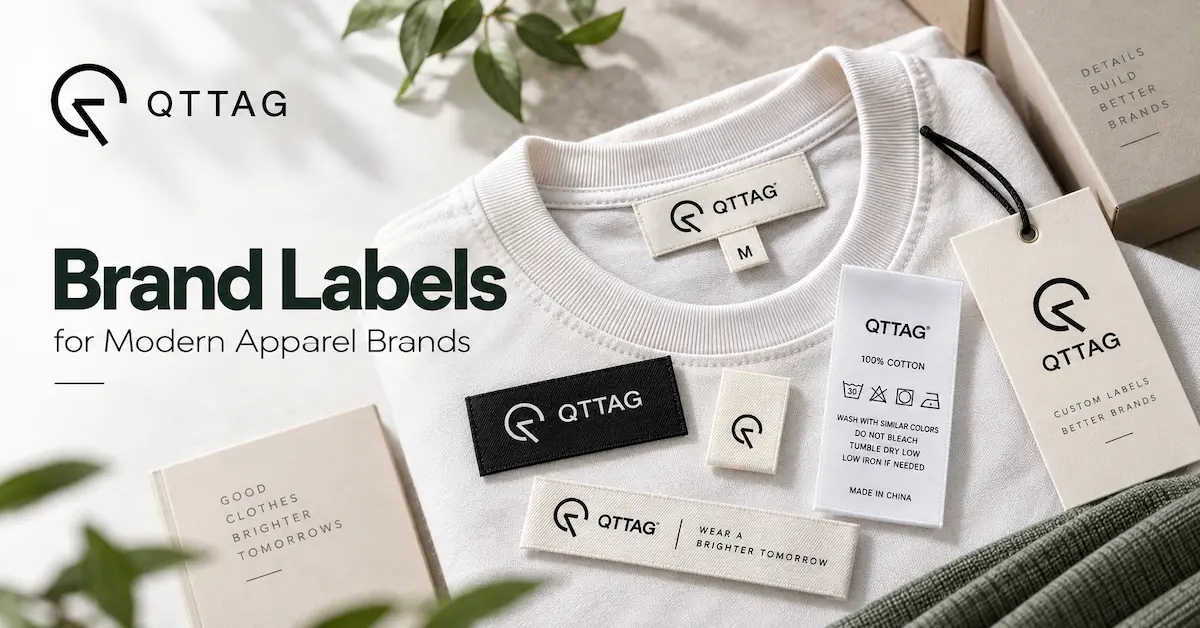
A customer may forget where they bought a T-shirt, but they can often recognize the brand that made it. The name inside the collar, a small symbol near the hem, or a distinctive label on a jacket can all contribute to that recognition.
For clothing brands, this creates a design challenge. A label needs to carry the brand identity without looking disconnected from the garment. It should remain recognizable when produced in different sizes, colors, and materials.
A sophisticated logo does not automatically make a successful clothing brand label. A beautiful digital design can become unreadable when woven into a small fabric surface. A label that looks impressive on a luxury jacket may feel excessive on a minimalist T-shirt.
The right brand labels should make your clothing recognizable, represent your brand consistently, and fit naturally into the design of each garment. Start with a clear brand identity, define approved logo variations, consider where customers will encounter the label, and evaluate physical samples before committing to production.
This guide focuses on brand identity and visual consistency rather than repeating general garment-label manufacturing advice.
What Are Brand Labels in Apparel?
Brand labels are identification elements used to communicate a clothing brand's name, logo, or visual identity.
They can appear inside garments, along seams, near hems, or on other appropriate product surfaces.
Their primary purpose is branding rather than communicating garment-care instructions or technical product details.
Common brand label applications include:
-
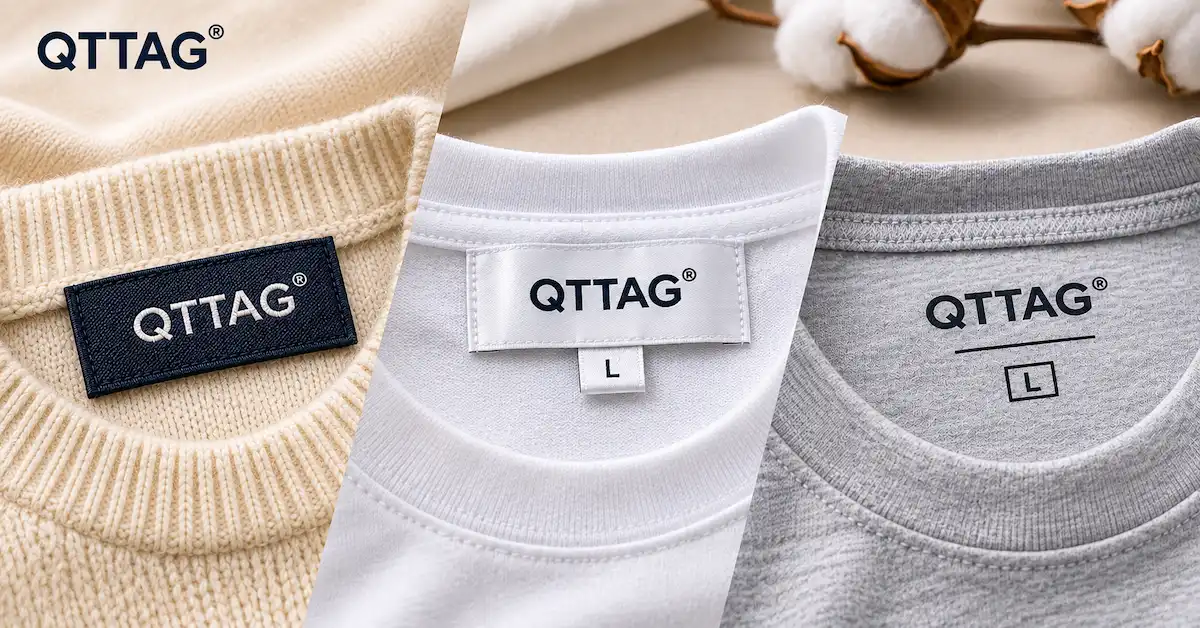
Main logo labels inside collars
-
Woven labels on jacket interiors
-
Small branded tabs at garment hems
-
Decorative labels on denim and streetwear
-
Brand labels on bags and textile accessories
-
Coordinated labels used across clothing collections
A brand label may be woven, printed, or produced through another suitable method. What matters is whether the result communicates the intended brand identity clearly.
Brand Labels vs Information Labels
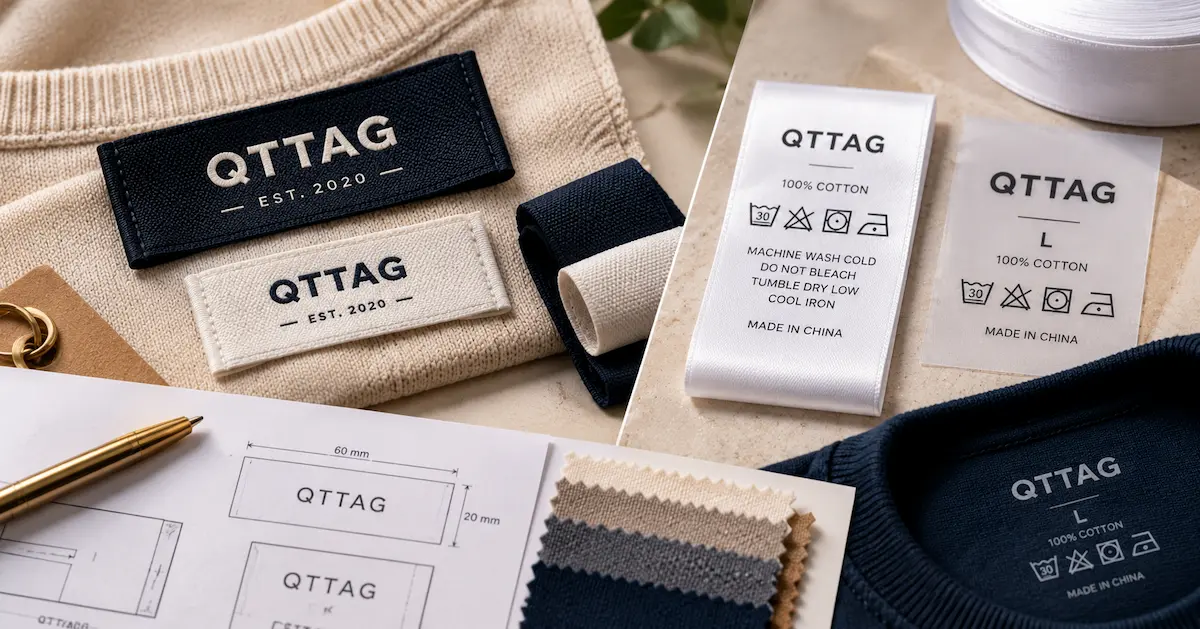
Brand labels and information labels may appear on the same garment, but they have different purposes.
| Label Category | Primary Purpose | Typical Information |
|---|---|---|
| Brand Label | Communicate brand identity | Logo, brand name, symbol |
| Size Label | Identify garment size | S, M, L, XL or another size system |
| Care Label | Provide garment information | Fiber composition and care instructions |
| Origin Label | Communicate applicable origin information | Country-of-origin statement |
| Decorative Brand Label | Reinforce visible branding | Logo, symbol or brand design |
The requirements for mandatory textile information depend on the product and its destination market.
Decorative brand labels should not be assumed to replace required information labels.
Begin with Your Brand Identity, Not the Label Material
Many new clothing brands approach label development by choosing a material first.
They might request a black woven label because it looks premium, or select a gold logo because they associate metallic finishes with luxury.
Those choices may work, but they do not necessarily reflect the brand.
Before deciding on construction, define how the brand should appear to its customers.
Identify Your Brand's Visual Character
A clothing brand's identity might emphasize:
-
Minimalism and simplicity
-
Heritage and craftsmanship
-
Technical performance
-
Playful creativity
-
Premium design and refinement
-
Natural materials and sustainability
-
Youth culture and streetwear
These are design directions, not fixed manufacturing categories.
A minimalist brand might use restrained typography and a small monochrome logo. A colorful streetwear brand may want a stronger visual element.
Neither approach is inherently superior.
The important point is that the label supports the clothing collection's intended visual identity.
Think Beyond a Single Garment
A brand identity should be recognizable across different products.
The same label design may not work equally well on a T-shirt, jacket, handbag, and knitted sweater.
Instead of forcing one identical construction onto every product, create a consistent visual system that allows appropriate variations.
Create a Brand Label Identity System
A brand label identity system defines how the brand appears on different types of physical labels.
It provides a reference for designers, purchasing teams, garment manufacturers, and label suppliers.
The system should establish which elements remain unchanged and where variations are allowed.
Define Your Primary and Secondary Logos
A brand may have:
Primary wordmark: The full company or brand name.
Symbol: A simplified visual mark that can appear independently where appropriate.
Combined logo: The symbol and wordmark used together.
Compact variation: An approved version for smaller applications.
Not every company needs four versions.
However, a brand with a complex primary logo may benefit from a simpler approved variation for small labels.
Example Brand Label Identity Matrix
| Brand Element | Recommended Use | Control Requirement |
|---|---|---|
| Primary Logo | Main neck and interior labels | Preserve proportions |
| Compact Symbol | Small hem tabs or accessories | Use approved artwork |
| Monochrome Version | Limited-color woven applications | Approved contrast |
| Brand Colors | Key branding components | Reference approved colors |
| Typography | Wordmark and supporting text | Maintain approved spacing |
| Decorative Graphic | Selected collections | Keep secondary to brand identity |
This is an illustrative planning framework rather than a fixed requirement for every QTTAG customer.
A supplier should receive approved artwork for the selected variation instead of creating new logo interpretations.
Should Your Brand Label Use a Logo, a Wordmark, or Both?
This decision affects how recognizable the label will be at different sizes.
A wordmark communicates a brand name directly.
A symbol can become recognizable over time, but that recognition depends on consistent use and customer familiarity.
Using both may provide flexibility.
Wordmark Labels
A wordmark can work well when the brand name itself is central to the identity.
It is often practical for a new brand that wants customers to remember its name.
Check that lettering remains readable at the intended label dimensions.
Symbol-Only Labels
A compact symbol can be useful on small external tabs or accessories.
However, a newly launched brand should not assume customers already recognize its symbol.
Symbol-only labels may work better when paired with clear wordmark branding elsewhere on the garment or packaging.
Combined Logos
A combined logo helps connect the symbol with the brand name.
It may be appropriate for main labels and other locations with enough space.
The symbol and lettering should retain their approved relationship.
Practical design rule: Never stretch a logo merely to fill the available label area. Adjust the surrounding space or use an approved alternative layout.
How to Design Brand Labels That Remain Recognizable
Recognition depends on more than logo size.
Contrast, spacing, shape, color, and placement all affect how easily someone can identify a brand.
Maintain Clear Contrast
A dark logo on a light background is often easier to distinguish than two colors with similar visual brightness.
But high contrast does not always require black and white.
Many brand palettes can provide clear recognition when carefully combined.
Keep Fine Details Under Control
Intricate lettering and extremely thin graphic elements may lose definition at small physical sizes.
Review designs at their intended dimensions.
If a logo contains several small decorative features, evaluate whether they remain useful when reduced.
Avoid Adding Unnecessary Information
A brand label does not always need a slogan, product story, founding year, and multiple symbols.
A smaller, more focused design can sometimes make the brand name easier to recognize.
Supporting information can be placed on a hang tag or packaging component when appropriate.
Brand Recognition Review Checklist
| Question | What to Evaluate |
|---|---|
| Is the brand name readable? | Actual-size text clarity |
| Is the logo recognizable? | Shape and visual contrast |
| Does the label match the clothing? | Collection styling |
| Is the artwork consistent? | Approved logo proportions |
| Does the design work at small sizes? | Simplified variations if necessary |
| Does it remain identifiable without color? | Monochrome version |
| Does it conflict with other garment graphics? | Visual hierarchy |
Use actual-size physical mockups rather than evaluating labels only on a large screen.
How Different Fashion Brand Positions Influence Label Design
A label should reflect the clothing brand's positioning.
This does not mean every premium brand should use metallic details or every sustainable brand must use green.
The design needs to be consistent with the wider product experience.
Minimalist Fashion Brands
Minimalist brands may favor limited colors, readable typography, and restrained sizes.
A simple woven label can support a quiet visual identity.
The challenge is ensuring that a subtle label remains recognizable.
Premium and Designer Collections
Premium clothing labels may emphasize refined artwork reproduction, thoughtful materials, and a consistent tactile finish.
Quality should be evaluated through actual construction rather than visual embellishment alone.
Gold lettering or elaborate packaging cannot compensate for poor execution.
Streetwear Brands
Streetwear labels may become visible design elements.
A hem tab, external woven patch, or distinctive logo can contribute to the garment's aesthetic.
The label should still suit the intended placement and garment construction.
Outdoor and Performance Brands
Technical apparel brands often value a clear, functional visual identity.
Brand labels may need to work across outerwear, activewear, bags, and accessories.
The labeling method should be compatible with the products and their expected use.
Brand Positioning Comparison
| Brand Style | Possible Label Direction | Priority |
|---|---|---|
| Minimalist | Simple wordmark, restrained colors | Clarity |
| Premium Fashion | Refined texture and detail | Finish consistency |
| Streetwear | Visible symbols and decorative tabs | Distinctive identity |
| Outdoor Apparel | Clear identity across product types | Consistency and suitability |
| Children's Fashion | Friendly graphics and appropriate construction | Recognition and comfort |
| Private Label Basics | Straightforward, scalable branding | Repeatability |
These are examples, not strict design rules.
Brands should select the identity that matches their own products and customers.
Keeping Brand Labels Consistent Across Different Materials
One of the biggest branding challenges is translating the same artwork into different physical materials.
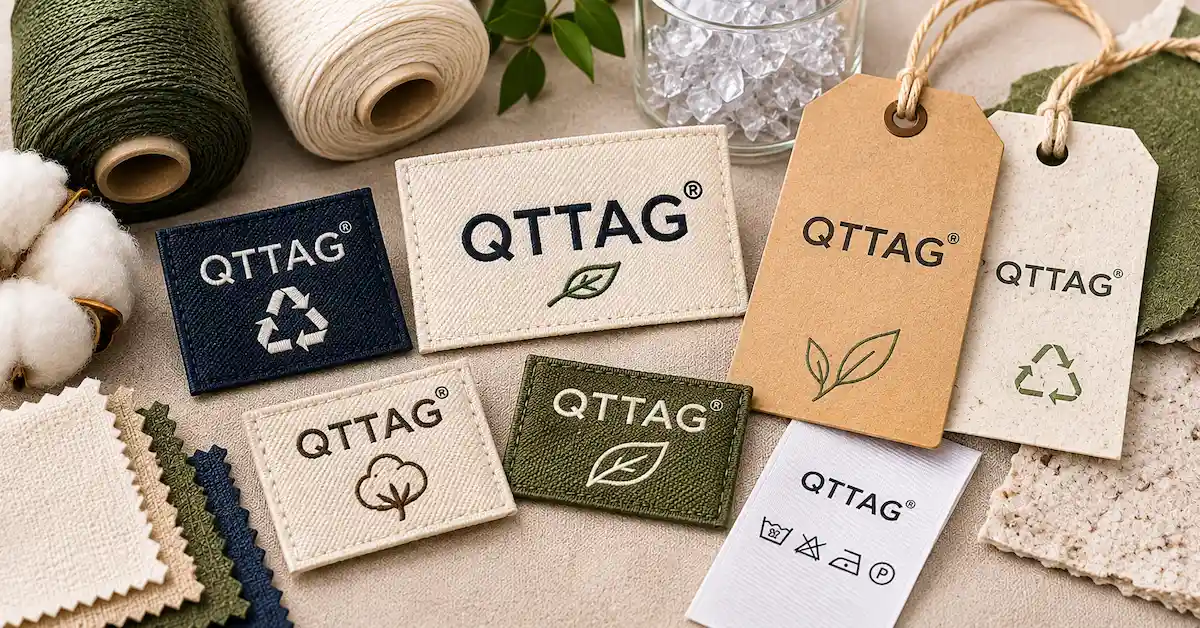
A logo might appear on woven fabric, printed satin, paper hang tags, and packaging boxes.
Those materials do not reproduce color, texture, or detail in exactly the same way.
Consistency Is Not Always Identical Appearance
A woven label has a different surface from a printed paper tag.
Attempting to make both products visually identical under every lighting condition may not be practical.
A better objective is to preserve recognizable brand elements:
-
Logo geometry
-
Typography
-
General color relationships
-
Visual hierarchy
-
Approved design proportions
Material differences can remain visible without making the branding inconsistent.
Use Shared Reference Files
Provide all suppliers with the same approved logo masters and color references.
Avoid sending different screenshots or manually resized files to separate production teams.
When possible, review representative samples of different components together.
That helps identify visual differences before larger orders are placed.
The Relationship Between Brand Labels and Hang Tags
Garment labels and hang tags play different roles in a brand presentation.
A sewn brand label remains with the garment during normal use.
A hang tag is usually removed after purchase.
This difference creates opportunities for coordinated design.
What Should a Brand Label Communicate?
A main brand label should generally prioritize brand identification and an appropriate physical appearance.
What Can a Hang Tag Add?
A hang tag may offer more space for:
-
Product identification
-
Collection information
-
Brand storytelling
-
Material information
-
Product-specific details
-
Other appropriately supported claims
A brand story that is too long for a small woven label might be more suitable for a hang tag.
Coordinated Branding Example
A clothing brand may use:
-
A simple woven wordmark inside the collar
-
A compact symbol on the hem
-
A hang tag with the same symbol and typography
-
Packaging that follows the same visual guidelines
The materials can differ while the customer recognizes the same brand.
QTTAG's product offering includes garment labels, hang tags, attachments, and apparel packaging, making these categories relevant to coordinated branding discussions.
How to Refresh Brand Labels During a Rebrand
A brand refresh may seem like a straightforward design change.
But physical labels introduce production considerations.
Older label versions may already exist in warehouses, approved sample sets, or garment factories.
Changing the artwork without managing those versions can create mixed branding across the same collection.
Decide What Is Changing
A rebrand might involve:
-
A redesigned logo
-
New typography
-
Updated brand colors
-
Different label construction
-
Revised placement
-
New hang tag or packaging artwork
Identify which products are affected.
Establish a Transition Date
The purchasing and production teams should agree on when the new artwork becomes effective.
For example, the company may use the updated design for a new seasonal collection while existing products retain approved earlier branding.
The approach depends on commercial and production requirements.
Prevent Mixed Artwork
Issue clearly named revisions for the new design.
Check the status of existing components before ordering additional labels.
A transition plan should identify:
-
Existing approved artwork
-
New approved artwork
-
Affected garment styles
-
Inventory of older labels
-
Sample approval status
-
Factory communication requirements
-
Planned implementation date
This makes a brand refresh easier to coordinate across manufacturing partners.
How to Evaluate a Brand Label Sample
A sample should be evaluated against the intended brand identity, not simply judged as an attractive physical object.
The review should involve the people responsible for branding and product development.
Brand Label Sample Approval Checklist
| Review Area | Key Question | Status |
|---|---|---|
| Logo Shape | Are the proportions correct? | Pass / Revise |
| Lettering | Is the name readable at actual size? | Pass / Revise |
| Color | Does it follow the approved reference? | Pass / Revise |
| Dimensions | Does it fit the intended placement? | Pass / Revise |
| Material | Does it suit the clothing collection? | Pass / Revise |
| Finish | Is the construction visually consistent? | Pass / Revise |
| Placement | Does the label complement the garment? | Pass / Revise |
| Brand Consistency | Does it work with tags and packaging? | Pass / Revise |
The sample approval record should reference the correct artwork version.
If a later production order changes the logo or dimensions, check whether a new sample is needed.
Why a Standalone Sample Is Not Enough
A label may look balanced when placed on a table.
Once attached to a garment, the surrounding fabric, stitching, and available space can change the visual result.
Review the label on the intended garment before confirming its final application.
What Should New Clothing Brands Prioritize?
Startup apparel businesses often operate with limited development budgets and several competing priorities.
They may be developing garments, packaging, marketing materials, and supplier relationships at the same time.
Brand label development should therefore focus on practical consistency.
Start with One Strong Primary Identity
A new brand does not need numerous decorative label variations.
An approved primary logo, a clear color reference, and a practical main label specification may provide a useful starting point.
Define a Small Number of Approved Applications
For example, a startup could begin with a main neck label and an optional external brand tab.
Additional designs can be introduced as the collection expands.
Keep Artwork Reusable
Save the approved digital artwork and technical specifications.
This reduces the need to reconstruct the design when ordering again.
Compare Total Project Requirements
If you need woven labels, hang tags, and packaging, discuss which components should be coordinated and which may be developed separately.
Before production, confirm the actual quantities, specifications, sample requirements, and commercial terms.
A consistent brand identity does not require unnecessary complexity.
Preparing a Brand Label Design Brief for Your Manufacturer
A useful design brief should explain both the visual identity and the required physical product.
It should not rely on an instruction such as "make this logo look premium."
Provide clear artwork and explain what the label needs to accomplish.
Brand Label Design Brief
| Item | Information to Provide |
|---|---|
| Brand Name | Approved spelling and presentation |
| Logo File | Primary and permitted alternate artwork |
| Brand Positioning | Intended style and customer |
| Garment Type | T-shirt, jacket, knitwear, etc. |
| Label Location | Neckline, hem, interior panel or other |
| Preferred Dimensions | Finished width and height |
| Color References | Approved brand colors |
| Material Preference | Requested fabric or construction |
| Visual Priority | Texture, clarity, softness or appearance |
| Related Branding | Hang tags and packaging requirements |
| Estimated Quantity | Per design and variation |
| Target Market | Intended destination |
| Sample Approval | Required reviewers and approval process |
Not every field requires a complicated document.
But the information should be clear enough for a supplier to understand the project.
Questions to Ask Before Approving Production
Ask whether the proposed logo can be reproduced at the intended size.
Confirm which materials and finishing methods are suitable.
Request samples if artwork detail or brand color is important.
Check the relationship between the finished label and the garment.
Agree on the actual order requirements before approving bulk manufacturing.
Frequently Asked Questions About Brand Labels
What is a brand label in clothing?
A brand label is an identification component used to display a clothing brand's name, logo, or visual identity. It can be attached inside a garment or used as an external branding detail.
What is the difference between brand labels and care labels?
Brand labels primarily communicate brand identity. Care labels provide information such as garment-care instructions and other applicable textile details. Their purposes are different.
Should a clothing brand use its full logo on every label?
Not necessarily. A brand may use approved wordmark, symbol, or combined-logo variations depending on the available space and application.
Are woven brand labels better for premium fashion?
Woven labels can create a distinctive textile appearance, but premium positioning depends on the overall product and execution. A woven label is not automatically the best choice for every premium garment.
Can a startup clothing brand order custom brand labels?
Yes, subject to the supplier's manufacturing options and order requirements. Start with clear artwork, practical dimensions, and an estimated quantity.
How can I maintain consistent brand colors across labels and packaging?
Use approved color references and review representative physical samples. Different materials may reproduce colors differently.
What should I do if my logo is too detailed for a small label?
Discuss whether the logo dimensions can be adjusted or whether an approved simplified version is appropriate. Do not distort the original artwork.
Can brand labels be placed on the outside of clothing?
Yes, when the design and garment construction allow it. Common options include hem tabs, external patches, and selected decorative locations.
Should brand labels match hang tags?
They should support a consistent visual identity, but the materials and layouts do not need to be identical. Preserve recognizable brand elements.
What information should I send for a custom brand label quotation?
Provide your approved logo, garment application, dimensions, preferred material, colors, quantity, and any related branding or packaging requirements.
Develop a Consistent Brand Label Identity with QTTAG
A clothing brand becomes recognizable when its identity is applied consistently across products.
That consistency begins with clear design decisions.
Choose the visual elements that represent your brand, define approved logo variations, and confirm how each version should appear on physical labels.
Then review the finished labels alongside the garments, hang tags, and packaging that customers will actually encounter.
QTTAG supports custom garment labels, woven labels, hang tags, accessories, and apparel packaging solutions for clothing brands and private-label businesses.
The team can discuss suitable product options based on approved artwork, design requirements, and intended applications.
Before contacting a supplier, prepare your logo files, garment examples, desired label dimensions, estimated quantities, and any packaging references.
Ready to Develop Custom Brand Labels for Your Clothing Line?
Share your brand artwork, label design ideas, preferred materials, estimated quantities and project requirements with QTTAG. Our team can discuss customization and sampling options for your clothing brand.
Request a Quote → Create Your Custom Sample
Author
Founder at QTTAG
Jason Qiao is the founder of QTTAG, focusing on garment branding and packaging solutions. With years of experience in the apparel industry, he shares practical insights on custom labels, hang tags and sustainable packaging to help global brands grow.
Written By
Jason Qiao