Garment Labels Cost Guide: What Changes Price, MOQ and Lead Time
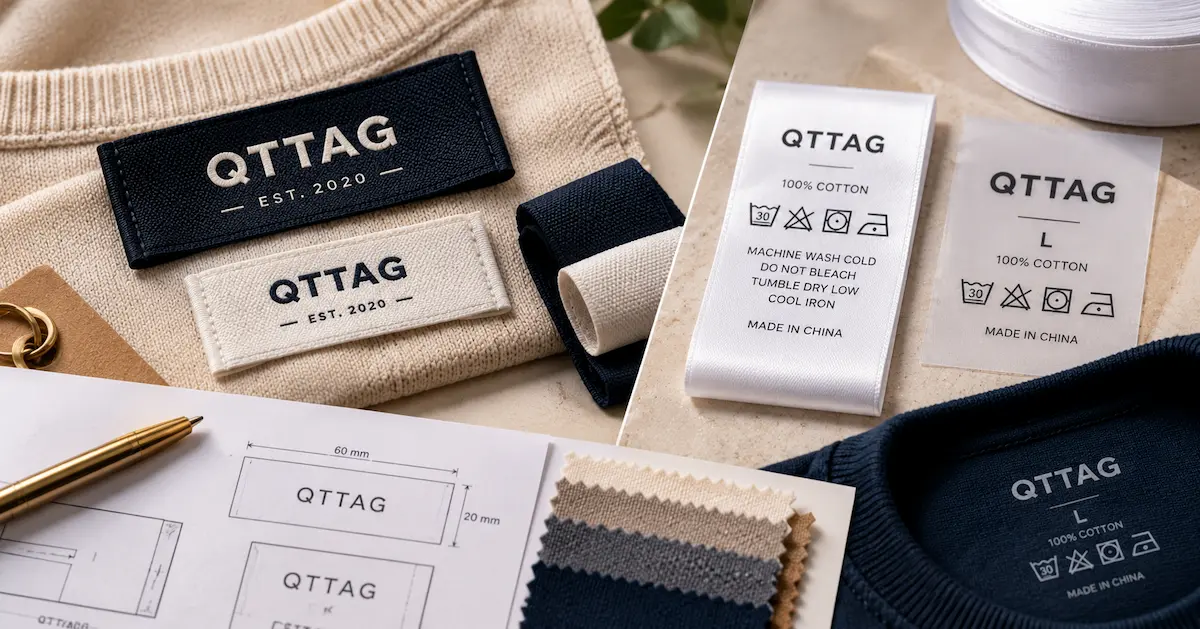
You receive two quotations for the same clothing label. One supplier quotes a lower unit price, while the other asks for more. The artwork is identical, so why the difference?
Look at the specifications before comparing the numbers.
One quotation might cover woven labels that are already cut and folded. The other could be for unfinished woven tape. Perhaps one includes sampling, while the other charges separately for proofing and preparation.
The cost of garment labels depends on the label type, material, dimensions, design complexity, finishing and order quantity. MOQ and lead time are also affected by how many versions are needed and whether new samples must be approved.
There isn't a single industry price that applies to every clothing label.
For a buyer, the useful question is what the finished label will cost by the time it reaches the garment factory—and whether it arrives in the right condition, quantity and version.
Why Do Garment Label Prices Vary Between Suppliers?
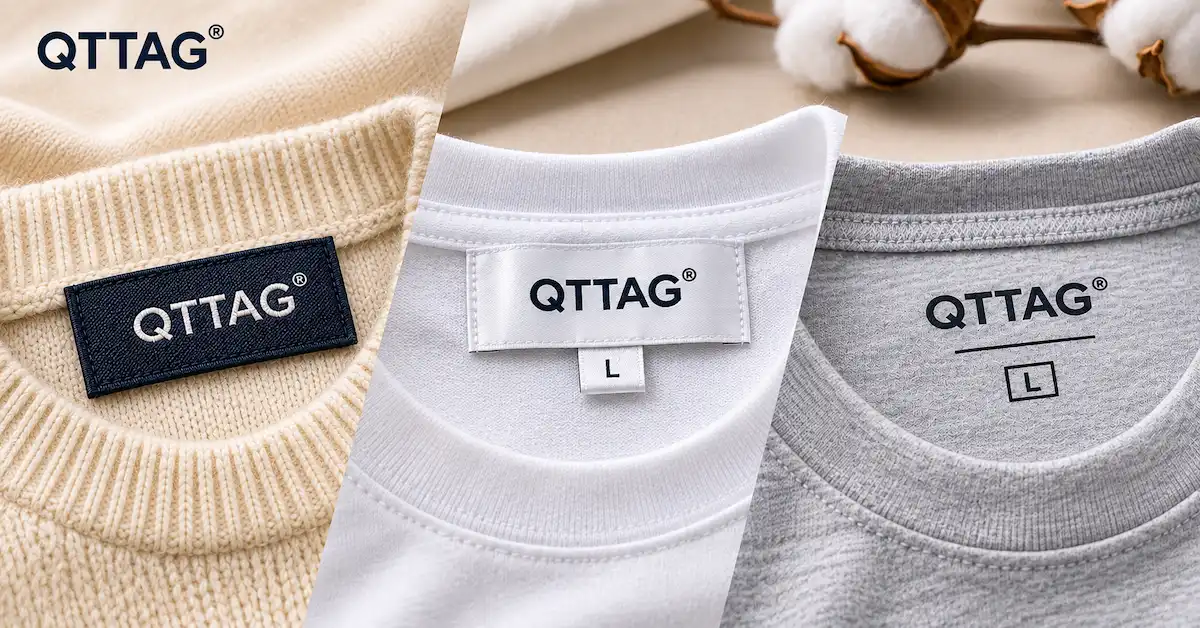
Garment labels are manufactured using different processes. A woven brand label, a printed care label and a heat transfer neck label may serve similar identification purposes, but their production requirements differ.
Woven labels form artwork by interlacing yarns. Printed labels reproduce information on a compatible substrate, while heat transfer labels use a transfer system that must be applied to suitable garment fabric.
The price comparison needs to begin with that distinction.
| Label Type | Common Application | Main Pricing Factors |
|---|---|---|
| Woven Labels | Neck labels and brand identification | Yarn, weave, colors, dimensions, folds |
| Printed Labels | Brand information and care labels | Substrate, printing, text layout, finishing |
| Heat Transfer Labels | Tagless neck branding | Transfer construction, artwork, quantity |
| Size Labels | Garment size identification | Material, versions, dimensions |
| Custom Brand Labels | Collection-specific branding | Artwork, materials, production requirements |
A supplier may offer several constructions within each category.
For example, a small woven label with a simple wordmark doesn't necessarily require the same preparation as one containing intricate lettering and several yarn colors.
Similarly, two printed care labels can differ in material, printing method and information layout.
When requesting prices, send the same finished specification to every supplier.
Otherwise, you may be comparing different products without realizing it.
Which Details Affect the Cost of Custom Garment Labels?
Most buyers expect label dimensions and material to influence pricing. A few less obvious details also matter.
Material and Construction
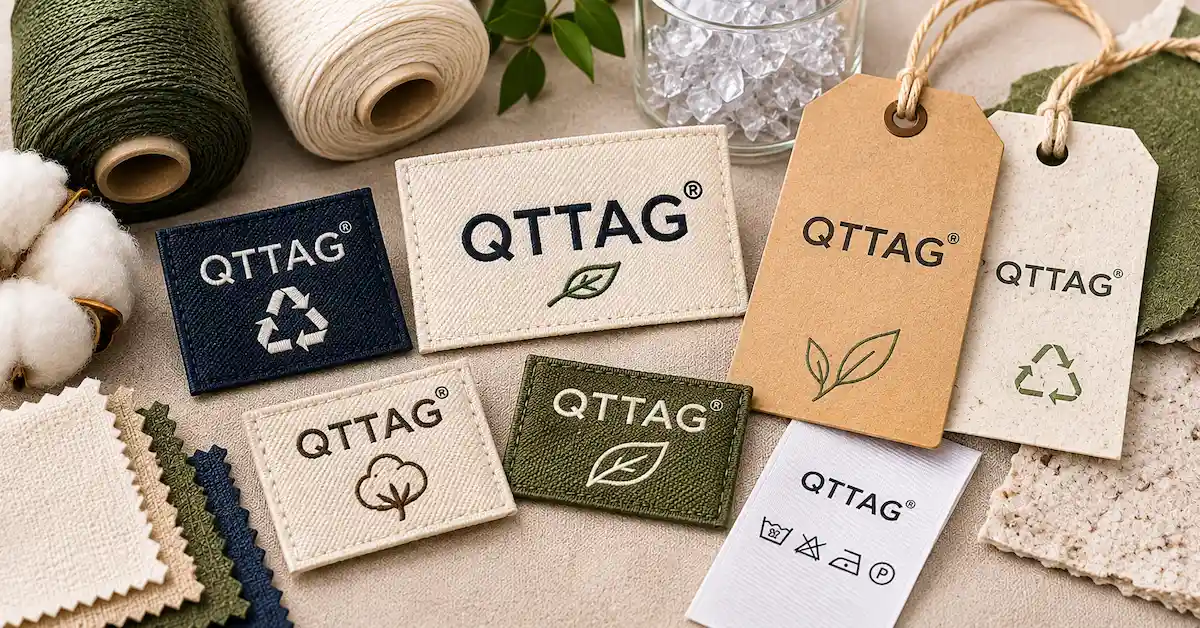
Polyester yarns are widely used in woven labels, but the available yarns and weaving constructions can vary.
Printed labels may use satin-style, polyester or other suitable textile substrates. Each has different material and printing characteristics.
For a brand with a specific surface feel or material requirement, the supplier needs to assess the chosen substrate before confirming the price.
The term premium isn't a technical specification.
If the label needs a particular weave, texture or composition, describe it clearly.
Artwork Complexity
Fine lettering and intricate designs can require additional attention during preparation.
A complex woven logo may need adjustments to its dimensions or weaving specification to achieve acceptable clarity.
That doesn't mean every additional graphic detail automatically increases the price. The actual effect depends on the manufacturing process.
It's worth asking the supplier to review the artwork instead of making assumptions from a general price list.
Size and Finishing
Consider a woven label measuring the same finished width in two different constructions.
One is straight cut. The other requires an end fold.
The total material dimensions and finishing operations may differ.
Other options include center folds, mitre folds and additional cutting requirements.
Before accepting a quotation, ask whether the labels will arrive in the exact form required for garment sewing.
If the factory expects finished individual labels but receives uncut tape, somebody still needs to complete that work.
Color and Design Versions
Brand logos may be produced in several colors for different collections.
Printed care labels introduce another variation: the content may change between garment styles.
Different material compositions, languages or sizes may require separate artwork versions.
These differences should be discussed before the order quantity is finalized.
How Does MOQ Work for Custom Clothing Labels?
MOQ stands for Minimum Order Quantity.
It sounds straightforward until a clothing collection contains multiple designs.
A supplier may set a minimum per artwork, per material, per color combination or per production run.
Those arrangements are not necessarily interchangeable.
A Common Purchasing Situation
Consider a startup preparing three T-shirt styles.
All three use the same brand logo, but the garments have different fiber compositions. The printed care labels therefore need different information.
The buyer wants to order the labels together.
Can the three versions count toward one minimum quantity?
Possibly. But it depends on the supplier's production arrangements.
The fact that the labels share a similar appearance doesn't establish that they can be manufactured as one order.
The supplier needs to confirm the MOQ basis.
Questions Worth Asking
-
Does the minimum apply to the entire order or to each design?
-
Can several sizes be combined?
-
Are different material compositions treated as separate label versions?
-
Does changing the yarn color create a new production minimum?
-
Is a smaller trial quantity available?
-
Are there additional setup charges for small orders?
These questions matter particularly for private-label startups, where the first production run may be relatively small.
A lower MOQ allows a business to purchase fewer units. It doesn't necessarily deliver a lower cost per label.
For that, buyers need to examine the entire quotation.
How Do You Compare the Real Cost of Two Label Quotations?
The unit price is only one line of the purchasing calculation.
Suppose a quotation excludes sampling, cutting, folding and shipment. Those costs may appear later.
Another supplier might include some of them.
It helps to compare the full order.
A practical calculation is:
Total label purchasing cost = label production + applicable setup and sample charges + finishing + packing and freight.
If the garment factory charges separately for sewing or heat-applying labels, include that cost when evaluating the fully branded garment.
Compare Quotes Using the Same Checklist
| Quotation Item | What to Confirm |
|---|---|
| Material | Exact yarn or substrate specification |
| Dimensions | Finished size, including relevant folds |
| Artwork | Approved logo and variations |
| Unit price | Currency and quantity basis |
| MOQ | Minimum per design or order |
| Setup | Included or charged separately |
| Samples | Price and revision terms |
| Finishing | Cutting, folding and other operations |
| Quality requirements | Agreed inspection and sample criteria |
| Packing | Quantity and version identification |
| Freight | Included or excluded |
| Delivery | Production completion and shipping terms |
This checklist can expose differences that aren't visible in the headline price.
Should You Always Order More to Reduce Unit Cost?
Not necessarily.
A larger order may have a lower price per unit. But unused labels still cost money.
If the brand later changes its logo, fabric composition or product range, those extra labels may no longer be usable.
Before increasing quantity, compare the potential unit-price saving with expected demand and the likelihood of artwork changes.
For a new collection, avoiding excess inventory may be more valuable than achieving the lowest possible unit price.
Why Does Garment Label Lead Time Change?
A production estimate needs a clearly defined starting point.
Does the supplier begin counting when the buyer sends an inquiry, pays for the order or approves the final artwork?
Those dates can be different.
Published supplier procedures illustrate this distinction. For example, Dutch Label Shop's FAQ explains its production arrangements and how proof-related revisions can influence turnaround.
That is an example of one supplier's procedure, not an industry-wide guarantee.
For a new label project, several activities may occur before bulk manufacturing begins.
The supplier may need to review the artwork, confirm materials, prepare a proof and produce a sample.
The buyer then checks the result and either approves it or requests changes.
Production and Shipping Are Separate
A supplier might finish manufacturing the labels before the agreed shipment arrives at the garment factory.
The complete delivery plan may include:
-
Artwork review and approval
-
Material confirmation
-
Physical sampling where required
-
Bulk production
-
Cutting, folding and inspection
-
Packing
-
Dispatch and transportation
Not every order follows exactly the same sequence.
A repeat order using unchanged approved specifications may need less development work than a completely new label.
Material availability and production capacity can still affect the schedule.
What Should You Ask About Lead Time?
Ask for the expected dates of artwork approval, sample availability, production completion and dispatch.
If your garment factory has a fixed sewing schedule, share that deadline with the label supplier.
A realistic schedule is more useful than an attractive turnaround claim that excludes sampling or freight.
Is Physical Sampling Worth the Extra Cost?
For a new construction, a physical sample can reveal issues that don't appear in a digital proof.
Take a woven brand label with small lettering.
The digital artwork may look excellent, but the final woven details depend on the selected yarn and construction.
A printed care label presents a different concern. Small symbols and dense text need to remain legible on the actual substrate.
For a heat transfer neck label, the application should be evaluated on suitable garment fabric.
These checks are not interchangeable.
What Should Be Approved?
A useful sample review covers the material, artwork, dimensions, cutting, folding and intended garment application.
Where necessary, it should also include appropriate handling or washing tests.
The final approved sample becomes the physical reference for production.
Sampling isn't a guarantee that every finished unit will be perfect. It gives the buyer and supplier an agreed result to compare against.
A Note on Care Label Information
Printing quality and information accuracy are separate responsibilities.
A label printer might reproduce the approved file exactly, even if the fiber composition written in that file is wrong.
In the United States, the Federal Trade Commission's textile labeling guidance explains the applicable fiber-content, origin and responsible-business identification rules for covered textile products. Separate requirements govern care labeling for covered apparel.
Brands selling internationally should also check the relevant destination-market rules.
Correcting information before labels are printed is usually preferable to discovering an error after they have been sewn into finished clothing.
How Can Clothing Brands Control Label Costs Without Sacrificing Quality?
Cost control works best when the brand knows which details are necessary and which are optional.
A garment label doesn't need an elaborate construction merely to appear professional.
Start with the function.
Is it a visible brand label? A care label? A size identifier? A low-profile neck transfer?
Once that is clear, decide which material and finish are appropriate.
There are several practical ways to avoid unnecessary purchasing complexity.
Keep the artwork stable. Repeated revisions can interrupt development and may introduce additional costs.
Choose dimensions that suit the garment. Oversized labels may use unnecessary material, while labels that are too small can cause readability problems.
Plan design variations early. Work out how many labels are needed for each garment version before asking for MOQ concessions.
Approve samples before bulk production. This reduces uncertainty about the final construction.
Coordinate orders with the garment schedule. Labels arriving before they are needed may add storage work; labels arriving late can delay the garments.
The objective isn't to make every label as cheap as possible.
It's to obtain the required finished product with predictable purchasing conditions.
What Information Should You Send to a Garment Label Manufacturer?
A manufacturer can usually prepare a more useful quotation when the buyer provides a complete, concise specification.
If the project involves custom garment labels, start with the product type and artwork.
Include the intended garment, material preferences, finished dimensions and quantity.
If there are several versions, identify them separately.
The supplier also needs to know how the labels should be finished and where they will be delivered.
| RFQ Field | Information Needed |
|---|---|
| Label type | Woven, printed, heat transfer or other |
| Application | Garment type and intended position |
| Logo | Approved artwork |
| Material | Yarn, fabric or transfer requirement |
| Dimensions | Finished width and height |
| Colors | Approved references |
| Fold | Straight cut, center fold, end fold or other |
| Variations | Designs, sizes or information changes |
| Quantity | Total and per-version requirements |
| Sampling | Physical sample and approval needs |
| Performance | Relevant readability or wash requirements |
| Delivery | Destination and target date |
If the material hasn't been chosen, tell the supplier what the label needs to do and provide a visual reference.
That gives the manufacturer a starting point for discussing feasible constructions.
Frequently Asked Questions About Garment Labels Cost
How much do custom garment labels cost?
Pricing depends on the material, manufacturing process, dimensions, artwork, finishing and order quantity. Request a quotation using the finished specification rather than relying on a generic unit price.
Why are woven labels priced differently from printed labels?
They use different manufacturing processes and materials. The selected artwork, size, construction and quantity influence the actual quotation.
What is the MOQ for custom garment labels?
MOQ varies by supplier and construction. It may apply to each artwork version, material or production run. Confirm the minimum before ordering.
Can I combine different garment sizes in one label order?
Often possible as a purchasing arrangement, but whether the quantities can share one MOQ depends on the manufacturer and production process.
How long does it take to produce custom woven labels?
Lead time depends on artwork approval, material availability, sampling, production and finishing. Ask the supplier when the quoted production period begins.
Are sample charges included in the price?
They may be included or charged separately. Confirm the sample type, number of revisions and relevant fees.
Can I reduce costs by ordering larger quantities?
Larger orders may lower the unit price, but they also increase total spending and potential unused stock. Compare the saving with the quantity your collection actually needs.
Do printed care labels need special approval?
Yes. Buyers should verify the garment information and review the finished print for legibility, material suitability and applicable regulatory requirements.
What should I check when comparing label manufacturers?
Compare equivalent materials, dimensions, artwork, finishing, MOQ, sample terms, production arrangements, quality requirements and delivered cost.
Request a Garment Label Quotation From QTTAG
Before requesting a quotation, prepare the final logo, garment specifications and estimated quantities for each label version.
If you are comparing woven, printed or heat transfer labels, explain the intended garment application and the appearance you want.
QTTAG supports custom apparel branding projects involving garment labels and related products. Actual MOQ, material availability, production schedules and sample arrangements should be confirmed for each inquiry.
Ready to Plan Custom Garment Labels for Your Clothing Brand?
Share your logo artwork, garment specifications, preferred label materials, dimensions, fold requirements, estimated order quantity and delivery needs with QTTAG.
Our team can review your requirements and discuss available customization, sampling and quotation options.
Request a Quote
Author
Founder at QTTAG
Jason Qiao is the founder of QTTAG, focusing on garment branding and packaging solutions. With years of experience in the apparel industry, he shares practical insights on custom labels, hang tags and sustainable packaging to help global brands grow.
Written By
Jason Qiao