7 Common Clothing Labels Mistakes and How to Avoid Them
Clothing labels may be small, but mistakes in their design, materials or production can affect the appearance, comfort and identification of an entire apparel collection. An unclear woven logo, an uncomfortable neckline label or incorrect washing instructions can create problems long after the original artwork has been approved.
For fashion brands and private-label manufacturers, these problems are often preventable. Most begin with incomplete specifications, unsuitable materials, unrealistic artwork or insufficient sample testing.
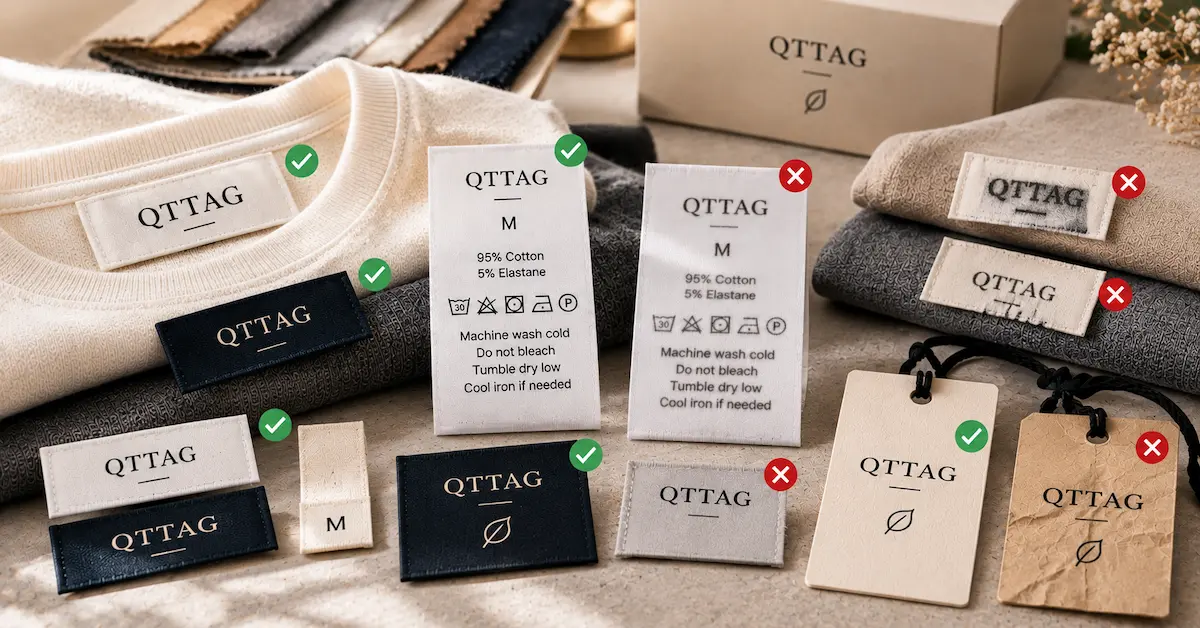
The seven most common clothing labels mistakes are choosing the wrong material, using incorrect dimensions, overlooking artwork limitations, printing inaccurate care information, selecting poor label placement, skipping physical sampling and failing to control bulk production quality.
Avoiding these mistakes requires more than choosing an attractive label design. Buyers should evaluate how each label will be manufactured, attached to the garment and used throughout the product's intended life.
This guide explains seven common problems in custom clothing label development, why they occur and how apparel sourcing teams can prevent them before bulk manufacturing.
Why Do Clothing Label Mistakes Matter?
Clothing labels serve different functions depending on the product.
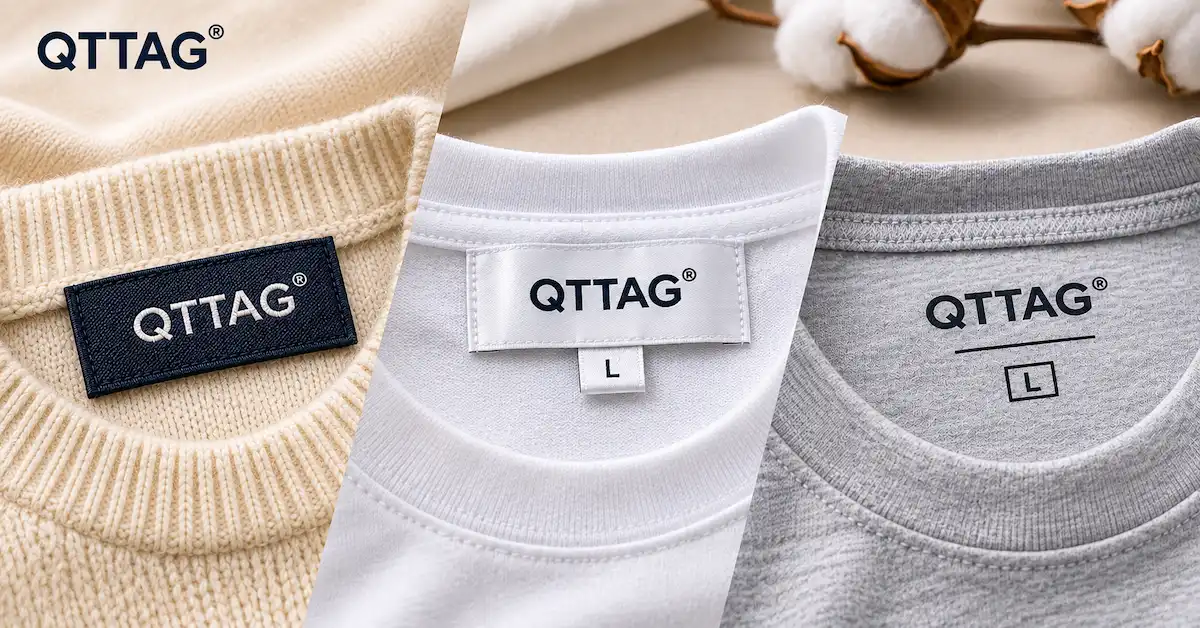
A woven brand label helps identify the manufacturer or fashion brand. A printed care label communicates product information, while a size label helps distinguish garment variations. Heat transfer neck labels offer another way to present branding directly on suitable fabric.
When one of these components fails to meet its requirements, the impact may extend beyond the label itself.
For example, a neckline label that is too stiff may affect the garment's intended comfort. Incorrect care information may create compliance or product-use concerns. A brand label with inconsistent logo proportions may weaken the collection's visual identity.
Common Consequences of Labeling Mistakes
-
Poor reproduction of the brand logo
-
Labels that look disproportionate on garments
-
Uncomfortable or unsuitable attachment
-
Incorrect garment information
-
Delays caused by repeated sample revisions
-
Additional sorting, replacement or rework
-
Inconsistent branding across different product styles
-
Potential problems with applicable labeling rules
The best prevention strategy is to establish clear specifications and validate the finished label before production.
Mistake #1: Choosing the Wrong Clothing Label Material
One of the most common clothing label design mistakes is selecting a material based only on its appearance.
A label may look attractive in a supplier photograph but feel too stiff, appear too thick or behave differently after washing.
Material choice should follow the garment's requirements rather than a general assumption that a particular fabric is always better.
Why This Mistake Happens
Buyers sometimes select materials before confirming the garment application.
For example, a label intended for a lightweight T-shirt has different handling requirements from a decorative woven label on a heavy jacket.
The label construction also affects the finished result.
A woven label uses interlaced yarns to reproduce artwork. A printed label applies information onto a suitable substrate. A heat transfer label depends on compatibility between the transfer and garment fabric.
Choosing Materials by Application
| Label Type | Common Material Consideration | What Buyers Should Check |
|---|---|---|
| Woven brand label | Yarn and weave construction | Logo clarity, texture and flexibility |
| Printed care label | Suitable printed textile substrate | Comfort and print readability |
| Satin-style label | Surface finish and construction | Feel, thickness and laundering |
| Cotton-based label | Textile structure | Print quality and dimensional behavior |
| Heat transfer label | Transfer and fabric compatibility | Surface feel, adhesion and application |
| Decorative label | Intended visual appearance | Weight, edge finishing and attachment |
How to Avoid the Mistake
Begin by identifying the garment type, intended label position and required information.
Then request representative material samples.
Evaluate the material both separately and after it has been attached to the garment.
Where relevant, inspect the result after laundering under defined conditions.
Key buying principle: Material suitability should be established through actual garment application and testing, not simply through a supplier's product description.
Mistake #2: Using Incorrect Label Dimensions
A correctly manufactured label can still be unsuitable if its dimensions were not planned around the garment.
Oversized labels may interfere with minimalist garment designs. Labels that are too small may make logos, product information or laundry symbols difficult to read.
Why Label Size Matters
Dimensions affect:
-
Brand logo readability
-
Label proportions
-
Sewing allowances
-
Fold construction
-
Garment placement
-
Required information space
-
Wearing comfort
-
Manufacturing feasibility
Confusing Artwork Size With Finished Size
This is a common development problem.
The visible artwork area and the total finished label dimensions may not be identical.
For example, an end-fold label may need additional material at both ends to create the intended fold.
Similarly, a center-fold label may require the artwork to be arranged around the fold line.
The buyer should confirm what each dimension represents.
Label Dimensions and Garment Applications
| Garment | Main Size Consideration |
|---|---|
| T-shirt | Compact label appropriate for the neckline |
| Knitwear | Suitable flexibility and attachment |
| Jacket | Proportion to garment construction |
| Sportswear | Low bulk and compatibility with movement |
| Underwear | Comfort and limited label space |
| Children's clothing | Product suitability and applicable requirements |
| Uniform | Readability and consistency |
How to Avoid the Mistake
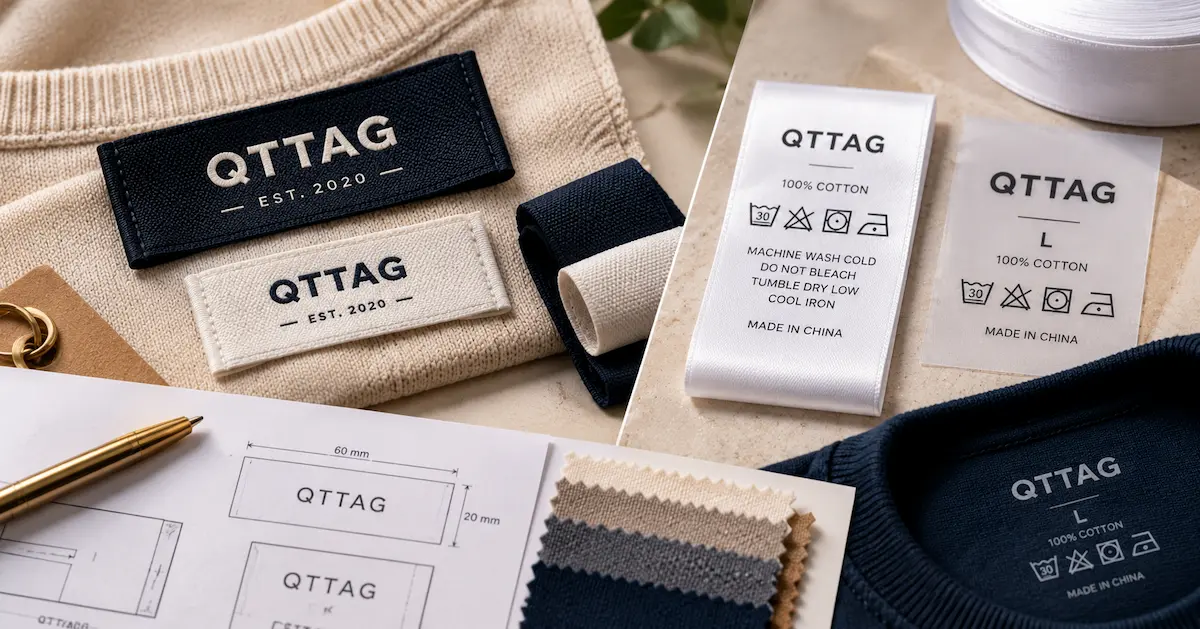
Provide the supplier with the intended finished width and height, fold type and garment placement.
Check the printed or woven artwork at its actual size.
Approve the label on a representative garment rather than evaluating it only on a flat sample board.
Do not assume that a label size suitable for one clothing style will work for an entire collection.
Mistake #3: Ignoring Logo Detail and Artwork Limitations
Brand designers work with digital artwork, but physical clothing labels are manufactured through weaving, printing or transfer processes.
These technologies do not reproduce every detail in exactly the same way.
Thin lettering, complex logos and closely spaced graphic elements can become difficult to recognize at small label dimensions.
Why Digital Artwork Can Be Misleading
An enlarged digital preview may show every line clearly.
Once the design is converted to woven yarns or printed on a small textile surface, the result may be less precise.
Fine elements can become crowded or lose definition.
Woven Label Artwork
Woven labels reproduce designs using interlaced yarns.
The available resolution depends on yarn, weave construction, dimensions and manufacturing capabilities.
A logo may require spacing or size adjustments.
Printed Label Artwork
Printed labels depend on material, ink or transfer compatibility and printing resolution.
Small typography and symbols should be tested at production size.
Heat Transfer Artwork
Heat transfer labels introduce additional considerations involving transfer construction and fabric application.
Very fine details may not reproduce consistently with every process.
Common Artwork Problems
| Problem | Possible Reason | Recommended Action |
|---|---|---|
| Blurred lettering | Artwork too small for the process | Review finished size |
| Missing graphic details | Manufacturing resolution limitations | Adjust approved artwork |
| Incorrect logo proportions | Artwork scaling error | Use master vector file |
| Poor color matching | Material and process differences | Approve physical references |
| Uneven spacing | Inappropriate artwork preparation | Review production proof |
| Illegible care symbols | Excessively small printing | Increase usable information area |
How to Avoid the Mistake
Prepare an approved vector logo where appropriate.
Provide exact finished dimensions and brand color references.
Ask the label supplier to review the smallest letters and most complex details.
If adjustments are required, approve the revised artwork before sampling.
Never allow production changes to alter a brand logo without review and approval.
Mistake #4: Printing Incorrect Care or Composition Information
Not every clothing label carries regulated information, but care and composition labels require particular attention.
Incorrect text can create problems even when the label itself has been manufactured perfectly.
For example, a supplier may print exactly what appears in the approved artwork, but the original fiber composition may not match the garment.
This is a content-verification problem rather than a printing defect.
What Information May Need Verification?
Depending on the garment and destination market, relevant information may include:
-
Fiber composition
-
Washing instructions
-
Bleaching instructions
-
Drying methods
-
Ironing guidance
-
Professional textile care
-
Country of origin
-
Responsible business identification
-
Applicable language requirements
-
Additional product-specific information
The exact requirements differ by jurisdiction and garment category.
Why This Mistake Happens
Several teams may be involved in preparing a clothing collection.
The fabric supplier provides material information, the garment manufacturer develops the clothing, the brand approves the product and the label supplier manufactures the label.
If information is transferred incorrectly between these teams, the finished label may contain inaccurate content.
Why Copying Another Garment's Label Is Risky
Two garments that look similar may contain different fibers, finishes or constructions.
A washing instruction suitable for one product may not be suitable for another.
Care information should be developed from the actual garment's requirements.
How to Avoid the Mistake
Create a controlled source of approved garment information.
Identify the responsible party for verifying each field.
Confirm the destination markets before completing the artwork.
Review label content separately from printing quality.
Where appropriate, obtain qualified regulatory review before production.
Important: A label manufacturer can reproduce approved information, but accurate printing alone does not prove legal compliance.
Mistake #5: Choosing the Wrong Label Placement or Attachment
A label can have the correct artwork, dimensions and material yet still cause problems when applied to the garment.
Placement affects appearance, comfort and usability.
An unsuitable position may interfere with a seam, become uncomfortable against the skin or fail to meet applicable labeling requirements.
Neckline Labels
Neckline labels are often used for brand identification.
The buyer should evaluate how the finished label sits against the garment and whether the attachment creates unwanted bulk.
Side Seam Labels
Side seam locations may be suitable for selected information labels.
However, the construction should provide adequate access to the printed information and meet the relevant requirements.
Exterior Branding Labels
Some clothing brands use visible labels as decorative elements.
Their position should complement the garment design.
Sewn Labels vs. Heat Transfer Labels
Sewn labels use a suitable stitching or seam attachment.
Heat transfer labels require compatible application materials and validated pressing conditions.
Neither method is universally better.
The correct choice depends on fabric, artwork, garment construction and intended use.
Label Placement Checklist
| Placement Issue | What to Check |
|---|---|
| Neckline discomfort | Material feel and fold construction |
| Label distortion | Stitch position and tension |
| Poor visibility | Garment location and orientation |
| Excessive bulk | Material layers and size |
| Incorrect placement | Approved garment reference |
| Heat transfer failure | Fabric and application compatibility |
| Information access | Readability and relevant market rules |
How to Avoid the Mistake
Test the label on an actual sample garment.
Inspect it after sewing or application, not only while it is loose.
For different garment types, determine whether separate label constructions or positions are necessary.
Document the approved placement and application method before manufacturing.
Mistake #6: Skipping Physical Sample Approval
Digital mockups are useful for communicating design intent, but they cannot demonstrate every physical characteristic of a garment label.
A digital image cannot fully reproduce yarn texture, label thickness, edge feel, fold construction or the actual appearance after sewing.
Skipping sample approval can leave important problems undiscovered until bulk production.
Why Physical Samples Are Important
A physical sample allows buyers to evaluate:
-
Actual logo reproduction
-
Material texture and flexibility
-
Yarn or printing color
-
Finished dimensions
-
Cutting and folding
-
Sewing allowances
-
Garment attachment
-
Comfort and appearance
-
Relevant washing or durability performance
A Practical Sample Approval Process
Step 1 — Confirm the specifications
Approve the artwork, intended materials, dimensions and application.
Step 2 — Produce representative samples
Use the proposed manufacturing construction.
Step 3 — Inspect the physical label
Check artwork clarity, colors, dimensions and finishing.
Step 4 — Attach the label to a garment
Evaluate the finished application.
Step 5 — Perform relevant tests
Where necessary, assess washing, handling or attachment performance.
Step 6 — Record the approved sample
Retain the final reference and corresponding specification.
Sample Approval Table
| Sample Item | Approval Requirement |
|---|---|
| Artwork | Correct logo and approved information |
| Material | Intended yarn or fabric |
| Dimensions | Agreed finished size |
| Colors | Approved physical appearance |
| Fold | Correct construction |
| Edges | Acceptable cutting or finishing |
| Attachment | Suitable garment application |
| Comfort | Appropriate for intended contact |
| Durability | Relevant performance criteria |
How to Avoid the Mistake
Require physical sample approval for new materials, important construction changes or applications where actual performance cannot be established from artwork alone.
Record all requested revisions.
Do not authorize bulk production using an ambiguous or outdated sample reference.
Mistake #7: Failing to Control Bulk Production Quality
A sample may be accurate, but production quality can still vary if specifications, materials and inspections are not controlled.
This is especially important when a brand orders multiple label types or several garment sizes.
Common Production Problems
Potential issues include:
-
Incorrect yarn or material selection
-
Inconsistent logo details
-
Unexpected color variation
-
Wrong label dimensions
-
Irregular folds or cut edges
-
Incorrect care-label artwork versions
-
Mixed garment size labels
-
Incorrect packing quantities
These are possible manufacturing risks, not verified defects in any particular QTTAG product.
Establish a Production Reference
The supplier should manufacture according to the final approved artwork and sample.
Identify Different Versions
Each relevant label variation should have a clear reference.
For example, a collection may need different care information or size labels for several garments.
Check Incoming Materials
Verify that the materials match the approved specification.
Inspect During Production
Where appropriate, examine representative units before the entire order has been completed.
Perform Final Inspection
Compare finished labels against the agreed acceptance criteria.
Confirm Packing Accuracy
Different artwork and size versions should be identified and packed correctly.
How to Avoid the Mistake
Develop a practical inspection plan based on the product and manufacturing risks.
Use agreed dimensional tolerances, material references and quality criteria.
Record defects and corrective actions when necessary.
Retain the approved specifications for repeat orders.
Quick Comparison: Seven Common Clothing Label Mistakes
The following table summarizes the seven problems and the most effective prevention points.
| Mistake | Main Risk | Prevention |
|---|---|---|
| Wrong material | Poor feel or unsuitable performance | Evaluate material on garment |
| Incorrect dimensions | Poor fit or unreadable details | Approve actual finished size |
| Artwork limitations ignored | Unclear logo or text | Review production artwork |
| Incorrect care information | Misleading or noncompliant content | Verify source information |
| Poor placement | Discomfort or unsuitable attachment | Test finished application |
| No physical sample | Unidentified construction problems | Approve representative samples |
| Weak production control | Inconsistent orders | Maintain references and inspections |
For apparel brands, these checks are most useful when completed before bulk production rather than after the garments have been assembled.
How to Choose the Right Clothing Labels for Different Garments
Different garments may require different label constructions.
A consistent brand identity can be maintained without using an identical physical label on every product.
T-Shirts
Lightweight garments may benefit from relatively compact labels or suitable tagless branding.
Evaluate comfort, placement and washing performance.
Knitwear
The label should suit the garment's texture, thickness and movement.
Outerwear
Jackets and coats may accommodate a wider range of woven brand label constructions.
However, placement and attachment should still follow the garment specification.
Sportswear
Material flexibility, garment movement and application durability may be important.
Underwear
Comfort and limited label space may influence material and construction decisions.
Children's Clothing
Additional product safety or labeling requirements may apply.
Product-specific suitability and applicable market rules should be reviewed.
Uniforms
Brand consistency, identification and repeat production may be important purchasing considerations.
The preferred label should be approved for the actual garment rather than selected solely from a general product catalog.
Why Custom Clothing Labels Need Better Artwork Management
Custom clothing labels often involve multiple design versions.
A brand may have one master logo, several garment sizes and different care-label layouts for different products or export markets.
Without clear artwork management, suppliers may receive inconsistent files.
Maintain a Master Logo
Use an approved source file.
Define Artwork Versions
Identify relevant differences between designs.
Control Size Information
Ensure the size shown on the label matches the intended garment.
Verify Care Information
Each garment's approved content should be associated with the correct product.
Maintain Material References
Document the yarn, fabric or transfer construction.
Record Approval Dates and Revisions
Keep a clear record of which version is authorized for production.
Confirm Repeat Orders
Check whether the specification has changed before manufacturing again.
Good artwork management helps reduce preventable label errors across clothing collections.
How Clothing Labels Affect Apparel Branding
Labels contribute to brand recognition and the overall finished garment presentation.
However, branding quality comes from consistent execution rather than material cost alone.
Logo Consistency
The same approved identity should appear across appropriate garment styles.
Typography
Lettering should remain readable and recognizable.
Material Presentation
Woven, printed and transfer labels create different visual effects.
Color Direction
Physical color references can help align different materials.
Garment Application
Labels should sit appropriately on the finished product.
Coordinated Hang Tags and Packaging
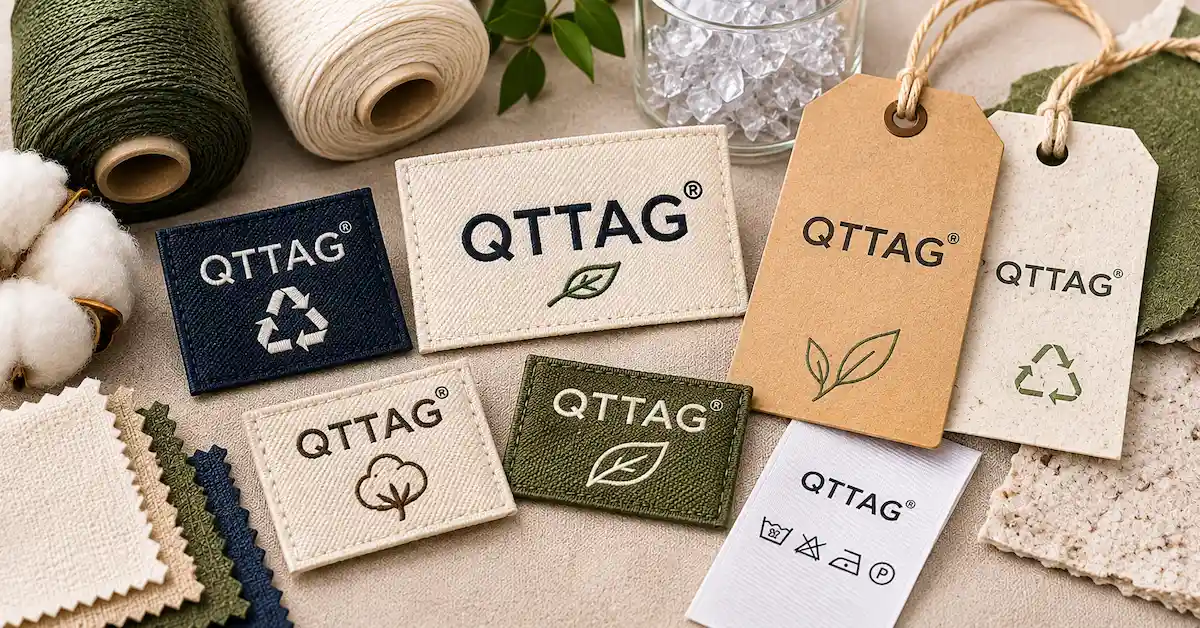
A consistent identity may extend to paper hang tags, shopping bags and packaging boxes.
A label that looks attractive in isolation may not complement the garment if its material, size or placement is poorly selected.
For this reason, apparel branding should be reviewed as a complete product system.
How to Prepare a Clothing Label RFQ Without Missing Details
A clear Request for Quotation helps suppliers understand the actual product requirements.
It also makes competing quotations easier to compare.
| RFQ Information | What Buyers Should Provide |
|---|---|
| Brand artwork | Approved logo or technical design |
| Garment type | Intended clothing application |
| Label function | Brand, care, size or decorative |
| Label material | Preferred yarn or fabric |
| Finished dimensions | Width and height |
| Artwork colors | Approved references |
| Printing or weaving | Preferred construction |
| Fold type | Center fold, end fold or other |
| Attachment | Sewing or compatible transfer |
| Information | Approved garment text |
| Quantity | Estimated order volume |
| Variations | Different sizes or designs |
| Sampling | Physical sample requirements |
| Quality | Relevant acceptance criteria |
| Delivery | Destination and target schedule |
Include the Garment Application
Supplier recommendations are more useful when the actual garment is known.
Specify the Finished Product
Do not rely only on a flat logo image.
Ask About Material and Manufacturing Limits
The supplier should identify artwork or construction details that may require revision.
Clarify Sampling and Commercial Terms
Confirm available sample options, minimum order quantities and quotation scope for the specific product.
How to Reduce Clothing Label Problems Across Repeat Orders
A brand may approve a label successfully for its first collection and encounter inconsistencies when ordering again.
Repeat-order quality depends on retaining the correct specifications and references.
Keep Approved Physical Samples
A retained sample provides a useful comparison.
Maintain Product Specifications
Record dimensions, materials, colors, folds and attachments.
Check Artwork Changes
A revised logo or care instruction may require a new label version.
Review Material Substitutions
Any proposed replacement material should be evaluated before use.
Verify Production Identification
Different garment size and style labels must remain correctly identified.
Compare Finished Samples
Check whether repeat-order samples remain consistent with the approved reference.
Update the Quality Record
Document meaningful changes and corrective actions.
A repeat order should not depend solely on the supplier remembering what was manufactured previously.
Frequently Asked Questions About Clothing Label Mistakes
What are the most common mistakes when ordering clothing labels?
Common mistakes include choosing unsuitable materials, incorrect sizes, overly detailed artwork, inaccurate care information, poor placement, skipping sample approval and insufficient production checks.
Why do clothing labels become uncomfortable?
Discomfort may relate to material texture, thickness, cut edges, folding, placement or attachment. The complete label should be evaluated on the actual garment.
How can clothing brands choose the correct label size?
Confirm the intended garment location, finished dimensions, logo readability, fold construction and sewing allowance. Approve a physical sample where appropriate.
What causes poor logo quality on woven labels?
Fine artwork may exceed the detail capabilities of the selected yarn or weave construction. A supplier should review artwork at its intended finished size.
Can printed care labels contain the wrong information?
Yes. A label may be printed accurately while the source text is incorrect. The responsible product team should verify composition, care instructions and applicable market requirements before production.
Are heat transfer labels better than sewn labels?
Neither is universally better. The correct choice depends on garment fabric, comfort, artwork, attachment and performance requirements.
Is physical sampling necessary for custom clothing labels?
Physical sampling is strongly recommended for new constructions and applications where material feel, artwork reproduction or garment compatibility requires verification.
What should buyers inspect before bulk label production?
Review artwork, materials, dimensions, colors, finishing, attachment, relevant performance requirements and correct identification of label versions.
How can brands prevent inconsistent clothing labels between orders?
Maintain approved artwork, material specifications, physical samples and production references. Review significant changes before repeat manufacturing.
Can one label design work for every garment?
A common brand identity can be used across a collection, but different garment types may require different label dimensions, materials or attachment methods.
What is the minimum order quantity for custom clothing labels?
MOQ depends on the supplier, material, label construction and design. Request a quotation for the actual specification.
Can QTTAG help review clothing label specifications?
QTTAG supports custom garment labeling inquiries. Buyers can provide their approved artwork, materials, dimensions and application requirements to discuss available customization and sampling options.
Avoid Clothing Label Mistakes With QTTAG
A successful clothing label project begins with accurate requirements.
Material selection, logo design, dimensions, care information, label placement and production quality should be considered together.
For fashion brands and private-label manufacturers, physical samples and approved production specifications are important tools for reducing avoidable mistakes.
QTTAG supports custom apparel branding projects, including woven labels, printed care labels, heat transfer labels and related garment identification products.
When developing a new clothing collection, share your approved logo, garment specifications, preferred materials, label dimensions, attachment requirements and estimated quantities.
These details provide a starting point for discussing customization, suitable constructions and physical sample development.
Ready to Create Custom Clothing Labels for Your Apparel Brand?
Share your logo artwork, garment type, preferred label materials, dimensions, fold requirements, care label information and estimated order quantity with QTTAG.
Our team can discuss suitable clothing label customization and sampling options for your collection.
Request a Quote
Author
Founder at QTTAG
Jason Qiao is the founder of QTTAG, focusing on garment branding and packaging solutions. With years of experience in the apparel industry, he shares practical insights on custom labels, hang tags and sustainable packaging to help global brands grow.
Written By
Jason Qiao