How to Choose Clothing Labels for Modern Apparel Brands
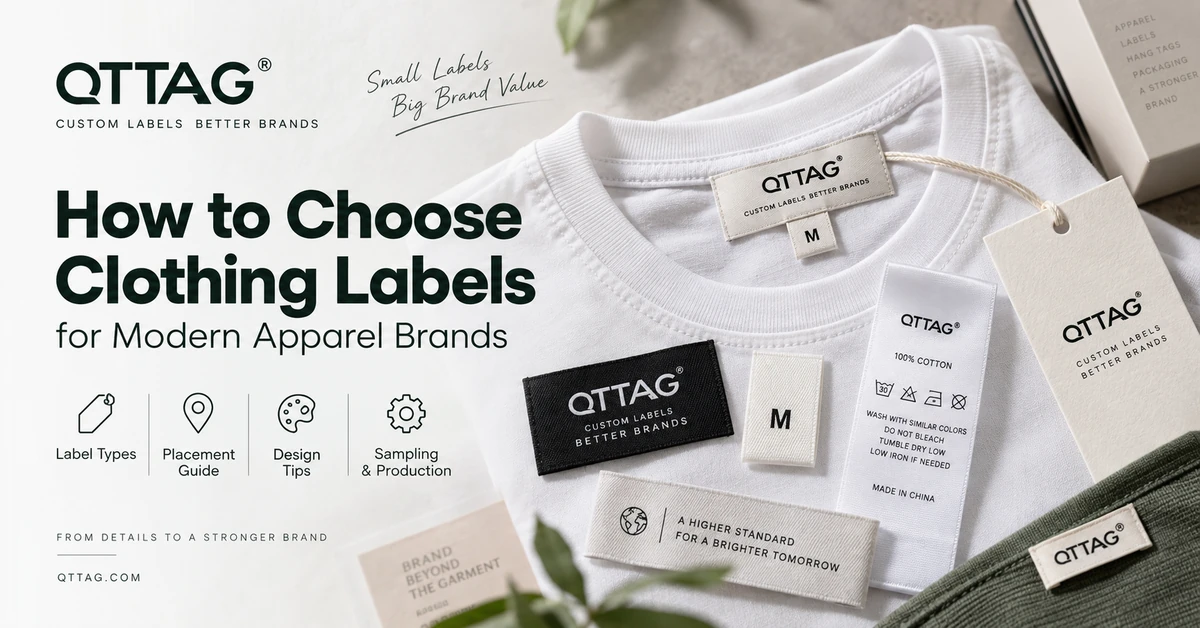
A clothing label may take up only a few centimeters of fabric, but its placement, size, material, and design affect how a garment looks and feels.
For fashion brands, private-label businesses, and apparel manufacturers, the challenge is not simply choosing one attractive label. It is deciding how several labels should work together without making the garment uncomfortable, cluttered, or difficult to produce.
The most effective clothing label system separates brand identification, sizing, care information, and decorative branding. Each label should have a clear purpose, an appropriate location, and specifications that match the garment's construction.
This guide explains how to plan that system, avoid common labeling mistakes, and prepare a clear specification for your clothing label manufacturer.
What Are Clothing Labels?
Clothing labels are woven, printed, or transferred components used to identify garments and communicate information about them.
They commonly display:
-
Brand names and logos
-
Garment sizes
-
Fiber composition
-
Care instructions
-
Country of origin
-
Product identification or other information
-
Decorative branding elements
Different labels serve different purposes. A neckline label may display the brand name, while a side-seam label carries garment information.
An external hem label might be added to reinforce the brand identity without interfering with the main design.
For buyers, the important question is not how many labels a garment can accommodate. It is how many are necessary.
Adding labels without considering their purpose can increase manufacturing complexity and make the garment less comfortable.
Plan the Complete Clothing Label System First
Before selecting individual labels, consider the garment as a finished product.
A label system should account for the garment's appearance, construction, use, and destination market.
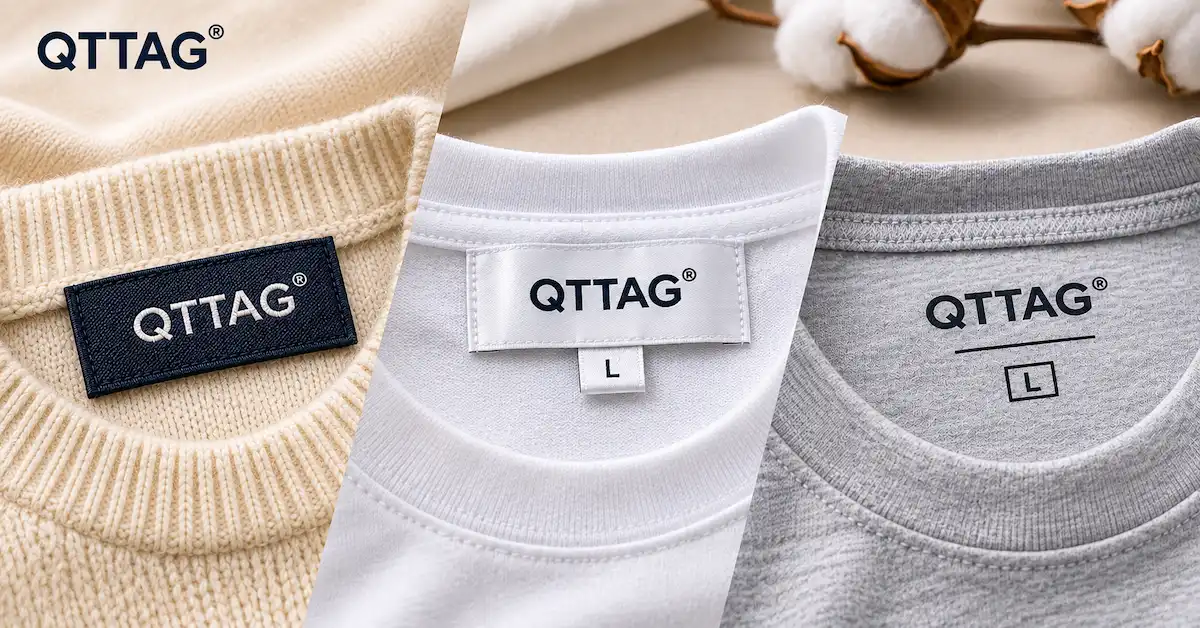
For example, a premium cotton T-shirt could use a woven neckline label, a small size tab, and a printed side-seam care label.
An athletic T-shirt might use a tagless neckline transfer and a separate information label.
A denim jacket might include a prominent interior brand label and an exterior decorative label.
These examples illustrate different ways of organizing clothing identification.
Clothing Label Placement Guide
| Label Type | Common Placement | Main Purpose | Key Consideration |
|---|---|---|---|
| Main Brand Label | Inner neckline or waistband | Brand identification | Visibility and comfort |
| Neck Label | Back of the collar | Brand and garment identity | Skin contact |
| Size Label | Near main label or side seam | Size identification | Clarity and consistency |
| Care Label | Side seam or approved position | Fabric and care information | Legibility and applicable regulations |
| Hem Label | Bottom garment edge | Decorative brand visibility | Placement and attachment |
| Sleeve Label | Sleeve seam or cuff | Additional branding | Size and garment appearance |
| Interior Information Label | Designated inside location | Required or optional information | Durability and legal requirements |
Placement examples are illustrative. Actual information-label placement must follow the rules applicable to the product and sales market.
A useful starting point is to draw a garment diagram and mark every planned label position.
This makes it easier to identify unnecessary duplication before sampling.
How to Choose the Right Main Brand Label
The main brand label is often one of the first details customers notice when examining a garment.
It should represent the brand clearly while remaining appropriate for the clothing category.
A label for a minimalist fashion collection might use a small logo with restrained colors.
A streetwear brand may choose a more visible woven label with stronger color contrast.
A children's clothing brand may place greater emphasis on softness and comfort.
Consider the Logo Design
Fine lettering, complex symbols, and closely spaced elements need special attention.
Artwork that appears sharp on a large digital screen may lose definition when reduced to a small fabric label.
Before production, check:
-
Logo width and height
-
Letter spacing
-
Minimum readable text size
-
Color contrast
-
Background and thread or print colors
-
Visual appearance at actual label dimensions
If the artwork contains small details, request a sample rather than assuming the design will reproduce perfectly.
Match the Label to the Garment
The size and appearance of the main label should suit the product.
An oversized label may look appropriate on a statement jacket but feel excessive inside a lightweight T-shirt.
The label should complement the garment, not compete with it.
Neck Labels: Comfort Matters as Much as Branding
Neck labels deserve particular attention because they may contact the wearer's skin.
A label that feels acceptable when held in the hand can become irritating after hours of wear.
The problem may come from a stiff substrate, a rough cut edge, bulky sewing, or an unsuitable fold.
Sewn Neck Labels
Sewn neck labels are suitable for many types of apparel, especially when the brand wants a traditional textile finish.
When evaluating samples, consider how the label bends with the fabric and whether the edges remain comfortable.
Tagless Neck Labels
Tagless heat transfer labels are another option for compatible garment fabrics.
They are commonly considered for:
-
Activewear
-
Underwear
-
Lightweight T-shirts
-
Performance clothing
-
Garments where low bulk is important
A heat transfer label can remove the need for a separate sewn neckline label, but it must be evaluated for fabric compatibility, appearance, and laundering performance.
Neck Label Decision Checklist
| Buyer Question | What to Evaluate |
|---|---|
| Will the label contact skin? | Softness and edge comfort |
| Is the garment lightweight? | Label thickness and flexibility |
| Is the logo highly detailed? | Reproduction method |
| Will the garment be washed frequently? | Label and attachment performance |
| Is a tagless finish preferred? | Transfer suitability and care conditions |
The best choice is the one that performs well on the finished garment, not simply the one that looks best in a product photograph.
Size Labels: Keep Information Clear and Consistent
Size labels may look simple, but inconsistent sizing information can create confusion during apparel production and distribution.
A clothing collection may include XS, S, M, L, XL, and larger sizes. Each garment needs to receive the correct size identification.
For international collections, buyers should also decide whether the label will show one sizing system or multiple regional equivalents.
Separate or Combined Size Labels?
A size label can be made as a separate tab or integrated into another label design.
Separate size labels may provide flexibility when the same main brand label is used across several garment sizes.
Combined labels may reduce the number of separate components but require more artwork variations.
The correct option depends on the collection structure, production method, and the way garments are assembled.
Check Size Accuracy Before Packing
For orders involving multiple sizes, specify how labels should be identified, separated, and packed.
Incorrect size labels can create problems even when the garments themselves have been manufactured correctly.
A clear size-by-size packing instruction helps reduce this risk.
Care Labels: Plan the Information Before the Layout
Care labels are especially important because they may carry information required for consumer use and regulatory compliance.
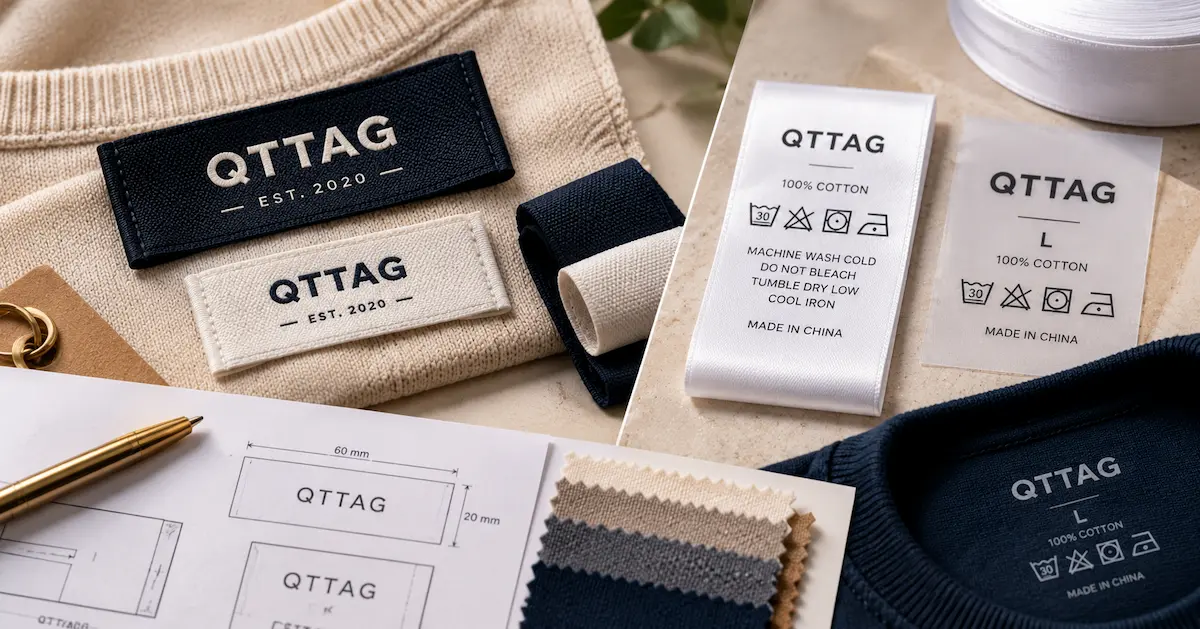
Depending on the destination market and product category, textile labels may need information such as fiber composition, origin, business identification, or care instructions.
These requirements vary.
For example, the United States has textile and care-labeling rules administered by the Federal Trade Commission, while the European Union has rules concerning textile fiber composition labeling.
Brands should confirm the exact requirements for their products before finalizing artwork.
Common Care Label Information
| Information | Why It Matters |
|---|---|
| Fiber Composition | Identifies textile materials |
| Care Instructions | Helps consumers care for garments |
| Country of Origin | Supports applicable origin disclosure requirements |
| Responsible Business Details | May be required under destination-market rules |
| Size or Product Information | Supports identification and handling |
| Care Symbols | Communicates garment-care instructions where appropriately used |
Not every field is mandatory for every garment in every market.
A label should not include unverified fiber claims, inaccurate care instructions, or unsupported certifications.
Readability and Durability
Care information must remain readable under the conditions required by the relevant rules and intended use.
Tiny text may allow a smaller label, but it can become difficult to read.
Review the final label at actual size.
Where appropriate, test the print or weave after laundering.
Production tip: Approve the final care-label text separately from the brand logo artwork. A change in fabric composition or destination market may require the information label to be revised even when the branding remains unchanged.
Hem Labels and Decorative Clothing Labels
Not every label needs to be hidden inside the garment.
Hem labels and other decorative labels can add brand recognition in places where traditional neck labels are not visible.
Common examples include labels attached to:
-
T-shirt bottom hems
-
Jacket side seams
-
Hoodie pockets
-
Sleeve cuffs
-
Denim waistbands
-
Fabric accessories
The design should match the visual character of the clothing collection.
Consider the Attachment Method
A folded woven label may suit a garment seam.
A flat decorative label may require a different sewing or attachment arrangement.
Before approval, examine the garment construction and confirm where the label will be attached.
The label should not interfere with normal wear or with the garment's intended appearance.
Avoid Excessive Branding
Multiple visible logos can create a crowded design.
A small, well-positioned hem label often communicates brand identity more effectively than several competing decorative elements.
For minimalist apparel collections, restraint can be part of the branding strategy.
How Should Clothing Labels Match a Brand Identity?
A complete clothing label system should look coordinated.
This does not mean that every label must be identical.
A brand may use a black woven neckline label, a white information label, and a colored exterior hem label.
The components can still feel related when they use consistent design principles.
Consider these elements:
Logo proportions: Maintain consistent artwork geometry across different label sizes.
Typography: Use compatible lettering styles and readable text sizes.
Color references: Define colors before sampling, especially when labels use different materials.
Material selection: Choose finishes that complement the garment and brand positioning.
Packaging coordination: Where appropriate, align labels with hang tags, paper bags, boxes, and other packaging elements.
For private-label apparel businesses, planning these details together can simplify artwork approval and reduce inconsistency between products.
Five Common Mistakes When Ordering Clothing Labels
Many labeling problems begin before the manufacturer receives an order.
The following mistakes are worth checking early.
Mistake 1: Choosing Labels Without Checking Garment Construction
A label may look suitable in a catalog but be difficult to attach to a particular seam.
Confirm placement and sewing requirements before approving the construction.
Mistake 2: Using Artwork That Is Too Detailed
Fine lines and small text can be difficult to reproduce at limited dimensions.
Always evaluate artwork at the intended finished size.
Mistake 3: Ignoring Skin Comfort
A stiff or poorly finished label may irritate the wearer.
Assess physical samples on the actual garment.
Mistake 4: Leaving Required Information Until the Last Minute
Fiber composition and care instructions may require technical and regulatory review.
Approving the decorative logo first does not mean the entire labeling system is ready for production.
Mistake 5: Failing to Control Label Variations
Different sizes, colors, and styles create multiple versions of the same label.
A clear product identification and packing system helps prevent mixing.
These issues are easier to correct before bulk production than after labels have been attached to finished garments.
How to Prepare Clothing Label Specifications
A clear specification makes communication easier between apparel brands and suppliers.
It should define what each label needs to display and how it will be manufactured or attached.
Clothing Label Specification Checklist
| Specification | Information to Confirm |
|---|---|
| Garment Category | T-shirt, hoodie, jacket, trousers, etc. |
| Label Purpose | Branding, sizing, care or decoration |
| Label Type | Woven, printed, heat transfer or another method |
| Artwork | Approved logo and information files |
| Finished Dimensions | Width and height |
| Materials | Requested substrate or construction |
| Colors | Artwork and color references |
| Fold or Cut | Required finished construction |
| Placement | Garment location |
| Attachment | Sewing or application method |
| Variations | Sizes, colors, product styles |
| Quantity | Pieces per version |
| Testing | Relevant performance or compliance checks |
| Packaging | Sorting and identification requirements |
When possible, include a photograph of the intended garment and a diagram showing each label position.
This is often more useful than sending only a logo file.
Why Sampling Should Come Before Bulk Production
Sampling gives buyers an opportunity to check whether the proposed labeling system works in practice.
A physical sample can reveal problems that are difficult to notice in a digital proof.
For example, a brand might discover that a neckline label is too wide, a printed care label is difficult to read, or a decorative hem label looks better in a smaller size.
A sample review should focus on:
-
Artwork reproduction.
-
Label dimensions.
-
Materials and texture.
-
Fold construction.
-
Color matching.
-
Placement and attachment.
-
Comfort and appearance.
-
Relevant durability or laundering requirements.
Once the specifications are agreed upon, preserve the approved sample and revision details as production references.
If a design changes after approval, evaluate whether new samples are necessary.
For a collection involving several garment styles, a single loose-label sample may not be sufficient. Consider checking labels on representative finished garments.
How to Work with a Custom Clothing Label Manufacturer
A supplier should be able to discuss how the label specifications relate to the garment and production process.
Useful questions include:
-
Which label construction suits this garment?
-
Can the artwork be reproduced at the requested size?
-
What finishing options are available?
-
Can samples be prepared for review?
-
How are different sizes and designs identified?
-
What inspection criteria should be agreed upon?
-
What information is needed for an accurate quotation?
-
Can multiple branding components be developed together?
The answers should be specific to your project.
A supplier cannot reasonably confirm every detail without knowing the artwork, materials, quantity, and intended application.
Coordinating Labels, Tags, and Packaging
Some apparel projects involve more than clothing labels.
A collection may also require hang tags, string attachments, paper bags, poly bags, or packaging boxes.
Developing these elements within a coordinated design brief can help keep the brand presentation consistent.
QTTAG provides custom garment-label, hang-tag, accessory, and apparel-packaging solutions, with OEM/ODM development and sampling support.
Brands can submit their artwork, garment details, quantities, and packaging requirements for a project-specific review.
Exact production methods, available materials, quantities, and delivery schedules should be confirmed through quotation and sampling.
Frequently Asked Questions About Clothing Labels
What labels does a clothing brand need?
The answer depends on the garment and its destination market. A typical garment may need brand identification, sizing, and applicable information labels, but the exact arrangement varies.
Can I put my own brand name on clothing labels?
Yes. Custom clothing labels can display a supplied brand name or logo, subject to artwork suitability and production requirements.
Where should clothing labels be placed?
Brand labels often appear near the neckline or waistband. Information labels may be placed at designated interior locations, while decorative labels can appear at the hem or sleeve. Applicable rules may restrict certain placements.
Are neck labels and clothing labels the same?
A neck label is one type of clothing label. Clothing labels also include size labels, care labels, hem labels, and other identification components.
Can clothing labels be made in different sizes?
Yes, subject to the selected construction and production capabilities. Provide finished dimensions and relevant attachment specifications.
How do I choose a comfortable clothing label?
Consider material softness, thickness, fold construction, edge finishing, and attachment method. Assess a physical sample on the intended garment.
Should size labels be separate from brand labels?
Either arrangement may work. Separate size tabs allow the same main brand label to be used with different sizes, while integrated designs may reduce separate components.
Are custom clothing labels suitable for small fashion brands?
They can be. Smaller brands should provide clear artwork, quantities, and garment specifications so the supplier can recommend suitable production options.
Can clothing labels match custom hang tags?
Yes. Coordinating logo artwork, typography, colors, and finishing choices can create a more consistent brand presentation.
What information should I send for a clothing label quotation?
Provide your logo, label type, dimensions, material preferences, color references, quantities, attachment requirements, and destination.
Start Your Clothing Label Project with QTTAG
A clothing label system should be planned alongside the garment, not treated as a last-minute accessory.
Start by identifying the required label functions. Then decide where each label belongs and what specifications it needs.
If your collection uses several garment styles, prepare a separate label placement guide for each style.
Ready to Create Your Custom Clothing Labels?
Share your artwork, quantity and specifications with QTTAG.
Request a Quote → Create Your Custom Sample
Author
Founder at QTTAG
Jason Qiao is the founder of QTTAG, focusing on garment branding and packaging solutions. With years of experience in the apparel industry, he shares practical insights on custom labels, hang tags and sustainable packaging to help global brands grow.
Written By
Jason Qiao