Apparel Packaging: A Branding and Packaging Guide for Fashion Businesses
Apparel packaging does more than contain a garment. It protects clothing during handling and delivery, communicates brand identity, and influences how customers experience a product from the moment they receive it.
For fashion businesses, choosing the right packaging involves balancing appearance, garment protection, material selection, dimensions, cost and production requirements. A premium clothing box may create an elegant presentation, but it offers little value if it does not fit the garment properly. Likewise, a branded shopping bag must be suitable for the products it is expected to carry.
The best apparel packaging combines consistent branding with practical garment protection, appropriate materials and packaging structures designed around the actual clothing products.
Whether a fashion brand sells through retail boutiques, wholesale distribution or direct-to-consumer e-commerce, its packaging should reflect the intended customer experience without introducing unnecessary complexity.
This guide explains the main apparel packaging options, branding strategies, materials, design decisions, sampling methods and quality checks that fashion businesses should evaluate before ordering custom packaging.
What Is Apparel Packaging?
Apparel packaging refers to the materials and containers used to protect, organize, present and distribute clothing products.
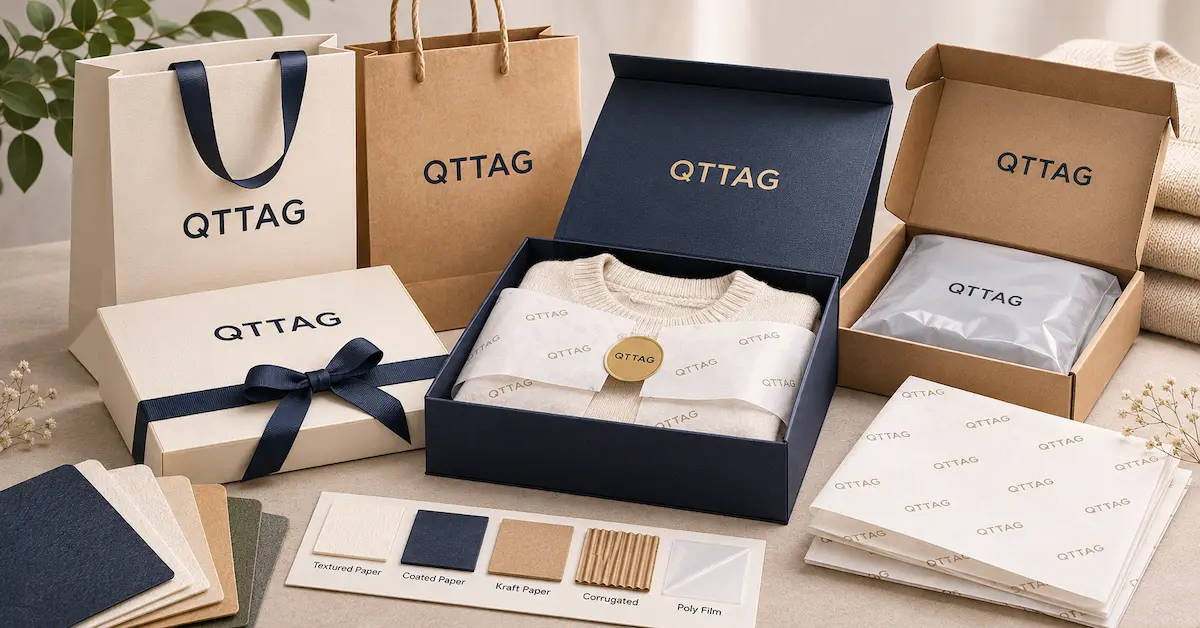
Depending on the brand and sales channel, packaging may include paper shopping bags, protective garment bags, cardboard boxes, mailer boxes, tissue paper, inserts and other related components.
Different packaging products serve different purposes.
A protective bag used during storage has different requirements from a retail shopping bag or a premium gift box.
Common Types of Apparel Packaging
-
Custom paper shopping bags for retail purchases
-
Poly bags and other suitable protective garment packaging
-
Folding cartons for selected clothing products
-
Rigid gift boxes for premium apparel presentation
-
Mailer boxes for e-commerce orders
-
Tissue paper for wrapping and presentation
-
Product cards, stickers and packaging inserts
-
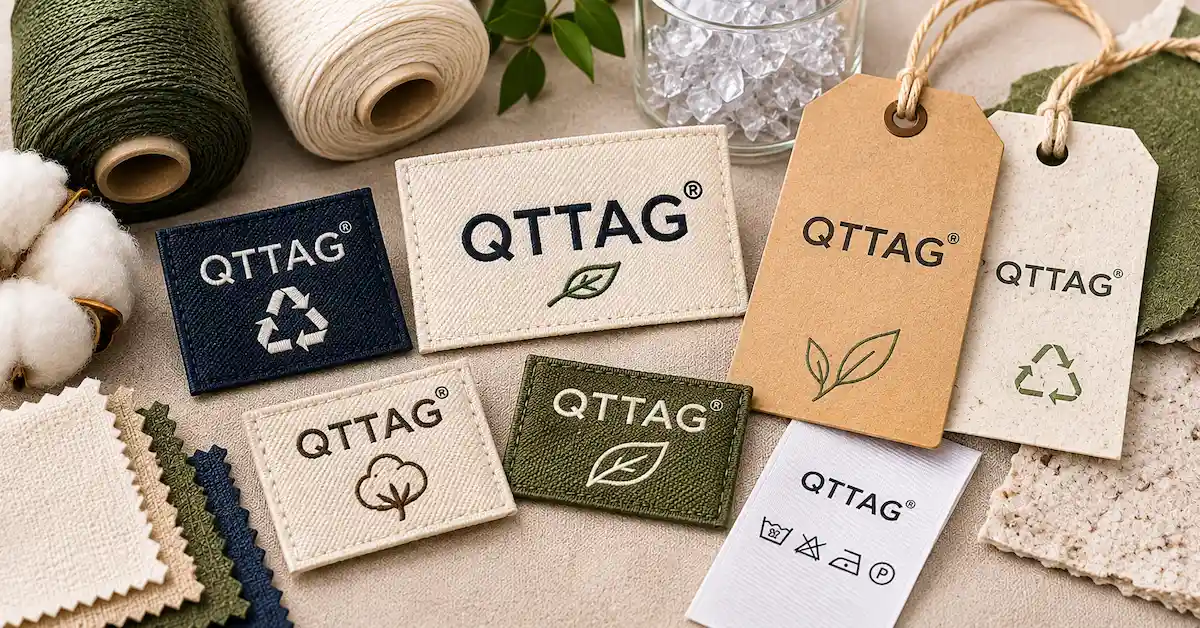
Coordinated labels and hang tags
Not every clothing brand requires all these products.
The appropriate packaging system should reflect the garments, sales channels, customer expectations and operational requirements.
Why Apparel Packaging Matters for Fashion Branding
A clothing brand's identity extends beyond its logo and garment labels.
Packaging is another physical point where customers encounter the brand.
Creating a Recognizable Brand Experience
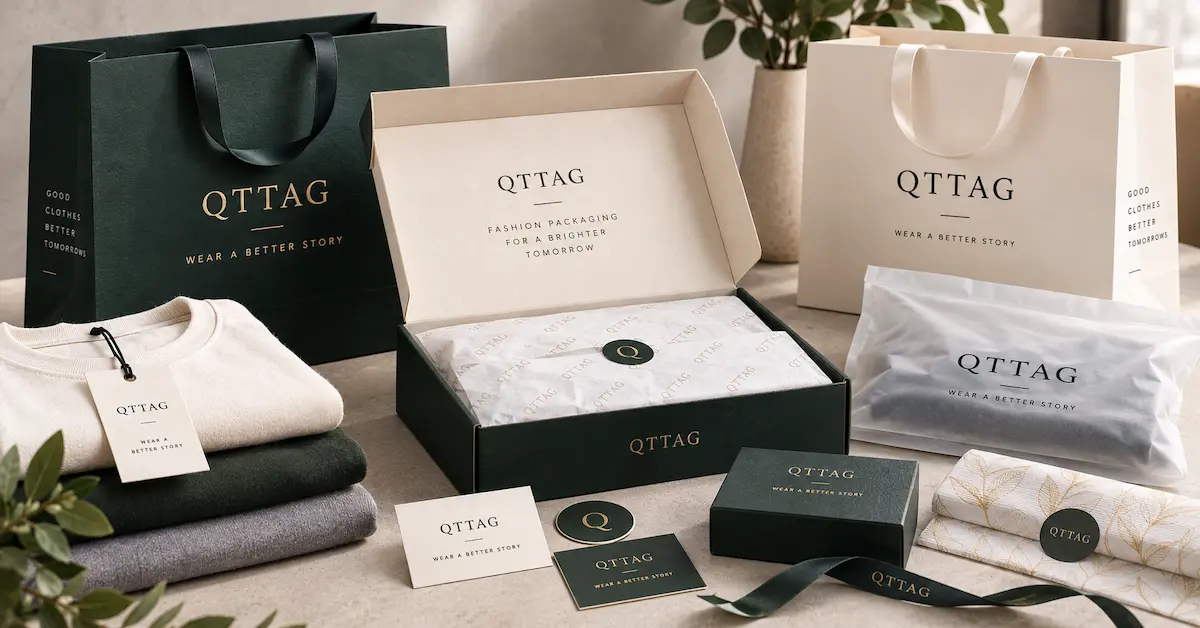
Consistent colors, typography and logo placement can connect packaging with the clothing collection.
For example, a fashion business may use the same master logo across woven labels, hang tags, shopping bags and packaging boxes.
Different materials may reproduce colors differently, so physical references are helpful when coordinating the final presentation.
Supporting Product Presentation
Packaging influences how customers first see a garment.
A neatly folded shirt inside a correctly sized box presents differently from clothing placed loosely in an oversized container.
The packaging should support the intended appearance without compromising the garment.
Communicating Brand Information
Packaging can carry selected brand information, product identification or a link to the company's website.
Any printed claims about materials, environmental attributes or product performance should be accurate and supported by relevant evidence.
Providing a Consistent Customer Experience
A fashion retailer may use several packaging formats.
A small accessories bag and a larger garment bag do not need identical dimensions, but they can share recognizable design features.
Consistency is achieved through controlled artwork and materials rather than using the same packaging structure for every product.
What Are the Main Types of Apparel Packaging?
Different packaging structures should be evaluated according to their intended functions.
| Packaging Type | Typical Application | Main Purchasing Consideration |
|---|---|---|
| Paper shopping bags | Boutique and retail purchases | Dimensions, handles and carrying requirements |
| Poly bags | Storage and garment protection | Closure, material and garment compatibility |
| Folding boxes | Retail or presentation packaging | Product fit and folding construction |
| Rigid gift boxes | Premium clothing presentation | Structure, inserts and finishing |
| Mailer boxes | E-commerce distribution | Handling and shipping protection |
| Tissue paper | Wrapping and presentation | Material and garment compatibility |
| Packaging inserts | Product positioning or information | Dimensions and purpose |
Custom Paper Bags
Custom paper bags are commonly used for retail presentation.
Their appearance can be coordinated with garment labels, hang tags and store branding.
Buyers should evaluate paper construction, handle attachment, dimensions and intended carrying conditions.
A bag that looks attractive when empty may behave differently when carrying a folded jacket or several garments.
Custom Poly Bags
Poly bags may help keep garments together and provide suitable protection during certain storage and distribution processes.
The material, dimensions, closure and any required warnings should be selected according to the specific product and destination market.
Poly bags should not automatically be described as environmentally friendly or recyclable without supporting material evidence.
Custom Packaging Boxes
Packaging boxes can organize and present individual garments or apparel sets.
Possible constructions include folding cartons, rigid boxes and selected gift packaging formats.
The preferred option depends on garment dimensions, presentation requirements, storage and distribution.
Mailer Boxes
Mailer boxes may be considered for direct-to-consumer clothing shipments.
Their structure should be evaluated against the intended delivery conditions.
A decorative mailer is not automatically suitable for every transport environment.
How to Choose Apparel Packaging Materials
Material selection affects both the appearance and practical performance of the finished packaging.
Fashion businesses should consider the complete packaging construction rather than selecting a material based solely on its color or surface texture.
Paper and Paperboard
Paper-based materials may be used for shopping bags, folding cartons, rigid box coverings and other components.
Important characteristics include:
-
Paper weight and thickness
-
Stiffness
-
Surface texture
-
Printing compatibility
-
Folding behavior
-
Structural suitability
-
Availability and consistency
Paper weight, often described in grams per square meter, is not the only measure of packaging strength.
The full bag or box construction should be evaluated.
Corrugated Board
Corrugated materials may be considered for certain mailer boxes and shipping applications.
The appropriate construction depends on product size, handling and distribution requirements.
Flexible Protective Materials
Flexible films and other suitable protective materials may be used for garment packaging.
The selected material should reflect the intended storage, closure and handling requirements.
Specialty Papers and Finishes
Textured papers, colored stocks and selected surface treatments may support premium apparel branding.
However, specialty finishes should be tested for manufacturing compatibility.
Material Comparison
| Material | Potential Use | What Buyers Should Verify |
|---|---|---|
| Uncoated paper | Retail bags and wrapping | Texture, print quality and strength |
| Coated paper | Selected premium printed packaging | Coating and finishing compatibility |
| Paperboard | Cartons and box components | Stiffness and folding behavior |
| Corrugated board | Mailer boxes | Structural and transport suitability |
| Flexible film | Garment protection | Thickness, closure and compatibility |
| Specialty material | Selected luxury packaging | Appearance and production feasibility |
Materials should be approved through representative physical samples whenever the finish or performance is important.
How to Design Custom Apparel Packaging for Your Brand
Custom apparel packaging should communicate the brand's identity while remaining suitable for the clothing and packaging operation.
Start With the Master Brand Artwork
Use an approved logo file and consistent typography.
Each packaging product may require a different layout, but the brand elements should remain recognizable.
Define the Color System
Choose colors that complement the clothing collection and intended customer experience.
The same digital color reference may appear different on paperboard, tissue paper and textile labels.
Physical samples help establish acceptable consistency.
Choose an Appropriate Visual Direction
A minimalist brand may prefer restrained typography and textured paper.
A boutique fashion collection may emphasize distinctive graphics or selected specialty finishes.
A casualwear brand may prioritize clear identification and a practical packaging system.
No visual style is universally appropriate for every fashion business.
Design Around Actual Products
Determine packaging dimensions using representative garments.
A folded sweatshirt, dress and shirt can have different volume and handling requirements.
Consider the Complete Set
When using several packaging components, evaluate how they appear together.
A box, paper bag and hang tag should follow one design direction without requiring identical materials.
How to Choose Packaging Dimensions for Clothing
Incorrect packaging dimensions can create unnecessary material use, poor presentation and handling difficulties.
Buyers should establish size requirements from the intended garments.
Measure the Folded Garment
Prepare a sample garment using the proposed packing method.
Measure its folded dimensions rather than relying only on garment size charts.
Account for Product Thickness
A lightweight T-shirt and a thick knitted sweater require different internal volumes.
Include Necessary Accessories
Tissue paper, product cards or other packaging components affect the usable space.
Allow Suitable Clearance
Packaging should accommodate the clothing without unacceptable compression.
However, excessive free space may also affect presentation and handling.
Review Multiple Garment Sizes
Some clothing collections can use one standard packaging size.
Others may need several formats for different products.
| Clothing Product | Main Packaging Consideration |
|---|---|
| T-shirts | Folded size and quantity |
| Shirts | Neat presentation and folding |
| Knitwear | Volume and compression |
| Jackets | Larger dimensions and garment bulk |
| Dresses | Fabric drape and folding |
| Accessories | Small-item positioning |
| Gift sets | Multiple items and internal arrangement |
Before bulk production, test the final packaging dimensions using the actual contents.
Apparel Packaging Design for Luxury Fashion Brands
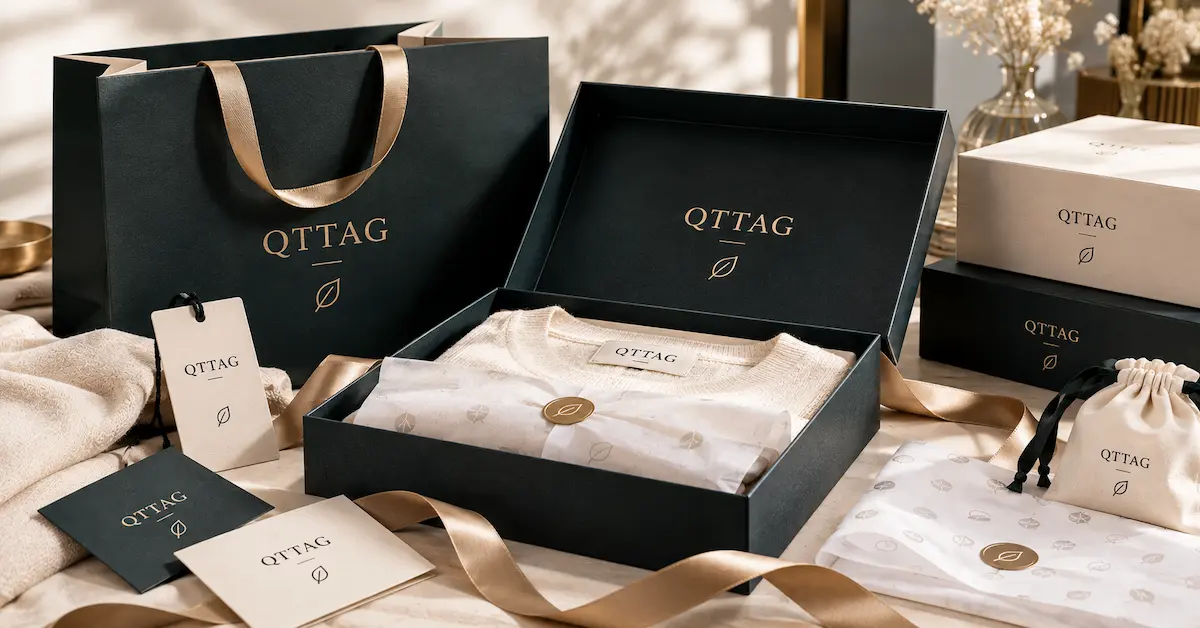
Luxury fashion packaging often emphasizes material presentation, carefully controlled finishes and a coordinated opening experience.
This does not necessarily require excessive decoration.
A simple rigid box with suitable materials and precise finishing may support the intended identity better than a complex design with many unrelated elements.
Rigid Gift Boxes
Rigid structures may be considered for premium garments, curated sets and selected gifting applications.
Their construction, lid fit and garment capacity should be checked during sampling.
Foil Stamping
Foil stamping can create metallic or other decorative effects on suitable materials.
The final appearance depends on the selected foil, paper and production process.
Embossing and Debossing
Embossing introduces raised surface detail, while debossing creates a recessed impression.
These techniques can emphasize logos or decorative elements.
Specialty Paper
Textured and colored papers may provide distinctive tactile qualities.
Their suitability depends on the packaging construction and finishing methods.
Interior Presentation
Tissue paper, appropriate inserts and coordinated interior materials can influence how the garment is revealed.
The interior arrangement should remain practical for packing and garment removal.
Designing Packaging for E-Commerce Clothing Brands
E-commerce apparel packaging has different priorities from packaging used primarily for boutique display.
A parcel may be handled repeatedly before reaching the customer.
Select a Suitable Shipping Structure
The package should be appropriate for the products and intended distribution conditions.
Protect the Garment
Where required, protective internal materials can help keep garments organized and separate them from the outer packaging.
Consider Product Movement
Large amounts of unused space can allow contents to shift.
Packaging should be designed around the actual garment dimensions.
Balance Presentation and Protection
Branding should not compromise the package's suitability for transportation.
Evaluate the Complete Shipment
A printed box may look attractive but still require additional protective packaging or different structural features.
Test the intended shipping configuration before approving production.
Coordinating Packaging With Garment Labels and Hang Tags
Apparel packaging becomes more cohesive when it reflects the brand identity already used on the garments.
Woven Labels
Woven labels communicate brand identity directly on the garment.
The packaging can use corresponding artwork and colors adapted to paper printing.
Care Labels
Care labels carry information related to garment care and composition.
Their information requirements may differ from those of removable packaging.
Custom Hang Tags
Hang tags connect the garment to its retail presentation.
Coordinating their typography, logo and material direction with packaging can create a consistent visual system.
Shopping Bags and Boxes
A brand may use related finishes across paper bags and gift boxes.
Each material should be evaluated independently for printing and finishing compatibility.
Keep One Approved Design Reference
Maintain approved artwork, color references and physical samples for the different components.
This can help reduce inconsistency when several manufacturing processes are involved.
How Printing and Finishing Affect Packaging Appearance
Printing and finishing choices influence surface appearance, logo clarity and production complexity.
| Finishing Option | Potential Visual Effect | Main Check |
|---|---|---|
| Conventional printing | Logos, patterns and product information | Clarity and color |
| Foil stamping | Metallic or decorative detail | Coverage and alignment |
| Embossing | Raised texture | Detail and consistency |
| Debossing | Recessed texture | Impression quality |
| Matte lamination | Selected matte appearance | Material compatibility |
| Gloss lamination | Reflective finish | Surface consistency |
| Spot UV | Selected gloss highlights | Alignment and coating |
Additional finishes may require separate manufacturing operations.
Buyers should select them according to the desired result rather than assume that using more finishing methods creates better packaging.
How to Make Packaging Support the Customer Experience
The customer experience includes how packaging is handled, opened and used to access the product.
Retail Experience
A shopping bag should comfortably accommodate the purchased garments and provide appropriate carrying performance.
Delivery Experience
An e-commerce package should arrive in a condition appropriate for its intended use.
Opening Experience
Boxes, closures, tissue paper and internal arrangements affect how easily customers access the garments.
Product Presentation
The clothing should be positioned so that it maintains the intended appearance.
Information Experience
Where relevant, packaging may provide product information, brand contact details or links to useful online resources.
The printed information should be accurate and accessible.
Avoid Unnecessary Components
Additional inserts, wrapping or decorative pieces may increase costs and packing work.
Use components that contribute meaningfully to presentation, protection or information.
Sustainable Apparel Packaging: What Should Brands Verify?
Environmental considerations may influence packaging selection.
However, sustainability claims should be based on the actual materials and applicable evidence rather than appearance.
Recycled Content
If the packaging contains recycled material, the claimed content should be supported by relevant documentation.
Recyclability
Recyclability depends on material composition, coatings, attachments and available collection systems.
A paper appearance alone does not establish recyclability.
Material Reduction
Reducing unnecessary packaging components may be worth evaluating, provided the packaging still meets the required handling and presentation needs.
Reusable Packaging
If reuse is part of the intended design, evaluate the construction and realistic use conditions.
Supplier Documentation
Ask for suitable material specifications and supporting evidence before making environmental claims.
Avoid unsupported statements such as "100% eco-friendly" or "fully sustainable."
Common Apparel Packaging Mistakes
Several problems can arise when packaging is developed without clear product requirements.
Choosing Packaging Based Only on Appearance
An attractive box may not fit the clothing properly.
Using Incorrect Dimensions
Packaging can be too small, too large or unsuitable for the product's folded configuration.
Ignoring Material Compatibility
Certain papers or coatings may not work well with the desired finishing process.
Overcomplicating the Design
Additional decorative elements can introduce costs and production challenges without improving the customer experience.
Poor Brand Consistency
Uncontrolled artwork files can lead to different logo proportions or colors across packaging products.
Skipping Physical Sampling
Digital mockups cannot fully demonstrate material texture, structural performance or garment fit.
Making Unsupported Claims
Environmental or performance claims should not appear on packaging without appropriate evidence.
How to Approve Apparel Packaging Samples
Physical sampling helps verify that the packaging meets the design and practical requirements.
Step 1: Confirm the Packaging Brief
Identify garments, packaging types, dimensions and intended distribution conditions.
Step 2: Select Materials
Compare suitable paper, board or protective materials.
Step 3: Prepare Artwork
Approve logos, text, colors and finishing details.
Step 4: Develop Structural Samples
Check box construction, bag dimensions or other required features.
Step 5: Review Printed Samples
Inspect the actual appearance of printing and finishing.
Step 6: Test With Garments
Use representative clothing to confirm fit and presentation.
Step 7: Evaluate Handling
Check handles, closures, packing and relevant distribution requirements.
Step 8: Record the Approval
Retain the physical reference sample and production specifications.
| Approval Area | What to Check |
|---|---|
| Materials | Texture, thickness and color |
| Dimensions | Finished packaging size |
| Artwork | Logo accuracy and text |
| Printing | Clarity and visual consistency |
| Finishing | Foil, embossing or coating |
| Structure | Folding, closures and assembly |
| Garment fit | Space and presentation |
| Handling | Suitability for intended use |
| Packing | Correct components and variations |
Quality Control for Apparel Packaging Production
Production quality control should follow the agreed specification.
Material Inspection
Verify that the selected materials correspond to the approved references.
Printing Inspection
Check logos, typography, colors and alignment.
Structural Inspection
Confirm dimensions, folds, edges and assembly.
Finishing Inspection
Review specialty finishes against the accepted physical sample.
Functional Checks
Evaluate relevant handles, closures and completed packaging structures.
Packing Accuracy
Confirm the correct packaging versions and quantities are supplied.
Repeat Orders
Maintain the approved artwork, construction and material references.
If significant changes occur, assess whether additional sampling is required.
What Determines the Cost of Custom Apparel Packaging?
Packaging pricing depends on the products and specifications included in the order.
Important cost factors may include:
-
Packaging type
-
Material composition and grade
-
Finished dimensions
-
Printing colors and coverage
-
Foil stamping or embossing
-
Die-cutting and tooling
-
Handles and closures
-
Interior inserts
-
Protective materials
-
Order quantity
-
Number of size or artwork variations
-
Sample development
-
Assembly and delivery
Compare Complete Specifications
A quote for an empty paper box may not include inserts, wrapping or other accessories.
A paper bag quotation may or may not include the same handle construction as another supplier's offer.
Clarify the finished product specification.
Consider Packaging Operations
Packing time, storage and distribution may contribute to total cost.
Avoid Unnecessary Complexity
An effective design does not need every available finishing technique.
Select materials and features that help meet the intended requirements.
What Should Buyers Include in an Apparel Packaging RFQ?
A clear RFQ helps suppliers understand the purchasing requirements and prepare appropriate recommendations.
| RFQ Information | What to Provide |
|---|---|
| Brand artwork | Approved logo and graphics |
| Garment type | Products being packaged |
| Folded dimensions | Actual product measurements |
| Packaging format | Bag, box, mailer or protective packaging |
| Materials | Preferred stock and construction |
| Dimensions | Required finished size |
| Printing | Colors, artwork and placement |
| Finishing | Foil, embossing, lamination or other |
| Accessories | Handles, inserts, ribbons or tissue |
| Quantity | Estimated volume |
| Variations | Different products, sizes or designs |
| Distribution | Retail, wholesale or e-commerce |
| Sampling | Physical sample approval requirements |
| Delivery | Destination and requested schedule |
For complex projects, provide a separate specification for each packaging component while maintaining a shared brand artwork reference.
Frequently Asked Questions About Apparel Packaging
What is apparel packaging?
Apparel packaging includes the bags, boxes, protective materials and other components used to organize, present and distribute clothing.
What packaging is best for clothing brands?
The best packaging depends on the garment, sales channel, brand identity, protection requirements and budget. No single packaging format works for every clothing product.
What is the difference between apparel packaging and clothing packaging?
The terms are often used interchangeably. Both refer to packaging used for garments and related clothing products.
How does custom apparel packaging improve branding?
It can create a consistent visual identity across packaging and garment products through coordinated logos, colors, materials and presentation.
Are paper bags suitable for premium fashion brands?
They may be suitable when the paper, printing, handles and finished construction match the brand and intended retail application.
When should clothing brands use rigid gift boxes?
Rigid boxes may be considered for selected premium garments, gift sets and presentation-focused packaging. Product fit, storage and distribution should be evaluated.
What packaging is suitable for e-commerce clothing orders?
Appropriate options may include suitable mailer boxes or other shipping packaging combined with necessary garment protection. The complete configuration should be evaluated for the intended delivery conditions.
Can packaging use recycled materials?
Materials with documented recycled content may be considered where suitable. Recycled-content and other environmental claims should be supported by relevant evidence.
How should apparel packaging samples be approved?
Inspect the actual material, dimensions, printing, construction and garment fit. Approve the completed packaging rather than relying only on digital mockups.
What is the minimum order quantity for custom apparel packaging?
Minimum quantities depend on the supplier, packaging type, material and production requirements. Request a quotation using the full specification.
Develop Custom Apparel Packaging With QTTAG
Effective apparel packaging connects brand identity with practical clothing presentation, protection and distribution requirements.
Paper shopping bags, garment bags, packaging boxes and mailers serve different purposes, but they can be coordinated through one consistent branding system.
QTTAG supports custom garment branding and packaging projects, including paper bags, poly bags, packaging boxes, labels and related apparel presentation products.
When developing a new collection, prepare your brand artwork, garment dimensions, packaging requirements, material preferences, estimated order quantity and intended sales channels.
These details provide a useful starting point for discussing customization and physical sampling.
Ready to Create Custom Apparel Packaging for Your Fashion Brand?
Share your logo artwork, garment specifications, preferred packaging materials, box and bag dimensions, printing requirements and estimated order quantity with QTTAG.
Our team can discuss suitable apparel packaging customization and sampling options for your clothing collection.
Request a Quote
Author
Founder at QTTAG
Jason Qiao is the founder of QTTAG, focusing on garment branding and packaging solutions. With years of experience in the apparel industry, he shares practical insights on custom labels, hang tags and sustainable packaging to help global brands grow.
Written By
Jason Qiao