Luxury Fashion Packaging: What Apparel Brands Need to Know
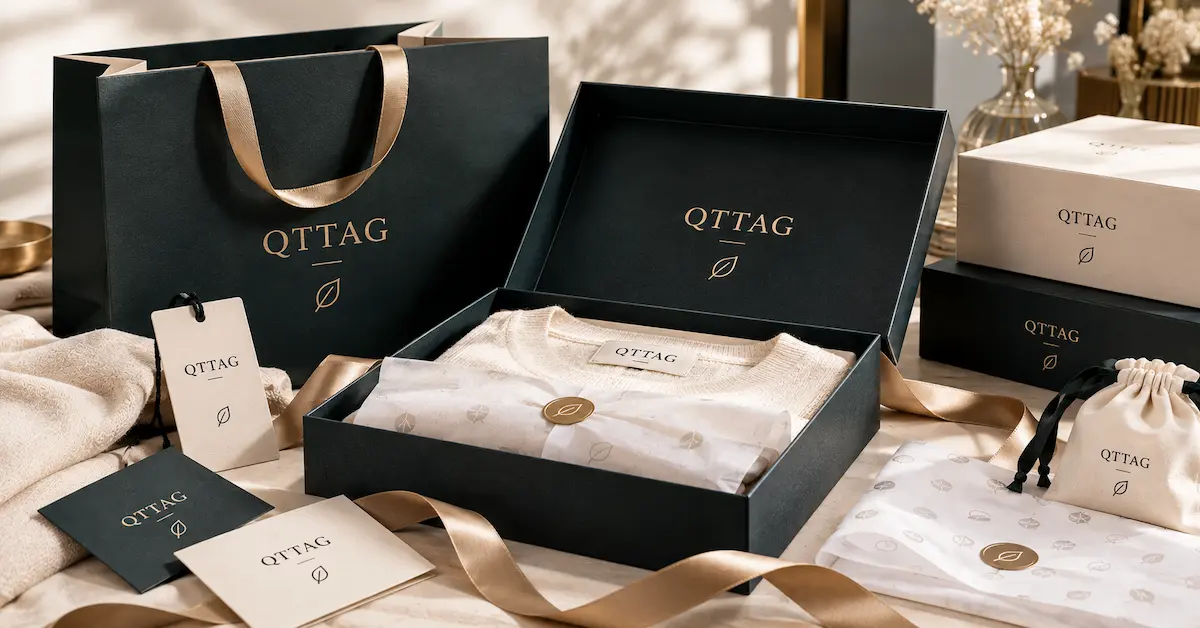
Luxury fashion packaging is more than a decorative box or shopping bag. It is part of how a clothing brand presents its products, communicates its identity and creates a consistent experience across boutiques, gifting and online orders.
For high-end apparel brands, the smallest packaging details can influence the overall impression. The texture of a paper shopping bag, the alignment of a foil-stamped logo, the fit of a rigid gift box and the way a garment is revealed during unboxing all contribute to the finished presentation.
However, premium packaging should never be designed around appearance alone. Materials, structure, printing, product protection, manufacturing feasibility and cost must work together.
Effective luxury fashion packaging combines refined materials, consistent brand identity, functional garment protection and carefully controlled production details. The best solution is not necessarily the most expensive box, but the one that supports the intended customer experience while meeting the product's practical requirements.
This guide explains luxury clothing packaging options, material selection, printing and finishing techniques, structural considerations, sample approval, supplier evaluation and the information buyers should prepare before requesting a quotation.
What Is Luxury Fashion Packaging?
Luxury fashion packaging refers to packaging designed to support the presentation, handling and distribution of premium clothing and fashion accessories.
Unlike generic packaging, it typically follows a defined brand identity and may use carefully selected materials, refined printing, custom structures and coordinated accessories.
Common examples include:
-
Custom rigid gift boxes
-
Premium paper shopping bags
-
Folding apparel boxes
-
Drawer-style packaging
-
Magnetic closure boxes
-
Branded tissue paper
-
Custom garment wraps
-
Product cards and box inserts
-
Ribbons and other presentation accessories
-
Coordinated hang tags and garment labels
Not every luxury brand requires every component.
The packaging should reflect the product, the intended sales channel and the brand's design language.
What Makes Packaging Feel Premium?
A premium impression may come from several characteristics:
-
Appropriate material texture
-
Balanced proportions
-
Consistent typography
-
Precise printing
-
Carefully selected finishing
-
Suitable opening and closing mechanisms
-
A neat garment presentation
-
Reliable construction
The key is consistency.
An understated box with accurate construction and thoughtful material selection may create a stronger impression than a heavily decorated box with poor finishing.
Why Is Packaging Important for Luxury Apparel Brands?
Luxury clothing brands often invest considerable effort in garment design, materials and manufacturing.
Packaging extends that design direction into the retail and delivery experience.
Brand Recognition
A coordinated packaging system makes the brand recognizable across shopping bags, boxes, wrapping materials and product labels.
Product Presentation
Packaging establishes how garments are arranged and revealed.
A carefully folded shirt inside a correctly sized box provides a different presentation from clothing loosely placed in oversized packaging.
Customer Experience
The appearance, opening method and interior arrangement influence how customers interact with the product.
Retail Consistency
Boutique stores may use several bag and box sizes.
Maintaining consistent logos, colors and finishing helps connect those formats.
Gift Presentation
Some collections require packaging suitable for gifting or special product launches.
The structure and accessories should support that purpose.
Product Protection
Premium packaging must still be appropriate for the garment's handling, storage and distribution.
A beautiful rigid box does not automatically replace protective shipping packaging.
What Types of Packaging Are Used for Luxury Fashion?
Different packaging structures serve different purposes.
| Packaging Type | Typical Application | Main Design Consideration |
|---|---|---|
| Rigid gift boxes | Premium apparel and gift sets | Structure and interior presentation |
| Magnetic closure boxes | Selected luxury gift packaging | Closure function and construction |
| Drawer-style boxes | Curated apparel sets | Sliding mechanism and product fit |
| Folding cartons | Retail and selected product packaging | Paperboard and folding design |
| Premium paper bags | Boutique retail purchases | Handles, structure and branding |
| Tissue paper | Garment wrapping | Texture and material compatibility |
| Garment protection bags | Storage and protective packaging | Material and closure suitability |
| Custom inserts | Product positioning | Dimensions and garment handling |
Rigid Gift Boxes
Rigid boxes are often considered for premium garments, gift sets and special collections.
Their structure can support decorative covering materials and coordinated interior arrangements.
Paper Shopping Bags
Luxury shopping bags should complement the brand identity while remaining suitable for the products being carried.
Folding Packaging
Folding constructions may be appropriate when storage efficiency and practical assembly are important.
Packaging Accessories
Tissue paper, cards and ribbons can support presentation when they serve a clear purpose.
Adding too many accessories may increase packaging complexity without improving the customer experience.
How to Choose Luxury Clothing Packaging Boxes
Choosing luxury clothing packaging boxes begins with the garment.
The box should be designed around the product's folded dimensions, material characteristics and intended presentation.
Understand the Garment
A cashmere sweater, silk blouse and structured jacket may need different packaging arrangements.
Select the Box Construction
Common options include lift-off lid, hinged lid, magnetic closure and drawer-style constructions.
Confirm Internal Dimensions
The usable interior space must accommodate the folded garment and any additional wrapping or inserts.
Consider Opening and Closing
The mechanism should operate consistently and feel appropriate for the intended use.
Review Storage Requirements
Assembled rigid boxes can require substantial storage space.
Evaluate Distribution
If the gift box will be shipped directly to customers, additional outer protection may be necessary.
The final construction should be approved through physical sampling.
Rigid Boxes vs. Folding Cartons for Premium Apparel
Rigid boxes and folding cartons can both support high-end apparel presentation.
Their differences concern construction, storage and handling rather than a simple division between luxury and non-luxury products.
| Factor | Rigid Boxes | Folding Cartons |
|---|---|---|
| Construction | Stiff, usually assembled form | Creased and folded paperboard |
| Typical presentation | Structured gift or premium packaging | Retail or product packaging |
| Storage | May require more space | Often stored flat |
| Assembly | Depends on rigid box construction | Folding or carton assembly |
| Interior options | Selected custom inserts and linings | Compatible inserts and folds |
| Main buying concern | Structure, finish and garment fit | Board quality, folding and product fit |
When Rigid Packaging Makes Sense
Rigid packaging may be suitable for a limited-edition apparel collection or curated gift set where structural presentation is important.
When Folding Packaging Makes Sense
Folding cartons may be more appropriate when convenient storage, product protection and straightforward assembly are priorities.
Neither option should be selected without evaluating the finished product.
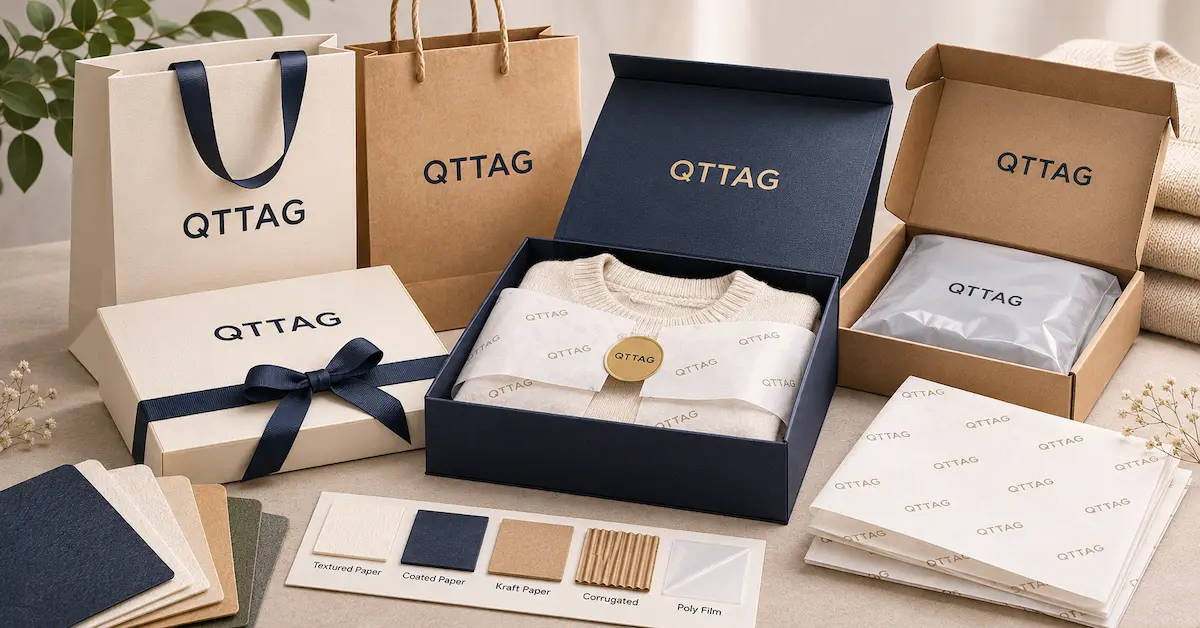
Selecting Premium Materials for Luxury Fashion Packaging
Material choice affects appearance, touch, construction and cost.
Different packaging products may require different materials even when they follow the same brand identity.
Premium Uncoated Paper
Uncoated paper can provide a restrained surface appearance.
Available stocks differ in texture, stiffness and printing behavior.
Textured Paper
Textured paper introduces a tactile quality that can support understated branding.
However, strong textures may affect fine printing or certain decorative finishes.
Coated Paper
Coated paper may be appropriate for specific printed designs or finishing requirements.
The chosen coating must be compatible with the manufacturing process.
Rigid Paperboard
Rigid box constructions commonly use stiff board components with suitable covering materials.
Board thickness and construction should follow the box dimensions and intended contents.
Corrugated Materials
Corrugated constructions may be considered for suitable shipping or protective packaging applications.
Textile and Decorative Materials
Some packaging designs use ribbon, fabric covering or selected interior materials.
Compatibility, cleanliness and handling should be evaluated before production.
| Material | Main Application | What Buyers Should Check |
|---|---|---|
| Smooth uncoated paper | Bags and decorative covering | Printing and surface quality |
| Textured paper | Premium presentation | Texture and finish compatibility |
| Coated paper | Selected printed packaging | Coating and color appearance |
| Rigid paperboard | Gift box construction | Structural suitability |
| Corrugated board | Shipping packaging | Handling and protection |
| Ribbon or fabric | Presentation accessories | Appearance and attachment |
The selected materials should be approved using representative physical samples.
How Printing and Finishing Create a Luxury Appearance
Premium apparel packaging design often relies on the relationship between material texture and finishing precision.
The right printing process can emphasize a logo without making the packaging visually crowded.
Foil Stamping
Foil stamping can produce metallic or specialty decorative effects on compatible substrates.
Gold, silver and other available finishes may be considered.
The exact visual effect should be approved on the chosen paper.
Embossing
Embossing creates a raised impression.
It can introduce dimensional detail to logos or selected graphic elements.
Debossing
Debossing creates a recessed impression.
This may suit minimalist designs where texture is more important than a prominent printed color.
Spot UV
Selected UV coating applications can create areas of gloss contrast.
Material compatibility and registration should be confirmed.
Matte Lamination
Matte lamination may modify the appearance and feel of suitable packaging materials.
Specialty Printing
Other printing methods may be appropriate depending on artwork, materials and available manufacturing capabilities.
Finishing Comparison
| Finish | Potential Visual Effect | Main Quality Concern |
|---|---|---|
| Foil stamping | Metallic highlight | Coverage and alignment |
| Embossing | Raised texture | Impression definition |
| Debossing | Recessed texture | Position and consistency |
| Spot UV | Gloss contrast | Registration |
| Matte lamination | Controlled matte surface | Surface uniformity |
| Printed artwork | Brand colors and graphics | Color and detail accuracy |
A sophisticated design does not necessarily require multiple finishes.
One precise decorative detail can be more effective than several competing effects.
Designing Premium Paper Bags for Fashion Boutiques
Shopping bags are a visible part of a boutique's brand identity.
Unlike a gift box that may remain inside packaging, a retail bag is carried outside the store.
Select the Correct Size
The bag should accommodate the intended garments or gift boxes.
Choose a Suitable Paper Stock
Material selection influences stiffness, texture and printing.
Review Handle Options
Possible designs include paper handles, cotton cords and selected ribbons.
Coordinate Colors
The bag should follow the brand's approved color direction.
Evaluate Load Suitability
Handle attachment, reinforcement and bottom construction should be evaluated with representative contents.
Inspect the Finished Bag
Check printing, dimensions, folds, handles and overall appearance.
A premium bag must be practical as well as visually consistent.
How to Create a Coordinated Apparel Packaging System
A fashion brand may use several packaging formats across one collection.
The challenge is maintaining a consistent identity without using identical construction for every product.
Establish the Master Artwork
Use approved logo and typography files.
Define Brand Colors
Maintain physical color references where appropriate.
Create Packaging Variants
Develop separate layouts for paper bags, boxes, wraps and other components.
Coordinate Printing Finishes
Use finishes that suit each material rather than forcing identical techniques across all products.
Link Packaging to Garment Branding
Woven labels, care labels and hang tags should follow the same recognizable brand direction.
Control Artwork Versions
Seasonal colors or collection changes should be documented.
This approach creates consistency while allowing each product to function correctly.
The Role of Hang Tags and Garment Labels in Luxury Packaging
Packaging begins with the exterior but continues through the garment presentation.
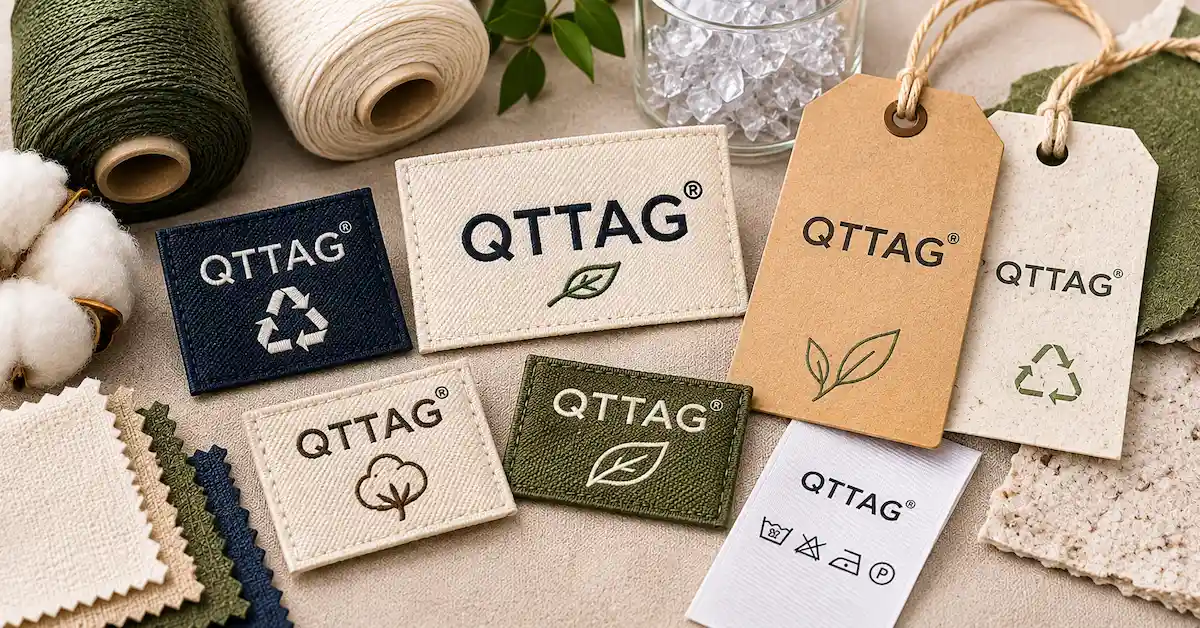
Custom hang tags and clothing labels contribute to the complete branding experience.
Woven Brand Labels
A woven label can carry the brand identity directly on the garment.
Its colors and typography can inform the packaging design.
Printed Care Labels
Care labels provide relevant garment information.
They have different material and information requirements from decorative packaging.
Custom Hang Tags
Hang tags connect garment identification with retail presentation.
Attachment Accessories
Strings, seals and ribbons can introduce additional material and color references.
Complete Branding Sets
For some collections, developing these components together may help maintain a consistent visual direction.
The business should still establish a separate approved specification for each product.
What Makes a Luxury Unboxing Experience Effective?
Unboxing is often discussed as a branding opportunity, but it should also be evaluated as a practical interaction.
Exterior Appearance
The box or bag introduces the brand.
Opening Mechanism
The lid, drawer or closure should operate as intended.
Product Reveal
The garment should be arranged so that it can be viewed and removed appropriately.
Interior Materials
Wrapping and inserts can support presentation where they are useful.
Garment Protection
Packaging must not create unacceptable pressure, staining or other unwanted effects.
Ease of Use
Customers should be able to access the product without unnecessary difficulty.
Design Consistency
Exterior and interior artwork should follow the same general brand direction.
An effective experience depends on the combination of these details, not on the number of layers a customer must open.
How to Develop Packaging for Different Luxury Apparel Products
Different garments create different packaging requirements.
| Apparel Product | Packaging Priority | Potential Format |
|---|---|---|
| Premium shirts | Neat folded presentation | Suitable apparel box |
| Cashmere knitwear | Appropriate space and wrapping | Rigid or suitable folding box |
| Silk garments | Surface protection and careful folding | Suitable box and wrap |
| Outerwear | Larger dimensions | Appropriate large packaging |
| Fashion accessories | Organized product positioning | Small rigid box or carton |
| Gift sets | Multiple-item presentation | Box with suitable interior layout |
| Boutique purchases | Carrying and brand presentation | Premium paper shopping bag |
These examples are possible directions, not fixed packaging rules.
The final specification should follow actual garment samples and intended distribution conditions.
How to Choose the Right Packaging Dimensions
Incorrect dimensions are a common source of packaging development problems.
Measure the Actual Garment
Use the intended folded configuration.
Include Material Thickness
A thick knitted garment occupies more space than a lightweight shirt of similar folded width.
Account for Additional Components
Tissue paper, inserts and other accessories affect the usable internal space.
Avoid Excessive Compression
Packaging should not force the garment into an unsuitable shape.
Avoid Excessive Empty Space
Unnecessary space can affect product presentation and handling.
Test Multiple Sizes
When a collection contains several garment sizes, determine whether one packaging format works for all.
Physical garment-fit testing is essential.
Luxury Packaging and Sustainability: What Should Brands Consider?
Premium brands may want to evaluate the environmental characteristics of their packaging.
However, material appearance is not reliable evidence of environmental performance.
Recycled Content
A recycled-content claim should be supported by relevant documentation.
Material Composition
The brand should understand what materials are used in the complete packaging construction.
Recyclability
Recyclability depends on the product and available collection or processing systems.
Material Reduction
Removing unnecessary packaging elements may be worth considering while preserving functionality.
Reusability
If a box is intended for repeated use, its construction should support realistic handling requirements.
Avoid Unsupported Claims
Terms such as "100% sustainable" should not be used without an appropriate basis.
Buyers should request product-specific evidence before making environmental claims.
Physical Sampling: From Packaging Concept to Approved Product
Digital mockups are useful for reviewing artwork and appearance, but they cannot demonstrate every aspect of the finished packaging.
Physical samples should be used to confirm material, structure, dimensions, finishing and garment fit before bulk production.
Step 1: Prepare the Packaging Brief
Identify the garment, intended customer experience and packaging requirements.
Step 2: Review Materials
Compare relevant paper, board and decorative components.
Step 3: Select the Construction
Choose a suitable bag, box or other packaging structure.
Step 4: Confirm Dimensions
Use garment measurements and intended folding methods.
Step 5: Prepare the Artwork
Review logo placement, colors and finishing requirements.
Step 6: Produce a Sample
Develop a representative physical product.
Step 7: Inspect the Packaging
Evaluate dimensions, printing, finish and assembly.
Step 8: Check Garment Fit
Place the actual clothing inside.
Step 9: Approve the Reference
Retain the approved sample and corresponding specifications.
Step 10: Confirm Production Requirements
Establish the relevant quality checks, quantities and packing instructions.
Quality Control for Luxury Fashion Packaging
Quality control should reflect the agreed appearance and functional requirements.
| Inspection Item | What Buyers Should Verify |
|---|---|
| Paper or board | Material and surface consistency |
| Dimensions | Finished packaging size |
| Printing | Logo clarity and positioning |
| Color | Approved physical appearance |
| Foil stamping | Coverage and registration |
| Embossing | Impression quality |
| Box assembly | Alignment and construction |
| Closures | Intended operation |
| Bag handles | Attachment and handling |
| Interior inserts | Product fit |
| Garment compatibility | Suitable presentation |
| Packing | Correct products and quantities |
Visual Quality
Subtle finishing defects may be noticeable in minimalist designs.
Structural Quality
Boxes and bags should be suitable for their expected use.
Functional Checks
Closures, handles and inserts should perform as intended.
Batch Consistency
Representative production samples should be checked against approved references.
Repeat Orders
Maintain approved specifications and review significant material or process changes.
Common Luxury Packaging Problems
Several problems can affect the finished presentation.
Uneven Foil Stamping
The metallic finish may have incomplete coverage or inconsistent alignment.
Poorly Fitted Box Lids
The lid may be too loose or difficult to remove.
Incorrect Garment Dimensions
A box may not accommodate the intended product.
Paper Surface Defects
Covering papers may show unwanted wrinkles, marks or inconsistent finishes.
Weak Bag Handles
An unsuitable attachment may fail under the intended carrying conditions.
Inconsistent Brand Colors
Different material surfaces may produce visibly different results.
Poorly Fitted Inserts
An insert may interfere with product placement or removal.
Incorrect Packaging Versions
Multiple SKUs may be mixed without clear identification.
These issues can be reduced through precise specifications, physical sample approval and suitable production inspection.
How Much Does Custom Luxury Fashion Packaging Cost?
The price of custom luxury fashion packaging depends on the complete design and manufacturing requirements.
Important factors include:
-
Packaging structure
-
Finished dimensions
-
Paperboard and covering materials
-
Printing colors and artwork
-
Foil stamping or embossing
-
Lamination and specialty coatings
-
Interior inserts
-
Handles, ribbons and closures
-
Order quantity
-
Number of designs or size variations
-
Tooling requirements
-
Physical samples
-
Assembly and packing
-
Shipping and storage requirements
Material Cost
Specialty materials may involve different purchasing and manufacturing requirements.
Construction Cost
A rigid gift box and a folding carton require different production processes.
Finishing Cost
Additional decorative processes may introduce separate manufacturing operations.
Quantity
MOQ and unit cost vary by supplier and packaging specification.
Shipping and Storage
Assembled rigid boxes may occupy more storage and transportation space.
Total Cost
A useful quotation should include the complete finished product and required accessories.
Comparing boxes with different specifications based only on unit price can be misleading.
How to Choose a Luxury Fashion Packaging Manufacturer
When sourcing a luxury fashion packaging manufacturer, buyers should evaluate more than product photographs.
The relevant questions concern actual manufacturing capability, materials, sampling, quality control and communication.
Product Capability
Can the supplier manufacture the selected structure and finishing requirements?
Material Options
Are suitable paper, board and covering materials available?
Artwork Preparation
Can the supplier review production artwork and identify manufacturing limitations?
Physical Sampling
Can representative samples be developed before bulk production?
Quality Standards
What inspection methods are used for printing, finishing and assembly?
Production Consistency
How are repeat orders managed?
Commercial Terms
What are the MOQ, quotation scope and delivery conditions?
Evidence and Documentation
Can the supplier provide appropriate product specifications and approved samples?
Buyers should confirm the specific supplier's capabilities instead of assuming all packaging manufacturers offer identical processes.
What Should Apparel Brands Include in a Packaging RFQ?
A detailed RFQ helps suppliers evaluate the project accurately.
| RFQ Item | Information to Provide |
|---|---|
| Brand artwork | Approved logo and design files |
| Apparel product | Garment type and intended presentation |
| Folded dimensions | Actual product measurements |
| Packaging type | Rigid box, paper bag, folding carton, etc. |
| Box or bag dimensions | Finished size |
| Materials | Paper, board and interior preferences |
| Printing | Colors and artwork |
| Finishing | Foil, embossing, lamination or other |
| Interior | Tissue paper, inserts or compartments |
| Attachments | Handles, ribbon or closures |
| Quantity | Estimated order volume |
| Variations | Different sizes, colors or designs |
| Distribution | Retail, gifting or e-commerce |
| Sampling | Prototype and approval requirements |
| Delivery | Destination and target schedule |
If the buyer has not selected a suitable structure, providing the garment and desired presentation can help the supplier evaluate options.
Frequently Asked Questions About Luxury Fashion Packaging
What is luxury fashion packaging?
Luxury fashion packaging is packaging developed to support the presentation, handling and branding of premium clothing and fashion accessories. It may involve rigid boxes, paper bags, specialty materials and coordinated finishes.
What materials are used for luxury clothing packaging?
Common options include premium paper, textured paper stocks, paperboard, rigid box materials and selected decorative or interior components. The right choice depends on the intended packaging structure and garment.
Are rigid gift boxes suitable for luxury apparel?
Rigid gift boxes may be suitable for premium garments, curated sets and gifting applications. Their structure, dimensions and garment compatibility should be confirmed through physical sampling.
What is the difference between luxury packaging and regular packaging?
Luxury packaging typically places particular emphasis on brand presentation, materials, design consistency and finishing. Both luxury and conventional packaging still need to meet relevant functional requirements.
Can luxury apparel packaging use recycled materials?
Selected materials with documented recycled content may be considered. Claims about environmental attributes must be supported by product-specific evidence.
Can foil stamping and embossing be combined?
They may be combined in suitable manufacturing processes. Artwork alignment, substrate compatibility and final appearance should be confirmed through physical samples.
How should luxury packaging samples be approved?
Buyers should inspect the materials, dimensions, printing, finishing, construction, closures, inserts and actual garment fit.
How do brands coordinate packaging with clothing labels?
Maintain common approved logos, typography, colors and design references while adapting the manufacturing details for different materials.
What is the minimum order quantity for luxury fashion packaging?
MOQ depends on the supplier, packaging construction, material, finishing and order specifications. Request a quotation for the actual product.
How can buyers compare luxury packaging suppliers?
Compare equivalent specifications, approved samples, material options, quality processes, production feasibility and total commercial terms.
Develop Custom Luxury Fashion Packaging With QTTAG
Luxury fashion packaging should connect the brand's visual identity with functional clothing presentation.
Rigid gift boxes, premium paper bags, interior wrapping and coordinated accessories serve different purposes, but they can follow a unified branding direction.
QTTAG supports custom apparel branding and packaging projects, including paper bags, packaging boxes, garment labels and hang tags.
When developing a new collection, share your logo artwork, garment dimensions, preferred materials, packaging structures, finishing requirements and estimated quantities.
These details provide a starting point for discussing suitable design, material selection and sample-development options.
Ready to Create Luxury Packaging for Your Fashion Brand?
Share your brand artwork, apparel specifications, packaging dimensions, preferred materials, printing finishes and estimated order quantity with QTTAG.
Our team can discuss suitable luxury packaging customization, structural options and physical sampling for your collection.
Request a Quote
Author
Founder at QTTAG
Jason Qiao is the founder of QTTAG, focusing on garment branding and packaging solutions. With years of experience in the apparel industry, he shares practical insights on custom labels, hang tags and sustainable packaging to help global brands grow.
Written By
Jason Qiao