7 Common Custom Printed Labels Mistakes and How to Avoid Them
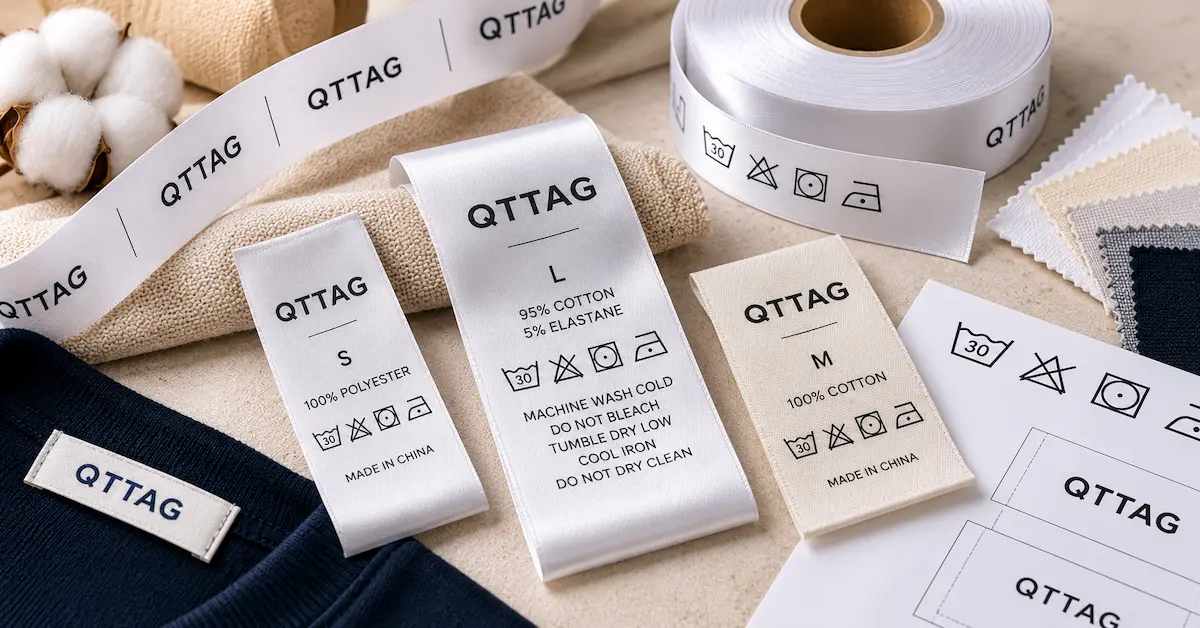
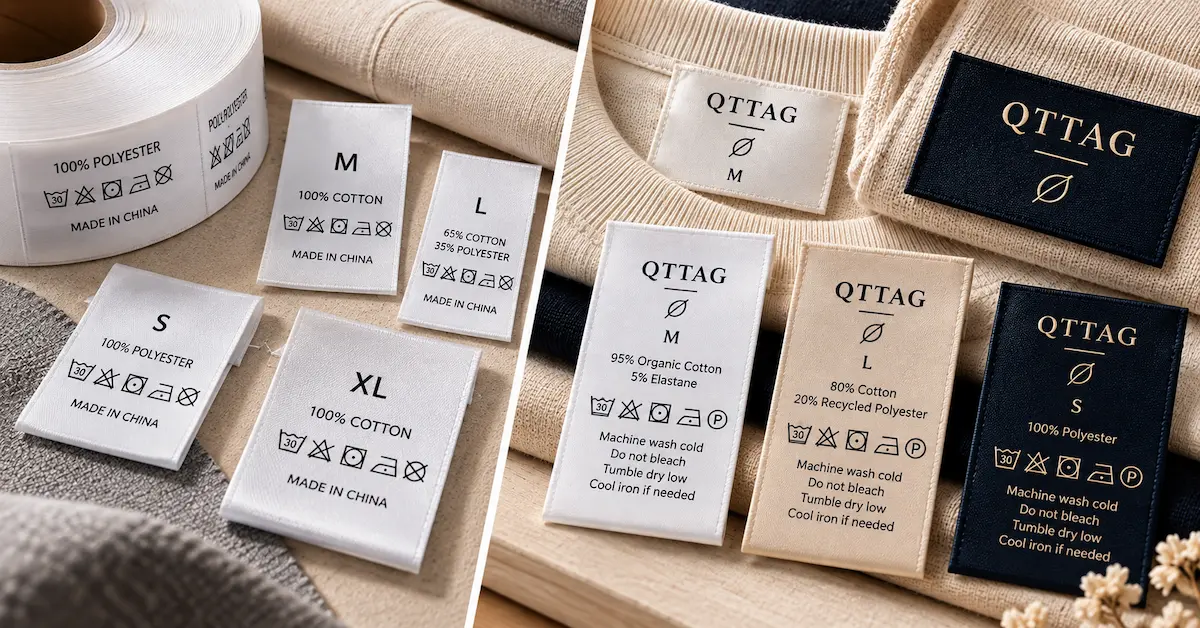
Custom printed labels may be small, but their details matter throughout a garment's life. A clothing brand can select the right fabric, approve the fit and finish production on schedule, only to discover that its care-label text is difficult to read or the printing fades after washing.
Unlike decorative hang tags, many printed clothing labels carry information that customers need after purchase. They may identify the brand, provide fiber composition, display laundry symbols or communicate other garment details. Mistakes can therefore affect presentation, product information and regulatory obligations.
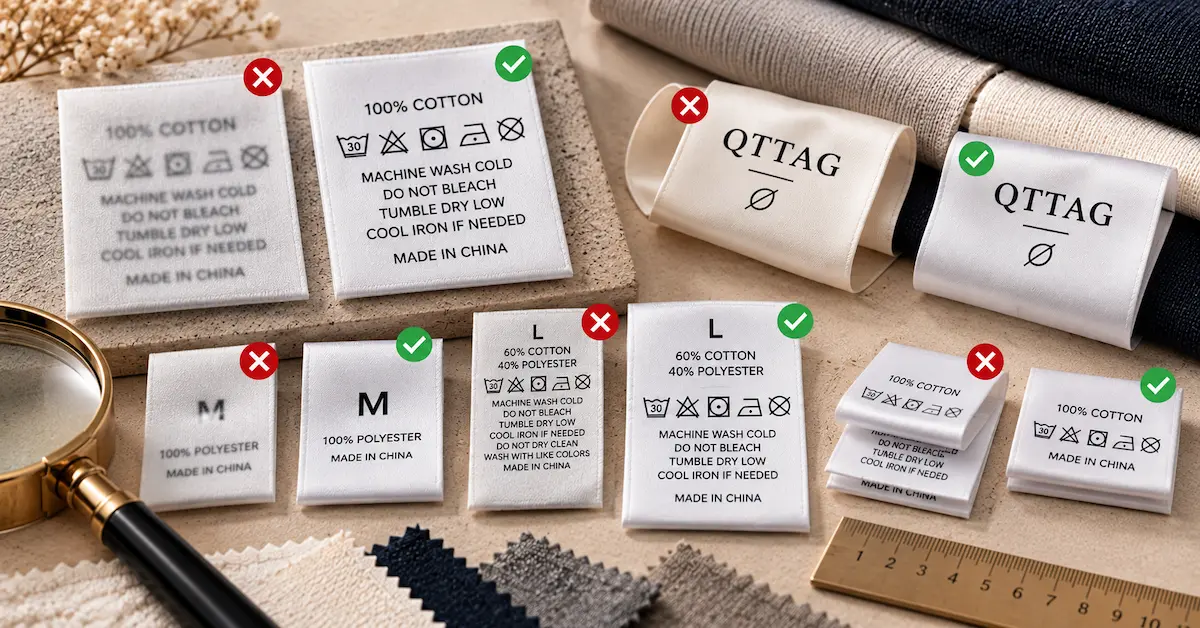
The seven most common custom printed labels mistakes are choosing incompatible label materials, printing illegible artwork, using incorrect care information, overlooking finished dimensions and folds, failing to validate wash durability, approving incomplete samples and allowing errors during bulk production.
These problems are usually easier to address before manufacturing than after labels have been sewn into thousands of garments.
For apparel brands and sourcing teams, the goal is to establish a practical approval process that covers material, artwork, information accuracy, manufacturing performance and final garment application.
This guide explains each mistake, how to recognize it and what to check before placing a custom printed label order.
Why Do Custom Printed Label Mistakes Happen?
Custom printed labels combine several decisions within a limited physical space.
A supplier may need to reproduce a logo, garment size, fiber composition and care instructions on a narrow fabric strip that will later be cut, folded and sewn into clothing.
The finished label must work with the garment and, where required, remain legible after use and washing.
Problems arise when the artwork is approved without considering the label material, or when the material is selected before the supplier knows how much information must fit on it.
Other common causes include incomplete garment data, unclear responsibilities and production files that have not been properly version-controlled.
The Main Factors Affecting Printed Label Quality
| Factor | Why It Matters | Main Buyer Check |
|---|---|---|
| Label substrate | Influences feel and print compatibility | Material and garment suitability |
| Printing method | Affects artwork reproduction | Process and substrate compatibility |
| Text size | Determines readability | Finished-size proof |
| Care information | Must describe the actual garment | Approved source data |
| Finished dimensions | Affects layout and attachment | Width, length and fold |
| Durability | Determines performance during use | Relevant laundering tests |
| Production control | Maintains order consistency | Approved samples and versions |
For most projects, buyers should evaluate the complete printed and finished label rather than making decisions from digital artwork alone.
Mistake #1: Choosing the Wrong Label Material
One of the most common mistakes is selecting a label material because it looks smooth, soft or premium in a product photograph.
The surface appearance alone does not reveal whether the substrate is suitable for the intended printing technology or garment.
Why Material Selection Matters
Printed clothing labels may use polyester-based substrates, satin-style materials, cotton-based fabrics or other compatible constructions.
These materials differ in texture, stiffness, print response and behavior during garment use.
Even substrates with similar descriptions may behave differently depending on their exact composition and finishing.
An Example: Printed Care Labels for Knitwear
A knitwear brand may want a flexible, comfortable care label with detailed instructions.
A substrate that works well for a structured jacket might feel inappropriate against lightweight knit fabric.
Conversely, a soft material may fail to reproduce very small text clearly with a particular printing system.
The correct choice requires balancing comfort, readability and durability.
Material Selection Comparison
| Material Option | Potential Application | Main Evaluation |
|---|---|---|
| Polyester textile | Printed care and identification labels | Print compatibility and durability |
| Satin-style textile | Smooth brand or care labels | Surface, feel and printing clarity |
| Nylon-based material | Selected information labels | Material and print compatibility |
| Cotton-based material | Selected apparel branding | Ink behavior and dimensional stability |
| Recycled-content material | Projects with sourcing requirements | Evidence, printing and performance |
These are possible material categories, not a statement that each is currently supplied by QTTAG in every construction.
How to Avoid This Mistake
Provide the supplier with the garment fabric, intended label placement, printing requirements and expected care conditions.
Request actual material samples and compare the printed result, not just blank label substrates.
When the label will touch the skin, evaluate the finished edges, folds and attachment.
A suitable label material must work with the garment and printing process together.
Mistake #2: Using Artwork That Produces Blurry or Unreadable Text
Printed labels often contain much more text than woven brand labels.
Fiber percentages, laundry care instructions, style references and multiple languages can make the artwork crowded.
A common mistake is reducing the font size until all the information fits.
Why Small Text Becomes Difficult to Read
Digital artwork can look sharp when enlarged on a monitor.
At the actual label dimensions, small typography may become difficult to reproduce or recognize.
Print quality depends on the substrate, printing method, artwork preparation and finished size.
Common Artwork Problems
-
Small fonts
-
Insufficient contrast
-
Thin typefaces
-
Closely spaced lettering
-
Compressed laundry symbols
-
Poor-quality source artwork
-
Excessive information within a narrow layout
What Should Be Checked?
| Artwork Issue | Potential Result | Prevention |
|---|---|---|
| Very small typography | Unreadable garment information | Review physical proof |
| Low contrast | Poor text visibility | Improve approved color contrast |
| Thin lettering | Missing or incomplete strokes | Check production capability |
| Crowded symbols | Difficult symbol recognition | Increase spacing |
| Low-resolution source | Blurred logo | Use suitable artwork |
| Overloaded layout | Difficult information hierarchy | Revise layout or construction |
Example: A Multi-Language Care Label
A fashion brand may need several language versions for its intended markets.
Trying to fit every version onto a very small single-panel label can reduce readability.
A suitable multi-panel or folded construction may provide additional space, subject to manufacturing feasibility and applicable labeling requirements.
How to Avoid This Mistake
Review a printed proof at actual size.
Confirm the smallest text and laundry symbols remain legible.
Ask the supplier whether the selected substrate and printing process can reproduce the approved artwork.
Do not rely on a screen preview at high magnification.
Where a design cannot be reproduced clearly, adjust the dimensions or layout before bulk production.
Mistake #3: Printing Incorrect Fiber Content or Care Instructions
This mistake can be more serious than a cosmetic printing defect.
A label may be perfectly printed while containing information that does not match the garment.
For example, a label supplier may reproduce a fiber composition exactly as provided, but the clothing brand later discovers that the garment uses a different fabric blend.
The printing process worked correctly; the source information was wrong.
Information That Requires Verification
Depending on the garment and destination market, a label may contain:
-
Fiber composition
-
Washing instructions
-
Bleaching instructions
-
Drying instructions
-
Ironing guidance
-
Professional care information
-
Country-of-origin information
-
Responsible business identification
-
Size or product references
-
Other applicable product information
Why Incorrect Information Happens
Apparel development often involves different teams.
Material sourcing, garment design, technical development, regulatory review and label production may be handled by separate organizations.
Information can become outdated when materials change or earlier artwork is reused.
A Practical Verification Process
Step 1: Confirm the garment specification.
Verify the actual materials and approved construction.
Step 2: Establish the correct care information.
Use appropriate garment knowledge, evidence and testing where required.
Step 3: Identify the destination markets.
Check applicable labeling and language requirements.
Step 4: Approve the content separately.
Confirm technical and regulatory information before reviewing print appearance.
Step 5: Release a controlled artwork version.
Ensure the label supplier receives the final approved file.
Printed Care Labels and Compliance
Labeling rules differ between markets.
For example, applicable U.S. and European requirements are not identical, and a single printed label should not be assumed suitable for every destination.
The responsible business should verify the relevant requirements for the actual product.
How to Avoid This Mistake
Never ask a printer to guess fiber composition or care instructions from a photograph.
Provide approved information and identify the person or team responsible for its accuracy.
Correct printing does not guarantee correct product information.
Mistake #4: Ignoring Finished Dimensions, Cutting and Folding
A flat printed label may look correct before finishing but become difficult to read or sew after it is cut and folded.
Buyers sometimes specify the artwork dimensions without accounting for the final construction.
Different Measurements May Be Involved
A custom printed label may have separate requirements for:
-
Flat material dimensions
-
Printed artwork area
-
Cutting allowance
-
Fold position
-
Sewing allowance
-
Finished visible dimensions
These measurements should be defined in the technical specification.
Center-Fold Printed Labels
A center fold creates two sides.
The content should be arranged so important information appears in the intended location after folding.
End-Fold Printed Labels
End folds require suitable material allowances.
If the printing is positioned too close to the folded area, parts of the design may become hidden.
Straight-Cut Labels
Straight-cut constructions should be evaluated for edge quality and intended attachment.
Multi-Panel Labels
Information-heavy labels may use suitable folded or layered formats.
The production process must support the intended construction.
Common Dimensional Problems
| Issue | Potential Result | Prevention |
|---|---|---|
| Incorrect cut position | Missing information | Confirm artwork margins |
| Inadequate fold allowance | Poor attachment | Specify final fold |
| Text across fold | Reduced readability | Review folded proof |
| Label too long | Excessive garment bulk | Test on garment |
| Label too narrow | Crowded text | Adjust layout |
| Incorrect sewing position | Hidden information | Approve attachment |
How to Avoid This Mistake
Request a finished, folded physical sample.
Confirm the actual visible dimensions after sewing.
Inspect the position of text, symbols and margins.
A flat printed sheet should not be the only approval reference for a finished clothing label.
Mistake #5: Failing to Validate Print Durability After Washing
For labels intended to remain attached to garments, durability matters.
A care label that looks clear before washing may become difficult to read after use if the materials and printing system are unsuitable.
What Affects Printed Label Durability?
Relevant factors may include:
-
Label substrate
-
Ink or ribbon system
-
Printing process
-
Application conditions
-
Garment washing method
-
Detergents
-
Drying conditions
-
Mechanical handling
Performance should be evaluated for the actual intended care conditions.
Typical Durability Problems
Fading: Printed information becomes lighter after laundering.
Loss of definition: Small characters or laundry symbols become difficult to distinguish.
Surface damage: The label material or printed surface changes during use.
Edge deterioration: Cutting or folding areas show unacceptable defects.
Attachment problems: The label or stitching does not remain suitable for the garment.
How to Test Wash Durability
A useful approval process should identify the intended laundering conditions and relevant acceptance criteria.
Test representative samples, then review both appearance and information readability.
| Evaluation | What to Check |
|---|---|
| Initial printing | Text and symbol clarity |
| After washing | Continued legibility |
| Material appearance | Surface condition |
| Fold and edges | Physical integrity |
| Attachment | Label remains suitable |
| Product information | Required details remain accessible |
How to Avoid This Mistake
Do not assume that a printed label is washable merely because the material is described as polyester or satin.
Ask which printing and substrate combinations are suitable for the intended care conditions.
Approve the finished construction using relevant physical testing.
Avoid unsupported claims such as guaranteed durability for a fixed number of washes unless product-specific evidence supports them.
Mistake #6: Approving Only a Digital Mockup Instead of a Physical Sample
Digital artwork is essential for preparation, but it cannot demonstrate every aspect of the finished printed label.
A digital preview does not fully reveal label flexibility, ink appearance, cut edges or how the material feels after sewing.
Why Physical Sampling Matters
The sample helps buyers evaluate the actual result under conditions closer to production.
It should represent the proposed label material, printing, dimensions and finishing.
A Practical Approval Process
Step 1 — Confirm artwork.
Check the logo, typography, symbols and approved garment information.
Step 2 — Select the material.
Confirm the printing substrate and intended construction.
Step 3 — Print a representative sample.
Use the proposed process where practical.
Step 4 — Inspect text and symbols.
Check clarity at actual size.
Step 5 — Review cutting and folding.
Confirm finished dimensions.
Step 6 — Attach the label to a garment.
Evaluate comfort, location and readability.
Step 7 — Conduct relevant durability checks.
Review wash and handling performance when required.
Step 8 — Approve the production reference.
Retain the sample and final specification.
Physical Sample Approval Checklist
| Item | Approval Requirement |
|---|---|
| Label substrate | Approved material |
| Artwork | Correct logo and layout |
| Fiber information | Verified content |
| Laundry symbols | Correct and readable |
| Printing | Clear at actual size |
| Dimensions | Finished width and length |
| Folding | Correct panel arrangement |
| Edges | Suitable finishing |
| Attachment | Compatible with garment |
| Durability | Meets agreed requirements |
How to Avoid This Mistake
Require a physical sample for new constructions or meaningful changes.
Keep the approved sample as a reference for production inspection.
If a sampling substitute is used, document the difference and obtain further approval when necessary.
Mistake #7: Poor Version Control and Bulk Production Quality Checks
Custom printed labels may contain many similar-looking versions.
A brand might need separate labels for different garment sizes, fiber compositions, styles or export markets.
One of the most avoidable production problems is supplying the correct label design to the wrong garment.
Why Version Errors Occur
Several files may share similar names.
Design revisions can be made without updating the production references.
Labels may be packed together without sufficiently clear identification.
A manufacturer may accidentally reuse an earlier artwork version.
Common Production Problems
-
Incorrect garment size
-
Wrong fiber composition
-
Missing care instructions
-
Incorrect language
-
Outdated brand logo
-
Poor print alignment
-
Inconsistent label dimensions
-
Mixed SKU quantities
Establish a Controlled Approval System
Each final label version should have an identifiable reference.
The reference can link the artwork, garment specification and production order.
Verify Variable Information
If a collection has different fabric compositions, confirm that the appropriate label is produced for each variation.
Inspect Representative Production Samples
Compare the finished labels with the approved references.
Check Packing Accuracy
Ensure different designs and product versions remain correctly separated and identified.
Example Production Checklist
| Control | What to Verify |
|---|---|
| Artwork version | Correct approved file |
| SKU | Correct garment association |
| Fiber composition | Matches product |
| Size | Correct size information |
| Language | Approved market version |
| Printing | Clarity and completeness |
| Dimensions | Agreed tolerance |
| Folding | Correct finished construction |
| Quantity | Correct packing count |
How to Avoid This Mistake
Maintain one controlled production reference for each approved version.
Document revisions and require approval before implementing changes.
Use suitable in-process and final inspection criteria.
Bulk quality control should check information accuracy as well as physical appearance.
Seven Printed Label Mistakes: Quick Comparison
The following table summarizes the problems and corresponding preventive actions.
| Mistake | Main Risk | Recommended Prevention |
|---|---|---|
| Wrong material | Unsuitable feel or poor printing | Match substrate to garment and process |
| Illegible artwork | Unclear text or symbols | Review printed proof at actual size |
| Incorrect care information | Misleading or noncompliant label | Verify source content |
| Wrong dimensions and folds | Hidden text or poor sewing | Approve finished construction |
| Inadequate wash durability | Faded or unreadable information | Perform relevant testing |
| Skipped sampling | Undetected physical problems | Approve representative samples |
| Weak version control | Wrong labels or inconsistent batches | Control artwork and inspect production |
Which Mistakes Should Be Addressed First?
Content accuracy, material suitability and printing feasibility should be established before approving the final production artwork.
Finished dimensions and folding should then be confirmed through sampling.
Durability and production controls should follow the intended product specification.
In practice, these checks overlap. A change in material can affect both printing clarity and wash durability, while a change in label size may require a new artwork layout.
How to Choose Printed Label Materials for Different Garments
A clothing brand may use one visual identity across several garments without requiring the same printed label construction everywhere.
T-Shirts
Lightweight T-shirts may need compact, flexible labels with suitable neckline or side-seam placement.
Knitwear
Fabric texture, stretch and garment construction influence the label's placement and attachment.
Sportswear
Garment movement, technical materials and expected care conditions should be considered.
Underwear
Comfort, label thickness and limited garment space may be particularly important.
Jackets
Outerwear may provide more options for label dimensions, but information and attachment requirements still apply.
Children's Clothing
Product-specific regulatory or safety considerations may require additional review.
Choosing the Right Material
The supplier should know the actual garment application before recommending a substrate.
A printed label approved for one garment does not automatically suit every other fabric or care program.
Printed Labels vs. Woven Labels: Common Selection Mistakes
Printed and woven labels are different manufacturing methods.
A printed label reproduces artwork or text on a compatible substrate, while a woven label creates its design through interlaced yarns.
The main mistake is treating one method as universally superior.
| Decision Factor | Printed Labels | Woven Labels |
|---|---|---|
| Manufacturing | Printing on suitable material | Interlaced yarn construction |
| Detailed care information | Often practical | Depends on weave and layout |
| Brand texture | Printed surface | Woven textile appearance |
| Small details | Depends on printing system | Depends on weaving capability |
| Physical feel | Material-dependent | Yarn and weave-dependent |
| Performance | Product-specific testing | Product-specific testing |
For example, a brand may choose a woven neckline label for its visual identity and a separate printed care label for detailed garment information.
The correct choice depends on the function of each label.
How to Prevent Printed Care Label Compliance Errors
Care label content should be based on accurate garment information and the requirements of the intended market.
This is especially important for brands selling internationally.
Verify Fiber Composition
Use the actual product specification rather than a generic template.
Confirm Suitable Care Information
Care instructions should reflect the garment and applicable market rules.
Check Language Requirements
Different markets may require information in different languages.
Review Label Placement
Applicable rules may specify how certain information must be presented.
Keep Physical and Digital Information Consistent
Product details displayed on labels, packaging and relevant online pages should not conflict.
Identify Approval Responsibilities
The brand or other responsible economic operator should determine the correct product information.
The label supplier should manufacture according to the approved specifications.
Avoid Assuming Global Compliance
A label design suitable for one country should not automatically be considered compliant everywhere.
Regulatory review should take place before the artwork is released for production.
How to Coordinate Printed Labels With Apparel Branding
Printed labels do more than carry technical information.
Selected constructions may also support the visual identity of the garment.
Brand Logo
Use approved artwork and consistent proportions.
Typography
Maintain readable and recognizable lettering.
Material and Color
Different label materials can create different visual effects.
Woven Labels
A woven label may provide the main brand identity while a printed label supplies garment information.
Hang Tags
Printed hang tags can use related typography and artwork.
Apparel Packaging
Boxes, bags and wrapping can follow the same overall brand design direction.
Keep Production Specifications Separate
Although these products share an identity, their materials and manufacturing processes differ.
Each product should be approved against its own requirements.
What Determines the Cost of Custom Printed Labels?
Printed label pricing depends on the complete product specification.
Factors may include:
-
Label material
-
Printing technology
-
Finished dimensions
-
Artwork complexity
-
Number of printed colors
-
Folding and cutting
-
Order quantity
-
Different artwork versions
-
Sampling requirements
-
Performance testing
-
Packing and delivery
Material Selection
Different substrates may have different costs and manufacturing characteristics.
Printing Requirements
Text density, color and production processes may influence the quotation.
Artwork Variations
Multiple size, language or fiber-content versions may introduce additional preparation and sorting requirements.
Quantity
Minimum order quantities depend on the specific supplier and construction.
Total Finished Cost
Compare equivalent printed and finished labels rather than only the initial printing price.
A lower price is not necessarily better if the label fails to meet the required information and performance standards.
What Should Buyers Include in a Custom Printed Label RFQ?
A detailed purchasing brief helps suppliers evaluate the actual requirements.
| RFQ Item | What to Provide |
|---|---|
| Label type | Brand, care, size or other |
| Garment | Intended clothing application |
| Material | Preferred substrate |
| Dimensions | Finished width and length |
| Artwork | Approved logo and layout |
| Content | Verified garment information |
| Printing | Colors and production requirements |
| Fold | Straight cut, center fold or other |
| Attachment | Intended sewing method |
| Quantity | Estimated volume |
| Variations | Sizes, languages or designs |
| Performance | Relevant washing and durability |
| Sampling | Physical approval requirements |
| Delivery | Destination and required schedule |
Where the buyer has not yet selected a substrate or printing technology, provide the garment specifications and intended information.
The supplier can then discuss appropriate options and manufacturing feasibility.
Frequently Asked Questions About Custom Printed Labels
What are the most common custom printed labels mistakes?
The most common mistakes involve unsuitable materials, unreadable artwork, incorrect garment information, poor dimensions and folding, inadequate wash durability, skipping physical sampling and weak production version control.
Why does text on printed clothing labels become blurry?
Blurred text can result from artwork that is too small, an unsuitable substrate, printing-process limitations or other manufacturing factors. A physical proof should be reviewed at the intended finished size.
What is the best material for printed care labels?
There is no universal best material. The right substrate depends on printing requirements, garment comfort, care conditions and manufacturing compatibility.
Can custom printed care labels include fiber composition?
Yes. Suitable printed labels may carry fiber composition and other garment information, provided that the content is verified and the applicable market requirements are met.
Why do printed labels fade after washing?
Fading or loss of definition may depend on the substrate, ink or ribbon system, printing process and laundering conditions. Product-specific performance testing is recommended.
Are cotton labels better than polyester labels?
Neither material is automatically better. The appropriate choice depends on appearance, printing compatibility, garment suitability and the required performance.
Can one printed label design be used in multiple countries?
Sometimes, but destination-market requirements may differ. Content, language, placement and other applicable obligations must be checked for each relevant market.
Should printed labels be tested before bulk production?
Physical sampling and relevant durability testing are useful for confirming printing clarity, finished dimensions, material suitability and garment compatibility.
What should I check when approving laundry symbols?
Confirm that the symbols are appropriate for the actual garment, correctly reproduced and readable at the intended printed size.
How can apparel brands prevent incorrect care-label versions?
Use controlled artwork files, clear product references, approved information and production inspections that verify the association between labels and garment SKUs.
What is the minimum order quantity for custom printed labels?
MOQ depends on the supplier, substrate, printing method, dimensions and design variations. Buyers should request a quotation based on the actual specification.
Develop Custom Printed Labels With QTTAG
A successful printed label project combines correct garment information, suitable materials, readable artwork and reliable production.
For apparel brands, the most important steps are selecting the appropriate substrate, preparing accurate content, confirming finished dimensions, approving physical samples and establishing quality-control requirements.
QTTAG supports custom garment branding projects, including printed care labels, woven labels, heat transfer labels and related apparel identification products.
When preparing a new clothing collection, share the approved logo, garment specifications, intended label dimensions, material preferences, care information and estimated quantities.
These details provide a starting point for discussing label customization and sample development.
Ready to Create Custom Printed Labels for Your Clothing Brand?
Ready to Create Custom Printed Labels for Your Clothing Brand?
Share your logo artwork, garment specifications, preferred label materials, dimensions, printing requirements, approved care information and estimated order quantity with QTTAG.
Our team can discuss suitable printed label customization and sampling options for your apparel collection.
Request a Quote
Author
Founder at QTTAG
Jason Qiao is the founder of QTTAG, focusing on garment branding and packaging solutions. With years of experience in the apparel industry, he shares practical insights on custom labels, hang tags and sustainable packaging to help global brands grow.
Written By
Jason Qiao