How to Choose Garment Labels for Modern Apparel Brands
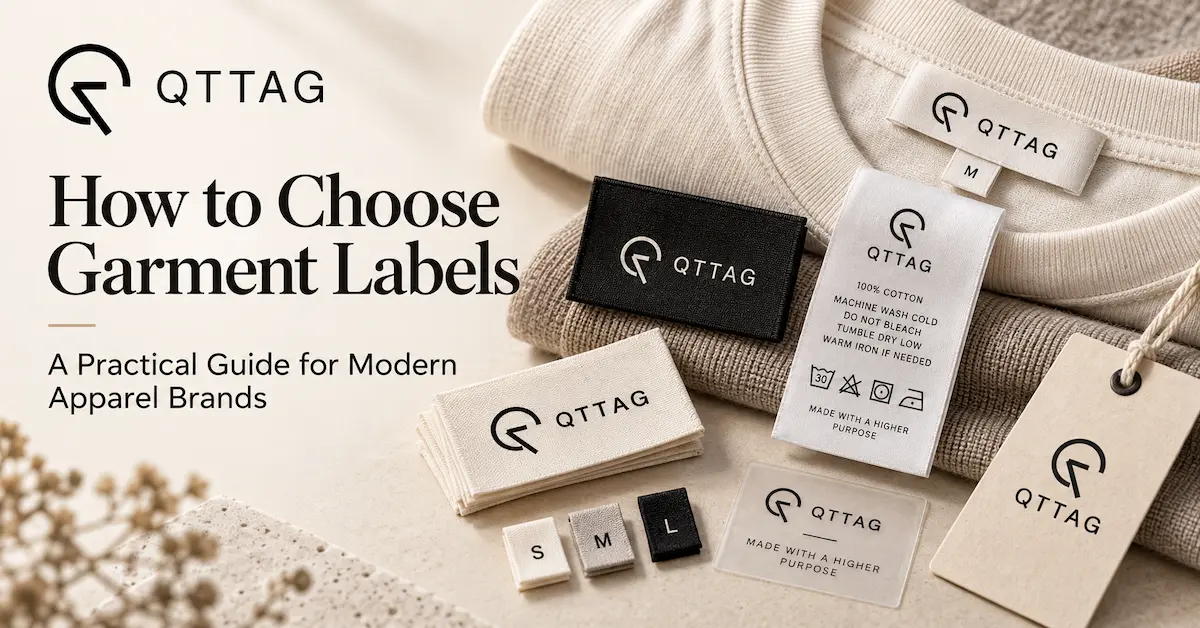
A garment label may be small, but it has several jobs to do. It identifies your brand, communicates important product information, and affects how a garment feels when someone wears it.
For apparel brands, choosing the right garment labels means balancing appearance, comfort, durability, legal requirements, and production cost.
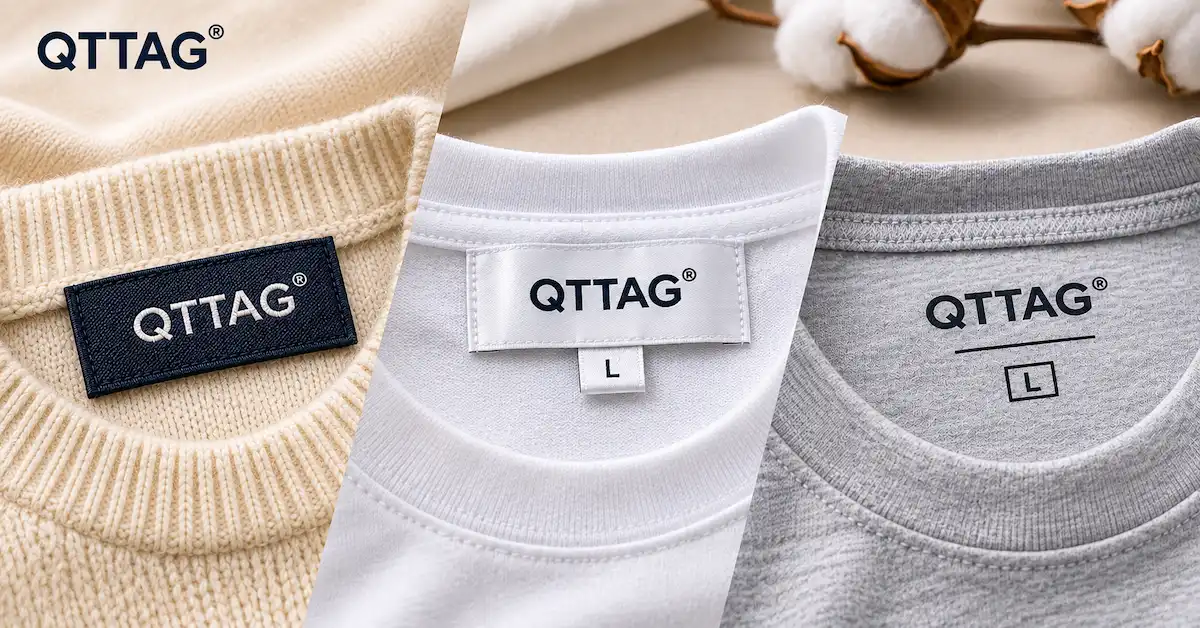
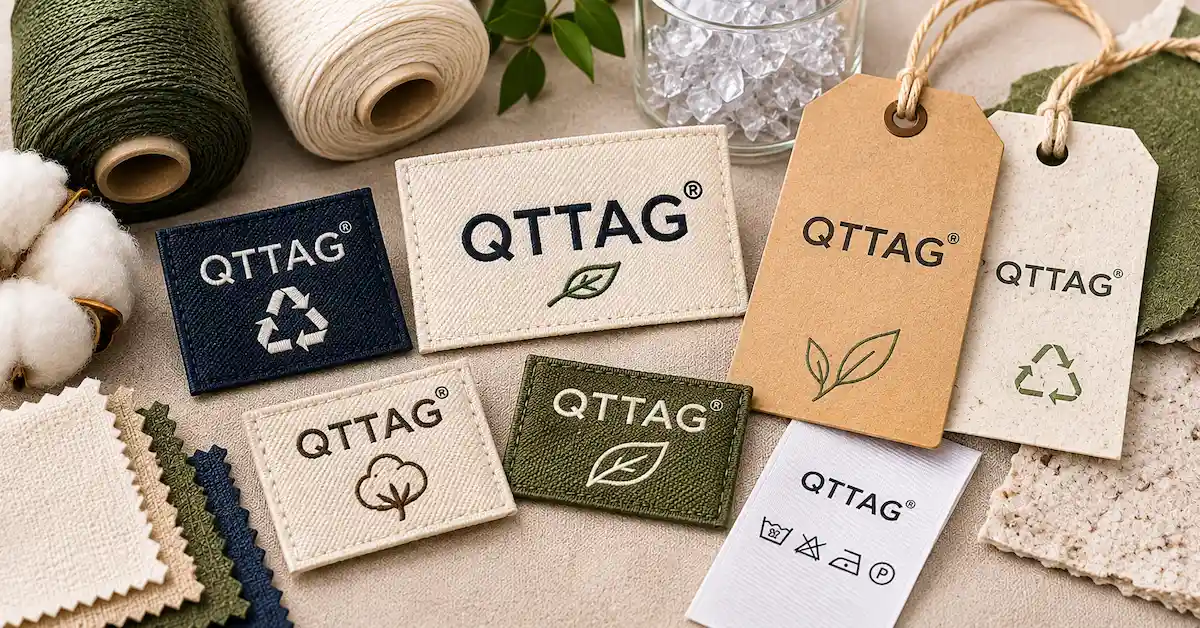
The best approach is to select labels according to their purpose. Use woven or printed labels for branding, care labels for garment information, and heat transfer labels when a smooth, tagless finish is preferred. Before ordering in bulk, confirm the materials, artwork, dimensions, attachment method, and performance on your actual garment fabric.
This guide explains how to make those decisions and what to check before approving production.
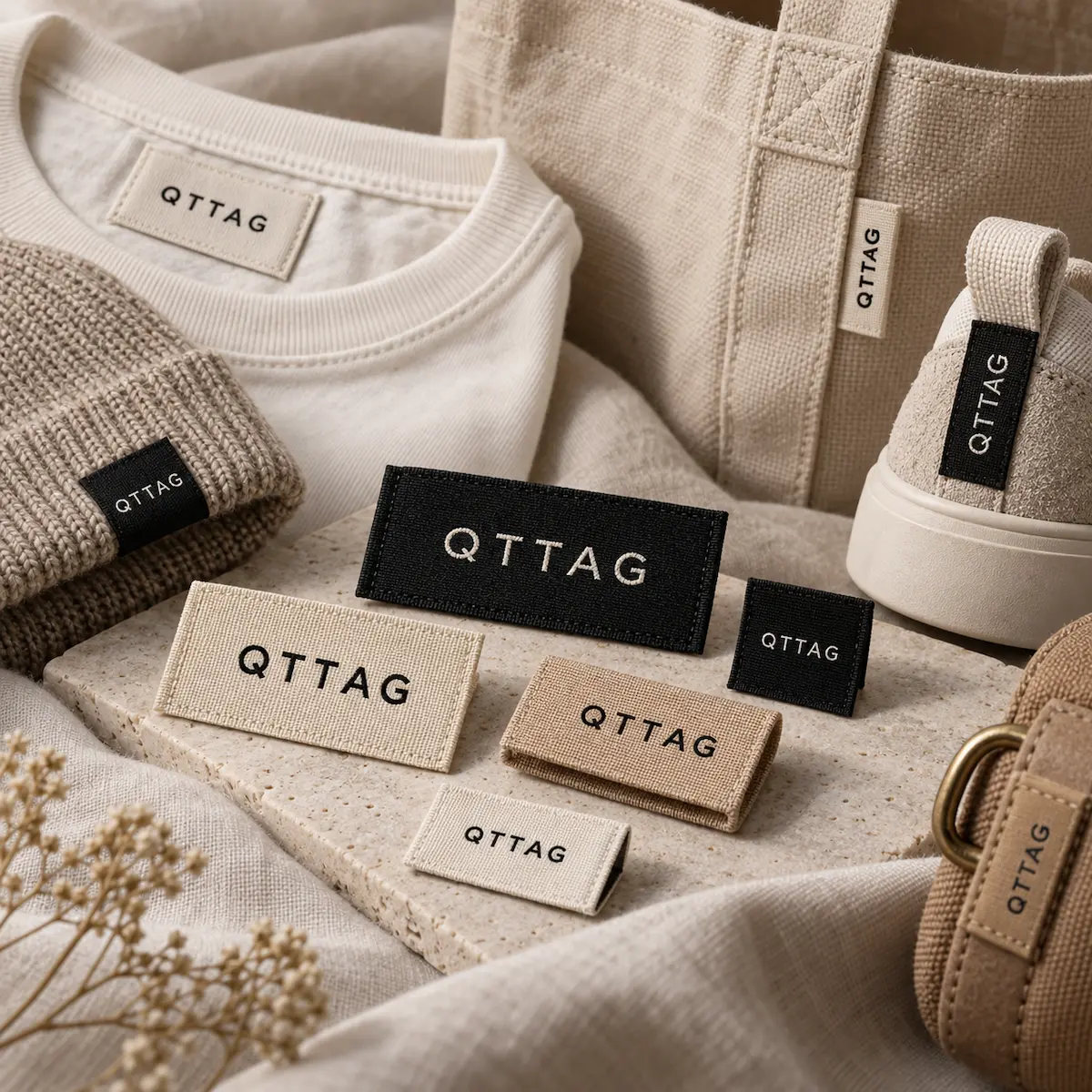
What Are Garment Labels?
Garment labels are identification or information components attached to clothing and other textile products. They may display a brand name, logo, garment size, fiber composition, country of origin, or care instructions.
A single garment can have several different labels, each serving a specific purpose.
For example, a casual T-shirt might include:
-
A woven brand label at the neckline.
-
A small size label beneath the main label.
-
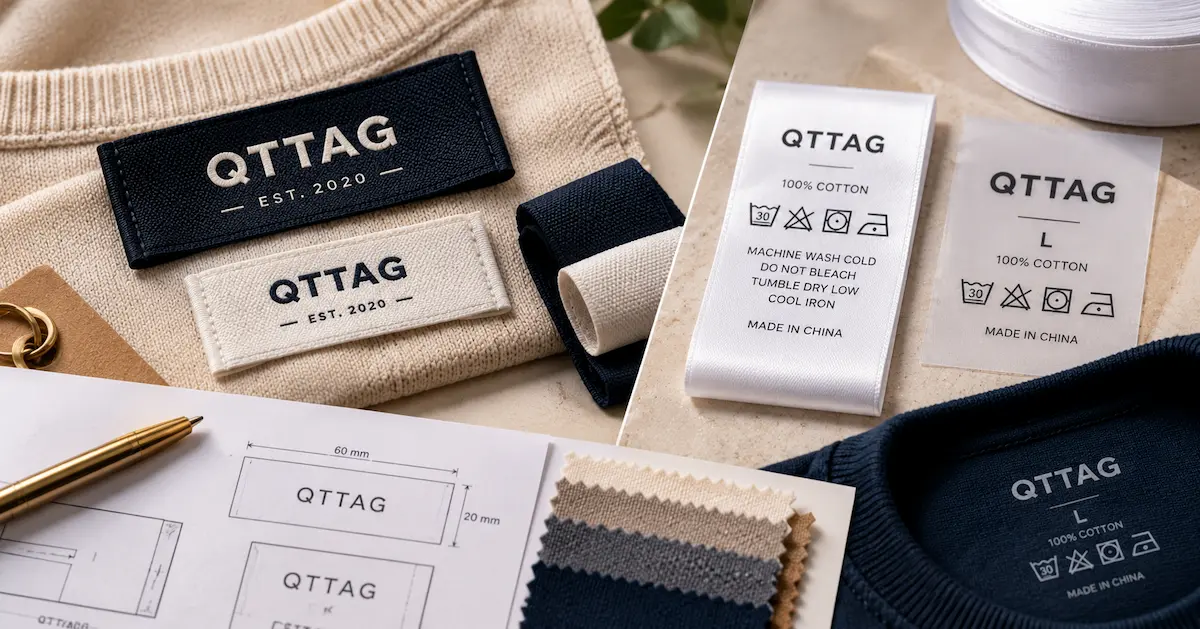
A printed care label inside the side seam.
-
A decorative label near the hem.
A performance T-shirt might use a tagless heat transfer at the neckline instead of a sewn label.
Neither arrangement is automatically better. The correct choice depends on the garment, the intended customer, and the information that must be displayed.
Understanding the Main Types of Garment Labels
Different labeling methods produce different visual and physical results.
| Label Type | Main Characteristics | Typical Applications | Buyer Considerations |
|---|---|---|---|
| Woven Labels | Logo or text formed with interlaced yarns | Shirts, jackets, denim, accessories | Detail, texture, fold, edge finish |
| Printed Labels | Text or graphics printed on a fabric substrate | Branding, information labels | Print clarity, colorfastness, material |
| Care Labels | Fiber and garment-care information | Clothing and textile products | Legibility, required information, durability |
| Heat Transfer Labels | Graphics transferred directly onto compatible fabric | Activewear, underwear, T-shirts | Fabric compatibility, wash resistance, hand feel |
| Size Labels | Garment size identification | Most apparel categories | Visibility, placement, sizing system |
| Decorative Labels | Branding or graphic embellishment | Streetwear, denim, accessories | Design, attachment, aesthetics |
A brand does not need to use every type. In fact, combining too many labels can create unnecessary cost and visual clutter.
Start with the information your garment needs. Then decide how that information should be presented.
Woven Labels vs Printed Labels: Which Should You Choose?
This is one of the most important decisions for a new apparel collection.
Woven Labels for Texture and Brand Identity
Woven labels create designs by arranging colored yarns during weaving.
Their appearance depends on the weave construction, yarn selection, label dimensions, and complexity of the artwork.
They are often selected for:
-
Premium apparel collections.
-
Denim and outerwear.
-
Knitwear and casual clothing.
-
Bags and textile accessories.
-
Brands looking for a distinctive textile finish.
A woven label can make a simple logo feel more integrated with the garment.
However, detailed designs require careful preparation. Extremely small lettering, thin lines, gradients, or complex illustrations may not reproduce exactly as they appear on a computer screen.
For small logos, request a physical sample before confirming the design.
Printed Labels for Detailed Information
Printed fabric labels offer another approach.
They can be useful when a design contains small text, detailed graphics, or information that would be difficult to reproduce through weaving.
Printed labels are commonly used for:
-
Care instructions.
-
Product information.
-
Detailed artwork.
-
Branding on suitable fabric substrates.
The printing method and fabric matter. A print that looks sharp on an initial sample may not perform the same way after repeated washing or abrasion.
Ask the supplier what material and printing process will be used, then evaluate a sample under the garment's expected care conditions.
Comparison: Woven vs Printed Labels
| Factor | Woven Label | Printed Fabric Label |
|---|---|---|
| Logo Production | Formed with yarns | Applied through printing |
| Surface Texture | Characteristic woven texture | Depends on the substrate |
| Fine Text | Limited by weave and size | Often suitable for smaller text |
| Color Effects | Depends on yarn and construction | Depends on ink and printing process |
| Durability | Depends on construction and attachment | Depends on substrate, ink and finishing |
| Production Cost | Depends on dimensions, yarns and complexity | Depends on method, material and quantity |
| Best Choice | Textile branding and dimensional appearance | Detailed graphics and information |
Practical recommendation: Choose woven labels when textile appearance is central to the design. Consider printed labels when information density or graphic detail is more important.
For a final decision, compare physical samples rather than relying only on digital artwork.
How to Choose the Right Label Material
Material selection affects more than appearance.
It can influence softness, thickness, fraying, print performance, sewing behavior, and how a label feels against the skin.
Damask Woven Labels
Damask-style woven labels are commonly considered when artwork requires relatively refined detail.
Actual results depend on loom configuration, yarn type, weave density, and the design itself.
Ask your manufacturer to confirm whether fine lettering or a complex logo can be reproduced at your proposed dimensions.
Satin Labels
Satin fabrics are often considered for their smooth, lustrous appearance.
The hand feel and performance depend on the fiber, weave and finishing process.
They may be useful for certain branding and printed information applications.
Taffeta and Other Woven Substrates
Taffeta-type materials can provide a different texture and structure.
Instead of choosing based on material names alone, compare actual fabric swatches and finished labels.
A material may look suitable in photographs but feel too firm for a neckline application.
Selecting Material by Garment Application
| Garment Application | Material Priority | Suggested Evaluation |
|---|---|---|
| T-shirt Neckline | Comfort and softness | Skin contact and edge feel |
| Denim Jacket | Durability and appearance | Attachment and repeated wear |
| Premium Knitwear | Softness and visual finish | Texture against knit fabric |
| Sportswear | Low bulk and flexibility | Fabric compatibility and laundering |
| Children's Clothing | Comfort and applicable safety requirements | Edges, placement and market rules |
| Bags and Accessories | Appearance and attachment | Sewing method and abrasion exposure |
The final selection should be based on a sample applied to the intended garment, not only on a loose label.
Choosing the Correct Label Fold and Edge Finish
A well-designed label can still look wrong if the fold type does not suit the garment.
The folding method determines how the label attaches and which parts remain visible.
Center Fold Labels
A center fold label is folded in half, usually with the folded edge visible and the open ends captured in a seam.
This is a common option for branding along seams or garment edges.
End Fold Labels
An end fold label has its ends folded underneath.
It can be useful where a clean, flat presentation is needed, depending on the sewing method.
Straight Cut Labels
Straight cut labels are supplied without an additional fold.
These may be used where the edges are secured by a suitable attachment method or finishing process.
Mitre Fold Labels
Mitre fold construction creates angled folds and can be used for certain hanging or specialty label applications.
Before specifying a fold, confirm these four dimensions:
-
Finished visible width.
-
Finished visible height.
-
Overall dimensions before folding.
-
Seam allowance or attachment area.
These measurements are not interchangeable.
A label specified only by its visible dimensions can create confusion during sample production.
Where Should Garment Labels Be Placed?
Placement affects visibility, comfort, brand recognition, and, for some required disclosures, regulatory compliance.
Common positions include the neckline, side seam, hem, waistband, sleeve, and interior garment panel.
Neck Labels
The neckline is a familiar location for brand and size information.
For frequently worn T-shirts and knitwear, the label should be assessed for scratching, stiffness, and movement against the skin.
A softer or tagless option may be preferable when comfort is the main concern.
Side Seam Labels
Side seams are often convenient for information labels.
They can provide space for fiber content and care instructions without adding unnecessary visual details around the neckline.
Hem Labels
A hem label can become a subtle external branding element.
Small woven labels at the hem are particularly relevant for casualwear, streetwear, and some private-label collections.
Labels for Bags and Accessories
Bags and textile accessories may use woven patches, sewn labels, printed labels, or other identification methods.
The attachment must suit the construction and anticipated use of the product.
Important: Brand preference cannot override mandatory label placement rules. Check the requirements of each destination market before finalizing garment construction.
Understanding Garment Labeling Requirements
Decorative branding and legally required textile information should be handled as separate design questions.
For apparel sold in the United States, the Federal Trade Commission provides requirements covering many textile products.
Depending on the product and applicable rules, labels must disclose information such as:
-
Fiber content.
-
Country of origin.
-
Manufacturer or other responsible business identity.
-
Appropriate garment-care instructions.
The FTC also has placement, readability and attachment requirements.
For the European Union, Regulation (EU) No 1007/2011 establishes requirements related to textile fiber composition labeling.
These rules are not identical across markets.
A label suitable for a domestic collection may need adjustments before a product is sold internationally.
Official references:
These references are starting points for compliance research, not substitutes for reviewing requirements applicable to a specific product and market.
A useful purchasing practice is to have the brand's compliance team approve the label wording before the supplier starts bulk production.
How to Evaluate Label Quality Before Production
A label should be evaluated as a physical product, not only as a printed or woven design.
The following checks help buyers compare samples.
Artwork Accuracy
Check whether the logo, spacing, lettering, and proportions match the approved artwork.
Pay particular attention to small text and thin elements.
Color Consistency
Compare samples against agreed color references under suitable lighting.
Computer screens alone are not reliable tools for approving production color.
If the brand has a defined color standard, communicate it before sampling.
Edge Quality
Look for excessive fraying, rough edges, visible defects, or inconsistent cutting.
The acceptable finish should match the intended garment use.
Attachment Strength
Test the attachment method on the actual garment material.
A beautifully made label is of little use if it becomes detached during normal wear or washing.
Comfort
Place the label in its intended position.
Check whether the edges irritate the skin, whether it bends naturally with the fabric, and whether the garment remains comfortable.
Laundering Performance
Test representative samples under appropriate garment-care conditions.
Look for changes in appearance, dimensional stability, legibility, and attachment.
Do not assume that every woven or printed label will perform identically. Materials and manufacturing methods make a difference.
What Affects the Cost of Custom Garment Labels?
The cost of custom garment labels depends on several production variables.
The most relevant factors generally include label dimensions, construction, design complexity, number of colors, material selection, finishing method, and order quantity.
| Cost Factor | Why It Matters | What Buyers Should Confirm |
|---|---|---|
| Label Size | Changes material use and production requirements | Finished and unfolded dimensions |
| Design Complexity | Can affect manufacturing setup and detail reproduction | Approved artwork and smallest elements |
| Color Requirements | Influences materials and production planning | Exact colors and references |
| Fold and Finish | Adds processing requirements | Fold type and edge treatment |
| Order Quantity | Affects setup cost allocation | Quantity per design and variation |
| Packaging | Changes sorting and handling work | Packing by size, design or SKU |
| Quality Requirements | May require additional testing or inspection | Acceptance criteria and test methods |
When requesting quotations, compare like-for-like specifications.
One supplier's quote may include folding and individual packing, while another may quote only the unfinished label.
A lower unit price does not necessarily represent a lower total project cost.
For a meaningful comparison, request a quotation based on the same approved specifications.
Why Physical Sampling Matters
Digital artwork shows the intended design. A physical sample shows how the production process reproduces it.
That difference is especially important when ordering woven labels with small text, multiple colors, or specific folding requirements.
A typical sample review should check:
-
Logo reproduction and spelling.
-
Label dimensions and fold construction.
-
Material texture and stiffness.
-
Color matching.
-
Sewing or attachment suitability.
-
Appearance after relevant tests.
The approved sample should serve as a reference for production and final inspection.
If a brand changes the artwork, dimensions, material, or folding method after approving a sample, it may need another approval cycle.
This is a straightforward way to reduce preventable production disputes.
How to Prepare a Garment Label RFQ
A Request for Quotation (RFQ) is more useful when it contains complete technical information.
Before contacting a supplier, prepare the following details.
| Required Information | Example or Explanation |
|---|---|
| Product Type | Custom woven brand label |
| Artwork | Vector logo or clear production file |
| Dimensions | Finished width and height |
| Material | Requested construction or reference sample |
| Colors | Approved color references |
| Fold Type | Center fold, end fold or another style |
| Application | T-shirt neckline, bag seam, jacket hem |
| Quantity | Number of pieces per design |
| Variations | Different sizes, colors or logos |
| Destination | Delivery country or region |
| Required Testing | Tests appropriate to the product |
| Delivery Target | Requested completion or arrival date |
If you are unsure about a material or folding method, provide photographs of the garment and a reference label.
A manufacturer can then evaluate the feasibility of the proposed construction before quoting.
How to Choose a Custom Garment Label Supplier
Selecting a supplier involves more than checking whether they can reproduce your logo.
A reliable evaluation should cover communication, sampling, manufacturing suitability, quality control and the ability to meet your order requirements.
Consider asking these questions:
Can the supplier explain the recommended construction?
A useful answer should connect material and finishing choices to your garment application.
Can the supplier produce an approval sample?
A physical reference reduces uncertainty around dimensions, texture and color.
How are production variations handled?
If your order includes five garment sizes, ask how those variations will be separated, identified and packed.
What inspection steps are used?
Discuss the specific defects and tolerances that matter for your product.
How will changes to approved artwork be managed?
Request a clear process for documenting revisions.
Can related branding products be coordinated?
When labels, hang tags, accessories and packaging share a visual identity, coordinating artwork and color references may simplify approval.
At QTTAG, custom garment labels are part of a broader apparel branding offering that also includes care labels, heat transfer labels, hang tags and packaging options. Buyers can discuss coordinated specifications for multiple components within the same project.
Specific materials, manufacturing capabilities, sample charges, minimum order quantities and lead times should be confirmed against the actual project requirements.
Frequently Asked Questions About Garment Labels
What is the difference between garment labels and clothing labels?
Both terms are commonly used to describe labels attached to garments. The products can include branding labels, size labels and information labels. The intended function determines the appropriate construction.
Are woven labels better than printed labels?
Not necessarily. Woven labels are useful when textile texture and woven branding are important. Printed labels can be preferable for detailed artwork or information. Compare samples based on your actual design.
Which labels are suitable for T-shirts?
Common options include woven neck labels, printed care labels, size labels, and tagless heat transfer labels. The choice depends on comfort, fabric compatibility, branding needs and applicable labeling rules.
Can garment labels be customized with a brand logo?
Yes. Custom label projects can use supplied artwork to define logo placement, size, colors and other production specifications. Feasibility depends on the selected material and process.
What is the best fold type for a neck label?
Center fold and end fold constructions are common options, but the correct choice depends on the garment and sewing method. Review a sample before making the decision.
Can a woven label contain small lettering?
It can, but legibility depends on the design, physical dimensions, yarn and weave construction. Very fine text may need to be enlarged or simplified.
How can I check whether a label is durable?
Evaluate the finished label under appropriate laundering, abrasion and attachment tests. Choose test conditions based on the garment's intended use and care instructions.
Do all clothing labels need care instructions?
Care labeling obligations depend on the product and sales market. Requirements in the United States, European Union and other destinations may differ. Check the applicable rules rather than assuming one universal standard.
What affects the minimum order quantity for custom labels?
MOQ can depend on the construction, material, artwork and manufacturing setup. Request a project-specific quotation rather than assuming the same minimum applies to every label.
How long does custom garment label production take?
Timing depends on sample approval, materials, production requirements, order quantity and shipping arrangements. Confirm sample lead time and bulk production lead time separately.
Start Your Custom Garment Label Project with QTTAG
Choosing garment labels becomes easier once you define the job each label needs to perform.
For a new clothing line, begin with the garment itself. Identify where the label will sit, what information it must carry, and how it should feel after attachment.
Then confirm the artwork, material, dimensions and finishing details with your supplier.
Ready to Create Your Custom Clothing Labels?
Share your artwork, quantity and specifications with QTTAG.
Request a Quote → Create Your Custom Sample
Author
Founder at QTTAG
Jason Qiao is the founder of QTTAG, focusing on garment branding and packaging solutions. With years of experience in the apparel industry, he shares practical insights on custom labels, hang tags and sustainable packaging to help global brands grow.
Written By
Jason Qiao