Heat Transfer Labels vs Custom Heat Transfers: Key Differences for Apparel Brands
An apparel buyer sends a transfer supplier a logo file and a short request: “We need heat transfer labels for our new clothing collection.”
There is enough information to recognize the product category, but not enough to choose a transfer. Is the logo going inside a T-shirt neckline or onto the sleeve of a running jacket? Is the fabric cotton jersey, polyester or a stretch blend? Will the transfer remain on the garment throughout its life?
The answers change what the supplier should recommend.
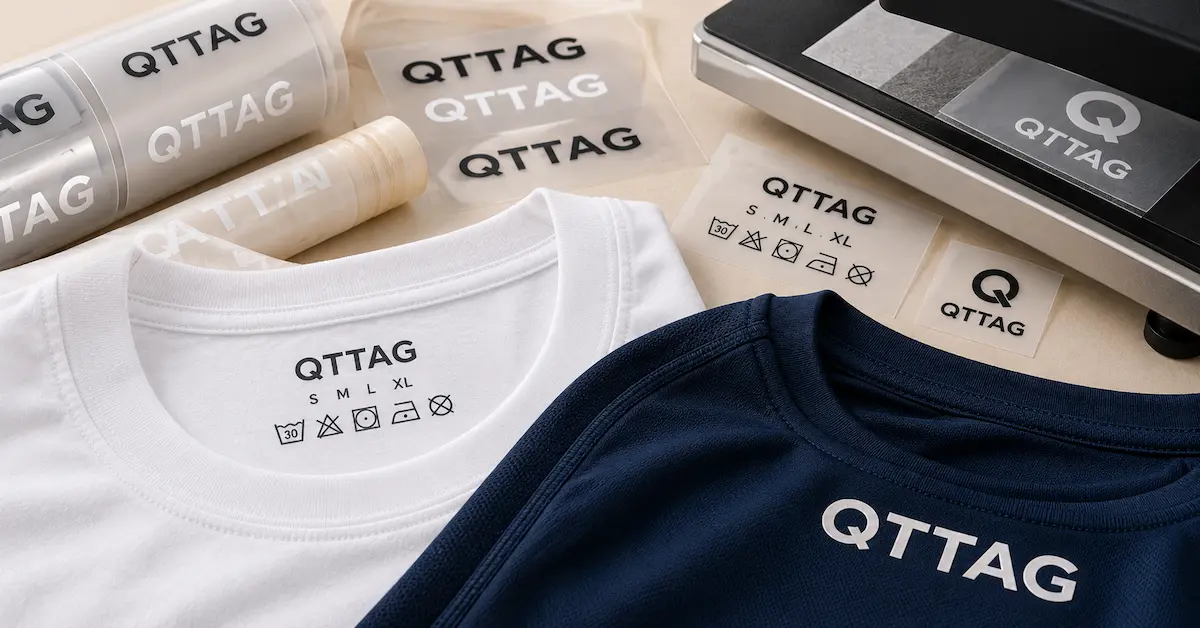
Heat transfer labels are typically used for garment branding, sizing and selected product information. Custom heat transfers cover a wider range of heat-applied designs made to a buyer's specifications, including neck logos, silicone graphics and reflective details.
These aren't competing manufacturing methods. A custom neck transfer label can fit both descriptions.
For a clothing brand, the distinction becomes useful when preparing artwork, choosing a material and comparing quotations. The product name is only the beginning of the specification.
When Does a Heat Transfer Label Become a Custom Transfer?
Imagine two requests.
One buyer needs a small brand name and size applied inside a sports shirt. Another wants a raised silicone logo on the outside of a sweatshirt.
Both products are applied with heat and pressure, provided that the chosen transfer system is compatible with the fabric. Yet the artwork, construction and acceptance criteria can be quite different.
The first design has to remain readable at a small size. Since it's positioned near the skin, the buyer will also want to examine the surface feel after application.
The second design is intended to be seen. Surface texture, thickness and the way the logo responds to garment movement may matter more.
Neither should be specified simply as “heat transfer printing.”
| Product Request | What Matters Most | Information the Supplier Needs |
|---|---|---|
| Tagless neck label | Legibility, low bulk, adhesion | Fabric, artwork size, placement |
| Custom chest logo | Color, definition, surface effect | Fabric, design, desired finish |
| Reflective sleeve marking | Reflective appearance and required performance | Intended use, fabric, testing needs |
| Heat-applied garment information | Readability and durability | Approved content, market, fabric |
The table also shows why a quotation can be misleading. Two suppliers may both offer custom heat transfers while quoting products built for different purposes.
Before discussing prices, make sure they're quoting the same construction.
The Fabric Can Change the Answer
A brand may want to use the same logo across cotton T-shirts and polyester-elastane activewear.
Keeping the artwork consistent makes sense. Keeping the transfer material identical requires more investigation.
A relatively stable jersey fabric and a stretch sportswear material won't necessarily behave the same way during pressing or wearing. The surface finish, dye system and garment construction can also influence the result.
For stretch activewear, the applied design needs to be assessed while the garment moves. An acceptable result on an unstretched sample doesn't tell the entire story.
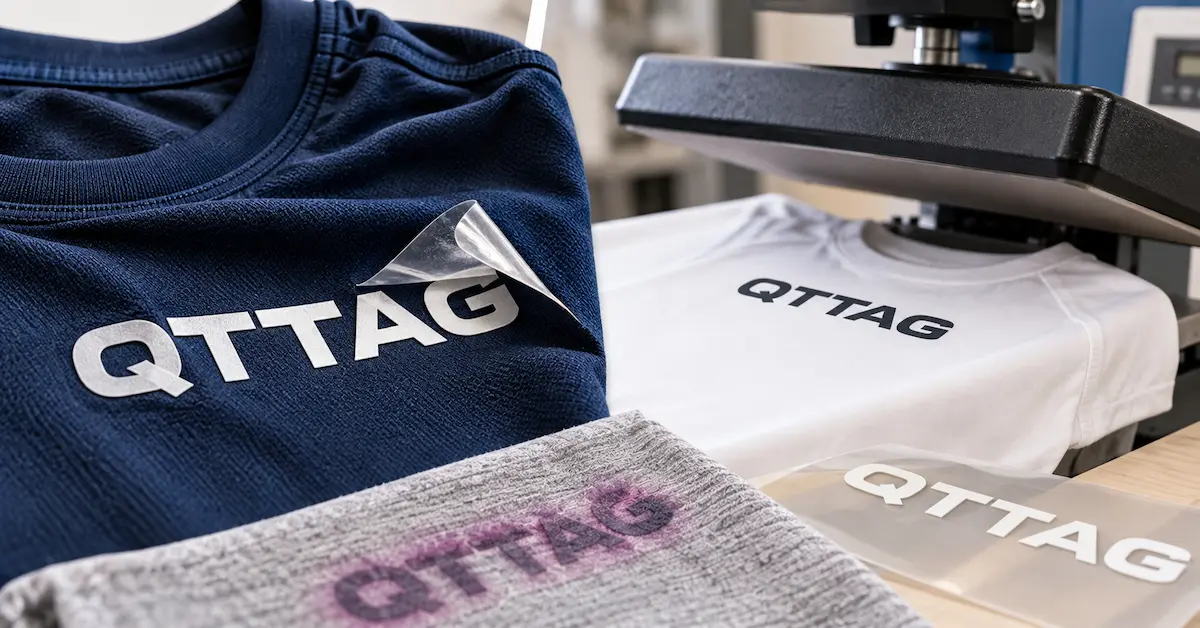
Polyester introduces another point worth discussing with the supplier: dye migration. Depending on the dye, fabric and transfer system, color can migrate into an applied design under certain conditions. A white logo is an obvious place to look for unwanted discoloration.
That doesn't mean polyester garments can't use heat transfers. It means the material combination deserves a suitable trial.
What about silicone, TPU and reflective transfers?
A silicone-based construction may be considered when a brand wants a raised or textured design. TPU-based transfers have their own material characteristics, while reflective transfers are chosen for a particular light-reflecting appearance.
Those descriptions are too broad to serve as technical specifications on their own.
For example, two silicone transfers may differ in thickness and flexibility. A reflective decoration isn't automatically suitable for a safety-related application.
The sensible approach is to show the manufacturer the intended garment and finished appearance, then request a construction that can be evaluated physically.
3. The Detail Missing From Many Transfer Briefs
A finished logo is only half of the application.
The other half is the process used to attach it.
Some transfer products require hot carrier removal, others warm or cold removal. The pressing conditions can differ as well.
These distinctions matter because the carrier supports the artwork during application. Removing it under unsuitable conditions may affect the finished result.
Manufacturers such as Siser and STAHLS' publish product-specific application instructions. They distinguish temperature, pressure, dwell time and peeling requirements across different materials.
An apparel factory shouldn't substitute settings from an unrelated product merely because both items are called heat transfers.
There is another issue: the actual pressing equipment.
A good sample made on one machine doesn't prove that a different press will produce exactly the same result. The production team needs to confirm that its equipment can deliver the approved conditions consistently.
Ask for the application instructions before approving the transfer, not after receiving the bulk order.
What Does an Approved Sample Actually Prove?
A transfer sample sheet can confirm color and design appearance. It cannot fully demonstrate how the graphic will behave on a finished garment.
For a neck label, the useful sample is one applied in the intended location. The buyer can then review the lettering, the surface feel and any visible effect on the surrounding fabric.
For a sportswear graphic, stretch and laundering may be relevant. For a jacket emblem, the buyer may be more concerned about adhesion around the edges and the response of the outer fabric to pressing.
These are different acceptance questions.
A practical sample record should identify the garment fabric, transfer construction, design dimensions and applied position. It should also reference the pressing procedure used for the approved sample.
After application, inspect the logo in ordinary lighting. Check fine letters and the edges carefully. Look at the garment surface around the transfer for unwanted marks or changes.
If washing performance matters, agree on the relevant care conditions and test accordingly.
Avoid accepting a blanket promise such as “guaranteed for 100 washes” unless the supplier can provide suitable evidence for the actual product and test conditions.
Before signing off, can you answer these questions?
-
Is the transferred artwork correct at its finished size?
-
Does it feel and look appropriate on the garment?
-
Has the intended application procedure been documented?
-
Have relevant washing or stretching requirements been evaluated?
-
Does the factory have the correct transfer version for each garment?
A clear approval record is especially useful when a collection contains several fabrics or design variations.
Can Heat Transfer Labels Replace Sewn-In Labels?
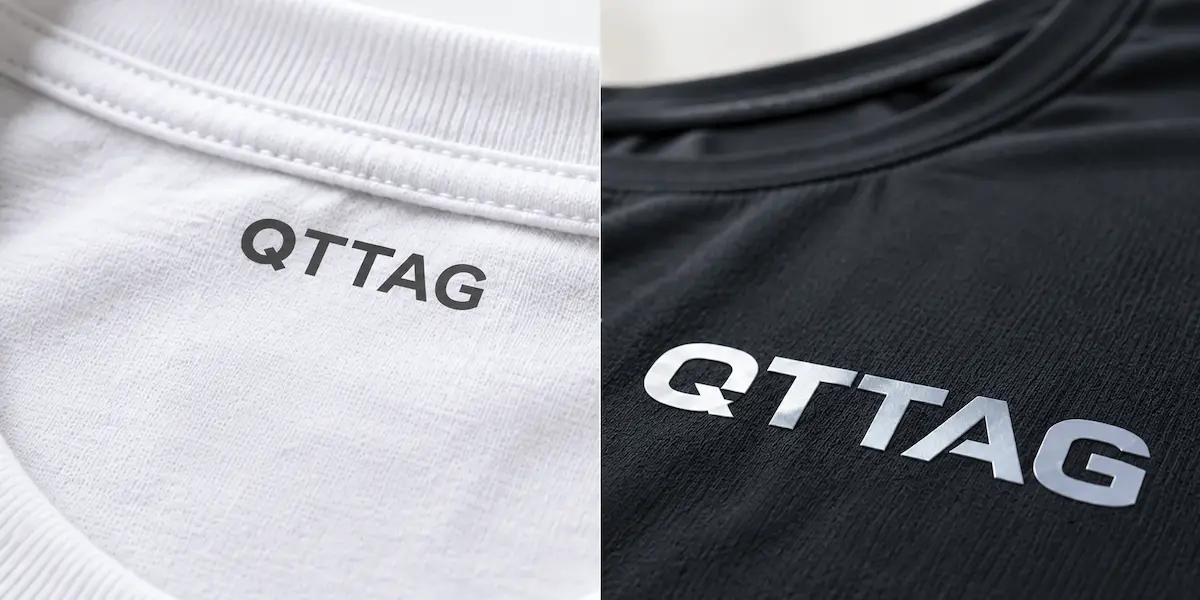
For brand identification, a suitable tagless neck transfer may be an alternative to a sewn woven label.
Whether that is desirable depends on the garment and intended appearance.
A lightweight training top may benefit from avoiding an additional folded neck label. A tailored jacket may look better with woven branding.
Care and composition information is a separate matter.
A small neck logo doesn't necessarily provide enough room for the required garment details. Some markets also have rules concerning content, placement or permanence.
A clothing brand might therefore choose a heat transfer for neck branding and retain a printed care label elsewhere.
There is nothing contradictory about that arrangement. The two components serve different jobs.
Before removing any information label, check the requirements of the intended sales market and the actual garment.
Comparing Suppliers Without Comparing the Wrong Products
The first question in a custom heat transfer quotation shouldn't be the unit price.
It should be: What exactly is included?
A supplier may quote a transfer sheet without application. Another may include special preparation or sample-development work. A third may propose a different transfer material from the one the buyer expected.
Those figures aren't directly comparable.
The buyer should confirm the material, artwork dimensions, color requirements, quantity, design variations and any setup or sample charges.
Minimum order quantities can also differ by construction. A supplier's MOQ for a simple neck label may not apply to a specialty silicone graphic.
Application costs deserve attention as well. If the garment factory will press the transfers, it needs suitable equipment and instructions.
A transfer that appears inexpensive on paper may not be the best choice if the approved process is difficult to reproduce in production.
A Useful RFQ Example
A short brief can provide the information needed for an initial assessment without pretending to know the correct transfer material in advance.
Product: Custom neck heat transfer labels
Garment: Polyester-elastane training tops
Artwork: Approved brand logo with size variations
Placement: Inside neckline
Requirements: Low-profile appearance, readable lettering, compatibility with the supplied fabric and suitable laundering performance
Supplier to confirm: Available constructions, sample requirements, validated application settings, MOQ and quotation terms
The same brief wouldn't be appropriate for a raised chest logo on a heavyweight sweatshirt. That project would need its own material and appearance requirements.
Questions Apparel Buyers Often Ask
Are heat transfer labels and custom heat transfers the same product?
The terms overlap. Heat transfer labels usually refer to garment identification or information applications. Custom heat transfers describe a wider range of heat-applied designs produced to the buyer's specifications.
Which option is better for a small neck logo?
A suitable neck heat transfer label is a common option. The right construction depends on the garment fabric, artwork size, desired surface feel and required durability.
Can I use the same transfer on cotton and polyester clothing?
Possibly, but it should not be assumed. Ask the supplier to confirm compatibility and test the proposed transfer on representative fabric from each garment.
What heat press settings should I use?
Use the product-specific instructions validated for the selected transfer and fabric. Temperature, pressure, contact time and peeling requirements can differ between products.
Are custom heat transfers suitable for activewear?
They can be, provided the construction suits the actual fabric and intended movement. Stretch, adhesion and garment-care performance may need to be checked.
How much do custom heat transfer labels cost?
Pricing depends on the transfer construction, dimensions, design, colors, quantity and commercial terms. Compare quotations based on equivalent specifications and clarify whether garment application is included.
Can tagless neck labels replace care labels?
Not automatically. A brand may use a tagless logo while retaining a separate label for required care or composition information. The final arrangement must satisfy the applicable market requirements.
Preparing Your Transfer Artwork for Quotation
A transfer manufacturer can give a more useful recommendation when the request includes the actual garment fabric, an approved logo and the intended placement.
If the material has not yet been chosen, that is fine. Supply a visual reference and explain the result you want.
For projects with different fabric types, identify those differences before sampling.
The supplier can then assess which constructions are feasible and what needs to be tested.
QTTAG supports custom apparel branding inquiries, including heat transfer labeling and related garment identification products. Specific silicone, reflective, TPU or other specialty options should be confirmed for the proposed project.
Ready to Create Custom Heat Transfer Labels for Your Clothing Brand?
Share your logo artwork, garment fabric, preferred transfer materials, label dimensions, application requirements and estimated order quantity with QTTAG.
Our team can discuss available customization and sampling options for your apparel collection.
Request a Quote
Author
Founder at QTTAG
Jason Qiao is the founder of QTTAG, focusing on garment branding and packaging solutions. With years of experience in the apparel industry, he shares practical insights on custom labels, hang tags and sustainable packaging to help global brands grow.
Written By
Jason Qiao