7 Common Custom Heat Transfers Mistakes and How to Avoid Them
A batch of sports shirts is ready for printing. The artwork has been approved, the transfer sheets have arrived, and the garment factory is preparing the heat press.
Everything looks ready. But one detail hasn't been checked: the logo was sampled on cotton, while the production shirts are made from polyester with stretch.
That difference can matter more than the artwork itself.
Custom heat transfers can fail because of fabric incompatibility, artwork limitations, incorrect pressing conditions, carrier-peeling errors, dye migration, inadequate durability testing or poor production control. Some problems appear as soon as the carrier is removed. Others aren't visible until the garment has been worn or washed.
Here are seven mistakes worth checking before they affect a clothing order.
The Transfer Was Approved on the Wrong Fabric
A transfer sample looks good. Does that mean it's ready for production?
Only if the sample represents the garment that will actually be used.
Cotton jersey, polyester sports fabric and coated outerwear can behave differently under heat. A transfer designed for one material may not bond properly to another. Stretch introduces another consideration: the decoration needs to behave appropriately when the garment moves.
It's easy to overlook this when the same logo appears across an entire collection.
Suppose a brand uses one design on a cotton T-shirt and a polyester-elastane running top. The visual result may be identical, but the material requirements aren't necessarily the same.
The purchasing brief should identify both fabrics.
Ideally, the factory should apply samples to representative production fabric before approving the transfer. If several fabrics are involved, their compatibility needs to be considered separately.
What to check: garment composition, surface finish, stretch requirements and the fabric used for sample approval.
Small Logo Details Disappear During Application
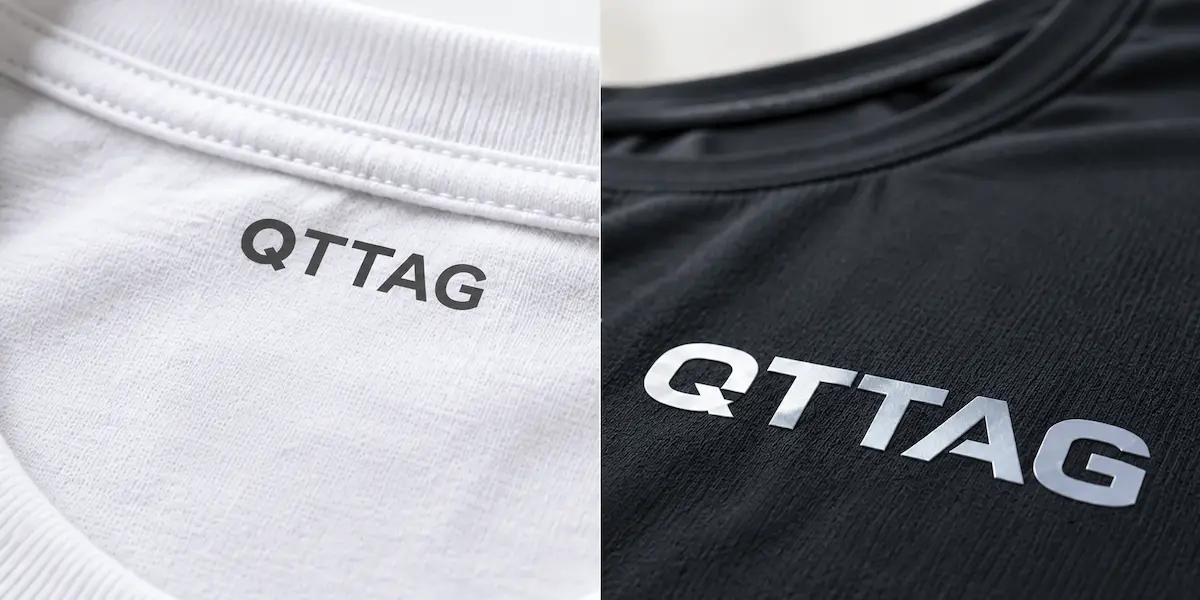
A printed neck label may contain a brand name, a size and perhaps a short line of information. There isn't much space.
The artwork might be clear when enlarged on a screen, yet difficult to reproduce at its final dimensions.
Thin strokes, small letters and narrow gaps can become troublesome, depending on the transfer process.
The problem isn't always visible on the carrier sheet. It may appear only when the transfer is applied and the carrier removed.
Before approving the design, look at the smallest elements at actual size.
If the supplier recommends changing the lettering or spacing, request a revised proof. Those changes should be approved by the brand, not made silently during production.
A larger chest logo and a small neckline design may require different artwork preparation even when they share the same original file.
Keep the master logo unchanged, but prepare each application for its intended dimensions.
The Heat Press Settings Are Treated as a Guess
Incorrect application settings can cause poor adhesion, incomplete transfers or unwanted changes to the garment surface.
Temperature is only part of the process.
Pressure, contact time, equipment condition and the way the garment sits under the platen also matter.
A press may display the selected temperature, but that doesn't automatically establish uniform heating across the entire application area. Thick seams, collars or other raised garment sections can affect contact.
When a transfer begins lifting, increasing the temperature is not necessarily the right response.
The problem could involve insufficient or uneven pressure, an unsuitable transfer material or a fabric finish that interferes with bonding.
A better approach is to compare the actual application with the supplier's instructions.
Check the equipment, the positioning of the garment and the approved process before changing settings.
There is no single temperature or pressing time that works for every custom heat transfer.
Manufacturers publish different instructions for different materials. The production team should use the specification for the exact transfer being applied.
Nobody Checked When the Carrier Should Be Peeled
The carrier is the temporary layer that supports the design during application.
Removing it sounds straightforward, but the correct timing depends on the transfer system.
Some products require hot peeling. Others require a warm or cold peel. Certain materials allow more than one method.
Using the wrong procedure can cause part of the design to lift with the carrier.
The confusing part is that two transfer sheets may look almost identical before application.
That doesn't mean their instructions are interchangeable.
Siser's published application guidance, for example, distinguishes application and carrier-removal requirements between specific products. The instructions must be read for the material actually being used.
The transfer supplier should provide the relevant procedure before the order reaches the production line.
The operator also needs to know whether any cooling, covering or additional pressing step is required.
It takes very little space to include this information on a production sheet. Leaving it out can create an avoidable source of rework.
A White Logo Changes Color on Dark Polyester
Dye migration is a particular concern with some dyed and sublimated polyester garments.
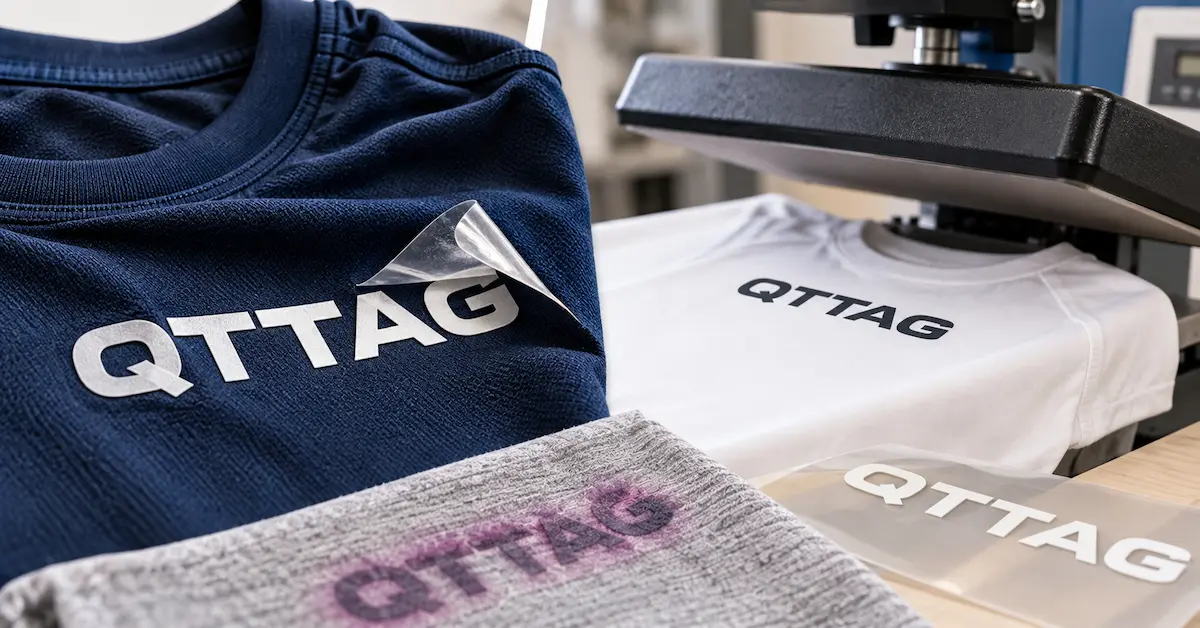
Imagine a white transfer applied to a dark sports shirt. It looks clean immediately after pressing, but later develops an unwanted pink or other colored tint.
One possible cause is dye migrating from the garment into the transferred material.
This doesn't happen to every polyester fabric, and the severity can vary with the dye system, material and application conditions.
Still, the possibility should be considered when choosing transfers for suitable high-risk fabrics.
A supplier may recommend a transfer system designed to reduce dye migration. Such materials have their own specifications and limitations.
A dye-blocking description is not a reason to skip testing.
For a buyer, the useful evidence is a finished sample made with the intended colored fabric and assessed under relevant conditions.
If the garment fabric or dyeing specification changes, the original approval may need to be reconsidered.
The Sample Looks Good, but Nobody Tests It After Washing
Freshly applied graphics are easy to inspect.
You can see whether the design is complete, whether the placement is correct and whether the edges appear properly attached.
Longer-term performance takes additional work.
For a sportswear logo, stretching may be relevant. For an everyday T-shirt, laundering is an obvious consideration. A neck label containing information should also remain readable for its intended use.
The testing method needs to match the garment.
A general claim such as "washable" doesn't explain what conditions were used or how the result was judged.
Before approving bulk production, agree on what the finished transfer needs to withstand.
The review may include:
| Check | What Matters |
|---|---|
| Initial appearance | Correct design and complete transfer |
| Adhesion | No unacceptable lifting |
| Fabric condition | No unwanted heat or pressure damage |
| Stretch | Suitable behavior during expected movement |
| Washing | Acceptable adhesion and appearance |
| Small lettering | Continued readability where required |
Avoid judging durability solely from the transfer sheet or from an unrelated garment sample.
A transfer may remain attached but still have an unacceptable appearance after washing. The complete result matters.
The Factory Doesn't Have the Same Instructions as the Sample Maker
This is a production-management problem rather than a material defect.
The sample may have been developed using one press, one fabric and a particular set of instructions.
Bulk production then moves to a different machine, another operator or a garment with a slightly different construction.
If the approved process isn't recorded, the factory may have to recreate it from incomplete information.
There is also the risk of mixing artwork versions.
A clothing brand might order several neck-label sizes or logo colors for one collection. Without clear references, the correct transfer can be applied to the wrong garment.
The approved artwork, material specification, garment reference and application instructions should be linked to the production order.
If something changes, the affected application needs to be reviewed.
For repeat orders, compare the new production requirements with the original approval. "Same as last time" isn't a complete technical specification.
A good sample is useful. A sample accompanied by clear production records is much more useful.
Before Placing a Bulk Order
A buyer doesn't need to understand every detail of transfer manufacturing to ask the right questions.
The most useful information to prepare is the actual garment fabric, the approved artwork, the intended logo dimensions and the location where the transfer will be applied.
Also explain whether the garment stretches, how it's expected to be washed and whether the factory already has suitable application equipment.
Ask the supplier to confirm the proposed construction and provide the relevant application instructions.
For new materials or unfamiliar fabric combinations, request representative samples before authorizing bulk production.
The quotation should also make clear whether it covers transfer sheets alone or includes garment application.
That distinction can affect the total purchasing cost.
Frequently Asked Questions
Why do custom heat transfers peel after washing?
Peeling may result from material incompatibility, inadequate bonding, unsuitable application settings or other construction-related problems. The approved transfer, garment and application process should be checked before choosing a correction.
Can the same transfer be used on cotton and polyester?
Some transfer systems are compatible with both, but suitability depends on the specific materials and finish. Representative application testing is recommended.
Why does a white heat transfer turn pink on polyester?
Dye migration is one possible cause, particularly with certain dyed or sublimated polyester fabrics. The fabric and transfer construction should be investigated before selecting a replacement material.
Is hot peeling better than cold peeling?
Neither is universally better. The correct carrier-removal method depends on the transfer product. Follow the relevant manufacturer's instructions.
How can a clothing brand check heat transfer durability?
Approve samples on representative garment fabric and assess them under relevant washing, handling and stretch conditions. Record the acceptance requirements before testing.
What information should I provide when ordering custom heat transfers?
Send the approved artwork, garment fabric, transfer dimensions, intended placement, required appearance, quantity and relevant performance requirements.
Ready to Discuss Your Custom Heat Transfer Project?
A clear purchasing brief helps the supplier evaluate which transfer construction may suit the garment.
If a collection contains different fabrics, sizes or finishes, identify those variations before sampling.
QTTAG supports custom apparel branding inquiries, including heat transfer labeling and related garment identification products. The availability of specific silicone, TPU, reflective or other specialty constructions should be confirmed for each project.
Ready to Create Custom Heat Transfers for Your Clothing Brand?
Share your logo artwork, garment fabric, preferred transfer materials, dimensions, application requirements and estimated order quantity with QTTAG.
Our team can discuss available customization and sampling options for your apparel collection.
Request a Quote
Author
Founder at QTTAG
Jason Qiao is the founder of QTTAG, focusing on garment branding and packaging solutions. With years of experience in the apparel industry, he shares practical insights on custom labels, hang tags and sustainable packaging to help global brands grow.
Written By
Jason Qiao