Quality Control: What Apparel Brands Need to Know
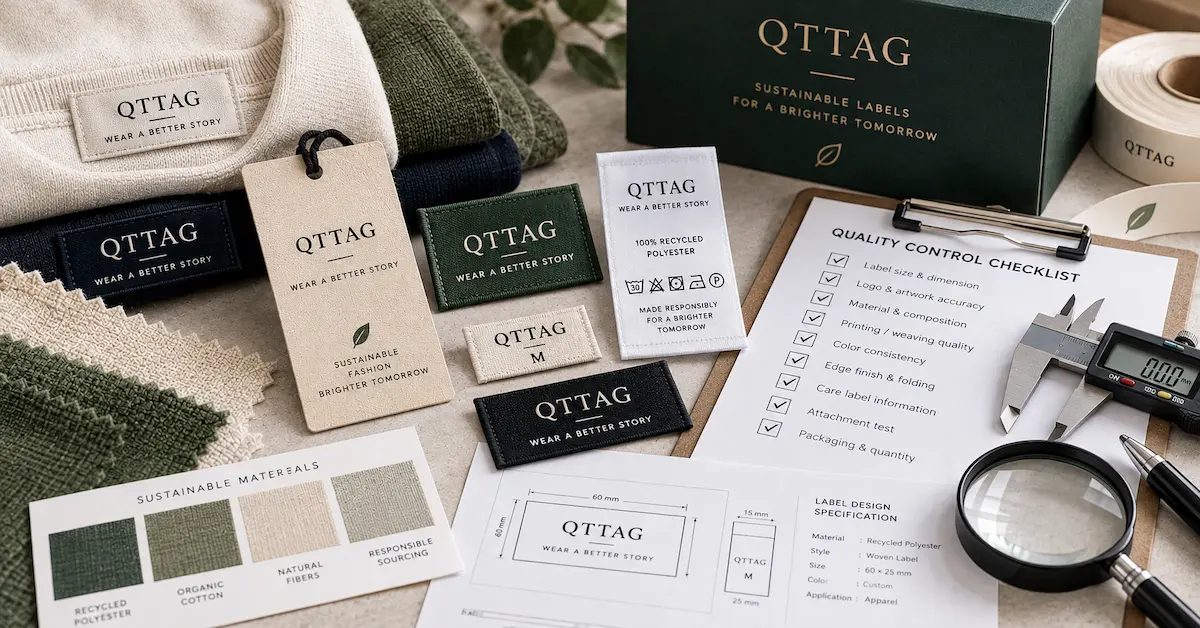
Quality control is one of the most important parts of apparel production. A garment may have an attractive design and carefully selected fabric, but incorrect labeling, inconsistent accessories or unsuitable packaging can still create problems before the product reaches its customer.
For clothing brands, quality control should begin before bulk manufacturing. It involves defining product requirements, reviewing materials, approving physical samples, inspecting production and confirming that finished products match the agreed specifications.
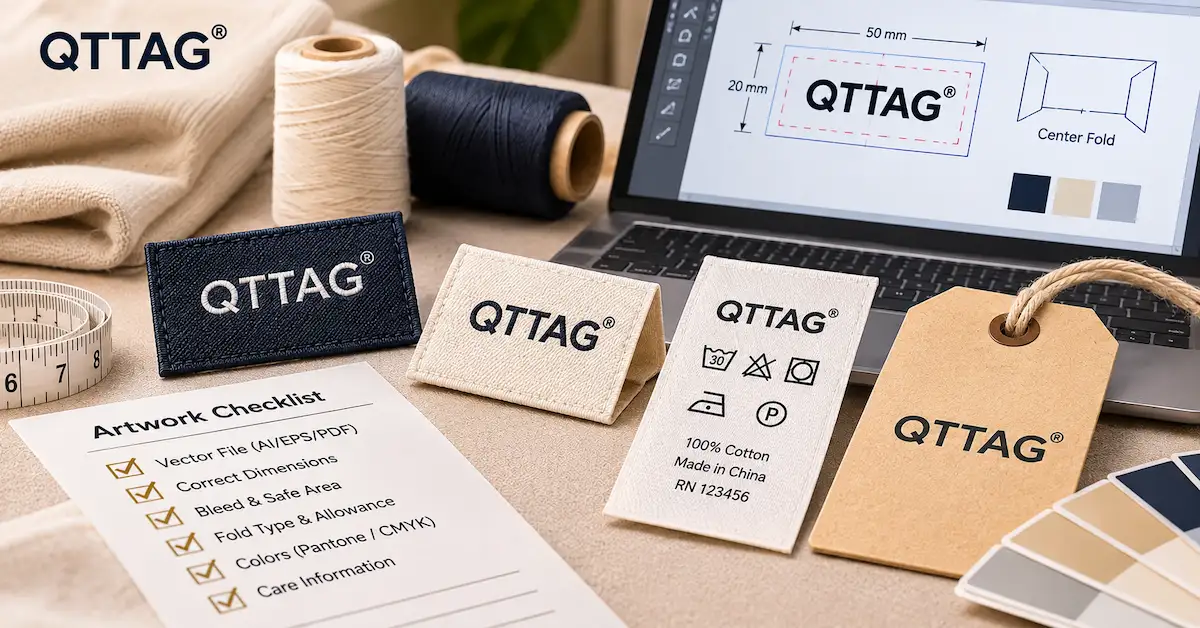
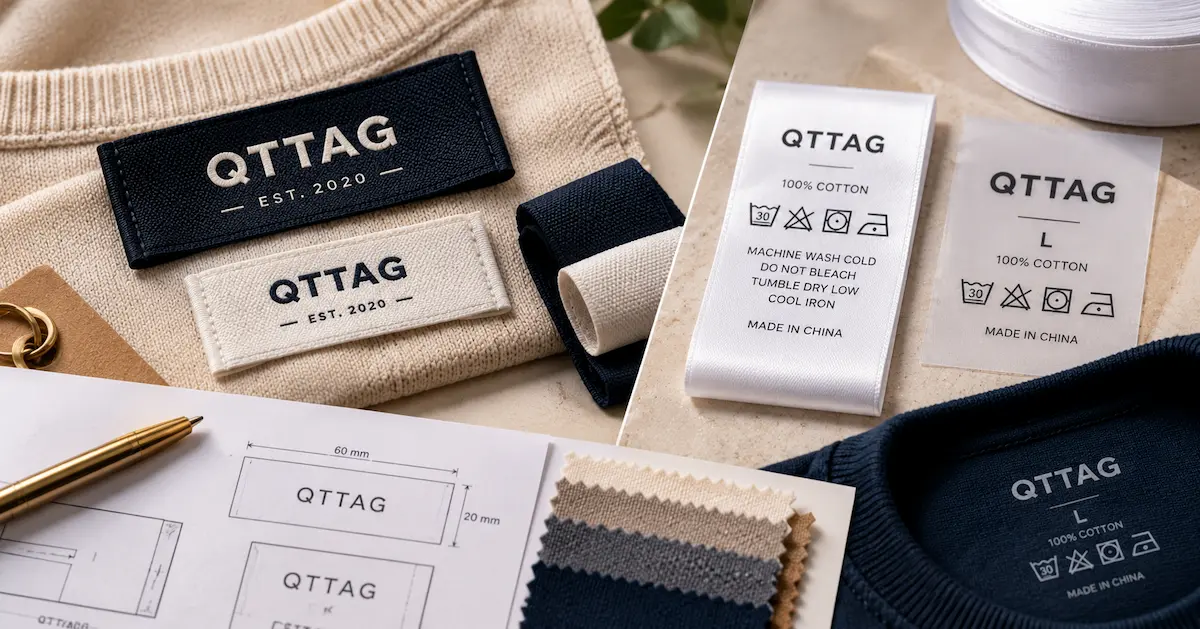
This is particularly important when working with custom woven labels, printed care labels, heat transfer labels, hang tags and apparel packaging. Each component uses different manufacturing processes and requires appropriate inspection methods.
Effective quality control for apparel brands combines clear specifications, approved reference samples, risk-based inspections, accurate product information and documented corrective actions.
The objective is not simply to find defects after production. It is to identify potential problems early, establish consistent expectations and prevent avoidable mistakes from reaching finished garments.
This guide explains how apparel brands can organize quality inspections, evaluate suppliers, classify defects and manage custom branding components before and during bulk production.
What Is Quality Control in Apparel Manufacturing?
Quality control refers to the inspection and verification activities used to determine whether products meet defined requirements.
In apparel manufacturing, these activities may cover fabrics, garment construction, accessories, labeling, printing, packaging and finished product presentation.
Quality assurance and quality control are related, but they are not identical.
Quality assurance focuses on establishing processes intended to prevent problems, while quality control focuses on checking whether materials and finished products meet specified requirements.
For apparel brands, both are useful.
A practical quality management process may include:
-
Reviewing technical specifications
-
Confirming material requirements
-
Approving physical samples
-
Checking incoming components
-
Inspecting production
-
Evaluating finished products
-
Recording defects and corrective actions
-
Confirming packaging and shipment accuracy
The specific inspection plan should reflect the product, manufacturing methods and risks involved.
Why Quality Control Matters for Custom Branding
Custom apparel branding components are often small, but they carry important information.
A woven label with an incorrect logo, a care label with inaccurate washing instructions or a hang tag containing the wrong barcode can create problems even when the garment itself is manufactured correctly.
The inspection process should therefore cover branding components as well as garment construction.
Why Apparel Brands Need a Defined Quality Control Process
A clear inspection process helps align the expectations of designers, buyers, suppliers and garment manufacturers.
Without an approved specification, different people may interpret the same product requirements differently.
Reducing Production Errors
Early inspections can identify incorrect materials, artwork versions or manufacturing settings before larger quantities are produced.
Protecting Brand Consistency
Logos, colors, label positions and packaging designs should follow approved references across the collection.
Supporting Product Compliance
Relevant product information must be accurate and suitable for the destination market.
Quality checks can verify that approved content has been reproduced correctly, although legal compliance also requires appropriate regulatory review.
Managing Multiple Suppliers
A clothing brand may obtain labels, hang tags, packaging and garments from different manufacturers.
Documented specifications help coordinate these products.
Improving Repeat Orders
Approved samples and records help buyers communicate requirements when placing subsequent orders.
Supporting More Informed Purchasing Decisions
Inspection records provide a clearer basis for evaluating suppliers than price or general quality claims alone.
The Main Stages of Apparel Quality Control
A practical quality plan can cover several stages of the production process.
| Stage | Main Objective | Typical Inspection |
|---|---|---|
| Specification review | Confirm requirements before production | Artwork, dimensions, materials and information |
| Incoming material inspection | Check supplied components | Material identity and visible condition |
| Pre-production approval | Establish the reference standard | Physical sample and production specification |
| In-process inspection | Identify issues during manufacturing | Printing, weaving, cutting and assembly |
| Final inspection | Evaluate completed products | Appearance, dimensions, function and quantity |
| Packing inspection | Confirm correct shipment preparation | SKU, identification and packaging |
| Corrective action | Address identified problems | Root cause, correction and verification |
Not every project requires the same frequency or depth of inspection.
The selected plan should depend on product complexity, the consequences of a defect, order requirements and applicable contractual standards.
How to Establish Clear Product Specifications
Quality control begins with defining what an acceptable product should look like and how it should perform.
A supplier cannot reliably meet requirements that have not been clearly communicated.
Approved Artwork
Maintain an identifiable final version of every logo, graphic and information label.
Specify dimensions, orientation and required colors.
Material Specifications
Identify the selected materials and relevant construction requirements.
For example, woven labels may need a defined yarn and weave specification, while paper hang tags require an agreed paper stock and finishing method.
Dimensional Requirements
Record finished dimensions and applicable tolerances.
A tolerance should be agreed according to actual manufacturing capabilities and product needs.
Finishing Requirements
Specify cutting, folding, printing, embossing, foil stamping, lamination or other relevant processes.
Performance Requirements
Define any necessary laundering, attachment, handling or packaging evaluations.
Acceptance Criteria
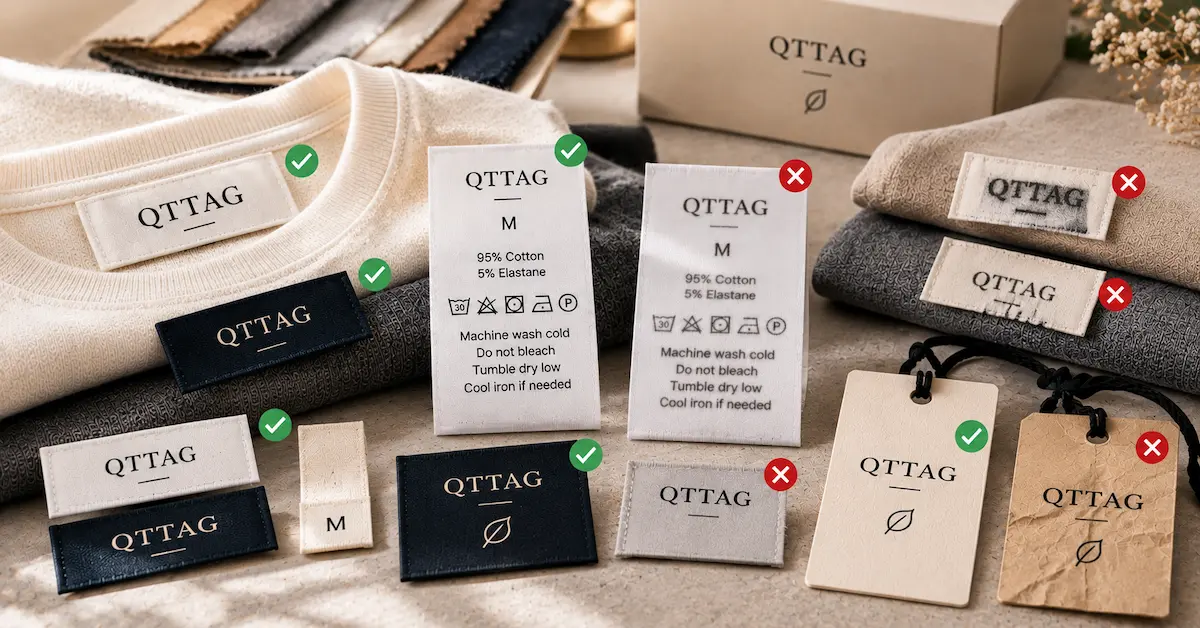
Agree on which variations are acceptable and which defects require correction or rejection.
A product description such as "premium quality" is not a measurable inspection standard.
Why Physical Sample Approval Is Essential
A physical sample provides a reference that digital artwork alone cannot supply.
It demonstrates material texture, construction, dimensions, colors and finishing.
What Should Be Approved?
For a custom branding component, review:
-
Finished dimensions
-
Artwork accuracy
-
Material construction
-
Color appearance
-
Surface and texture
-
Cutting and folding
-
Attachment method
-
Relevant functional performance
Review the Actual Application
A label should be inspected on a representative garment where its placement or comfort matters.
Similarly, a hang tag should be reviewed with its attachment, and a packaging box should be checked with its intended contents.
Maintain Version Control
Once a sample is approved, record the corresponding artwork and material specification.
Changes should be reviewed before they are applied to bulk production.
Keep an Approved Reference
A retained reference sample helps suppliers and buyers evaluate later production.
If an issue occurs, the approved sample provides a practical comparison.
Quality Control for Woven Clothing Labels
Woven labels communicate a clothing brand's identity through textile construction.
Their quality depends on yarn, weave, artwork reproduction and finishing.
Logo and Typography
Inspect whether important lettering and graphic details remain recognizable.
Small artwork elements should be checked at the finished label size.
Yarn Colors
Compare the woven color appearance with approved physical references.
Weave Consistency
Review visible irregularities, missing details or unwanted changes in the woven surface.
Cutting Quality
Inspect edges for unacceptable defects.
Fold Construction
For center-fold, end-fold or other folded labels, confirm the finished dimensions and fold position.
Garment Attachment
Check that the label can be attached according to the garment specification.
| Inspection Item | Main Check |
|---|---|
| Logo | Detail and readability |
| Yarn | Color and material reference |
| Weave | Surface consistency |
| Dimensions | Width and height |
| Cut edges | Acceptable finishing |
| Folding | Position and symmetry |
| Attachment | Garment compatibility |
A properly approved woven label should provide a clear reference for repeat production.
Printed Care Label Quality Inspection
Printed care labels require particular attention because they may carry important garment information.
Their quality should be evaluated through both content verification and physical inspection.
Fiber Composition
The printed composition should match the verified garment specification and applicable market requirements.
Care Instructions
Washing, drying, bleaching, ironing and other care instructions must be appropriate for the product.
Printing Clarity
Inspect small text and laundry symbols at actual size.
Material Comfort
Review the label surface, edges and attachment for suitability.
Wash Legibility
Where relevant, evaluate the printing under defined laundering conditions.
Language and Market Requirements
Some markets require specific languages, information or label characteristics.
The buyer must verify the relevant rules rather than assume that one label design satisfies all destinations.
An accurately printed label can still contain incorrect information if the original artwork was wrong. Content approval and manufacturing inspection are separate responsibilities.
Quality Control for Heat Transfer Labels
Heat transfer labels introduce application-related inspection requirements.
The final result depends on the transfer construction, garment fabric and validated pressing process.
Transfer Artwork
Confirm that the design matches the approved file.
Fabric Compatibility
Evaluate the transfer on representative production fabric.
Application Settings
Use the product-specific temperature, pressure and dwell time.
Do not assume that one setting works for every transfer.
Placement
Check the location and alignment on the garment.
Initial Adhesion
Inspect for incomplete transfer, lifting edges or missing details.
Laundering and Stretch Performance
Where appropriate, evaluate durability under defined conditions.
Finished Garment Appearance
Check whether pressing causes unacceptable surface marks or distortion.
A successful transfer sample alone does not establish consistent application across an entire garment order.
Hang Tag and Garment Accessory Quality Control
Hang tags and attachments contribute to product presentation and identification.
Their inspection should cover both visual finishing and practical assembly.
Paper Materials
Check the selected stock, surface appearance and dimensions.
Artwork and Printing
Confirm logo accuracy, product information and printing alignment.
Foil and Embossing
Evaluate the finished effect against the approved reference.
Die-Cutting
Inspect shape and edge quality.
Strings, Eyelets and Seals
Check that the correct components are assembled and attached.
Barcode or QR Code
Where these are used, test readability using the intended system.
| Component | Common Inspection Concern |
|---|---|
| Paper hang tag | Dimensions and printing |
| Foil-stamped tag | Coverage and registration |
| Embossed tag | Impression definition |
| Custom die-cut tag | Shape and edges |
| String or cord | Correct material and assembly |
| Hang tag seal | Design and attachment |
| Barcode | Correct information and readability |
Finished components should be inspected in the configuration supplied to the garment manufacturer.
Apparel Packaging Quality Inspection
Packaging quality affects garment presentation, product protection and shipment preparation.
Different packaging formats require different checks.
Paper Shopping Bags
Review dimensions, printing, handles, folding and intended carrying performance.
Apparel Boxes
Check structural dimensions, closures, printed artwork and product fit.
Poly Bags
Review material specifications, dimensions, closure and any required warnings.
Mailer Boxes
Evaluate structural suitability for the intended distribution conditions.
Packaging Inserts
Confirm that inserts fit the actual garments or accessories.
Packing Accuracy
Check that the correct packaging version is associated with the appropriate product.
A package that looks attractive when empty may not perform as intended when filled.
Use representative contents during sample evaluation.
How to Classify Apparel Production Defects
Defect classification helps buyers and suppliers determine the seriousness of identified problems.
A commonly used framework distinguishes critical, major and minor defects.
However, the actual definitions should be agreed for the product and its intended use.
| Defect Category | General Meaning | Illustrative Example |
|---|---|---|
| Critical | Potentially serious safety, regulatory or other unacceptable risk | A product condition that creates a verified serious safety concern |
| Major | Significantly affects function, saleability or agreed requirements | Incorrect brand logo or materially wrong label information |
| Minor | Limited deviation that does not materially affect intended use | Small cosmetic variation within a defined noncritical area |
These examples are illustrative, not automatic classifications.
A particular defect may require a different classification depending on customer requirements, legal obligations and product risk.
Establish a Defect Reference
The buyer and supplier can develop a written defect guide supported by photographs or approved samples.
Avoid Ambiguous Descriptions
Words such as "bad stitching" or "poor printing" are less useful than a specific description of the observed problem.
Record the Location and Quantity
Inspection findings should identify the product, defect type, affected quantity and relevant production information.
What Is AQL in Apparel Quality Control?
AQL, or Acceptance Quality Limit, is a concept used in acceptance sampling.
It is associated with statistical approaches for deciding whether a sampled lot meets specified acceptance criteria.
An AQL-based inspection does not mean that every product in an accepted lot is defect-free.
The relevant sampling plan depends on factors such as lot size, inspection level, selected acceptance quality limits and the applicable sampling standard.
Why Buyers Use Sampling Plans
Inspecting every unit may not always be necessary or practical.
A defined sampling plan provides a structured method for evaluating a production lot.
What Must Be Agreed?
The buyer and supplier should establish:
-
Relevant sampling standard
-
Lot definition
-
Inspection level
-
Defect classifications
-
Applicable acceptance quality limits
-
Sampling and acceptance rules
-
Handling of rejected lots
When More Inspection May Be Needed
For high-risk features, legally significant labeling information or known production problems, additional checks may be appropriate.
A statistical sampling plan is not a substitute for product risk assessment or regulatory compliance.
Avoid Invented Acceptance Levels
Do not apply a generic AQL number to every garment or branding component without confirming the contractual and product-specific requirements.
Quality Control for Low MOQ and Private Label Clothing Orders
Smaller production orders can require careful quality coordination because artwork, materials and product variations may change frequently.
Low MOQ projects are not automatically simpler to manage.
Multiple Product Versions
A private-label collection may include several garment colors, sizes or artwork versions.
Each version should be clearly identified.
Material Availability
Smaller orders may involve limited material choices or supplier-specific production arrangements.
Substitutions require approval.
Sampling Costs
Sampling and development work should be clarified before confirming the order.
Approved Artwork
Small batches can still suffer from incorrect logos, care information or label placement.
Production Consistency
Inspection requirements should reflect the risks of the project rather than rely only on order size.
Repeat Orders
Maintain the same reference documentation used for larger production programs.
For private label clothing brands, a clear specification is especially useful when coordinating several small collections.
Textile Labeling Compliance and Quality Inspection
Textile labeling compliance is related to quality control, but it requires additional regulatory attention.
A supplier may accurately reproduce the approved artwork without independently verifying whether the information satisfies a market's legal requirements.
Fiber Content
The declared composition should match the actual garment and applicable requirements.
Care Instructions
Care information must be appropriate for the product and destination market.
Country-of-Origin Information
Origin labeling requirements vary by jurisdiction.
Label Placement and Permanence
Some required information must appear in particular forms or locations.
Symbols and Languages
The appropriate symbols, terminology and language requirements depend on the target market.
Verification Responsibilities
The brand, garment manufacturer and labeling supplier should agree on who is responsible for verifying content and who is responsible for reproducing it correctly.
Quality inspection should not be represented as a guarantee of legal compliance.
Smart Labels, RFID and Digital Product Information
Some apparel brands use digital identification technologies to improve product information management or traceability.
Examples may include RFID-enabled labels, serialized identifiers or digital links to product information.
These technologies can introduce additional quality checks.
RFID Label Verification
Where RFID technology is used, the relevant identifier and read performance should be evaluated according to the system requirements.
Data Accuracy
The digital identifier should correspond to the correct product.
Artwork and Placement
The smart label must remain compatible with the intended garment or packaging.
Digital Product Passports
Digital Product Passports are a developing area of product-information regulation and implementation in some markets.
Their requirements depend on applicable legislation, product categories and implementation timelines.
A QR code or RFID tag does not automatically constitute a compliant Digital Product Passport.
Why This Matters for Quality Control
Physical labeling and digital product information need to remain aligned.
An accurately manufactured smart label with incorrect associated data can create operational problems.
Brands should evaluate both the physical component and the linked information system.
Supplier Quality Management: What Should Buyers Evaluate?
Apparel quality control is more effective when the buyer and supplier establish clear responsibilities.
Manufacturing Capability
Confirm whether the supplier can produce the requested materials and constructions.
Sample Development
Review how artwork, prototypes and changes are approved.
Inspection Procedures
Ask which checks are performed during material preparation, production and final inspection.
Documentation
Request relevant specifications, inspection records and test results where necessary.
Corrective Actions
Understand how the supplier investigates and addresses defects.
Production Changes
Establish a process for approving significant changes in materials, artwork or manufacturing methods.
Communication
One responsible project contact can help coordinate questions between designers, purchasing teams and manufacturers.
A supplier's claims should be supported by actual documentation appropriate to the project.
How to Handle Quality Problems During Production
Finding a defect is only the beginning of quality management.
A useful corrective-action process should establish what happened, identify affected products and reduce the risk of recurrence.
Step 1: Identify the Problem
Describe the defect and its location.
Step 2: Contain Affected Products
Where appropriate, separate or identify the affected production lot.
Step 3: Compare With the Approved Reference
Check whether the actual product differs from the agreed specification.
Step 4: Investigate the Cause
Review materials, artwork, equipment, process conditions and relevant records.
Step 5: Define Corrective Action
Determine how the affected products will be handled.
Step 6: Verify the Correction
Confirm that the proposed action addresses the identified issue.
Step 7: Update Relevant Controls
Adjust instructions, inspection criteria or other controls when justified.
Step 8: Document the Outcome
Maintain an appropriate record for future production.
A useful corrective action should address the cause of the problem, not simply conceal its visible symptoms.
Quality Control Checklist Before Bulk Production
Before authorizing production, apparel purchasing teams can review the following checklist.
| Checkpoint | Approval Question |
|---|---|
| Artwork | Is the final approved design identified? |
| Product specification | Are materials and dimensions confirmed? |
| Label information | Has the content been checked? |
| Color references | Are physical references available where necessary? |
| Sample approval | Is an appropriate finished sample approved? |
| Attachment | Is the intended application method defined? |
| Inspection criteria | Are acceptable variations and defects described? |
| Performance testing | Are relevant tests and acceptance rules agreed? |
| Supplier responsibility | Is ownership of each approval clear? |
| Changes | Is there a procedure for material or artwork changes? |
| Packing | Are SKU and packing instructions confirmed? |
| Delivery | Are final quantities and delivery requirements agreed? |
Completing the checklist does not guarantee a defect-free order, but it creates a clearer basis for production and inspection.
How Quality Control Supports Long-Term Brand Consistency
A clothing brand may use several suppliers and introduce new collections throughout the year.
Without controlled specifications, the same branding component may change between orders.
Maintain Master Artwork
Use an approved source for logos and other designs.
Retain Physical References
Keep samples of important materials and finished products.
Identify Product Versions
Different colors, sizes and materials should have clear references.
Review Supplier Changes
Material or process substitutions should be evaluated before implementation.
Track Recurring Issues
Repeated defects may indicate a process weakness that needs correction.
Update Specifications
When improvements are approved, revise the relevant documents so future orders use the correct version.
Quality consistency is a process of maintaining and verifying agreed requirements, not simply repeating the same visual design.
What Should Apparel Buyers Include in a Quality-Focused RFQ?
A request for quotation should provide enough information for the supplier to evaluate both manufacturing requirements and quality expectations.
| RFQ Information | What to Provide |
|---|---|
| Product | Woven labels, care labels, hang tags or packaging |
| Artwork | Approved design or technical file |
| Materials | Required composition and construction |
| Dimensions | Finished size and applicable tolerances |
| Colors | Approved references |
| Finishing | Cutting, folding, printing or specialty effects |
| Quantity | Order volume and variations |
| Application | Intended garment or packaging use |
| Performance | Relevant laundering, handling or functional checks |
| Inspection | Acceptance criteria and agreed sampling requirements |
| Documentation | Required test or material evidence |
| Packaging | Packing and SKU identification |
| Delivery | Destination and target schedule |
Clear specifications make quotations more comparable and help reduce misunderstandings during production.
Frequently Asked Questions About Apparel Quality Control
What is quality control in apparel manufacturing?
Quality control involves inspections and verification activities used to determine whether fabrics, garments, labels, accessories and packaging meet agreed requirements.
Why is quality control important for clothing brands?
It helps identify defects, verify product specifications, maintain consistent branding and support more reliable manufacturing decisions.
What is the difference between quality assurance and quality control?
Quality assurance focuses on processes intended to prevent defects. Quality control focuses on checking whether products meet specified requirements.
What should be checked on custom woven labels?
Buyers should review artwork clarity, yarn colors, weave construction, dimensions, edge finishing, folds and garment attachment.
How should care labels be inspected?
Check the accuracy of approved information, printing legibility, material condition, dimensions and relevant washing performance.
What is AQL in apparel inspection?
AQL is an acceptance sampling concept used within defined statistical inspection plans. The correct plan and acceptance rules must be selected for the particular product and requirements.
Do small MOQ orders need quality inspection?
Yes. Small orders can still contain incorrect artwork, unsuitable materials or manufacturing defects. The inspection approach should reflect the actual risks.
Does passing quality inspection guarantee textile labeling compliance?
No. Product inspection and legal compliance verification are related but different activities. The applicable regulatory requirements need separate review.
Can RFID improve apparel quality management?
RFID can support product identification and tracking in suitable systems, but correct data association and physical tag performance must also be verified.
What should buyers do when they find defective products?
Record the issue, identify affected products, compare them with approved requirements, investigate the cause and agree on corrective action.
Plan Custom Apparel Branding With QTTAG
Quality control begins with a clear product specification and an agreed physical reference.
For custom labels, hang tags and apparel packaging, the most important steps include confirming artwork, selecting suitable materials, evaluating samples and establishing practical inspection criteria.
QTTAG supports custom garment branding and packaging projects, including woven labels, care labels, heat transfer labels, hang tags and packaging products.
When preparing a new project, share your artwork, material requirements, dimensions, order quantity and intended application.
These details provide a starting point for discussing customization, physical sampling and appropriate quality requirements.
Ready to Develop Custom Labels and Packaging for Your Apparel Brand?
Share your logo artwork, product specifications, material preferences, dimensions, estimated order quantity and quality requirements with QTTAG.
Our team can discuss suitable customization and sampling options for your clothing collection.
Request a Quote
Author
Founder at QTTAG
Jason Qiao is the founder of QTTAG, focusing on garment branding and packaging solutions. With years of experience in the apparel industry, he shares practical insights on custom labels, hang tags and sustainable packaging to help global brands grow.
Written By
Jason Qiao