Heat Transfer Labels: Application, Durability and Design Guide
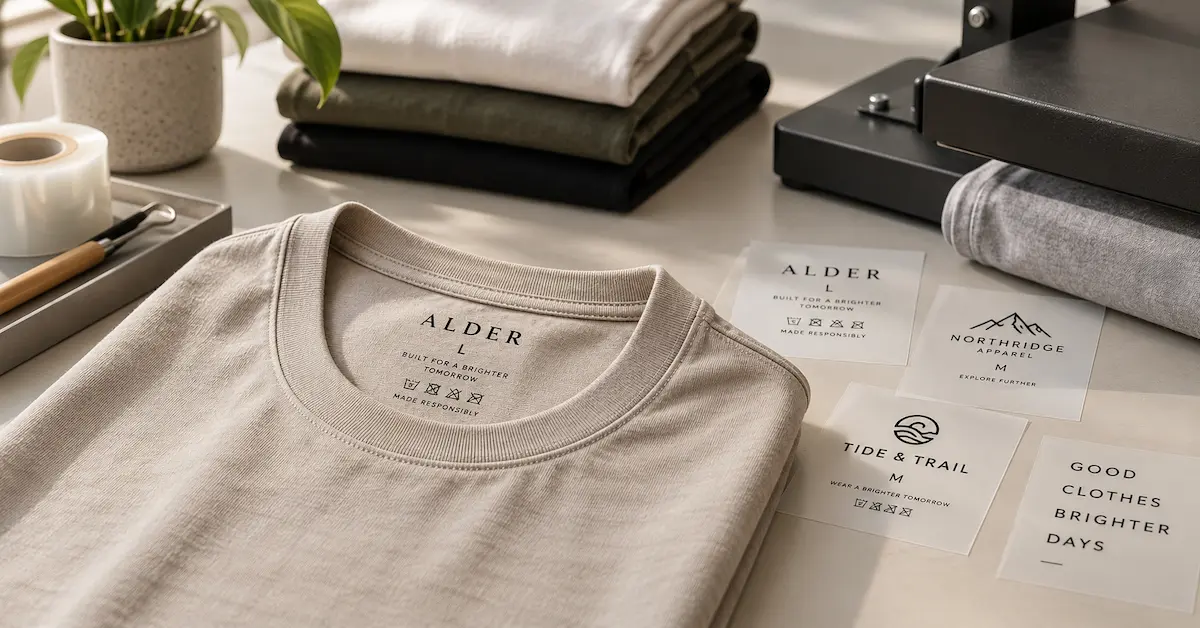
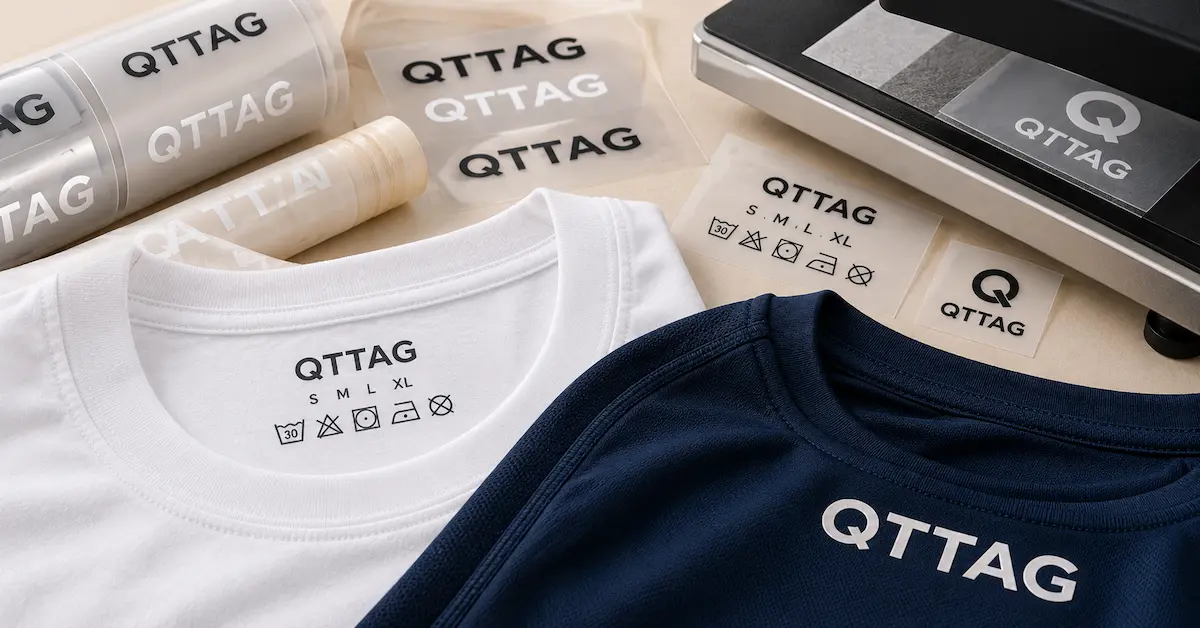
Heat transfer labels are a popular alternative to traditional sewn-in clothing labels, particularly for brands that want a clean appearance and minimal bulk against the skin. Instead of attaching a separate fabric label, a heat transfer uses controlled heat and pressure to bond a printed design directly to the garment.
For clothing brands and manufacturers, selecting the right heat transfer label involves more than choosing an attractive logo. Fabric compatibility, application conditions, wash durability, design detail and production consistency all influence the final result.
This guide explains how heat transfer labels work, where they perform best, how to assess durability and what buyers should confirm before placing a bulk order.
What Are Heat Transfer Labels?
Heat transfer labels are garment identification or branding graphics applied to fabric through a heat-activated transfer process.
They can display brand logos, garment sizes, care information or other product identification details without requiring a separately sewn label.
A typical heat transfer construction may include printed artwork, a compatible bonding layer and a temporary carrier film or paper. The exact structure depends on the transfer technology.
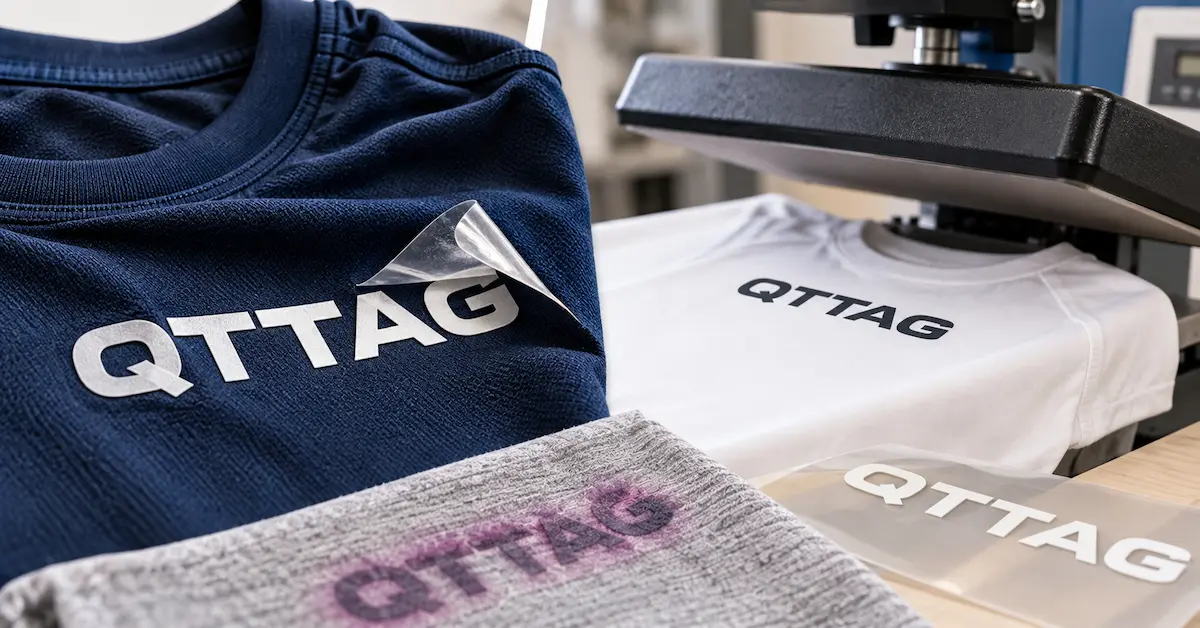
During application, heat and pressure activate the bonding system. After the specified pressing and peeling process, the intended graphic remains attached to the fabric.
Common applications include:
-
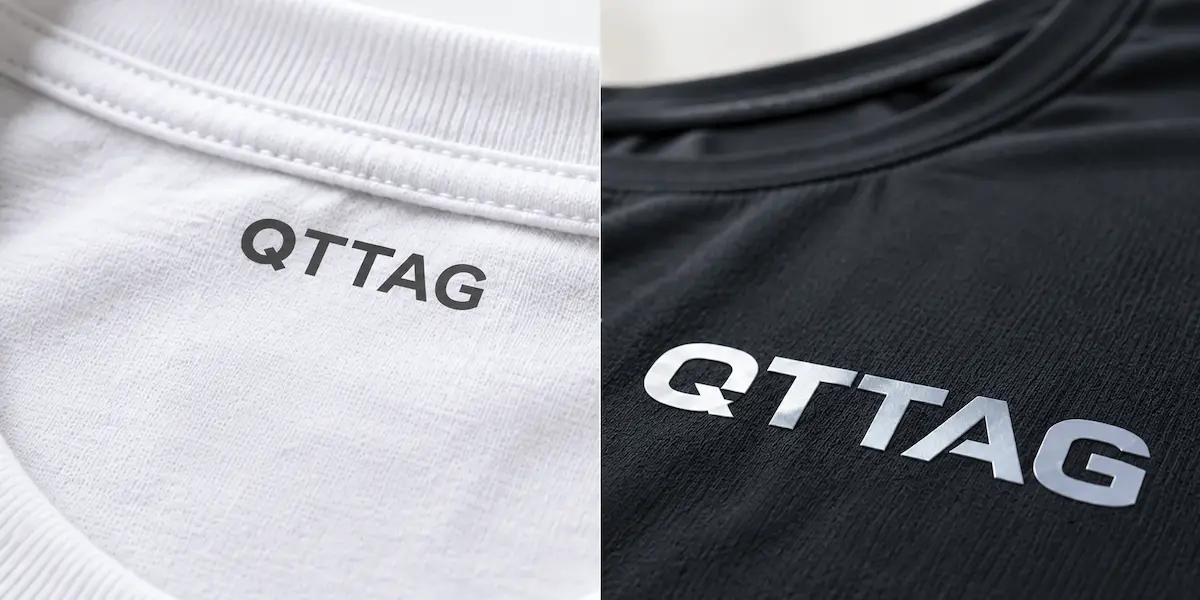
Brand logos inside T-shirt necklines
-
Size identification on sportswear
-
Product information on underwear and loungewear
-
Branding on athletic and performance clothing
-
Decorative logos on fashion garments
-
Identification marks on selected accessories
Heat transfer labels are sometimes called tagless labels, particularly when used inside garments instead of sewn neck labels.
However, not every heat transfer product is suitable for every fabric or application.
Why Do Clothing Brands Choose Heat Transfer Labels?
The main attraction is the ability to place brand information directly onto a garment without introducing an additional sewn label.
1. A Low-Profile Appearance
Heat transfer branding can create a clean, integrated finish.
For minimalist T-shirts, underwear and contemporary casualwear, this appearance can be more consistent with the overall garment design than a prominent fabric label.
The final feel depends on transfer thickness, ink coverage, placement and the garment surface.
2. Less Label Bulk Against the Skin
A conventional woven or printed label introduces an additional material layer, usually secured with stitching.
A suitable heat transfer removes that separate label component.
This can help reduce the bulk associated with sewn labels, although a transfer may still be noticeable depending on its texture, flexibility and printed area.
3. Flexible Branding Options
Depending on the transfer system, brands may be able to reproduce:
-
Small logos and size marks
-
Multicolor artwork
-
Fine typography
-
Matte or glossy effects
-
Selected dimensional textures
-
Reflective or specialty finishes
Artwork must still be evaluated for line thickness, spacing, readability and the limitations of the chosen manufacturing method.
4. Integration Into Garment Production
Heat transfers can be incorporated into a garment manufacturer's pressing or finishing workflow.
This can simplify certain labeling operations, but the actual production benefit depends on equipment availability, cycle time, operator training and inspection requirements.
Removing a sewing operation does not automatically mean lower total production cost.
Types of Heat Transfer Labels for Clothing
Different heat transfer technologies serve different branding and performance requirements.
| Label Type | Typical Application | Main Consideration |
|---|---|---|
| Standard printed heat transfers | Neck branding, size labels, basic logos | Artwork clarity and adhesion |
| Silicone heat transfers | Raised logos, selected sportswear branding | Texture, flexibility and thickness |
| Reflective heat transfers | Decorative or visibility-oriented apparel details | Reflective performance and wash testing |
| TPU heat transfer labels | Selected textured or dimensional branding | Material compatibility and construction |
| Multicolor transfers | Detailed brand artwork | Color reproduction and edge definition |
These are broad product categories rather than interchangeable material specifications. Actual performance varies by formulation and manufacturing process.
Standard Printed Heat Transfers
Standard printed transfers are commonly considered for internal garment branding.
They may be appropriate for brand names, sizes, logos and selected care information, provided that the required text remains readable after application and expected laundering.
Silicone Heat Transfers
Silicone transfers are often selected when a brand wants a more dimensional surface effect.
They may be used for logos or decorative details where appearance and touch are important.
Buyers should inspect edge definition, surface consistency, flexibility and how the finished transfer behaves when the garment stretches.
Reflective Heat Transfers
Reflective transfers can introduce a distinctive visual feature to sportswear, outerwear or accessories.
Reflective appearance alone does not establish compliance with any visibility or safety standard.
If reflective performance is a functional requirement rather than a decorative feature, the buyer must establish the relevant specification and testing requirements.
TPU Heat Transfer Labels
TPU-based constructions may be considered for particular textured branding applications.
Material suitability, flexibility, thickness and bonding requirements should be reviewed against actual samples rather than assumed from the material name.
How Are Heat Transfer Labels Applied?
Successful application depends on the interaction between the transfer material, fabric, pressing equipment and operating conditions.
The essential variables are:
Temperature: Enough heat must reach the bonding system without damaging the garment or transfer.
Pressure: The press must provide appropriate, even contact across the complete design.
Dwell time: The transfer must remain under the specified pressing conditions long enough for the process to work.
Peel method: The carrier may need to be removed while hot, warm or cold, depending on the product.
There is no universal temperature, pressure or time setting that works for every heat transfer label.
Step 1: Check Fabric Compatibility
Start with the garment's actual fabric composition, construction and finishing treatments.
Cotton, polyester, blended fabrics and stretch materials can respond differently to pressing and bonding.
Coated fabrics and highly textured surfaces may create additional adhesion challenges.
Step 2: Prepare the Garment
Position the garment on a suitable, clean pressing surface.
Check for seams, wrinkles, moisture, uneven thickness or surface contamination that may prevent consistent contact.
Follow the transfer manufacturer's preparation instructions, including any required pre-pressing step.
Step 3: Position the Transfer
Align the artwork against the approved garment placement reference.
For neck labels, confirm the distance from the neckline, center alignment and orientation.
A positioning guide can be useful when processing large quantities or multiple garment sizes.
Step 4: Apply the Specified Pressing Conditions
Use the temperature, pressure and dwell time validated for the exact transfer and garment combination.
Do not copy settings from another transfer merely because both products are described as heat transfers.
A change in adhesive, film, textile finish or pressing equipment can require a new application trial.
Step 5: Remove the Carrier Correctly
Follow the specified peel method.
Removing a carrier too early or under the wrong conditions may disturb the graphic or leave an incomplete transfer.
Step 6: Inspect and Test the Result
Check the applied artwork for:
-
Incomplete edges
-
Missing print details
-
Misalignment
-
Bubbling or visible lifting
-
Unexpected color changes
-
Fabric marks caused by pressing
An acceptable initial appearance is not sufficient proof of long-term durability.
The next step is laundering and wear validation.
How Durable Are Heat Transfer Labels?
Heat transfer label durability depends on the transfer construction, fabric compatibility, correct application and the garment's actual laundering and wear conditions.
A properly selected transfer may perform well throughout its intended use. However, durability should not be expressed as a guaranteed number of washes without product-specific test evidence.
Several variables matter.
Adhesion to the Fabric
The bonding system must be compatible with the textile surface.
Fabric coatings, finishes, moisture, contamination or inadequate pressing conditions may interfere with adhesion.
Resistance to Washing
Repeated laundering exposes a transfer to water, detergents, mechanical movement and changing temperatures.
Buyers should evaluate whether the design remains attached, readable and visually acceptable after a defined washing test.
Stretch and Flexibility
On activewear or fitted clothing, the transfer must accommodate the fabric's expected movement.
A design that looks acceptable on a flat garment may develop cracks or distortion when stretched repeatedly.
Drying and Heat Exposure
Drying conditions can also affect transfer appearance and adhesion.
Testing should reflect the laundering instructions and intended use of the finished garment.
Design Coverage
Large, solid printed areas may behave differently from smaller lettering or separated graphic elements.
When flexibility is critical, test the complete artwork rather than relying only on a small sample logo.
Heat Transfer Labels vs. Woven Labels: Which Should You Choose?
Both methods can provide professional garment branding, but they solve different design and production problems.
| Comparison | Heat Transfer Labels | Woven Labels |
|---|---|---|
| Construction | Graphic bonded to garment | Separately woven textile label |
| Attachment | Heat application | Usually sewn |
| Appearance | Often flat and integrated | Visible textile texture |
| Skin contact | No separate sewn label | Depends on material, fold and placement |
| Design detail | Depends on transfer printing method | Limited by yarn and weaving resolution |
| Main process risk | Adhesion and application compatibility | Attachment, cut edges and label construction |
| Wash durability | Requires transfer-specific validation | Requires yarn, color and attachment validation |
| Best fit | Tagless or integrated branding | Traditional textile brand identification |
Choose Heat Transfer Labels When:
-
A low-profile design is important.
-
The garment is intended to feel relatively smooth around the neckline.
-
The artwork is compatible with the transfer technology.
-
The garment factory can control the required application process.
-
The finished garment passes relevant durability tests.
Choose Woven Labels When:
-
Textile texture contributes to the brand identity.
-
The brand wants a visible woven detail.
-
A sewn label is already integrated into the production process.
-
The label design benefits from a particular woven structure or fold.
-
The chosen construction better suits the garment's expected use.
A brand does not need to use the same label type throughout its complete product range.
For example, a clothing collection may use heat transfer size identification inside T-shirts while retaining woven brand labels on jackets or other garments.
The decision should follow garment requirements rather than a universal ranking of labeling methods.
How to Design Heat Transfer Labels for Clothing
An effective transfer design must remain attractive and readable after application, laundering and normal garment movement.
Keep Small Text Readable
Neck labels often contain a compact combination of brand names, sizes and product details.
Small typography should be evaluated at actual production size.
Avoid assuming that artwork visible on a computer monitor will remain legible after printing and application.
Request a physical sample when checking fine type, narrow strokes or densely arranged information.
Choose Colors With the Fabric in Mind
The garment's background color affects how the transfer appears.
A light design on black fabric may require a different print construction from a dark design on a white garment.
Ask the supplier to evaluate color reproduction on the actual intended fabric.
Match the Design to the Garment
Consider the location, size and intended use of the graphic.
A small internal size mark has different requirements from a prominent exterior logo.
Stretch garments may also require different flexibility characteristics from structured woven garments.
Prepare Suitable Artwork
Vector artwork is often useful for logos and typography because it allows dimensions and shapes to be defined precisely.
Before sampling, confirm:
-
Final artwork dimensions
-
Color references
-
Minimum text and line details
-
Background fabric color
-
Transfer finish
-
Placement position
-
Applicable production file requirements
Do not approve production from an enlarged digital mockup alone.
Which Fabrics Work With Heat Transfer Labels?
Compatibility is determined by the full combination of textile, surface treatment, bonding system and pressing conditions.
| Fabric | What Buyers Should Check |
|---|---|
| Cotton jersey | Surface texture, adhesion and wash performance |
| Polyester | Heat sensitivity, print appearance and possible dye migration |
| Cotton-polyester blends | Compatibility across the blended construction |
| Stretch fabrics | Flexibility and repeated extension |
| Nylon | Fabric finish, surface bonding and heat tolerance |
| Fleece | Surface texture and consistent pressing contact |
| Coated textiles | Whether coatings interfere with adhesion |
This table is a screening checklist, not a promise that any particular transfer will work on all examples of these fabrics.
Special Attention: Polyester and Performance Fabrics
Polyester-based apparel deserves careful evaluation because certain constructions or dye systems can react to heat.
Potential issues include color migration, visible press marks or unwanted changes in the fabric's surface.
Performance fabrics may also contain treatments or coatings that affect bonding.
For these products, request trials using the exact fabric from the intended production order.
Common Heat Transfer Label Problems and How to Prevent Them
Understanding potential failure modes helps buyers establish better sampling and quality control procedures.
| Problem | Possible Causes | Recommended Check |
|---|---|---|
| Peeling edges | Incompatible adhesive or insufficient application | Review substrate, settings and wash results |
| Cracking | Inadequate flexibility or incompatible construction | Test movement and stretching |
| Blurry artwork | Print reproduction limitations | Check production-size artwork |
| Uneven adhesion | Inconsistent pressing contact | Review pressure and garment placement |
| Color changes | Heat effects or dye migration | Test on the final garment fabric |
| Visible press marks | Unsuitable heat or pressure conditions | Evaluate garment appearance after pressing |
| Carrier removal damage | Incorrect peel method | Follow the transfer-specific application instructions |
Several problems can have more than one cause.
For example, peeling after washing does not automatically prove that the transfer material is defective. Inconsistent application may produce a similar result.
A useful supplier investigation should compare an approved reference sample, actual application conditions and the affected garments.
How Should Buyers Test Heat Transfer Labels Before Bulk Production?
A sample approval process should assess both appearance and practical performance.
1. Visual Inspection
Check the logo dimensions, color, placement, line definition and surface finish.
Compare the sample against the approved artwork.
2. Initial Adhesion Inspection
Look for incomplete bonding or visible lifting.
Use the inspection method recommended for the transfer type rather than performing an uncontrolled pull test that could damage a valid sample.
3. Wash Testing
Wash the finished sample garments under defined conditions relevant to their intended care instructions.
Record the number of cycles, temperature, detergent, drying method and any changes observed.
Establish acceptance criteria before testing.
4. Stretch and Wear Evaluation
For garments designed to stretch, examine the transfer after representative movement.
Pay attention to cracking, distortion or edge separation.
5. Repeatability Testing
A single successful sample does not prove that bulk application will be consistent.
Check additional garments using the planned production equipment and operators.
Keep a confirmed reference sample and application specification for production inspection.
What Determines the Cost of Custom Heat Transfer Labels?
A quotation depends on the actual design and manufacturing requirements.
Key cost drivers may include:
-
Label dimensions and printed coverage
-
Transfer material or construction
-
Number of colors and artwork complexity
-
Specialty effects or finishes
-
Order quantity
-
Sampling and development requirements
-
Packaging and transfer sheet arrangement
-
Delivery requirements
Buyers should also consider application costs at the garment factory.
A low transfer unit price may not be economical if the application process requires extensive rework or creates unacceptable garment defects.
The most useful comparison is the total cost of obtaining an approved, consistently applied label.
What Information Should You Send a Heat Transfer Label Supplier?
A clear RFQ helps the supplier evaluate compatibility and avoid quoting an unsuitable product.
| RFQ Information | What to Provide |
|---|---|
| Garment type | T-shirt, leggings, underwear, jacket, etc. |
| Fabric composition | Actual fiber blend and available fabric details |
| Fabric color | Intended garment colors |
| Artwork | Vector logo or production design file |
| Label size | Finished width and height |
| Placement | Neckline, chest, sleeve or other location |
| Finish | Standard, matte, dimensional or specialty |
| Quantity | Estimated order volume and size variations |
| Performance | Expected washing, stretching and wearing conditions |
| Application | Planned heat press equipment and workflow |
| Delivery | Destination and required delivery date |
Ask the supplier to confirm recommended application conditions, compatible fabrics, sample availability and any available supporting test documentation.
If multiple fabric types are involved, request separate compatibility confirmation rather than assuming that one specification covers the entire collection.
Frequently Asked Questions About Heat Transfer Labels
Are heat transfer labels durable enough for everyday clothing?
They can be suitable for everyday clothing when the transfer system is compatible with the fabric and applied correctly. Durability should be established through representative washing and wear tests rather than general claims.
Are heat transfer labels better than sewn-in labels?
Neither option is universally better. Heat transfers are useful for integrated, low-profile branding, while sewn-in labels provide a separate textile component. The best choice depends on garment construction, appearance, comfort requirements and validated durability.
Can heat transfer labels be applied to polyester?
Some transfer systems are designed for polyester, but buyers must confirm fabric compatibility, heat tolerance and potential dye migration before production.
Do heat transfer labels peel off after washing?
Peeling can occur if the transfer is incompatible with the fabric, improperly applied or exposed to conditions beyond its tested performance. Sampling and wash validation help identify these risks before bulk production.
Can heat transfer labels include care instructions?
Yes, some transfer constructions can carry care information. The content must satisfy the applicable destination-market requirements, and the printed information must remain legible for the required use. Heat transfer suitability does not automatically establish regulatory compliance.
What is the minimum order quantity for custom heat transfer labels?
Minimum quantities depend on the supplier, transfer construction, artwork and production requirements. Request an exact quotation based on the intended label and order volume.
What should be approved before mass production?
Approve the actual printed design, garment placement, appearance, application instructions and relevant performance tests. Keep the approved sample and process specification available for production quality checks.
Develop Custom Heat Transfer Labels With QTTAG
Selecting the right heat transfer label starts with the garment itself.
A clear logo is important, but fabric compatibility, application repeatability, comfort and long-term appearance determine whether the label works for the finished product.
QTTAG supports clothing brands and manufacturers exploring custom garment branding solutions, including heat transfer labels.
Request a Custom Sample or Quote
Share your logo artwork, garment fabric, required label dimensions, order quantity and application requirements with QTTAG.
These details help establish a suitable sample brief and identify the checks needed before bulk production.
Contact QTTAG to discuss custom heat transfer labels for your clothing collection.
Request a Quote
Author
Founder at QTTAG
Jason Qiao is the founder of QTTAG, focusing on garment branding and packaging solutions. With years of experience in the apparel industry, he shares practical insights on custom labels, hang tags and sustainable packaging to help global brands grow.
Written By
Jason Qiao