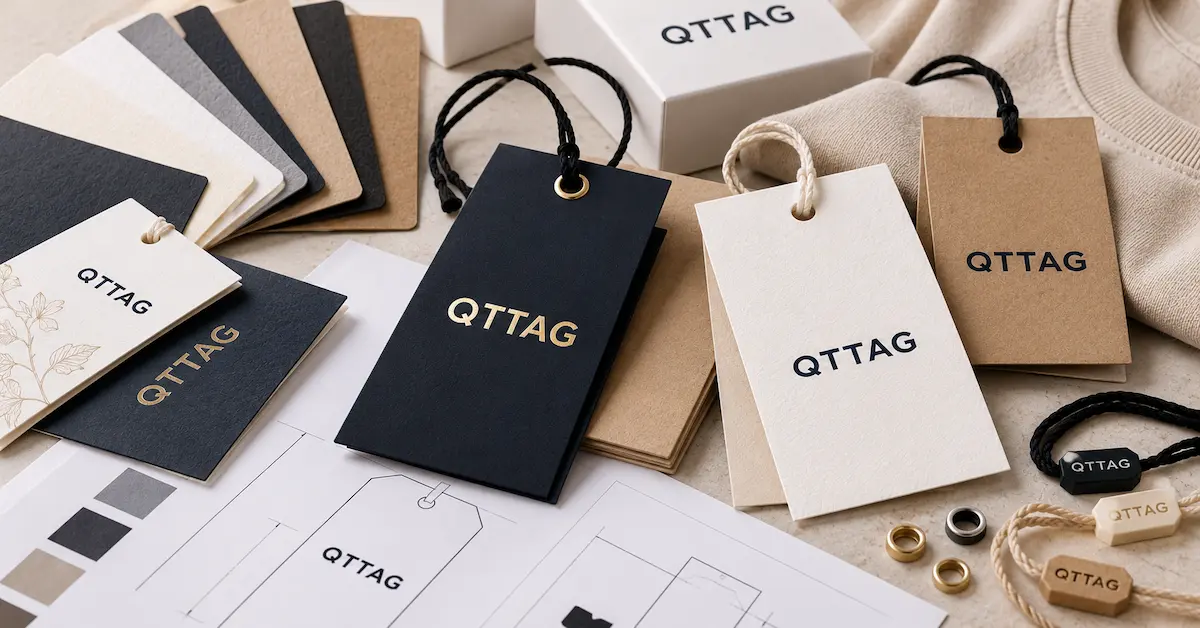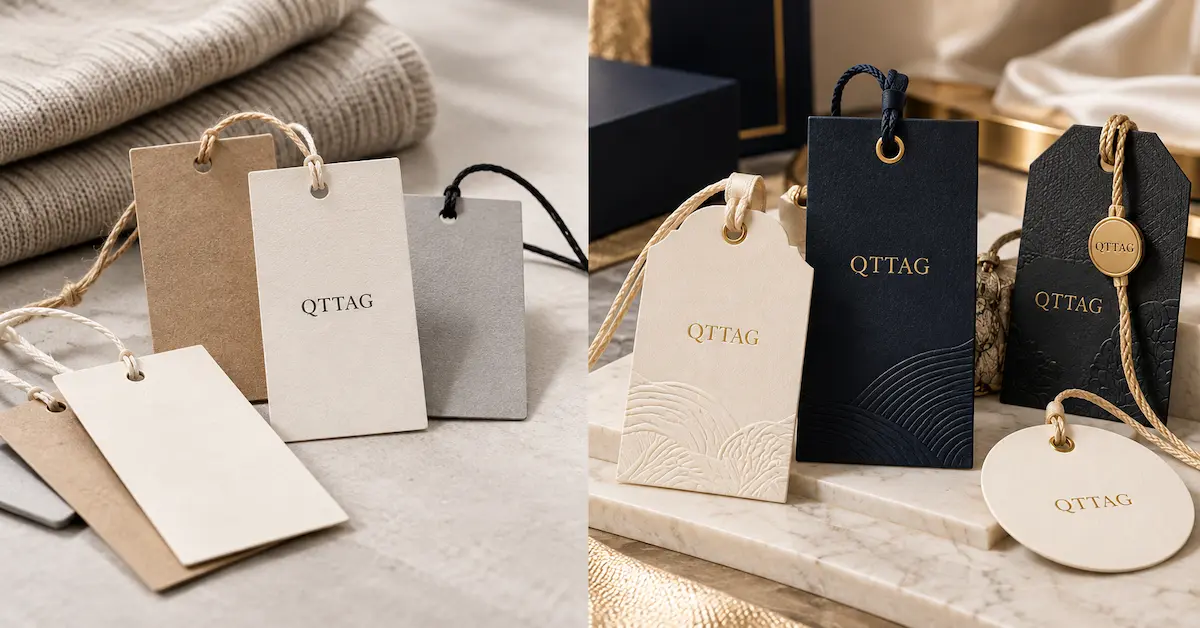
7 Common Custom Hang Tags Mistakes and How to Avoid Them
A clothing brand approves a beautiful hang tag design. The logo looks sharp, the paper color matches the collection, and the quotation seems reasonable.
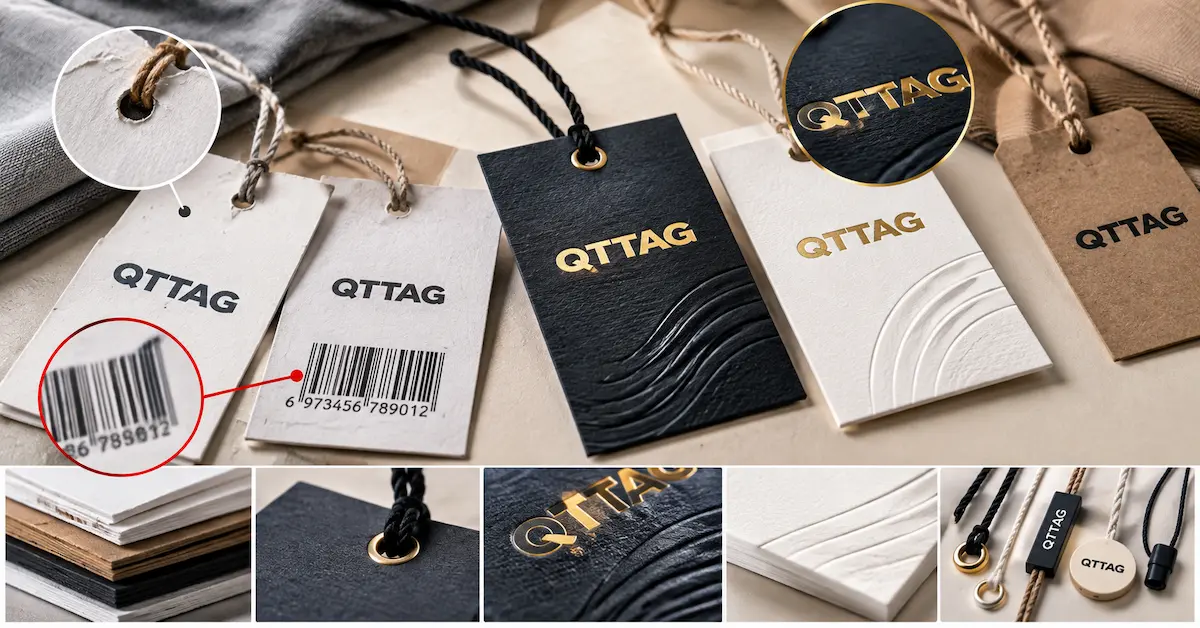
Then the finished tags arrive. The punched hole sits too close to the logo. The barcode doesn't scan consistently. A few tags have uneven foil stamping, and the chosen cord looks awkward on the garments.
None of these problems was obvious in the original design file.
The most common custom hang tags mistakes involve choosing unsuitable paper, getting the size or hole position wrong, preparing incomplete print artwork, selecting impractical finishes, overlooking barcode readability, using unsuitable attachments, and approving production without checking a complete physical sample.
For apparel brands, avoiding these mistakes starts with treating a hang tag as a finished product rather than a small piece of printed artwork.
Choosing Paper Before Considering the Finished Design
Paper is often the first thing buyers discuss. The problem is that the conversation sometimes stops at weight and color.
A supplier might offer 300 gsm cardstock, kraft paper or a textured specialty stock. Those descriptions give useful information, but they don't tell you everything about the finished tag.
GSM measures paper weight per square metre. Two stocks with similar weights can still differ in thickness, stiffness, texture and printing behavior.
That difference becomes noticeable when the tag is handled.
A smooth paper may suit a design with fine printed details. A heavily textured stock could create a different appearance, particularly when small lettering or decorative finishes are involved.
Kraft paper is another example. Its natural-looking surface may suit casualwear or lifestyle branding, but ink colors won't necessarily look the same as they do on white coated paper.
A dark printed logo can behave differently across those surfaces.
Before choosing the stock, ask to see printed samples rather than blank swatches alone. Place the samples next to the garments and compare the result.
Also avoid assuming that kraft paper is recycled or environmentally preferable simply because of its appearance. Claims about recycled content need appropriate documentation.
Getting the Tag Size, Shape or Hole Position Wrong
A hang tag might look balanced on a computer screen but feel oversized when attached to a lightweight shirt.
The opposite happens too. A tag designed for a jacket may be reduced to fit a smaller garment, leaving the logo, barcode and product details crowded together.
The attachment hole creates another constraint.
Imagine a narrow rectangular tag with the logo positioned near its upper edge. If the artwork doesn't account for the hole, part of the design may be punched out or appear uncomfortably close to the cord.
Moving the hole isn't always a simple correction. It can change how the tag hangs.
For a custom die-cut shape, buyers should review the outline and attachment point together.
Narrow extensions, unusual corners and other intricate shapes may also need additional production consideration.
The drawing should show the finished cut line and exact hole position before printing is approved.
It's worth making a simple physical mockup, even before the printed sample is produced. Attach it to a garment and see where it rests.
Does it obscure a pocket or decorative detail? Does it turn sideways? Is the size appropriate when the garment is folded for retail display?
Those are easier questions to answer with a physical tag than a digital image.
Sending Artwork That Isn't Ready for Printing
Artwork errors can create problems even when the printing equipment is working correctly.
A common issue is missing bleed.
If background colors or images stop at the finished trim line, small cutting variations can leave unwanted white edges.
Printers address this by extending the background beyond the cut line while keeping important text and logos inside a separate safe area.
For example, Greenerprinter's hang tag artwork guide specifies bleed, safe margins, a separate die-cut path and clearance around the attachment hole.
The exact measurements should come from the supplier's production template rather than being assumed for every factory.
There are other details to check.
Artwork at Actual Size
A logo that looks sharp when enlarged may contain details that become difficult to reproduce on a small tag.
Raster images also need adequate resolution at their intended printed dimensions.
Correct Color Preparation
A design created for a digital display may need conversion or adjustment for the selected printing process.
Brand colors should be evaluated on the intended paper stock.
Separate Finishing Layers
When foil stamping, embossing or custom cutting is involved, the supplier may require separate artwork identifying those operations.
A flattened image may not provide enough production information.
Before sending the final file, confirm what the supplier needs: a print-ready PDF, source artwork, a separate cut path or other process-specific files.
The best time to fix these issues is before the first physical proof.
Adding Too Many Decorative Finishes
A premium fashion hang tag doesn't need every finish available in the catalog.
Foil stamping, embossing, debossing and specialty coatings can produce attractive effects. They also introduce additional manufacturing requirements.
Fine details are particularly important.
A tiny metallic logo may appear elegant in the artwork but reproduce poorly if the selected foil process, paper surface or design geometry isn't suitable.
Textured paper can make some finishing details more challenging.
A brand might also choose a very dark paper with low-contrast printing. That can create a subtle appearance, but important text still needs to remain readable.
The question isn't whether foil stamping or embossing is better. It's whether the specific combination works.
For a small tag carrying a simple logo, one carefully executed finish may be sufficient.
If the design calls for several effects, ask the supplier to review how they interact.
A physical sample should show the complete result, including printing, finishing and cutting. Don't approve the foil color from a separate sample and assume it will look identical on the final stock.
For luxury hang tags, consistency is often more useful than complexity.
Treating Barcodes and QR Codes as Decorative Graphics
A hang tag may be the first place a retail barcode appears on a garment.
That barcode isn't simply another design element. It needs to carry the correct information and scan using the intended equipment.
A visually attractive layout can cause problems if the barcode is printed too small, placed too close to other graphics or given unsuitable contrast.
GS1 US recommends appropriate dark bars and light backgrounds for relevant GS1 barcode applications. Quiet zones—the clear spaces around the symbol—also matter.
A designer may be tempted to print a barcode in pale gold or place it against textured artwork to match the branding.
That choice should be checked against the barcode requirements, not decided on appearance alone.
QR codes have their own considerations.
A code can be printed clearly and still point to an incorrect or unavailable webpage. Its destination should be tested before production.
For products with changing style numbers, sizes or other retail identifiers, confirm that the correct codes belong to the correct tag versions.
The physical approval sample should be tested with suitable scanning devices.
Don't wait until finished garments reach a store to discover that the codes are difficult to read.
Choosing Attachments That Don't Suit the Garment
The paper tag is only one part of the finished assembly.
Strings, cords, ribbons, eyelets and seals affect how the product looks and how it attaches to the clothing.
A heavy cord can look disproportionate on a small, lightweight tag. A ribbon may work with a gift-oriented collection but feel inappropriate for basic sportswear.
Attachment placement also deserves attention.
Some fabrics require particular care when selecting an attachment method. An unsuitable fastener or application point may affect delicate knitwear or other sensitive surfaces.
Buyers should review the complete combination:
-
Finished hang tag
-
Attachment material and dimensions
-
Hole or eyelet
-
Fastener or seal, if used
-
Intended location on the garment
For a boutique collection, visual consistency may be important. The attachment color and material should coordinate with the printed tag and the garment.
For wholesale production, assembly and handling requirements may also influence the choice.
Ask whether the quotation includes assembled tags or whether the garment factory will add the strings and fasteners.
Those are different purchasing arrangements.
Approving a Digital Proof but Not the Finished Tag
A PDF proof can confirm artwork placement, spelling and general layout.
It cannot fully show paper stiffness, tactile texture, hole quality, attachment behavior or the finished appearance of embossing.
That's why approving only the digital proof can leave important questions unanswered.
A physical sample should represent the proposed finished construction as closely as practical.
Check the front and back. Look at the edges, hole position, printing and finishing. Attach it to the garment.
If several versions are needed, verify each one against the correct product information.
This becomes particularly important with private-label collections containing multiple styles or sizes.
An order might use identical front artwork while the reverse changes for different product references.
A production error could mix those versions without creating any obvious visual defect in the logo.
Keep the approved sample, artwork version and relevant specifications together.
When bulk production starts, the supplier should know exactly which reference has been approved.
If the material, dimensions or artwork changes, the affected approval should be reviewed rather than relying on an earlier sample.
Seven Mistakes at a Glance
| Mistake | What Can Go Wrong | Check Before Production |
|---|---|---|
| Unsuitable paper | Unexpected texture, stiffness or print result | Printed stock sample |
| Incorrect size or hole | Poor garment fit or obscured artwork | Finished mockup with hole |
| Incomplete artwork | White trim edges or cut-off details | Bleed, safe area and die line |
| Excessive finishing | Poor reproduction or inconsistent effects | Complete physical sample |
| Barcode problems | Unreadable or incorrect product codes | Scan verification |
| Wrong attachment | Poor presentation or unsuitable garment connection | Fully assembled tag on garment |
| Weak sample and version control | Mixed designs or inconsistent orders | Approved sample and production references |
What Should Buyers Include in a Custom Hang Tag RFQ?
A supplier can give a more useful quotation when the request describes the complete finished tag.
Start with the intended garment and brand artwork.
Provide the preferred dimensions, paper reference, printing requirements and any special finishes. If the tag needs an unusual shape, include a clear drawing or visual reference.
State the preferred attachment type and whether tags should arrive fully assembled.
For retail codes or changing product information, explain the number of versions and how they should be identified.
Order quantity matters too. If there are several artwork versions, provide the estimated quantity for each one rather than only the total.
Ask which samples, tooling or setup work are included in the quotation.
A low unit price isn't particularly useful if it excludes required attachments, additional finishing or other parts of the agreed product.
Frequently Asked Questions
What are the most common custom hang tags mistakes?
Common mistakes include unsuitable paper, incorrect dimensions, poor hole placement, incomplete print artwork, impractical finishing, unreadable barcodes, unsuitable attachments and insufficient sample or production control.
How much bleed should I add to hang tag artwork?
Bleed requirements depend on the printer and production process. Use the supplier's actual template and confirm the safe area and cut line before submitting artwork.
Are thick hang tags always better?
No. Paper weight alone doesn't establish quality. The appropriate stock depends on the tag's dimensions, stiffness, printing, finishing and intended garment.
Why does foil stamping sometimes look uneven?
Possible causes include artwork detail, paper texture and manufacturing conditions. The supplier should review the selected foil process and approve a representative sample.
Can I put a barcode on a custom die-cut hang tag?
Yes, if the final dimensions and layout provide sufficient space for a compliant, readable symbol. Confirm the code and test a physical sample.
Should custom hang tags be delivered with strings attached?
That depends on the buyer's production process. Some projects benefit from assembled tags, while others may require separate components. Confirm the quotation and packing requirements.
How can I prevent different hang tag versions from being mixed?
Use controlled artwork references, clear SKU identification, approved samples and appropriate packing and production checks.
What is the MOQ for custom hang tags?
Minimum quantities vary by supplier, paper, dimensions, finishing and number of artwork versions. Request a quotation based on the complete specification.
Preparing Your Custom Hang Tag Project With QTTAG
The most useful starting point is an approved logo and a clear idea of where the finished tag will be used.
If the design is still being developed, share the intended garment, preferred paper appearance and required information. These details help identify suitable customization and sampling options.
QTTAG supports custom apparel branding projects involving clothing hang tags, labels, attachments and related packaging. Specific materials, finishes and minimum order quantities should be confirmed for each project.
Ready to Create Custom Hang Tags for Your Clothing Brand?
Share your logo artwork, preferred paper materials, hang tag dimensions, printing finishes, attachment requirements and estimated order quantity with QTTAG.
Our team can discuss suitable customization and sampling options for your clothing collection.
Request a Quote
Author
Founder at QTTAG
Jason Qiao is the founder of QTTAG, focusing on garment branding and packaging solutions. With years of experience in the apparel industry, he shares practical insights on custom labels, hang tags and sustainable packaging to help global brands grow.
Written By
Jason Qiao