Hang Tags Cost Guide: What Changes Price, MOQ and Lead Time
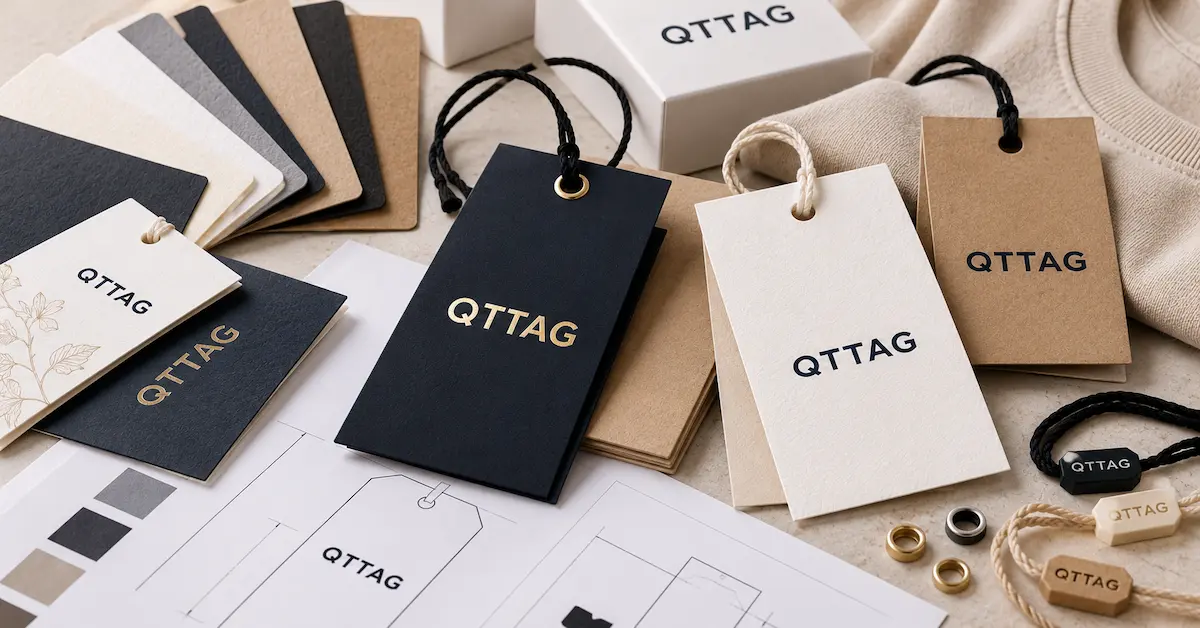
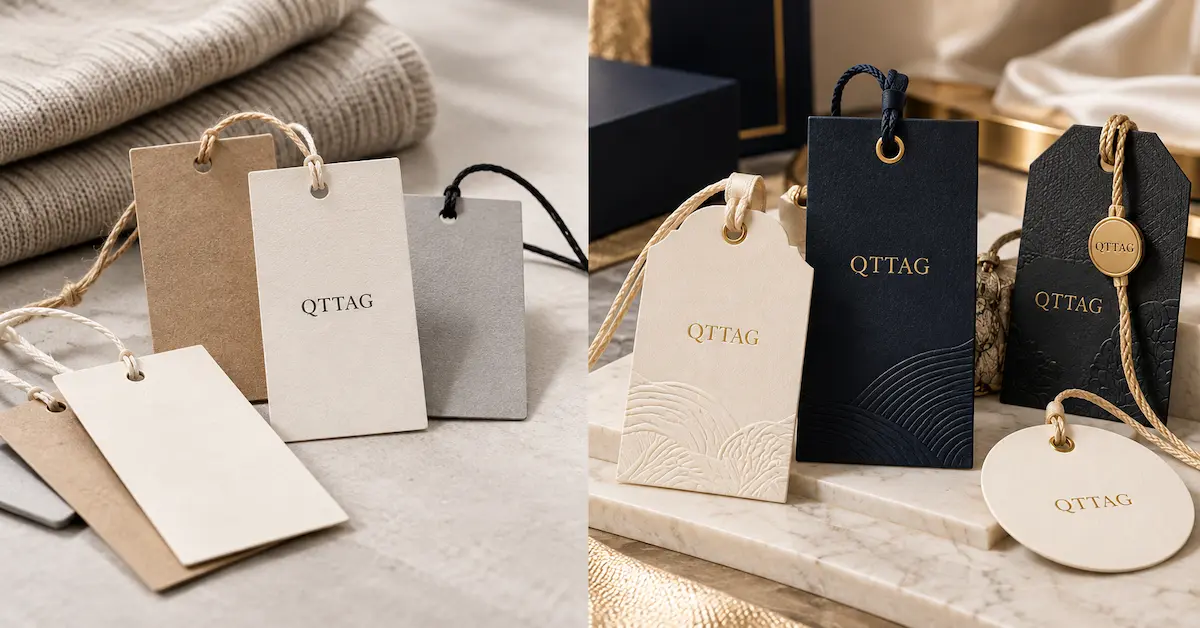
A clothing brand sends its logo to two hang tag suppliers. Both quote a rectangular paper tag, printed on both sides, with a hole at the top. Yet one price is considerably higher.
The difference might be the paper. It could also be the finishing, the attachment cord, or something less obvious: one supplier has included assembly, while the other is quoting printed cards only.
Hang tags cost depends on paper stock, finished size, printing method, artwork variations, special finishes, die-cutting, attachments and order quantity. MOQ and lead time depend on the supplier's production process and when the final specifications are approved.
For apparel buyers, the most useful comparison is the cost of a complete tag that is ready to attach to the garment.
That means checking what's included before choosing the lowest unit price.
Why Can Two Similar Hang Tags Have Different Prices?
At first glance, the tags may look almost identical.
Both might be black with a white logo. Both may have the same dimensions. Even their paper weight could be similar.
But the manufacturing specifications can differ.
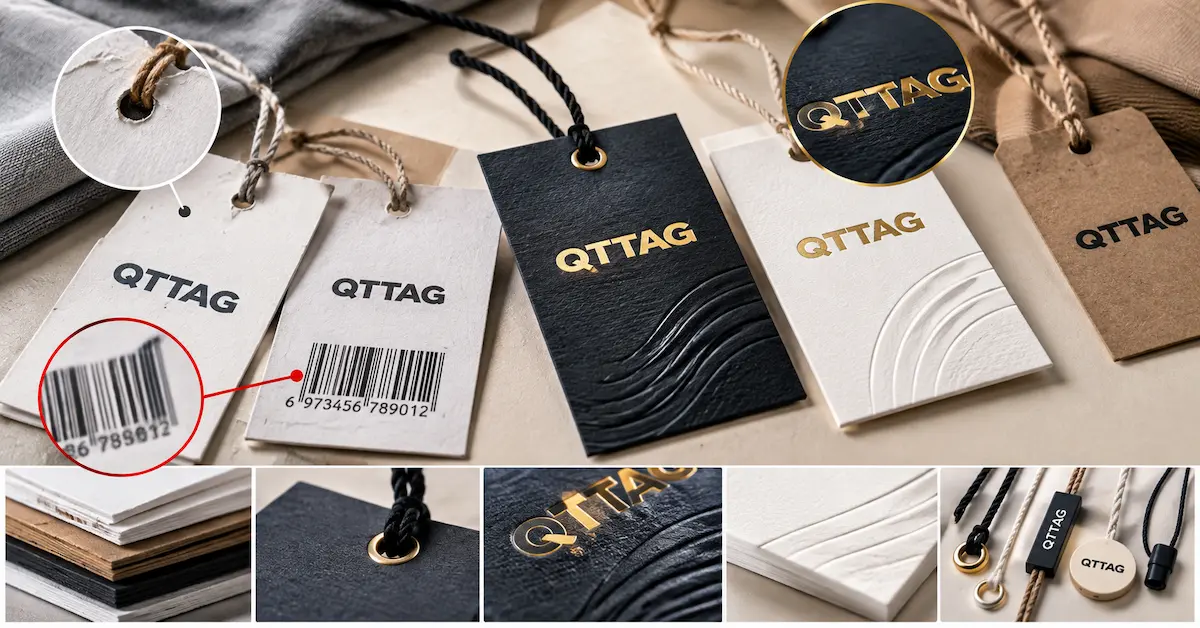
One could use standard coated cardstock and digital printing. The other might use textured paper, a separate spot-color printing process and a soft-touch finish.
The second option introduces different materials and production work.
There is also a distinction between printing a tag and supplying a finished tag with a cord, eyelet or seal.
A supplier quoting the paper component alone may appear cheaper than one supplying fully assembled hang tags.
Before comparing prices, confirm the finished product.
| Specification | Possible Effect on Cost |
|---|---|
| Paper stock | Material selection and availability |
| Finished dimensions | Paper use and production layout |
| Printing colors | Printing method and preparation |
| Front and back printing | Additional printing requirements |
| Foil or embossing | Separate finishing operations |
| Custom die-cut shape | Tooling or specialized cutting |
| Hole and eyelet | Additional finishing components |
| String or seal | Material and assembly work |
| Multiple designs | Artwork and production arrangement |
| Order quantity | Unit price and setup allocation |
A quote that simply says "1,000 custom hang tags" doesn't tell the buyer enough.
Ask for the paper, dimensions, printing, finishing and attachment details to be listed separately.
Does Paper Weight Make Hang Tags More Expensive?
Paper is one of the first choices buyers make, but paper weight alone isn't a reliable measure of quality.
A tag made from heavyweight cardstock may feel substantial. That doesn't mean it will automatically have better print quality or suit every clothing collection.
Two stocks with similar weight can differ in thickness, stiffness and surface texture.
The selected stock should fit the artwork and retail use.
Coated Cardstock
Coated paper may suit printed graphics that require a particular surface appearance.
It can be useful for clothing brands with strong colors or detailed artwork.
The exact result depends on the printing process and coating.
Uncoated and Textured Paper
Uncoated stocks offer a different visual and tactile character.
Textured paper can work well with restrained branding, but some fine printed or decorative details may require additional review.
A tag with subtle typography may look different on a deeply textured stock than on a smooth one.
Kraft Hang Tags
Kraft paper is often selected for its natural brown appearance.
It can support casualwear, lifestyle and selected minimalist branding.
However, printing colors on brown kraft may not appear the same as on white cardstock.
A light-colored design may also require a different printing approach.
Kraft should not automatically be described as recycled or more sustainable without appropriate material evidence.
What About Luxury Hang Tags?
A luxury appearance does not come from paper weight alone.
Material texture, logo position, accurate printing and finishing consistency can contribute just as much.
A well-produced uncoated tag may suit one premium collection better than a heavily decorated tag made with expensive materials.
For a new project, request physical paper samples before finalizing the specification.
How Much Do Printing and Special Finishes Affect the Price?
A simple logo can be printed using several available production methods.
The suitable choice depends on artwork, quantity, paper and required appearance.
Digital printing may be useful for shorter runs or projects involving multiple designs. Offset or other printing methods may suit different production volumes and specifications.
The manufacturer should recommend a process based on the actual order.
Foil Stamping
Metallic foil can add a distinctive appearance to a brand logo.
But foil stamping is a separate production operation. It may require additional preparation and can affect both price and schedule.
Fine lettering and textured stocks should be reviewed for manufacturing feasibility.
Embossing and Debossing
Embossing creates a raised effect, while debossing creates a recessed impression.
These finishes may require suitable tooling and paper construction.
Their quality is best judged on physical samples.
Lamination and Coatings
Matte, gloss and selected specialty surface treatments can change how a tag looks and feels.
They may also affect later finishing operations.
The best solution is not necessarily the one with the most decorative processes.
For a small tag, a precise logo on an appropriate paper stock may achieve the intended appearance without extra finishing.
When Is a Custom Die-Cut Worth Considering?
A custom shape can help distinguish a product, but it needs more attention than choosing an existing rectangular format.
The shape affects cutting and may introduce tooling or preparation requirements.
Narrow corners or intricate outlines can complicate production.
Check whether the proposed die-cut process is included in the quotation and whether any tooling charges apply to repeat orders.
How Does MOQ Work for Custom Hang Tags?
MOQ stands for Minimum Order Quantity.
For hang tags, the minimum may depend on the material, printing method, finishing and number of designs.
There is no universal MOQ that applies to every manufacturer.
Some commercial printers offer relatively small orders for standard-shaped tags. Other suppliers have higher minimums for specialty constructions or particular production arrangements.
The important question is how the supplier defines an order.
One Design or Several Designs?
Consider a hypothetical clothing collection with three hang tag versions.
The front artwork is identical, but the reverse contains different product information.
The buyer needs:
| Hang Tag Version | Quantity | What Changes |
|---|---|---|
| T-shirt collection | 200 | Product information |
| Knitwear collection | 200 | Product information |
| Jacket collection | 200 | Product information |
| Total | 600 | Three artwork versions |
Can the supplier treat this as one order of 600 tags?
Perhaps, but not necessarily.
One production method may allow the artwork to vary within a combined order. Another supplier may calculate MOQ separately for each printed version.
If the three tags also use different paper stocks or finishing methods, the production requirements become more complicated.
A brand should therefore ask:
-
Is MOQ calculated per design or for the total order?
-
Can different tag versions share one production run?
-
Are paper and finishing variations treated separately?
-
Can a smaller trial order be produced?
-
Are sampling and setup fees included?
A lower MOQ may help a startup buy only the quantities it needs.
That doesn't automatically mean the lowest unit price.
The Hidden Cost: Strings, Eyelets and Tag Assembly
Printed hang tags still need to be attached to garments.
That usually involves a suitable cord, string, ribbon, seal or other attachment component.
These items are easy to overlook when comparing quotations.
One supplier might deliver printed tags with punched holes. Another might include cotton strings, metal eyelets and assembly.
The second supplier's unit price may be higher because more work is included.
Does Every Hang Tag Need an Eyelet?
No.
The need for an eyelet depends on the paper, hole construction, attachment and intended use.
Some designs work with a punched hole and cord alone.
Other projects may use reinforcement for appearance or handling requirements.
Adding a metal eyelet purely because it looks premium can increase the cost without necessarily improving the finished product.
Should Tags Arrive Pre-Strung?
That depends on the garment factory's workflow.
Pre-strung tags may reduce later preparation work.
But they can also require different packing and assembly arrangements.
If strings and seals arrive separately, the garment factory must account for the work required to attach them.
A useful purchasing comparison should consider:
Total finished hang tag cost = printing and paper + finishing + attachments + assembly + applicable setup, packing and freight.
This is a budgeting framework rather than a universal supplier pricing formula.
The buyer should confirm which components are included in each quotation.
What Makes Hang Tag Production Lead Time Longer?
A supplier's advertised printing turnaround does not necessarily describe the complete delivery schedule.
Some printers calculate production time from artwork or proof approval.
That distinction matters when a clothing brand is working toward a launch date.
A new custom hang tag order may require several stages.
| Stage | What Needs to Happen |
|---|---|
| Artwork review | Check the print-ready design |
| Paper selection | Confirm stock and surface |
| Proof approval | Approve layout and printing details |
| Physical sample | Review if required |
| Tooling | Prepare a die or specialty finish if needed |
| Printing | Produce the approved artwork |
| Finishing | Cutting, punching, foil or embossing |
| Assembly | Add strings or other attachments |
| Inspection | Check finished products and versions |
| Shipment | Pack and dispatch the order |
Not every project requires all of these steps.
A standard rectangular tag with straightforward printing may have a different production schedule from a custom-shaped, foil-stamped tag with matching ribbons.
Does Sampling Add to Lead Time?
It can.
Physical sampling may require preparation, shipping and approval before bulk production begins.
If the artwork or material changes after the sample has been approved, additional review may be necessary.
For an important clothing launch, it's better to identify these stages in advance.
Production Time Is Not Delivery Time
A supplier may finish manufacturing before the tags reach the garment factory.
The final arrival date may also depend on packing, shipment and import arrangements.
Before confirming an order, ask for the expected dates of proof approval, production completion and dispatch.
If the garment factory needs tags before final packing, communicate that deadline clearly.
Why Physical Samples Can Save Rework
A digital proof is useful for checking artwork, spelling and layout.
It cannot fully demonstrate paper stiffness, texture, foil quality or how the finished tag hangs on a garment.
A physical sample can answer those questions.
Attach it to the intended clothing and examine the overall proportion.
Check the hole position, printing, edges and string.
For special finishes, inspect the actual production effect rather than relying on a digital simulation.
Don't Forget Barcodes
Many apparel hang tags carry retail product identifiers.
Barcode readability deserves separate attention.
GS1 US recommends suitable barcode dimensions, contrast and clear space around the symbol.
A decorative finish should not interfere with scanning.
If the tag includes barcodes or QR codes, test the printed samples using appropriate devices before bulk production.
The information must also correspond to the correct garment or product version.
A hang tag can look attractive and still cause problems at retail checkout if its barcode cannot be read reliably.
How Can Clothing Brands Reduce Hang Tag Costs?
Cost control begins with deciding which requirements are necessary.
For example, a rectangular tag may provide enough room for the logo and product information without custom die-cutting.
A suitable uncoated paper may deliver the desired appearance without a specialty lamination.
A simple string attachment may be appropriate where a metal eyelet isn't needed.
But removing features solely to lower the unit price can be counterproductive if it compromises the intended presentation.
Several decisions are worth reviewing before bulk production.
Keep artwork versions organized. Different product information should be clearly identified.
Choose appropriate dimensions. Leave enough space for important text and barcodes without making the tag unnecessarily large.
Use realistic order quantities. Avoid buying excessive stock only to achieve a lower unit price.
Review the finished assembly. A cheap printed card may require additional work before it can be used.
Approve the sample before production. Late changes to paper, cutting or finishing may affect both the quotation and schedule.
The goal is to reduce unnecessary work while maintaining the tag's intended quality and function.
What Should You Send to a Hang Tag Manufacturer?
A clear RFQ allows the supplier to calculate the complete order.
| RFQ Information | What to Provide |
|---|---|
| Artwork | Approved logo and product information |
| Tag type | Standard rectangle, folded or custom shape |
| Dimensions | Finished width and height |
| Paper stock | Preferred material or physical reference |
| Printing | Front/back, colors and artwork versions |
| Finishing | Foil, embossing, coating or lamination |
| Hole | Position and required construction |
| Attachments | Cord, ribbon, seal or eyelet |
| Assembly | Pre-strung or supplied separately |
| Quantity | Total and amount per design |
| Sampling | Physical sample requirements |
| Delivery | Destination and requested date |
If the paper or finish hasn't been selected, provide the garment type and visual direction.
The supplier can then discuss suitable options.
Ask for a quotation that separates any setup, tooling, sampling, finishing or assembly charges where applicable.
That makes offers easier to compare.
Frequently Asked Questions About Hang Tags Cost
How much do custom hang tags cost?
Pricing depends on paper, dimensions, printing, finishing, attachments, assembly and quantity. A complete specification is needed for an accurate quotation.
Are kraft hang tags cheaper than coated paper tags?
Not necessarily. Material availability, dimensions, printing and finishing affect the quote. Compare equivalent finished products.
Does foil stamping increase hang tag cost?
It can introduce additional preparation, material or finishing work. The effect depends on the design, quantity and supplier's production method.
What is the MOQ for custom clothing hang tags?
MOQ varies by supplier and construction. Standard printing may have different minimums from specialty foil, embossing or die-cut production.
Can several hang tag designs share one MOQ?
Sometimes. It depends on the printing method and supplier's order rules. Confirm whether artwork versions can be combined.
Are strings and eyelets included in the price?
Not always. Some quotations cover printed tags only, while others include attachments or assembly. Ask what is included.
Does a custom die-cut shape affect lead time?
It may require additional artwork preparation, tooling or cutting arrangements. Confirm these stages before approving the production schedule.
How long does custom hang tag production take?
Lead time depends on artwork approval, paper availability, sampling, printing, finishing and assembly. Shipping should be considered separately.
Do luxury hang tags always require heavyweight paper?
No. The desired result depends on paper texture, printing quality, design proportions and finishing. Heavier stock is not automatically better.
What information should I provide for a quote?
Send the artwork, dimensions, paper preferences, printing requirements, attachments, quantities by design and delivery destination.
Plan Your Custom Hang Tag Order With QTTAG
A useful hang tag quotation begins with the finished specification, not just a logo and total quantity.
QTTAG supports custom apparel branding projects involving hang tags, attachments and related packaging. Paper availability, finishing options, MOQ and production schedules should be confirmed for each order.
If you're preparing a clothing collection, share the approved artwork, intended garment application, preferred materials and quantity requirements.
Ready to Plan Custom Hang Tags for Your Clothing Brand?
Share your logo artwork, preferred paper materials, hang tag dimensions, printing finishes, attachment requirements, estimated order quantity and delivery needs with QTTAG.
Our team can review your requirements and discuss suitable customization, sampling and quotation options.
Request a Quote
Author
Founder at QTTAG
Jason Qiao is the founder of QTTAG, focusing on garment branding and packaging solutions. With years of experience in the apparel industry, he shares practical insights on custom labels, hang tags and sustainable packaging to help global brands grow.
Written By
Jason Qiao