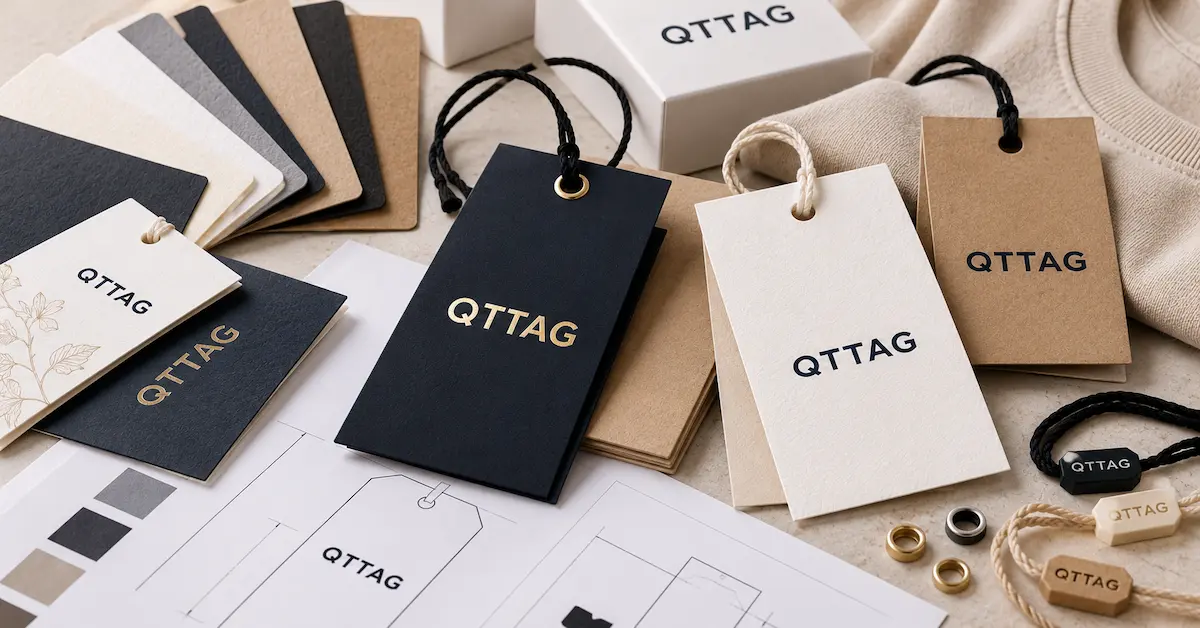
How Custom Hang Tags Improve Apparel Branding and Retail Presentation
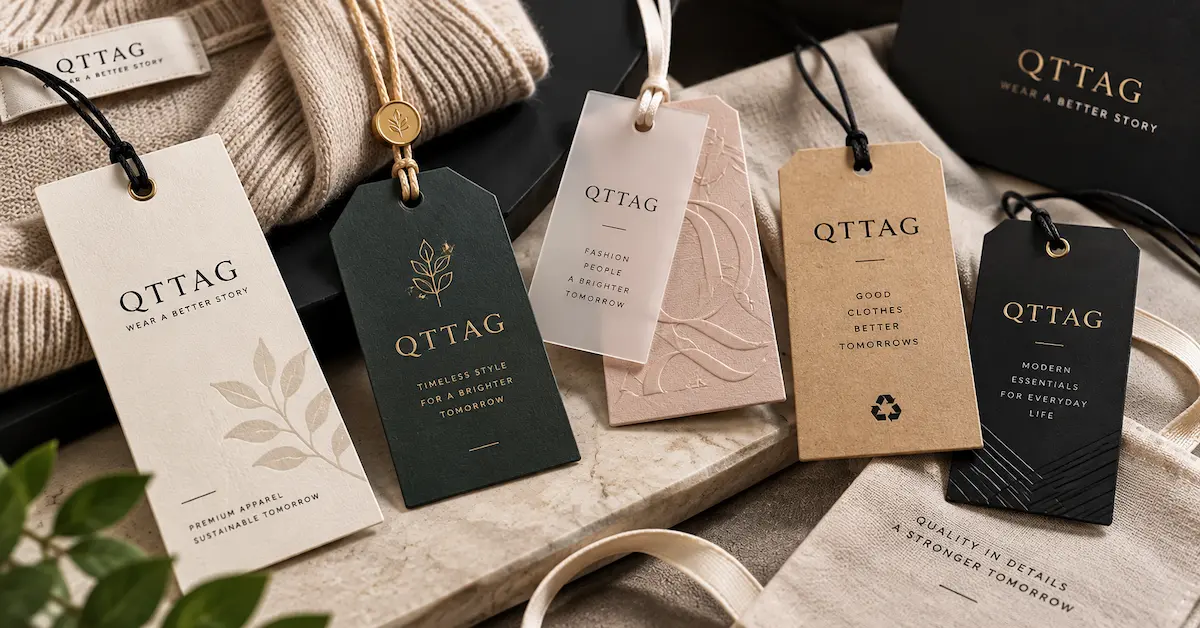
A clothing brand can invest heavily in fabric selection, garment construction and visual identity, yet overlook one of the first details customers handle in a retail setting: the hang tag.
Unlike generic product tags, custom hang tags are designed around a specific brand's logo, artwork, materials, dimensions and product information. They help establish a recognizable identity while giving fashion retailers a practical way to present individual garments and collections.
Custom hang tags improve apparel branding and retail presentation by combining distinctive design, clear product information and a coordinated physical finish that reflects the clothing brand's identity.
The most effective result does not necessarily require expensive materials or elaborate decoration. It requires the right combination of design, paper, printing, finishing and attachment.
For apparel brands preparing a new collection, understanding these choices helps reduce design revisions, improve sample approval and establish consistent specifications for production.
This guide explores how to develop custom hang tags that support brand presentation and practical retail requirements.
What Are Custom Hang Tags?
Custom hang tags are removable garment accessories manufactured according to a clothing brand's specific design and product requirements.
They usually consist of printed or finished paper or paperboard attached to garments with a string, cord, ribbon, seal or other appropriate accessory.
Unlike standard tags, custom designs allow the buyer to specify the appearance and construction.
Common customization options include:
-
Brand logo and artwork
-
Paper material and surface texture
-
Finished dimensions and shape
-
Printing colors and typography
-
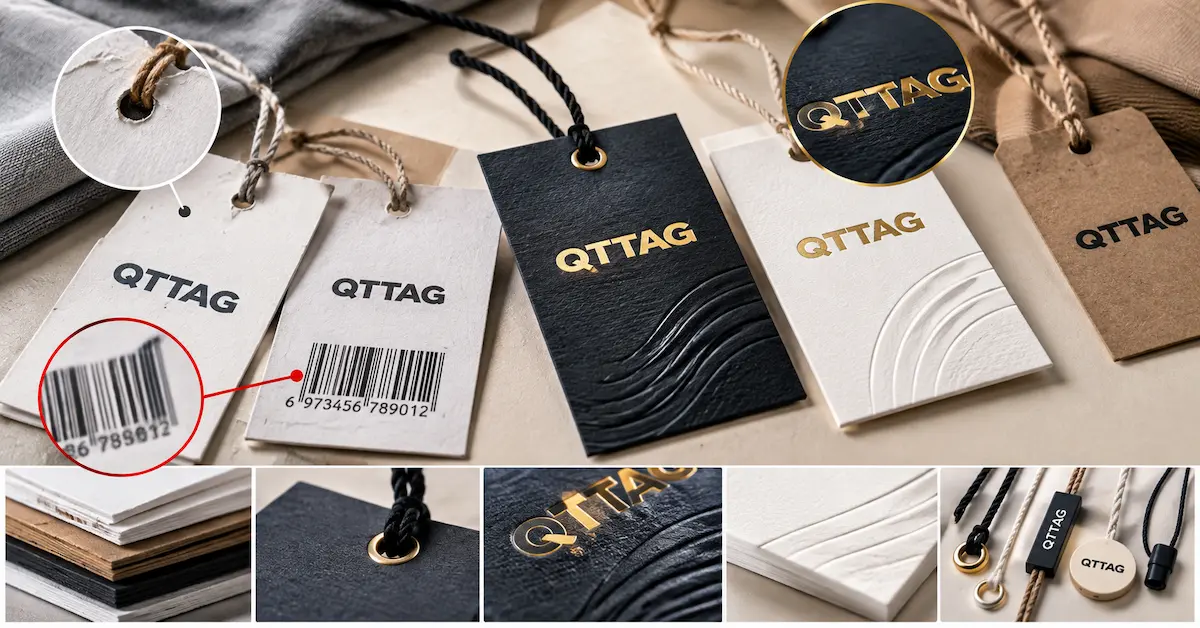
Foil stamping, embossing or other finishes
-
Double-sided printing
-
Folded or layered constructions
-
Attachment strings and seals
-
Product information, barcodes or QR codes
-
Coordinated packaging artwork
These options can help a brand distinguish its products while keeping the information and visual presentation consistent.
However, the chosen specification should be appropriate for the garment, intended retail market and manufacturing process.
Why Custom Hang Tags Matter for Clothing Brands
A custom hang tag provides a physical connection between a product and the identity behind it.
For clothing manufacturers and private-label brands, this can be useful across a wide range of garment styles.
A Recognizable Brand Identity
A collection may include T-shirts, outerwear, knitwear and accessories.
Although these garments have different materials and shapes, their hang tags can follow the same logo system, typography and design direction.
This creates a recognizable element across the product range.
A More Distinctive Presentation
Custom materials and finishes can support a brand's intended positioning.
For example, a minimalist fashion label may prefer uncoated paper and a small embossed logo, while a boutique collection may use a colored paperboard with a metallic finish.
The key is choosing a construction that fits the brand rather than copying a popular design trend.
Product Information at the Point of Sale
A hang tag can communicate relevant information without placing additional permanent printing on the garment.
Depending on the project, it may show a style reference, size, product line, material information or other approved content.
Consistency Between Garments and Packaging
Hang tags can also share design elements with woven labels, garment packaging and shopping bags.
A coordinated presentation helps different branding products feel like parts of the same collection.
What Can Be Customized on a Hang Tag?
Customization extends beyond printing the logo.
Paper construction, shape, finishing and attachments all affect the finished appearance.
| Customization Element | Available Design Direction | Buyer Consideration |
|---|---|---|
| Paper material | Coated, uncoated, kraft or textured | Surface, stiffness and printing |
| Dimensions | Small, medium or custom | Garment proportion and information |
| Shape | Rectangular, rounded or die-cut | Tooling and edge finishing |
| Printing | Single-color or multicolor | Artwork clarity and color |
| Foil stamping | Metallic or specialty foil | Paper compatibility |
| Embossing | Raised design | Detail and impression definition |
| Debossing | Recessed design | Material response |
| Lamination | Selected surface appearance | Folding and finish compatibility |
| Attachment | String, cord, ribbon or seal | Garment suitability |
| Layout | Single-sided, double-sided or folded | Information hierarchy |
Not all constructions are suitable for every design.
Buyers should confirm manufacturing feasibility before finalizing the artwork or placing a bulk order.
How to Design Custom Hang Tags for Apparel Branding
Custom hang tag design begins with the brand identity and the intended garment.
The artwork should be created for the actual physical tag, not merely adapted from a large graphic.
Start With the Brand Logo
Use approved artwork that preserves the intended logo proportions, typography and visual details.
Vector artwork is commonly useful for defining shapes, dimensions and finishing areas.
If the logo includes thin lines or very small text, confirm that the selected printing process can reproduce them.
Establish a Clear Information Hierarchy
Not every piece of information needs to appear on the front.
A practical arrangement might place the logo on one side and product information on the reverse.
This allows the brand to preserve a clean presentation without sacrificing readability.
Choose Appropriate Dimensions
Tag dimensions should correspond to the garment's size and intended retail appearance.
A small accessory may need a different tag format from a winter coat.
An oversized hang tag can interfere with garment display, while a tag that is too small may make important text difficult to read.
Design for Multiple Product Styles
A clothing collection may require different product information or size references.
Create a consistent master template and identify the fields that will change between versions.
This can simplify artwork management and reduce errors during production.
Choosing Paper Materials for Personalized Clothing Hang Tags
The paper affects how the hang tag feels, how the artwork appears and how the finished product responds to manufacturing.
Different paper stocks serve different design requirements.
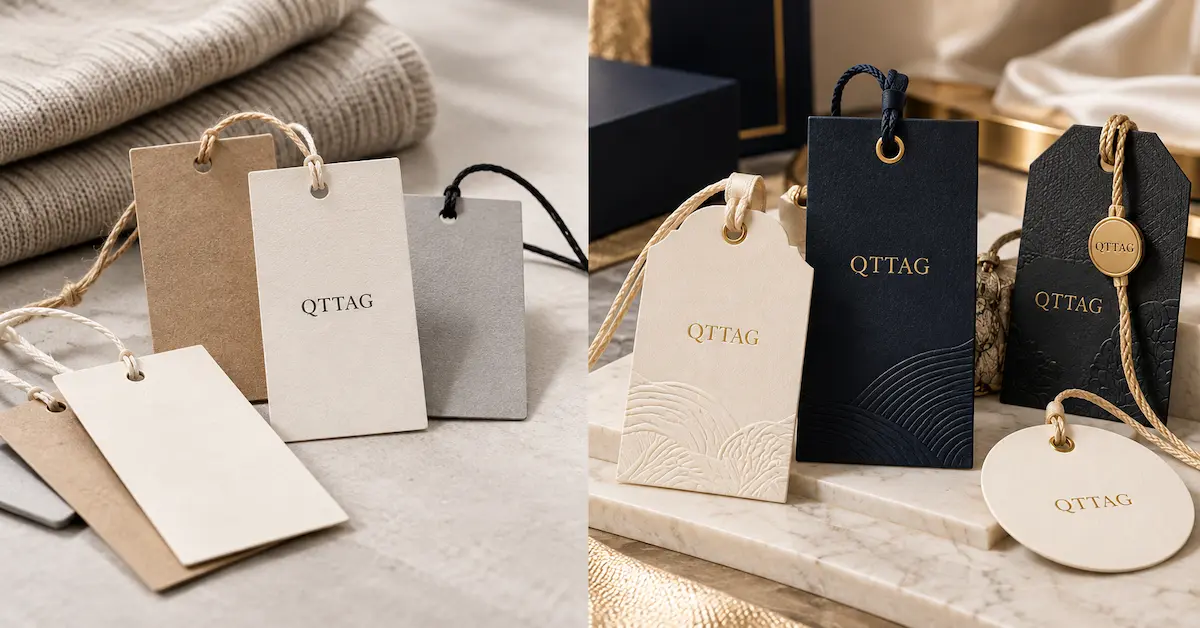
Coated Paper
Coated paper may be considered for designs that require certain printed surface characteristics.
Its suitability depends on the coating, printing method and any additional finishing requirements.
Uncoated Paper
Uncoated stocks may provide a more natural surface appearance.
These materials can suit minimalist designs, but buyers should examine how the intended colors and small details reproduce.
Textured Paper
Textured paper can introduce a distinctive tactile effect.
However, the texture may interact with foil stamping, fine typography or other decorative finishes.
Physical sampling is useful before committing to a specialty stock.
Kraft Paper
Kraft hang tags can complement lifestyle, workwear and casual fashion collections that favor a natural-looking material.
They may use printed logos, simple typography or selected decorative elements.
However, a kraft appearance alone does not demonstrate recycled content, biodegradability or other environmental characteristics.
Such claims require material-specific evidence.
Paperboard Thickness
Paper weight is often expressed in gsm.
However, paper weight alone does not fully determine stiffness, thickness or finished handling.
The actual stock should be assessed through a physical sample.
How Custom Printing and Finishing Create Brand Differentiation
Printing and finishing make it possible to create different visual effects using similar tag shapes.
The best combination depends on the brand's design direction.
Foil Stamping
Foil stamping can create metallic or decorative highlights on suitable paper.
Gold, silver and selected specialty foils may be considered.
Foil appearance should be approved on the actual paper stock.
Embossing
Embossing creates a raised impression in the paper.
It can be useful when a brand wants a tactile logo rather than relying only on ink color.
Debossing
Debossing creates a recessed surface effect.
This may be suitable for selected minimalist designs.
Spot UV
Spot UV may provide a localized glossy effect on compatible substrates.
It requires suitable alignment between the printed artwork and the coating.
Lamination
Matte or gloss lamination may change surface appearance and handling characteristics.
Compatibility with die-cutting, folding and other finishing processes must be reviewed.
Combining Finishes
Several finishes can sometimes be combined, but additional processes increase the need for precise artwork preparation and production control.
A clear, well-executed design may be more effective than adding multiple decorative techniques.
Custom Hang Tag Shapes: Standard vs. Die-Cut
Shape customization can help a brand develop a distinctive identity.
However, shape also affects manufacturing, handling and attachment.
Standard Rectangular Tags
Rectangular hang tags provide a straightforward format for brand artwork and product information.
They may be practical when a collection needs several sizes or versions.
Rounded-Corner Tags
Rounded corners can create a softer appearance.
The corner radius and die-cut finish should be defined in the production specification.
Die-Cut Hang Tags
Die-cut hang tags allow custom outlines that follow a selected shape or brand element.
For example, a tag may use a geometric outline instead of a conventional rectangle.
The design should account for minimum material widths, attachment position and cutting feasibility.
Folded Hang Tags
Folded tags can provide additional space for product information or collection details.
The fold construction may require specific paper and scoring considerations.
Layered Hang Tags
Layered constructions can combine different papers or design elements.
However, they introduce additional assembly requirements.
The supplier should evaluate the completed construction during sample development.
Choosing Hang Tag Strings, Cords and Attachments
The attachment should complement the hang tag and suit the garment.
Available options may include cotton strings, polyester cords, ribbon, eyelets and custom seals.
Cotton Strings
Cotton strings may support a restrained or textile-oriented appearance.
Their color, thickness and attachment method should be reviewed.
Polyester Cords
Polyester cords may provide alternative textures and finishes.
The specification should reflect the intended presentation.
Ribbon
Ribbon attachments may suit selected gift-oriented or boutique clothing collections.
The width and material should be appropriate for the hang tag's dimensions.
Eyelets
An eyelet can be used for certain constructions.
The paper and punched-hole design must be compatible with the eyelet.
Custom Hang Tag Seals
Custom seals can add another branding detail or complete the attachment system.
The finished assembly should be evaluated for both appearance and practical use.
For physical approval, inspect the tag with its intended attachment rather than reviewing the printed paper alone.
How Custom Hang Tags Improve Retail Product Presentation
Retail presentation is not only about the individual tag.
It also depends on how the tag looks when attached to clothing and displayed alongside related products.
Placement on the Garment
The attachment location should support the intended display without unnecessarily interfering with the product.
Different garments may require different positions.
Proportion and Scale
The tag should look balanced in relation to the garment.
A format that looks appropriate on a jacket may be oversized for a small fashion accessory.
Readable Product Information
Selected product details should remain easy to find and understand.
Avoid placing essential information in extremely small typography.
Consistent Collection Presentation
A coordinated hang tag design can help bring together products with different fabric colors and garment shapes.
Integration With Packaging
Custom hang tags for retail packaging can follow the same visual direction as branded bags, tissue paper and packaging boxes.
Consistent artwork and approved physical references support this coordination.
How Different Fashion Brands Can Customize Hang Tags
Different apparel brands may choose different designs based on their products and intended customer experience.
| Brand Type | Possible Hang Tag Direction | Main Focus |
|---|---|---|
| Luxury fashion | Textured paper, restrained foil or embossing | Material and finishing quality |
| Casualwear | Clear printing and practical shapes | Brand recognition |
| Activewear | Strong graphic identity and relevant product information | Readability and consistency |
| Private-label clothing | Flexible design system across product ranges | Customization and repeatability |
| Boutique fashion | Specialty paper and coordinated attachments | Retail presentation |
| Children's clothing | Clear, suitable graphic design | Information and product requirements |
These are design possibilities rather than universal requirements.
The chosen construction should follow the actual brand identity, production needs and applicable product requirements.
Coordinating Custom Hang Tags With Clothing Labels and Packaging
A clothing brand may use several different branding products across one collection.
These can include:
-
Woven labels
-
Printed care labels
-
Heat transfer labels
-
Custom hang tags
-
Hang tag strings and seals
-
Paper shopping bags
-
Packaging boxes
The goal is not to make every component identical.
Instead, the products should share common design references.
Master Brand Artwork
Use the same approved logo as the source for all branding components.
Manufacturing-specific adjustments may be needed, but the underlying identity should remain recognizable.
Consistent Typography
Maintain approved fonts and visual proportions where appropriate.
Coordinated Color References
Printing on paper and weaving with yarn can produce different appearances.
Physical color samples help establish an acceptable overall visual direction.
Related Finishing Details
A metallic logo on a hang tag might be paired with a related design treatment on suitable packaging.
Each material must be evaluated separately for technical feasibility.
What Should Buyers Check Before Approving a Custom Hang Tag Sample?
A sample demonstrates whether the selected materials, artwork and construction work together.
Digital previews cannot fully represent physical texture, foil reflection, paper stiffness or attachment behavior.
Step 1: Review Production Artwork
Confirm logo proportions, text, colors and finished dimensions.
Step 2: Confirm Paper and Finishes
Evaluate the proposed material against the intended design.
Step 3: Produce a Physical Sample
The sample should represent the final construction as closely as practical.
Step 4: Inspect Printing
Check artwork clarity, color appearance and alignment.
Step 5: Review Finishing
Inspect foil coverage, embossing definition or other relevant details.
Step 6: Check Die-Cutting and Attachments
Confirm shape, hole position and complete assembly.
Step 7: Evaluate on the Garment
Attach the tag to a representative garment and inspect its appearance.
Step 8: Approve a Reference
Keep the approved physical sample and specification.
| Sample Item | Approval Check |
|---|---|
| Artwork | Correct logo and product information |
| Paper | Approved texture and appearance |
| Dimensions | Finished size |
| Printing | Clarity and alignment |
| Foil or embossing | Appearance and consistency |
| Die-cutting | Shape and edge finish |
| Strings and seals | Correct construction |
| Garment presentation | Placement and proportion |
Physical sampling helps buyers identify issues before a full production order.
Quality Control for Bulk Custom Hang Tag Orders
After sample approval, production should follow the agreed specification.
Quality checks may include material consistency, printing accuracy, finishing, cutting and assembly.
Paper Material
Production paper should match the approved material reference within agreed acceptance criteria.
Printing
Compare printed details against the approved artwork.
Specialty Finishing
Inspect foil, embossing or other finishes for unacceptable defects.
Die-Cutting
Check dimensions, shape and edge quality.
Attachment Assembly
Confirm the correct strings, eyelets or seals have been used.
Order Sorting
Collections with several tag versions should use clear SKU identification and packing instructions.
Repeat Production
Keep approved artwork, material and finishing references.
Any material substitutions or significant process changes should be reviewed.
How Much Do Custom Hang Tags Cost?
Custom hang tag prices depend on the actual manufacturing requirements.
Important cost factors include:
-
Paper stock and weight
-
Finished dimensions
-
Printing colors
-
Artwork complexity
-
Foil stamping and embossing
-
Custom die-cutting
-
Strings, ribbons and seals
-
Number of design variations
-
Order quantity
-
Sampling and tooling
-
Assembly and packaging
-
Shipping requirements
Material Selection
Specialty paper and different constructions may have different manufacturing costs.
Printing Complexity
Additional colors and finishing processes can affect production planning.
Die-Cutting and Tooling
Custom shapes may require suitable tooling.
Order Quantity
The quantity and number of design variations can influence the quotation.
Minimum quantities vary by supplier and specification.
Total Finished Cost
Compare the cost of the completed tag, including the intended attachment.
A quote for printed paper alone may not represent the entire finished product.
What Should You Include in a Custom Hang Tag RFQ?
A complete purchasing brief helps the supplier evaluate the design and recommend suitable production options.
| RFQ Detail | Information to Provide |
|---|---|
| Brand artwork | Approved logo or design file |
| Garment application | Clothing category and intended use |
| Finished dimensions | Width and height |
| Paper material | Preferred stock or physical reference |
| Paper weight | Required grade, if known |
| Printing | Colors and artwork details |
| Finishing | Foil, embossing or lamination |
| Shape | Standard, die-cut or folded |
| Attachment | String, cord, eyelet or seal |
| Quantity | Estimated order volume |
| Variations | Different designs or product information |
| Sampling | Physical sample requirements |
| Delivery | Destination and required schedule |
If the buyer is unsure about the material or finishing, providing garment samples and visual references can help guide the initial discussion.
Frequently Asked Questions About Custom Hang Tags
What is the difference between custom hang tags and standard hang tags?
Custom hang tags are developed around a brand's specific artwork, materials, dimensions and finishing requirements. Standard tags may offer more limited design and construction options.
How do custom hang tags improve clothing branding?
They provide a consistent branded surface across garments and can communicate selected product information. Their impact depends on the design and its relationship with the clothing collection.
What paper is best for custom clothing hang tags?
Coated, uncoated, kraft and textured paper may all be suitable. The choice depends on design, printing requirements, surface feel and production considerations.
Can custom hang tags include foil stamping and embossing?
Yes, where the selected paper and manufacturing process support the intended combination. A physical sample should be approved before bulk production.
Are die-cut hang tags more expensive than rectangular hang tags?
Custom shapes may involve additional tooling or manufacturing requirements. Exact pricing depends on the design, material and order specification.
Can custom hang tags include QR codes?
Yes. QR codes can link to approved product or brand information. Check code readability and ensure the destination remains accessible and accurate.
How do I choose the right hang tag size?
Consider garment dimensions, artwork detail, required product information and attachment placement. Physical samples can help establish the correct proportions.
What is the minimum order quantity for custom hang tags?
Minimum quantities vary by supplier, material and finishing requirements. Request a quotation based on the exact design and planned order volume.
Develop Custom Hang Tags With QTTAG
Custom hang tags help clothing brands combine distinctive visual presentation with practical product identification.
The right materials, printing methods, dimensions and attachments should be considered together.
QTTAG supports apparel branding projects involving custom hang tags, attachment accessories, woven labels and coordinated packaging.
For brands developing a new collection, sharing the artwork, materials, dimensions, finishing requirements and estimated quantities provides a useful starting point for discussing production options.

Author
Founder at QTTAG
Jason Qiao is the founder of QTTAG, focusing on garment branding and packaging solutions. With years of experience in the apparel industry, he shares practical insights on custom labels, hang tags and sustainable packaging to help global brands grow.
Written By
Jason Qiao